You Dream It. We Pour It.
Concrete That Carries the Load.
Slabs, piers, patios, and more — poured to last, not just pass inspection.
Locally Owned
Local crew, proven craftsmanship, done right.
Reliable
On-time scheduling and consistent results.
$65 On-Site Estimate
Professional on-site estimate for $65.
Trustindex verifies that the original source of the review is Google. The on-site estimate was quick and fair, and they took the time to explain different options before getting started. Communication was solid and the timeline was reliable. Overall a smooth experience and quality work on my sidewalk.Posted onTrustindex verifies that the original source of the review is Google. Gavin, the owner of Top Core, is reliable and hardworking. We trust him and Top Core to perform honest work and offer personal consultation, taking the stress out of an otherwise stressful! job.Posted onTrustindex verifies that the original source of the review is Google. Great job. Looking like new drivewayPosted onTrustindex verifies that the original source of the review is Google. This guy is great!! Did a great job. I can see my driveway!!Posted onTrustindex verifies that the original source of the review is Google. I cannot recommend this company enough! They did an absolutely amazing job pressure washing our space. The results honestly made everything look brand new. What really stood out was how kind and personable they were. It’s rare to find a company that not only delivers incredible quality, but also shows so much care and pride in their work. We’re thrilled with the results and will absolutely use them again. If you’re looking for a pressure washing company that truly delivers, this is the one!Posted onTrustindex verifies that the original source of the review is Google. ⭐️⭐️⭐️⭐️⭐️ Absolutely Outstanding Pressure Washing & Concrete Service! ⭐️⭐️⭐️⭐️⭐️ I cannot say enough great things about this pressure washing and concrete company! From the first call to the final result, the experience was nothing short of exceptional. They showed up on time, were incredibly professional, and clearly took pride in their work. My driveway, sidewalks, and patio honestly look brand new—I didn’t even realize how dirty they were until I saw the transformation. The concrete cleaning was deep, thorough, and done with care, and they paid attention to every detail. Stains I thought were permanent are completely gone! What really sets them apart is their professionalism and work ethic. They explained the process, used top-notch equipment, and treated my property with respect. The results exceeded my expectations, and the pricing was more than fair for the quality of work delivered. If you’re looking for reliable, high-quality pressure washing or concrete services, this is the company to call. I’ll absolutely be using them again and recommending them to everyone I know. Five stars all the way! 🌟Posted onTrustindex verifies that the original source of the review is Google. They did a great job on our driveway. Excellent service and kept us updated throughout the process!Posted onTrustindex verifies that the original source of the review is Google. The consultation was thorough and I felt comfortable that I was in good hands with this our concrete projectsPosted onTrustindex verifies that the original source of the review is Google. The guys came out to the property and made sure our plans for a concrete road would work. All was good and the project went off without a hitch. Bonus points for not charging us an arm and a leg. Great company. It’s nice to know there are still some honest, hard working people out there. Maybe this planet has hope yet.
Expert Service You Can Trust
When Issues Arise, Trust Us to Handle Them
Trustindex verifies that the original source of the review is Google. The on-site estimate was quick and fair, and they took the time to explain different options before getting started. Communication was solid and the timeline was reliable. Overall a smooth experience and quality work on my sidewalk.Posted onTrustindex verifies that the original source of the review is Google. Gavin, the owner of Top Core, is reliable and hardworking. We trust him and Top Core to perform honest work and offer personal consultation, taking the stress out of an otherwise stressful! job.Posted onTrustindex verifies that the original source of the review is Google. Great job. Looking like new drivewayPosted onTrustindex verifies that the original source of the review is Google. This guy is great!! Did a great job. I can see my driveway!!Posted onTrustindex verifies that the original source of the review is Google. I cannot recommend this company enough! They did an absolutely amazing job pressure washing our space. The results honestly made everything look brand new. What really stood out was how kind and personable they were. It’s rare to find a company that not only delivers incredible quality, but also shows so much care and pride in their work. We’re thrilled with the results and will absolutely use them again. If you’re looking for a pressure washing company that truly delivers, this is the one!Posted onTrustindex verifies that the original source of the review is Google. ⭐️⭐️⭐️⭐️⭐️ Absolutely Outstanding Pressure Washing & Concrete Service! ⭐️⭐️⭐️⭐️⭐️ I cannot say enough great things about this pressure washing and concrete company! From the first call to the final result, the experience was nothing short of exceptional. They showed up on time, were incredibly professional, and clearly took pride in their work. My driveway, sidewalks, and patio honestly look brand new—I didn’t even realize how dirty they were until I saw the transformation. The concrete cleaning was deep, thorough, and done with care, and they paid attention to every detail. Stains I thought were permanent are completely gone! What really sets them apart is their professionalism and work ethic. They explained the process, used top-notch equipment, and treated my property with respect. The results exceeded my expectations, and the pricing was more than fair for the quality of work delivered. If you’re looking for reliable, high-quality pressure washing or concrete services, this is the company to call. I’ll absolutely be using them again and recommending them to everyone I know. Five stars all the way! 🌟Posted onTrustindex verifies that the original source of the review is Google. They did a great job on our driveway. Excellent service and kept us updated throughout the process!Posted onTrustindex verifies that the original source of the review is Google. The consultation was thorough and I felt comfortable that I was in good hands with this our concrete projectsPosted onTrustindex verifies that the original source of the review is Google. The guys came out to the property and made sure our plans for a concrete road would work. All was good and the project went off without a hitch. Bonus points for not charging us an arm and a leg. Great company. It’s nice to know there are still some honest, hard working people out there. Maybe this planet has hope yet.
Contact Us Today!
A member of our team will be in touch shortly.
Our Services
Contact Us Today!
Contact us today for a free consultation and let our experts bring your vision to life.
Why Choose TopCore Concrete
Expert Craftsmanship, Clear Communication
TopCore Concrete delivers durable, code-compliant concrete built on proven engineering principles. From mix design and reinforcement to drainage planning and control-joint layout, every detail is managed to maximize strength, longevity, and curb appeal.
You’ll get clear timelines, upfront pricing, and proactive updates at every stage. Our team is licensed and insured, follows strict safety protocols, and stands behind our workmanship with industry-best practices for preparation, pouring, finishing, and curing.
Residential And Commercial Capabilities
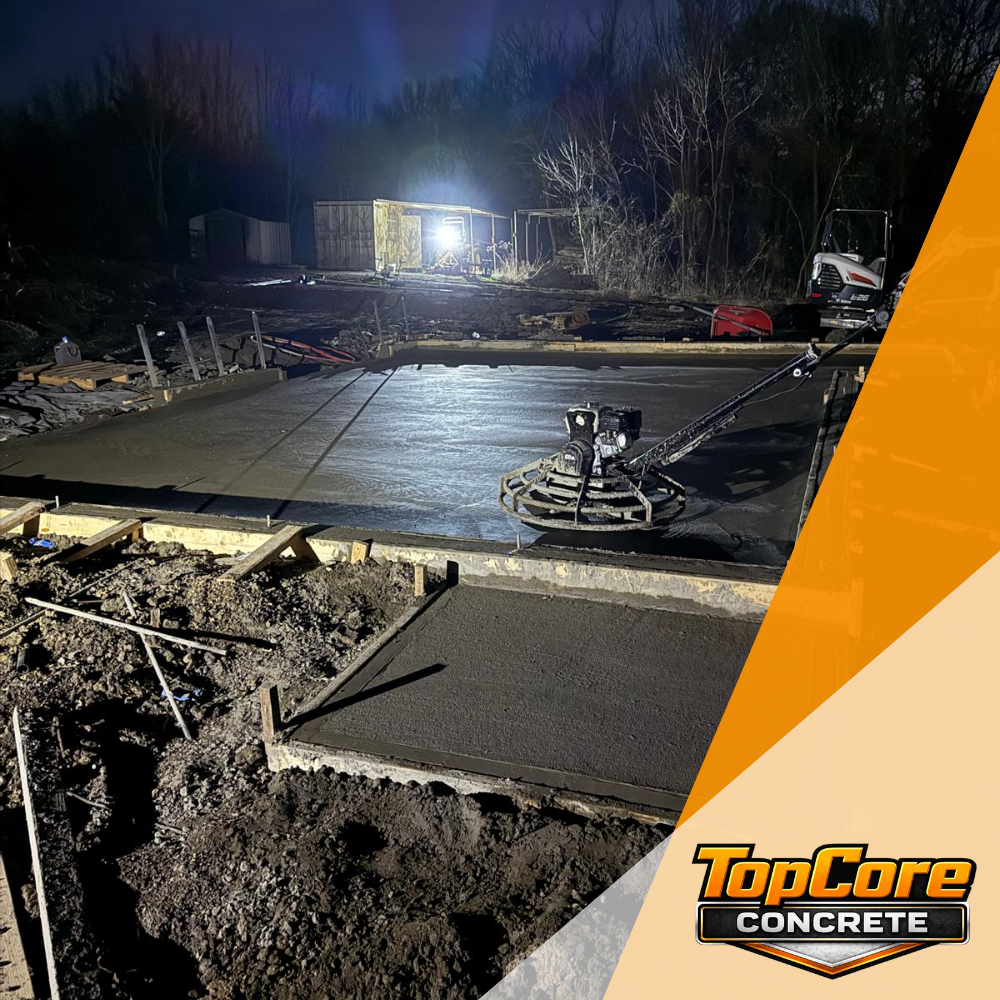
Our core services include Driveways, Sidewalks, Parking Lots, Gravel Driveway construction, Foundation Grading, Patio Installation, Retaining Walls, and Slab Foundations. Whether it’s new construction, a replacement, or an expansion, we tailor solutions to your site, budget, and timeline.
We also assist with design choices such as slab thickness, reinforcement type, base materials, finish textures, and joint patterns. Expect strategic recommendations that balance performance, aesthetics, and cost without compromising structural integrity.
Transparent Steps And Proven Methods
We begin with a thorough consultation and site assessment to understand soil conditions, slopes, access, and drainage. You’ll receive a detailed proposal with scope, materials, reinforcement, timelines, and any permitting or utility locate needs clearly outlined.
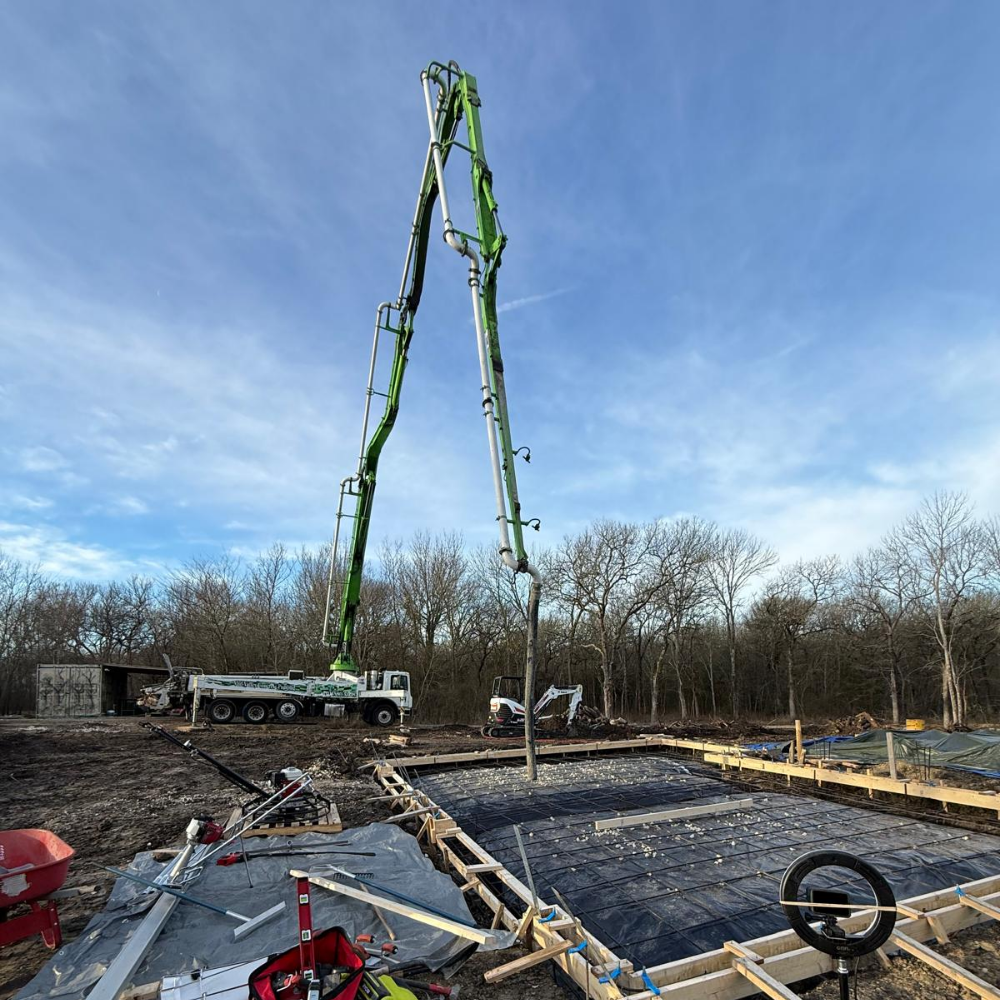
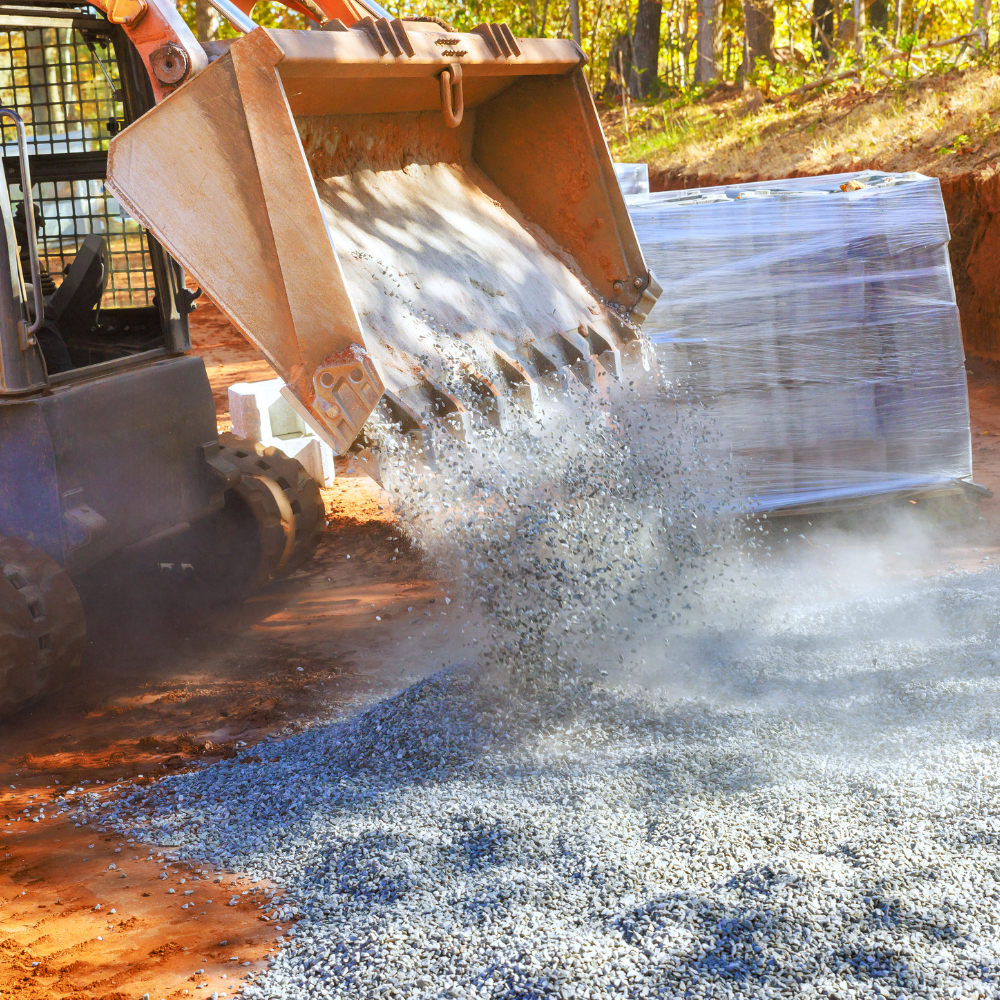
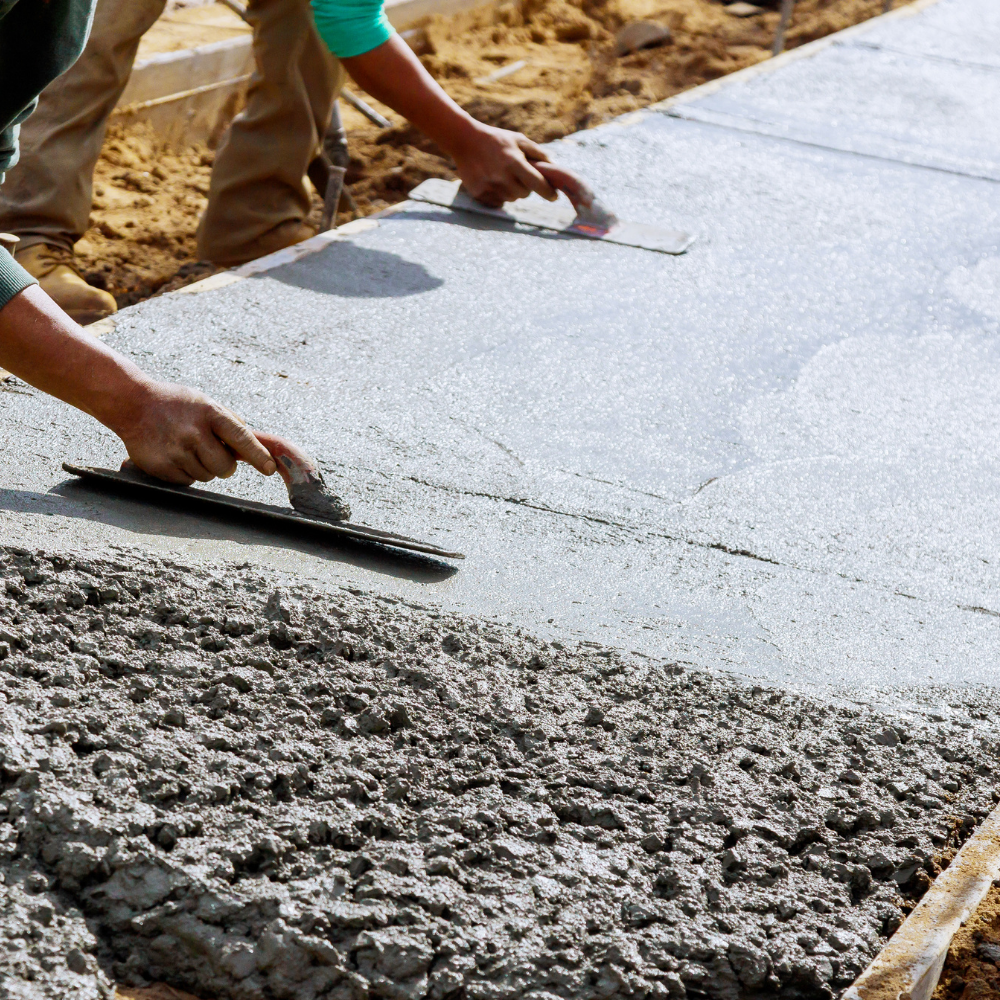
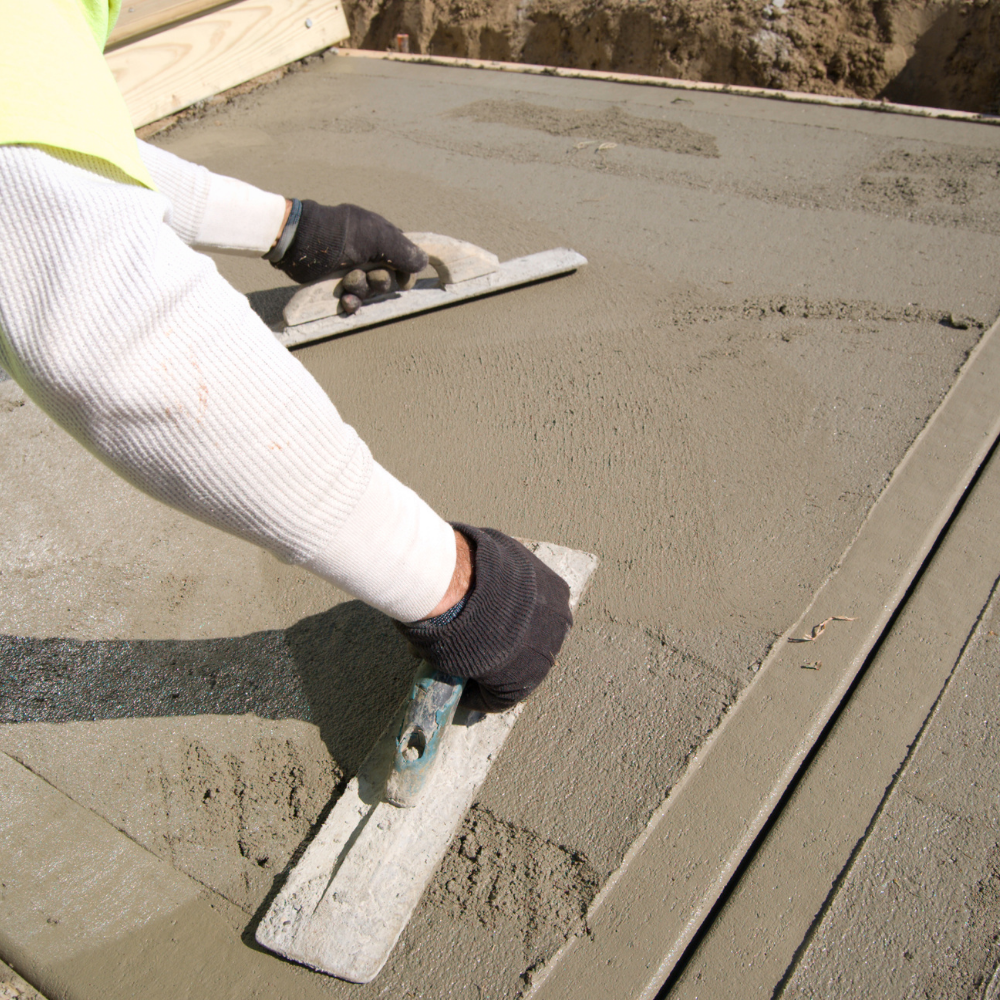
Before the pour, we complete precise foundation grading, compact a stable base, set forms to exact elevations, and install reinforcement. We plan control joints to minimize cracking and verify load paths for driveways, parking areas, and structural slabs.
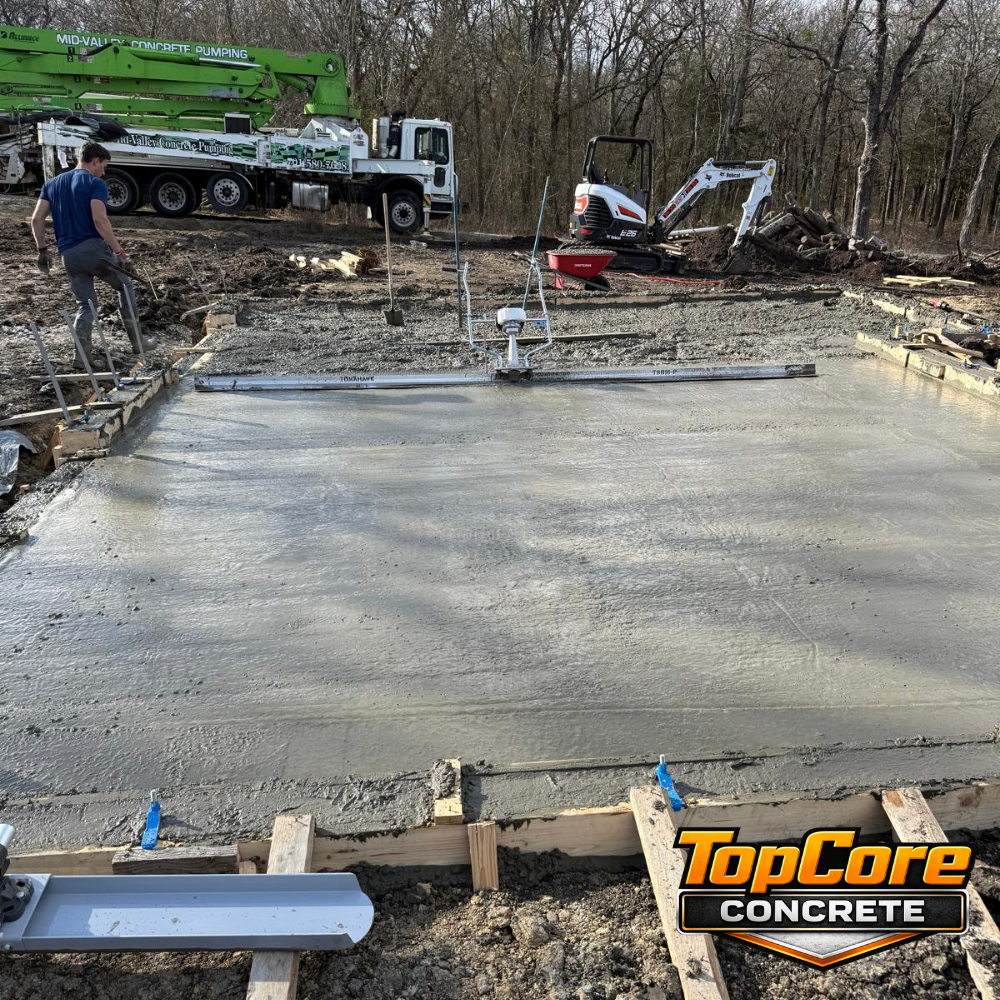
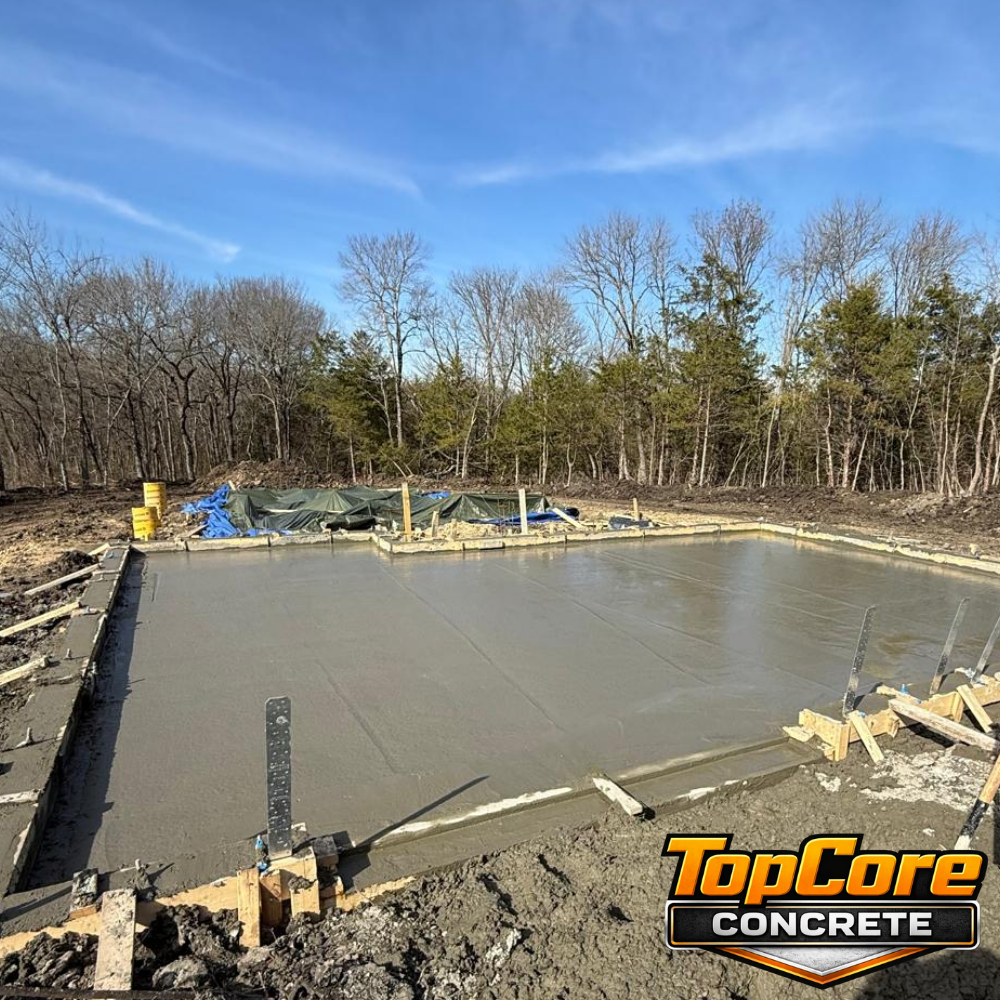
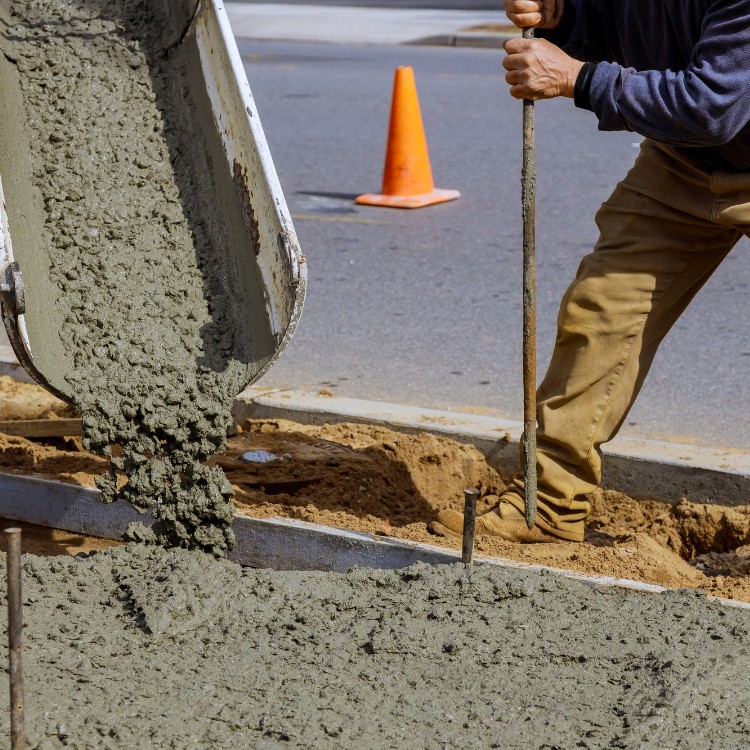
During placement, we use the correct slump and admixtures for the weather, finish with broom or decorative textures as specified, and apply curing methods that lock in strength. After cleanup, we conduct a final walkthrough and provide maintenance guidance for long-term performance.
Request Your Free Estimate
Fast Scheduling, Reliable Timelines
If your property in McKinney needs a new driveway, upgraded patio, stronger retaining wall, or a properly graded foundation, our team is ready to help with a solution engineered for long-term reliability.
We prioritize quick turnaround on quotes and efficient scheduling in McKinney, coordinating material deliveries, equipment, and crews so your project starts on time and finishes as planned.
Contact TopCore Concrete to book a consultation and receive a clear, itemized proposal in McKinney. We’ll evaluate your goals, explain options, and recommend the best path to a durable, attractive concrete installation.