
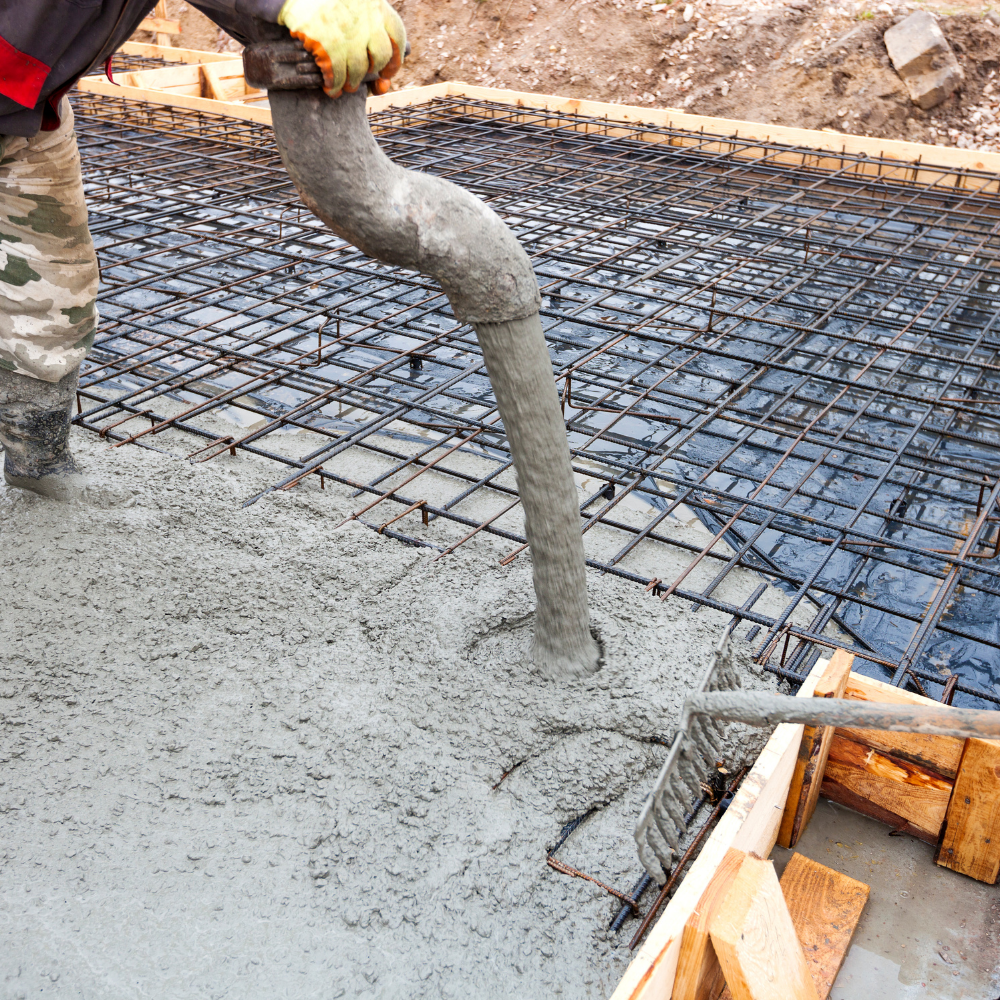
When you build on a slab foundation, you are deciding how your home or building will handle every season, every storm, and every shift in the soil beneath it. In North Texas, including McKinney, that decision carries even more weight because our clay-rich soils expand and contract dramatically with changes in moisture. Choosing the best slab foundation for durability is not just a technical detail; it is the difference between a structure that quietly performs for decades and one that constantly needs repairs, leveling, or in the worst cases, major reconstruction.
Many property owners focus on finishes, fixtures, and floor plans, but the real long-term value of a project begins at ground level. The right slab type, thickness, reinforcement, and drainage strategy will protect your investment, help keep doors and windows operating smoothly, and prevent unsightly cracks in walls and floors. Companies like TopCore Concrete in McKinney, TX see this play out every day: projects that began with a strong, well-designed slab tend to require fewer service calls and maintain their value far better over time.
Durability is not a single feature you can “add” to a slab; it is the result of dozens of decisions made before and during construction. Soil evaluation, structural design, material selection, reinforcement methods, and even how the concrete is cured all contribute to how that slab will perform in 5, 15, or 50 years. Understanding these moving parts gives you the power to ask better questions, choose the right contractor, and confidently select the slab foundation that will stand up to McKinney’s demanding conditions.
Understanding Local Soil And Climate
Durable slab foundations always start with a clear understanding of the ground they rest on. In McKinney and much of Collin County, the dominant soils are expansive clays. These clays swell when they get wet and shrink when they dry out, creating powerful upward and downward forces on any slab poured over them. If a foundation is not designed to manage this movement, cracking, tilting, or differential settlement can occur, often showing up as diagonal cracks in walls or uneven floors inside the building.
Climate intensifies these soil challenges. North Texas experiences cycles of heavy rain followed by long, dry, hot periods. After a wet spring, the soil can become saturated and swell around the slab; months later, a dry summer can cause that same soil to pull away and contract. This constant push and pull is why some slabs in the area fail prematurely. A durable slab design has to anticipate that movement and distribute loads in a way that keeps the structure stable even as the ground changes.
TopCore Concrete factors in local soil reports and site observations before recommending a slab type. A lot that slopes, has poor drainage, or shows signs of previous movement will not perform the same as a flat, well-drained site. Sometimes, the soil may need to be treated, compacted, or replaced with select fill before any concrete is poured. Skipping this step might save money up front, but it can dramatically reduce the lifespan and reliability of the foundation.
Homeowners and builders in McKinney can improve slab durability simply by respecting how powerful soil and climate forces really are. When you hear a contractor talk about soil testing, moisture control, and drainage planning, they are not adding unnecessary complexity; they are addressing the root causes of foundation problems. A slab that looks identical on the surface can behave completely differently depending on the preparation beneath it.
Comparing Common Slab Types
Not all slab foundations are created equal, and choosing the best option for durability starts with understanding the main types used in residential and light commercial construction. The simplest is the basic monolithic slab-on-grade, where the slab and footing are poured at the same time. While this type can work in some regions, it is often not robust enough on its own for highly expansive soils unless it is carefully engineered and reinforced. In McKinney’s conditions, a basic, lightly reinforced monolithic slab can be more vulnerable to cracking and movement over time.
A step up in performance is the slab with thickened edge beams and interior grade beams. In this design, the slab is supported by deeper, stronger beams that act like ribs, helping the foundation resist bending and differential movement. These beams can be spaced throughout the footprint of the house or building according to engineering specifications. For expansive clay soils, this type of reinforced slab often offers a better balance of cost and durability, especially when combined with proper reinforcement and moisture control strategies.
Post-tensioned slabs are another popular choice in North Texas. In a post-tensioned system, high-strength steel cables (tendons) are laid out in the slab before the concrete is poured. After the concrete cures to a certain strength, these tendons are tensioned, compressing the slab and significantly increasing its ability to resist cracking and movement. Post-tensioned slabs are widely used in areas with expansive soil because they create a more unified, stiff foundation that can better bridge over minor soil variations.
TopCore Concrete often evaluates whether a traditional reinforced slab or a post-tensioned slab is best for a specific McKinney project, taking into account building size, loads, site conditions, and budget. There is no one-size-fits-all answer; a small, lightly loaded structure on well-prepared soil may perform well with a conventional reinforced slab, while a larger home or commercial building on more variable soil could benefit from the added performance of post-tensioning. The key is to match the slab type to the realities of the site rather than defaulting to whatever seems cheapest or most familiar.
Key Design Details That Affect Durability
Beyond choosing a slab type, durability is heavily influenced by the details of the design. One of the most critical factors is slab thickness. Thicker slabs generally offer greater stiffness and can better resist bending and cracking under load or soil movement. However, thickness must be calculated based on structural requirements and soil conditions; simply pouring “extra thick” concrete without a plan can waste material without addressing the real issues. Engineers consider loads from walls, roofs, and live loads inside the building when determining slab thickness and beam dimensions.
Reinforcement is another major component of durable slab design. Steel rebar or welded wire mesh is placed within the slab to help control cracking and increase tensile strength. In a well-designed slab, reinforcement is positioned at the correct depth and spacing to work with the concrete, not against it. In post-tensioned slabs, the tendon layout and tensioning schedule are carefully engineered. When TopCore Concrete installs a slab in McKinney, attention to reinforcement placement is a non-negotiable step, because poorly placed or insufficient steel can severely compromise long-term performance.
Control joints and expansion joints also play a vital role. Concrete will crack; that is a reality of the material. The goal is to manage where and how it cracks so that the structural integrity is not affected and the appearance is acceptable. Control joints are intentional, weakened planes that guide cracking along straight, planned lines. Expansion joints allow for movement between different sections of concrete or between the slab and other structures. Without these joints, random cracking and stress concentrations can develop, leading to more serious issues over time.
Load paths and bearing points are sometimes overlooked but critical. Where heavy loads from columns, fireplaces, or large equipment bear on the slab, thicker concrete, larger beams, or extra reinforcement may be required. Failing to design for these concentrated loads can cause localized settlement or cracking. A durable slab is one where every significant load has a clearly defined, well-supported path down into the soil, and that design is documented and followed during construction.
Construction Practices That Make Or Break A Slab
Even the best design can fail if it is not executed properly in the field. Construction practices have a direct impact on durability, and this is where the experience and discipline of a contractor like TopCore Concrete really matter. Proper subgrade preparation is the first step: the soil or base material under the slab must be uniformly compacted, free of organic matter, and shaped to promote drainage away from the foundation. Soft spots, debris, or uneven compaction can create weak areas that settle differently, causing the slab to crack or tilt.
Formwork and layout accuracy are also critical. Forms must be set to the correct elevations and dimensions, and beam locations must match the engineered plans. If beams are misplaced or reduced in size, the slab may not perform as designed. During reinforcement placement, workers need to ensure that rebar or post-tension tendons are supported at the proper height within the slab, not lying directly on the ground. These small details, though easy to overlook, directly influence how the slab handles stress and movement later on.
Concrete quality and placement techniques further influence durability. The concrete mix must meet specified strength and workability requirements, and it should not be overwatered on site, which can weaken the final product. During placement, the concrete should be properly consolidated to remove voids and prevent honeycombing, especially around beams and reinforcement. Finishing should be timed and executed to avoid surface defects, and the slab must be given adequate time and conditions to cure, which significantly affects its long-term strength and resistance to cracking.
Post-construction practices like tensioning of post-tension cables (for applicable slabs) and early-age curing are just as important. In a post-tensioned slab, cables must be stressed at the right time and to the correct levels to achieve the intended performance. Curing methods such as water curing, curing compounds, or covering help control moisture loss, reducing shrinkage cracking. TopCore Concrete’s crews in McKinney follow these steps not as extra options but as standard practice, because skipping them can cut years off the useful life of a slab foundation.
Drainage, Moisture Control, And Maintenance
Even a well-designed and well-built slab can struggle if water management around the structure is poor. Drainage and moisture control are essential elements of long-term durability, especially on expansive clay. When water consistently collects near a foundation, the soil can swell unevenly, pushing up sections of the slab. Over time, this can cause heaving, interior cracks, and misaligned doors. Conversely, prolonged drought without any moisture near the foundation can lead to excessive shrinkage and settlement.
Good site grading is the first line of defense. The ground around a slab should slope away from the structure so that rainwater flows outward, not inward. Downspouts should discharge water several feet away from the foundation, not directly at the base of the walls. In some McKinney properties, French drains or surface drains may be necessary to route water safely away, especially on lots with limited natural drainage. When TopCore Concrete evaluates a site, they often recommend simple grading or drainage adjustments that can dramatically improve foundation performance over time.
Moisture consistency is just as important as moisture removal. For expansive soils, large swings between very wet and very dry conditions cause the most movement. Some homeowners use soaker hoses or irrigation near the foundation during extended dry periods to keep moisture levels more stable. While this should be done carefully to avoid overwatering, a consistent moisture envelope around the slab can reduce the stress cycles that lead to cracking and movement.
Ongoing maintenance and observation are part of choosing durability as well. Walk around your property periodically and look for signs of erosion, standing water, or soil pulling away from the foundation. Addressing these issues early is far less costly than major foundation repairs later. When you partner with a contractor like TopCore Concrete, you can also ask for guidance on long-term care, so your slab continues performing well in McKinney’s changing weather conditions.
Working With The Right Concrete Partner
The most durable slab foundation is the one designed and installed by a team that understands both engineering principles and local realities. In McKinney, TX, that means working with professionals who have hands-on experience with expansive clays, intense summer heat, and the kind of rapid development that can change drainage patterns around neighborhoods. TopCore Concrete brings that local insight to every project, helping clients select the slab type, reinforcement approach, and drainage strategy that fit their specific site and structure.
When evaluating potential contractors, ask detailed questions about their process. Do they perform or review soil testing? How do they decide between a reinforced slab and a post-tensioned slab? What quality controls do they use during reinforcement placement, concrete pouring, and curing? A contractor committed to durability will be able to explain these steps clearly and show you examples of past work that has stood the test of time.
Communication is another sign you are working with the right partner. Durable slab foundations involve tradeoffs between cost, performance, and schedule. A trustworthy contractor will help you understand where it makes sense to invest more for long-term reliability and where you can save without compromising structural integrity. With TopCore Concrete, McKinney property owners get a collaborative approach that keeps durability front and center, rather than treating the foundation as a hidden, low-priority line item.
Ultimately, choosing the best slab foundation for durability is not a single decision but a series of informed choices: from soil evaluation and slab type to reinforcement, construction practices, and maintenance. When those choices are guided by experienced professionals and grounded in local knowledge, you end up with a foundation that quietly does its job year after year, protecting everything you build on top of it.
Frequently Asked Questions
Why are slab foundations in McKinney, TX so prone to cracking? McKinney sits on expansive clay soils that swell when wet and shrink when dry. This constant movement puts stress on slab foundations. If a slab is not properly designed, reinforced, and supported by a well-prepared subgrade, it can crack as the soil moves. Poor drainage, inconsistent moisture around the foundation, and inadequate control joints can make the problem worse. Working with a contractor who understands local soil behavior, like TopCore Concrete, helps ensure the slab is engineered to handle these conditions.
Is a post-tensioned slab always better than a conventional reinforced slab? Post-tensioned slabs offer excellent performance in expansive soils because they are compressed by tensioned steel tendons, making them more resistant to cracking and bending. However, they are not automatically the best choice for every project. For smaller structures, certain soil conditions, or specific budget constraints, a well-designed conventional reinforced slab with beams can be perfectly durable. The best approach is to have your site and building loads evaluated so the slab type is matched to your project’s needs, rather than defaulting to one system for every situation.
What can I do as a homeowner to extend the life of my slab foundation? You can significantly extend your slab’s life by managing water and monitoring your property. Keep gutters clean and ensure downspouts discharge water away from the foundation. Maintain proper grading so water flows away from the house, not toward it. During long dry spells, consider using controlled irrigation or soaker hoses near the foundation to help maintain more consistent soil moisture, but avoid overwatering. Regularly inspect for signs of erosion, standing water, or new cracks, and consult a professional like TopCore Concrete early if you notice significant changes.
How important is soil testing before pouring a slab? Soil testing is one of the most important steps in designing a durable slab foundation. It provides data on soil type, bearing capacity, moisture conditions, and potential for expansion or shrinkage. Without this information, engineers and contractors are essentially guessing about how the soil will behave, which can lead to under-designed slabs and premature problems. In a region like McKinney, where soil conditions can vary even within a single neighborhood, soil testing gives TopCore Concrete the information needed to tailor the slab design for your specific site.
Can existing slab foundations be improved for better durability? While you cannot change the original design of an existing slab, you can often improve its performance and slow further damage. Strategies include correcting drainage problems, regrading the yard, adding or adjusting gutters and downspouts, and stabilizing soil moisture around the foundation. In some cases, structural repairs such as underpinning, pier installation, or slab leveling may be recommended to address significant settlement or heaving. A professional evaluation will determine the best combination of repairs and preventative measures to enhance the durability of your current foundation. For more information on options, you can learn more about Slab Foundations and consult with a local specialist.