
Engineers estimate that more than 80% of foundation problems in light residential and commercial buildings are linked to poor surface drainage and grading, not just structural defects. In other words, the ground around your building can quietly set you up for success or failure long before a single crack appears. For property owners in a fast-growing, clay-heavy region like McKinney, TX, this makes essential foundation grading one of the most important, yet most overlooked, steps in building a durable structure.
Foundation grading refers to shaping and sloping the soil around your home or commercial building so that water flows away from the foundation instead of toward it. That might sound simple, but in practice it involves understanding soil behavior, rainfall patterns, building codes, and long-term settlement. When grading is done correctly, your concrete foundation can perform as designed for decades. When it is done poorly, even the best-built slab from a contractor like TopCore Concrete can be stressed by constant moisture changes, erosion, and movement in the surrounding soils.
In McKinney, where expansive clay soils swell when wet and shrink when dry, grading is not cosmetic landscaping. It is a protective system that works hand in hand with your foundation design, gutters, and drainage features. Getting this right from the start – or correcting it on existing properties – is one of the most effective ways to extend the life of your structure, reduce repair costs, and protect your investment.
Why Grading Matters So Much
Water is the single most persistent enemy of a foundation. It does not need to flood into your building to cause damage; it only needs to sit, day after day, against the outside of your slab or footing. When the ground is flat or slopes toward the structure, rainwater and irrigation water can pool or infiltrate right at the foundation line. Over time, this contributes to soil expansion, erosion, and differential settlement that shows up as cracks in walls, sticky doors, and uneven floors.
In McKinney, the native clay soils are especially reactive. When they absorb water, they can expand with tremendous force, pushing against foundation walls and lifting parts of a slab. When they dry out, they contract, allowing the structure to settle or sink in places. Foundation grading is the first defense against these cycles. By sloping the soil away from the building, you reduce the volume of water that reaches the clay directly around the foundation, moderating how much it can swell or shrink.
Grading also matters for the performance of other drainage systems. Gutters, downspouts, French drains, and surface swales all rely on gravity to move water. If the ground is not shaped correctly, these systems struggle to do their job. A well-graded site allows water to move naturally away from the foundation, making every other drainage component more efficient and less maintenance-intensive. For concrete specialists like TopCore Concrete, it is clear: a durable structure depends as much on the surrounding ground profile as it does on the strength of the concrete mix.
Key Principles Of Proper Slope
At its core, grading is about creating a consistent, measurable slope away from the structure. A commonly accepted guideline is a minimum slope of about 5% for the first 5 to 10 feet away from the foundation. Practically, this means the ground should drop roughly 6 inches over the first 10 feet. This slope is enough to encourage water to move away rather than linger near the building. In McKinney, where heavy storms can drop a lot of water quickly, maintaining or even slightly exceeding this minimum can be beneficial.
However, slope alone is not the only factor. The smoothness and continuity of that slope are equally important. If the soil is uneven with low spots or depressions, water can still pool and soak into the ground near the foundation, even if the average slope looks correct. Professionals who understand both concrete and site work, such as TopCore Concrete, pay close attention to these subtle contours, using equipment and experience to avoid hidden pockets where water can collect.
Another key principle is tying the grading plan into the larger lot. A foundation cannot be protected in isolation. The slope near the building must connect smoothly to the rest of the yard, driveways, sidewalks, and neighboring properties. This prevents situations where water is successfully moved away from the foundation but then trapped somewhere else, creating erosion, standing water, or disputes with adjacent property owners. Good grading design considers the entire site and how water will behave from the roof edge all the way to the street or drainage easement.
Understanding McKinney’s Unique Soil Conditions
McKinney, TX sits in a region dominated by expansive clay soils. These soils have a high shrink-swell potential, meaning they change volume dramatically as their moisture content changes. When dry, cracks in the ground can appear; when saturated, the soil can soften and heave. This behavior makes foundation design and grading especially critical. A flat yard that might be tolerable in sandy soil can be a serious liability on a clay lot.
Because of this, grading around concrete foundations in McKinney must do more than simply shed water. It must reduce extreme swings in moisture near the foundation line. That is why consistent slopes, stable fill materials, and controlled drainage paths are so important. When the grading is done correctly, the clay near the foundation experiences smaller, slower moisture changes, which reduces the stress on slabs and grade beams.
Seasonal conditions add another layer of complexity. North Texas can see intense rainfall events followed by long dry spells and high heat. Without proper grading, these swings can cause the soil to repeatedly expand and contract right next to the foundation, leading to settlement on one side of a structure and lifting on another. Concrete professionals serving McKinney, like TopCore Concrete, understand that lasting durability depends on designing both the foundation and the grading to handle this cyclical reality.
How Professional Grading Protects Concrete
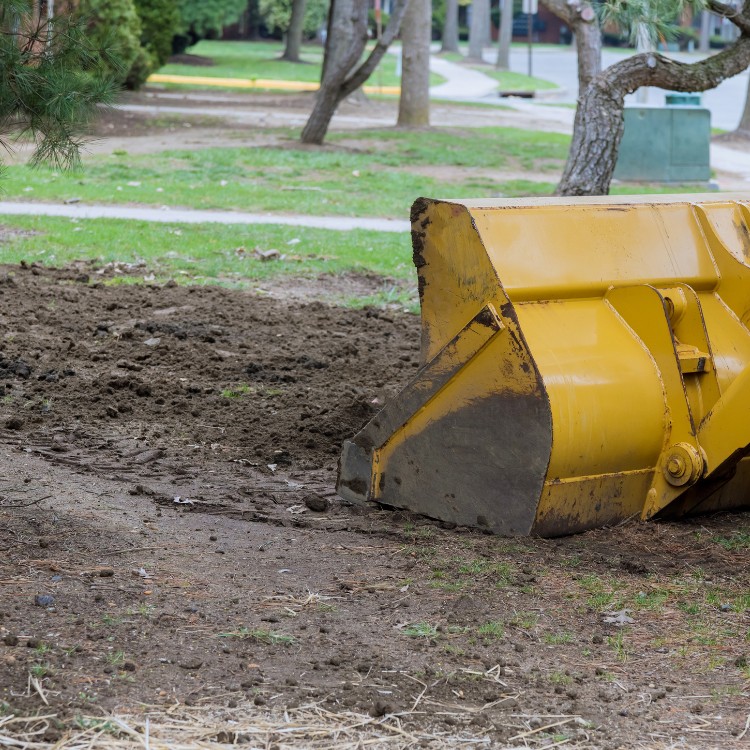
When a company that specializes in concrete and foundations approaches grading, they see it as part of a structural system rather than just a landscaping task. Before placement of a slab or footing, the building pad is shaped and compacted to specific tolerances. After the concrete is poured and cured, the surrounding soil is carefully brought up to meet the finished elevation, creating the desired slope without burying critical parts of the foundation or covering weep holes, vents, or siding.
Proper grading helps prevent undermining of the foundation edge. If water is allowed to flow toward the structure and then run down the side of the slab, it can wash away supporting soil over time, creating voids. These voids leave parts of the slab unsupported, which can lead to cracking and settlement. By shaping the ground and using appropriate materials, professional grading keeps the soil in place and reduces the risk of erosion close to the concrete.
Grading also works in cooperation with other protective measures. For example, downspouts that discharge several feet from the foundation rely on the graded slope to carry water further away. Surface drains and swales are only effective if they are positioned at low points created intentionally by grading. When TopCore Concrete is involved in a project, integrating these elements into a single plan ensures that the concrete is not only strong on day one, but also shielded from moisture-related issues for years to come.
Common Grading Mistakes To Avoid
One of the most frequent mistakes property owners make is adding new landscaping or hardscaping without considering how it changes drainage. Installing flower beds, edging, or decorative rock can unintentionally create dams that trap water against the foundation. Similarly, adding soil to plant shrubs or trees can raise the ground level too high, directing water toward the building or burying parts of the foundation that should remain exposed for inspection and ventilation.
Another common error is relying on visual judgment alone. A yard may appear to slope away from the house, but subtle dips and uneven areas can still collect water after a storm. Without using levels, laser tools, or experienced assessment, it is easy to underestimate how water actually moves across the site. In McKinney’s heavy downpours, these minor imperfections can quickly become problem zones where the soil stays wet for long periods.
Homeowners also sometimes assume that once grading is done during construction, it will remain correct forever. In reality, soil settles, especially newly placed fill around a foundation. Over a few years, the ground can sink near the slab, flattening the slope or even reversing it. This is why periodic inspection and touch-up grading are important. Professionals can identify low spots, add and compact soil correctly, and restore the proper drainage patterns before foundation damage develops.
Planning Grading For New And Existing Structures
For new construction in McKinney, grading should be part of the initial design, not an afterthought at the end of the project. A good site plan will show finished floor elevations, yard slopes, and drainage paths. Before the foundation is poured, the building pad is prepared to those elevations, and after concrete work is complete, the final grading fine-tunes the slopes around the structure. Working with a contractor like TopCore Concrete, who understands both the foundation and site work, helps ensure that each step supports the next.
Existing properties can also benefit significantly from upgraded grading. If you notice standing water near your foundation, soil pulling away from the slab in dry weather, or erosion channels forming around the house, these are signs that your grading may need attention. Correcting grading on an established lot often involves adding soil in strategic locations, re-shaping the ground, and sometimes integrating surface drains or swales to move water more effectively.
In either case, the goal is not just to solve the immediate water issue but to create a durable, long-term solution. That means choosing the right type of fill soil, compacting it properly, and coordinating grading with gutters, downspouts, and any concrete flatwork like driveways or patios. A thoughtful approach acknowledges McKinney’s climate and soil conditions and designs the ground around your structure to perform reliably through storms, droughts, and seasonal changes.
Frequently Asked Questions
How can I tell if my yard is graded correctly around my foundation? A quick visual check after a heavy rain is often revealing. Walk the perimeter of your home or building and look for standing water, saturated soil that stays wet long after other areas dry, or erosion lines that show where water is flowing. Ideally, you should see water moving away from the structure, not pooling near it. You can also use a simple level and straight board or a tape measure to check for a drop of several inches over the first 10 feet from the foundation. If the slope is minimal or reversed, it is worth having a professional assess the grading.
How often should grading be adjusted or checked? Grading is not a one-time task, especially in areas with clay soils and new construction fill, like McKinney. It is wise to inspect the slopes around your foundation at least once a year, preferably after the rainy season, to see if settlement has created low spots. Newly built homes may require touch-up grading within the first few years as the soil consolidates. If you notice recurring puddles, soil pulling away from the slab, or new foundation cracks, a grading review should be part of your evaluation.
Can I fix minor grading problems myself, or do I need a professional? For small, localized low spots, homeowners can sometimes add soil and gently reshape the area themselves. However, it is important to use compatible fill, avoid covering critical parts of the foundation or siding, and maintain a consistent slope. For more extensive issues, or when you are unsure how changes will affect overall drainage, involving a professional is wise. Contractors who understand foundations, such as TopCore Concrete, can evaluate how grading adjustments will interact with your structure and other site features, and may recommend integrated solutions like swales or surface drains along with soil re-shaping.
What types of soil are best for grading around a foundation? The ideal soil for grading is stable, compactable, and not overly organic. Clay-heavy soils, which are common in McKinney, can be used if handled properly, but they tend to shrink and swell. Often, a mix that includes more granular material, such as sandy loam, is used as a cap layer to promote drainage while still holding shape. Avoid using topsoil rich in organic matter right against the foundation, as it can decompose and settle significantly. A professional can recommend or source the right material and compact it to reduce future settlement.
How does foundation grading relate to other drainage solutions? Foundation grading is the foundation of your overall drainage strategy. Even the best gutters, downspouts, French drains, or surface drains cannot perform well if the surrounding ground slopes the wrong way. Proper grading ensures that water naturally flows toward these systems and away from your foundation. When a company like TopCore Concrete evaluates a property, they look at grading together with other drainage components to create a coordinated plan. Often, the most effective improvements involve a combination of reshaping the soil, extending downspouts, and adding targeted drainage features. For more insight into how these elements work together, you can explore Foundation grading resources and then discuss site-specific options with a local expert.