
The first warm Saturday of spring arrives in McKinney, and you drag a chair out onto the patchy grass behind your home, trying to picture the outdoor space you really want: a comfortable, solid patio where you can grill, relax, and host friends without worrying about mud, uneven ground, or wobbly furniture. For many homeowners, that moment is when the dream of a patio turns into a serious plan. But between choosing materials, planning drainage, and making sure the concrete actually lasts, it can be hard to know where to start.
Patio installation is more than just pouring concrete or laying pavers. Done right, it becomes an extension of your home that adds value, function, and style. Done wrong, it can crack, settle, or drain water toward your foundation. In a place like McKinney, TX, where clay soils, temperature swings, and occasional heavy rains are part of life, following best practices is essential. TopCore Concrete has seen both the success stories and the problem projects, and the difference almost always comes down to careful planning, solid preparation, and professional execution.
This guide walks through the best practices for patio installation from start to finish: how to plan the layout, prepare the site, choose the right concrete options, and ensure your patio stands up to North Texas weather. Whether you want a simple, low-maintenance slab or a decorative outdoor living area, understanding these principles will help you make better decisions and avoid costly mistakes.
Start With Purpose And Layout
Every successful patio project begins with a clear understanding of how the space will be used. Are you envisioning a quiet coffee corner for two, or a generous entertaining area with a grill, dining table, and seating? The intended use will inform the size, shape, and even the thickness and reinforcement of the concrete. For example, a patio that may occasionally support a heavy smoker or outdoor kitchen island might need a thicker slab and more robust base than a small seating area.
Next, consider how the patio connects to your home and yard. In McKinney, many backyards slope slightly for drainage, which can affect where a patio fits best. Think about door locations, traffic flow, and sightlines from inside the house. You want a layout that feels natural, not forced: a patio that lines up with a living room door, sits near the kitchen for easy grilling access, or frames a nice view. Taking time to walk the yard, mark potential edges with paint or string, and stand in different spots can help you visualize the final result.
Shape and style also matter. Rectangular patios are straightforward to design and build, but curves, angles, and extensions can add personality and help the patio blend into the landscape. However, more complex shapes require more precise forming and layout work. TopCore Concrete often recommends balancing aesthetics with constructability: choose a layout that looks great but also allows for proper reinforcement, control joints, and drainage. Proper planning at this stage prevents awkward slopes, strange step-downs, or last-minute compromises.
Respect The Ground: Site Preparation
Even the best concrete mix will fail on a poorly prepared base. One of the most critical best practices for patio installation is thorough site preparation. That starts with removing grass, roots, organic soil, and any loose or unstable material. Leaving organic matter under a slab almost guarantees future settling as it decomposes, creating voids that can cause cracking and uneven surfaces.
Once the top layer is removed, the subgrade needs to be evaluated and leveled. In McKinney, TX, many neighborhoods sit on expansive clay soils that swell when wet and shrink when dry. Simply pouring concrete directly on this type of soil is a recipe for movement and cracking. A seasoned contractor like TopCore Concrete will compact the subgrade and then install a layer of well-graded base material, such as crushed stone or road base, to create a more stable platform for the patio.
Compaction is another crucial step that cannot be rushed. The base material should be installed in lifts and compacted with the proper equipment, not just stepped on or lightly tamped. This process reduces future settlement and helps distribute loads evenly. Skipping or shortcutting compaction might save a little time initially, but it often leads to visible cracks, low spots, and drainage issues within a short period.
Plan For Water And Drainage
Water is one of concrete’s biggest enemies when it is not managed correctly. A well-installed patio should shed water away from the home and avoid creating puddles that stay wet after every rain. Best practices call for a slight slope in the patio surface, typically around 1/8 to 1/4 inch per foot, directing water toward the yard or a designated drainage area. This slope is subtle enough that you won’t feel it while walking, but effective enough to move water off the surface.
In McKinney’s climate, sudden downpours are common. If the patio is placed near the home, care must be taken to ensure water does not get pushed back toward the foundation. TopCore Concrete will carefully set elevations, sometimes adjusting door thresholds and transitions, to maintain a consistent slope away from the structure. In some cases, adding a French drain, channel drain, or surface drain may be necessary to handle runoff from adjacent roofs or higher yard areas.
Drainage planning should also consider how the patio interacts with surrounding landscaping. Raised beds, turf, and plantings can either help absorb water or accidentally create dams that trap it. Thinking through these relationships early in the design phase helps avoid soggy corners, slippery algae growth, or erosion issues. Good drainage design is invisible when done correctly: you simply notice that your patio dries quickly and stays usable after storms.
Choose The Right Concrete And Reinforcement
Not all concrete is the same, and not every patio needs the exact same mix. For residential patios in McKinney, a typical recommendation is a concrete mix in the 3,000–4,000 psi range, depending on usage and local conditions. Higher strength mixes can provide added durability, especially if the patio will experience heavier loads or more frequent use. Air entrainment may be used to help concrete withstand freeze-thaw cycles, which, while less extreme in North Texas than in colder regions, can still occur.
Reinforcement is another key factor in long-term performance. While concrete is strong in compression, it is relatively weak in tension, which is why reinforcement is used to help control cracking. Options include welded wire mesh, rebar, or in some cases, fiber reinforcement mixed directly into the concrete. For many patios, a combination of rebar placed in a grid pattern and properly spaced control joints provides an excellent balance of strength and crack management.
Thickness also matters. A standard patio slab is often 4 inches thick, but areas that will bear heavier loads may need to be 5 inches or more. Thicker edges or turn-down beams may be used where the patio meets a structure or where soil conditions are less stable. TopCore Concrete evaluates the specific site and use-case before recommending a slab design, ensuring that the patio is not underbuilt for its intended purpose.
Detailing, Finishing, And Joint Placement
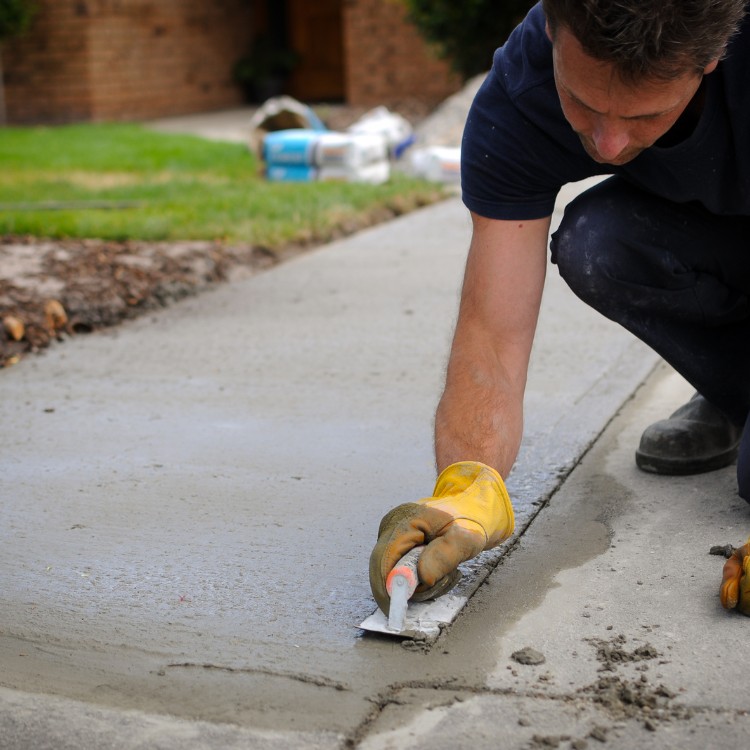
Once the concrete is placed, finishing techniques play a huge role in both appearance and performance. A common best practice for patios is a broom finish, which provides a slip-resistant surface that is still easy to clean. Overly smooth troweled finishes can become slick when wet and are generally better suited to indoor or covered applications. In decorative projects, stamped patterns, colored concrete, or exposed aggregate can be used to create a more custom look while still maintaining function.
Control joints are one of the most overlooked yet essential details. Concrete will crack; the goal is to control where it cracks. By cutting or tooling joints at the right spacing and depth, typically at intervals no more than 2–3 times the slab thickness in feet, you guide cracking into straight, less noticeable lines. Joints should form a logical pattern that complements the patio shape rather than looking random or like an afterthought.
Edges and transitions deserve attention, too. Rounded or beveled edges help prevent chipping and make the patio more comfortable and safer to walk on. Where the patio meets existing concrete or the home’s foundation, proper isolation joints and sealants may be needed to allow independent movement and prevent binding or stress. TopCore Concrete pays close attention to these small details because they often determine how “finished” and high-quality a patio feels once complete.
Timing, Curing, And Long-Term Care
Concrete continues to gain strength long after it is poured, and how it is treated during the first days and weeks is critical. Proper curing practices, such as keeping the surface moist, using curing compounds, or protecting the slab from rapid drying, help prevent surface cracking and improve durability. In the Texas sun, concrete can dry too quickly if left unprotected, which can weaken the surface and lead to dusting or scaling over time.
Traffic should be limited during the early curing period. While you may be able to walk on the patio within a day or two, heavy furniture, grills, or vehicles should be kept off for longer, based on your contractor’s guidance. Allowing adequate curing time gives the slab a better chance to reach its designed strength and resist future damage. TopCore Concrete typically provides homeowners with specific timelines tailored to the project and weather conditions.
Long-term care is relatively simple but still important. Keeping the patio clean, promptly removing leaves and debris, and avoiding harsh de-icing chemicals all help extend its life. Sealing the concrete periodically can protect against stains, water penetration, and surface wear, especially for decorative or colored patios. In McKinney, where sunlight and heat are intense, sealers can also help maintain color and reduce surface fading.
Finally, regular inspection for small cracks or joint sealant failure allows you to address minor issues before they become major problems. A well-installed and properly maintained patio can last for decades, continuing to add value and enjoyment to your property. For many homeowners, that investment pairs well with other concrete improvements, such as new Driveways, creating a cohesive and functional exterior space.
Frequently Asked Questions
How thick should a concrete patio be? For most residential patios in McKinney, TX, a 4-inch-thick slab is standard and sufficient for typical foot traffic and outdoor furniture. However, if you plan to place heavy features like outdoor kitchens, hot tubs, or large masonry fireplaces on the patio, increasing the thickness to 5 inches or more and adding extra reinforcement is often recommended. TopCore Concrete evaluates your specific design and soil conditions to determine the ideal thickness so you are not underbuilding or overspending.
Do I really need a gravel base under my patio? Yes, in almost all cases a compacted gravel or road base under the concrete is a best practice, especially with the clay soils common in McKinney. The base layer helps distribute loads, improves drainage, and reduces the risk of settling and cracking. Pouring directly on bare soil often leads to uneven support as the soil shifts or erodes over time. A properly compacted base is one of the most important steps for a long-lasting patio.
How long before I can use my new patio? You can usually walk on a new concrete patio within 24–48 hours, but heavier use should be delayed. Placing furniture, grills, or planters is typically safe after about a week, while maximum strength continues to develop over 28 days. If your patio will support especially heavy loads, TopCore Concrete may recommend waiting longer before placing them. Weather conditions, such as very hot or very cool temperatures, can also influence curing time.
Will my patio crack even if it is installed correctly? Some cracking in concrete is normal and does not necessarily indicate poor installation. The goal of best practices is to control where and how the concrete cracks through proper reinforcement and joint placement. When joints are correctly spaced and cut to the right depth, most cracking will follow these lines and remain narrow and less noticeable. A well-installed patio from a professional contractor like TopCore Concrete should not exhibit wide, uneven, or rapidly spreading cracks early in its life.
Is decorative concrete a good option for patios in McKinney? Decorative concrete, such as stamped patterns, integral color, or stained finishes, can be an excellent choice for patios when installed with the same structural best practices as a standard slab. In McKinney’s climate, proper sealing and periodic maintenance are important to protect decorative surfaces from UV exposure, moisture, and wear. When done correctly, decorative concrete provides the durability of a traditional slab with the appearance of stone, brick, or tile, often at a more cost-effective price and with lower long-term maintenance.