
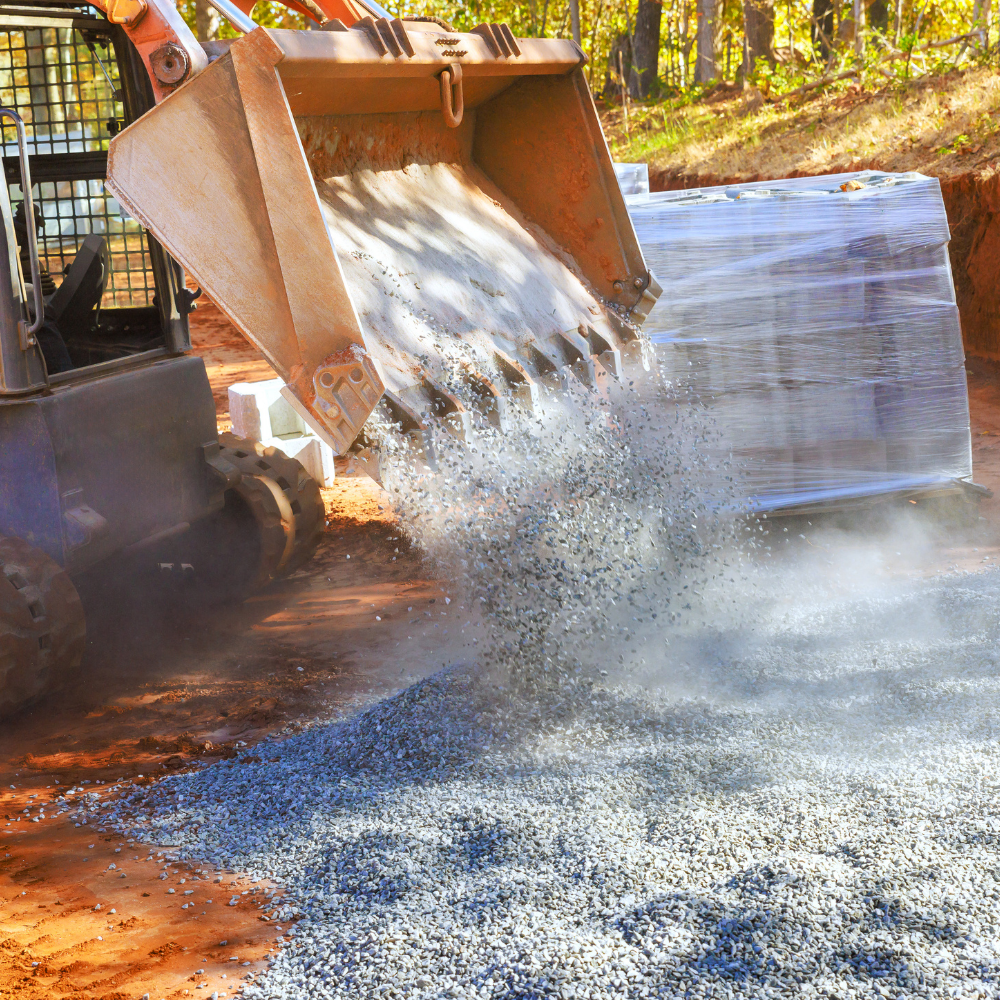
Most people think foundation grading is just pushing some dirt around so water runs away from the house. That assumption is exactly why so many foundations in North Texas end up cracking, settling, or heaving years earlier than they should. Proper grading is not a quick cosmetic slope; it is a carefully planned system that controls water, stabilizes soil, and supports the concrete structure for the long haul. When grading is treated as an afterthought, even the strongest concrete slab can be undermined by soft, shifting ground.
In McKinney, TX, where expansive clay soils swell when wet and shrink when dry, grading mistakes are amplified. A foundation can be engineered and poured perfectly, yet still move and crack because the soil moisture around it isn’t managed. That’s where foundation grading techniques come into play. When companies like TopCore Concrete talk about optimal support, they are really talking about how the surrounding ground is shaped, compacted, and drained to protect the slab or pier-and-beam system beneath your home.
Understanding foundation grading is about seeing the property as a whole, not just the footprint of the house. The yard, driveway, flower beds, and even neighboring lots influence how water flows and where it collects. If those elements are not coordinated, you can end up with pooling near the foundation, erosion under concrete, or uneven moisture zones that cause one side of the home to move more than the other. Effective grading techniques create a stable, predictable environment so your foundation can do its job without constant stress.
Why Grading Matters Here
McKinney sits on highly reactive clay soils that are notorious for movement. When these clays get wet, they expand; when they dry out, they contract. That constant expansion and contraction exerts pressure on foundations from below and from the sides. Without proper grading, rainwater and irrigation can collect near the foundation, saturating the soil and driving that expansion to extremes. Over time, that movement translates into cracks in walls, sticking doors, and uneven floors.
Another factor is the intensity of Texas storms. A single heavy rain can dump inches of water in a short period. If the grading does not quickly move that water away, it can pond against the foundation or run under concrete flatwork. Even a slight depression near the slab can hold water long enough for it to soak deeply into the soil. TopCore Concrete regularly sees foundation issues in McKinney that trace back not to a flawed slab, but to subtle grading problems that were never corrected.
Climate swings also play a role. Long, hot summers dry out the soil, while wet seasons rehydrate it. That cycle is inevitable, but its impact can be controlled. Proper grading helps regulate how much water reaches the soil right next to the foundation, reducing those dramatic moisture swings. When the ground is shaped correctly, your foundation experiences more uniform support, which is the key to preventing differential settlement and structural stress.
Establishing Correct Slopes
The core of foundation grading is simple in principle: the ground should slope away from the house. In practice, however, getting the slope right takes planning and precision. As a general guideline, you want at least 6 inches of drop in the first 10 feet from the foundation. That translates to about a 5 percent slope, which is enough to move water away promptly without creating a steep, awkward yard. In tight lots where there isn’t 10 feet of space, the grade must be carefully coordinated with swales, drains, or other features.
TopCore Concrete often starts by assessing existing grades with levels or laser tools, rather than just eyeballing the yard. Small variations that are invisible to the naked eye can make the difference between water flowing away or creeping back toward the slab. This precision is especially important around driveways, walkways, and patios that intersect the foundation. Those hard surfaces must tie into the grading pattern so they do not become channels that direct water back toward the house.
It is also important to think three-dimensionally. The slope cannot just drop from the foundation and then flatten out into a low spot where water collects. The entire yard needs a planned path for runoff, leading it to a street, alley, drainage easement, or other safe outlet. Where natural slopes are minimal, grading may involve building up soil near the house and gently feathering it out to create a continuous, functional slope. Done right, this grading is subtle and blends into the landscape while still doing serious work behind the scenes.
Soil Preparation And Compaction
Grading is not just about the surface angle; it is also about what is happening beneath that surface. If the soil under the top few inches is loose, inconsistent, or full of organic material, it will settle and shift over time. That settlement can change the slope, creating new low spots that hold water against the foundation. To avoid this, professional grading includes removing soft topsoil as needed, compacting the subgrade, and then rebuilding the final surface with stable fill.
In McKinney, that often means working directly with native clay soils, which behave differently than sandy or loamy soils. Clay can be very strong when properly compacted at the right moisture level, but it can also be problematic when compacted too wet or too dry. TopCore Concrete crews pay close attention to moisture conditioning, making sure the fill material is neither powder-dry nor muddy before compaction. This helps lock the soil into a dense, uniform layer that supports the grade long-term.
Another consideration is removing or minimizing organic material like roots, stumps, and excessive topsoil in the grading zone. As organic matter decomposes, it leaves voids and soft spots that can collapse under their own weight. Over time, that can cause the surface to sink near the foundation, reversing the intended slope. By building the grade on stable, compacted mineral soils, you preserve the integrity of the slope and protect the foundation from unexpected soil movement.
Managing Water With Swales And Drains
On many properties in McKinney, a simple outward slope is not enough to handle heavy rainfall or complex lot shapes. That is where swales and drains come into play. A swale is a shallow, gently sloped channel that guides water across the yard without causing erosion. Properly graded swales can move large volumes of water away from the foundation while remaining unobtrusive, often doubling as part of the landscape design.
Swales are especially useful between houses where space is tight. Rather than allowing water to collect in narrow side yards, a swale can be graded to carry water from the backyard to the front or rear drainage outlets. The depth and width of the swale must be carefully calculated so it performs in heavy storms without becoming an unsightly ditch. TopCore Concrete coordinates these features with the overall grading plan so water has a clear, controlled path at every point around the home.
In some cases, surface grading alone cannot overcome flat terrain or obstacles like neighboring lots, fences, and existing structures. Then, subsurface drainage systems such as French drains or area drains become necessary. These systems collect water and route it through pipes to a safe discharge point. The key is that they are integrated with the grading: water is directed toward the inlets by the surface slope, then carried away underground. When grading and drainage are designed together, they form a reliable shield for the foundation.
Integrating Concrete Flatwork And Landscaping
One of the most common grading mistakes occurs when new concrete features are added after the fact. A new patio, walkway, or Driveways installation can unintentionally alter how water flows around the home. If those surfaces slope toward the house or are set too high relative to the foundation, they can trap water or push it in the wrong direction. That is why TopCore Concrete treats flatwork and grading as a single system, not separate projects.
When a driveway or patio is poured, its elevation and slope must match the existing grading plan. Typically, the slab surface will slope slightly away from the house, then transition into the yard grade that continues the flow. Expansion joints and edges are also important; poorly sealed or misaligned edges can allow water to infiltrate underneath, eroding support and causing the slab to settle. Coordinating these details ensures the concrete surfaces help manage water instead of creating new problems.
Landscaping choices can either support or sabotage good grading. Raised flower beds that touch the foundation, thick mulch against exterior walls, or dense plantings that trap moisture can all interfere with water movement. Ideally, planting beds are set a bit away from the foundation, and their borders are graded to direct water outward. Decorative features like edging stones and retaining blocks must be placed so they do not form dams that hold water next to the slab. With careful planning, you can have attractive landscaping that enhances curb appeal while preserving foundation stability.
Ongoing Maintenance And Adjustments
Even a perfectly graded yard will not stay that way forever without attention. Soil settles, plants grow, and weather events can subtly reshape the ground. In McKinney, repeated wet-dry cycles can cause minor heaving and shrinking that gradually flatten slopes or create low spots. That is why regular inspection and minor maintenance are essential parts of protecting your foundation. You do not need heavy equipment every year, but you do need to keep an eye on how water behaves during storms.
Homeowners can walk the perimeter of the house after a good rain and look for standing water, erosion channels, or soft, muddy areas. Any spot where water lingers within a few feet of the foundation is a red flag. Often, these issues can be corrected by adding soil, re-compacting small areas, or adjusting landscaping features. TopCore Concrete often helps clients in McKinney with these targeted adjustments, which are far less expensive than waiting for foundation damage to appear.
Gutter systems and downspouts are also part of the grading puzzle. If downspouts discharge too close to the house, they can overwhelm even well-designed grades. Extensions or splash blocks should carry roof runoff several feet away so the yard grading can do its job. Periodic cleaning of gutters prevents overflows that dump water directly against exterior walls. When surface grading, drainage systems, and roof runoff management are all working together, the foundation enjoys consistent, reliable support.
Frequently Asked Questions
How much slope away from my house is enough? In most cases, you want at least 6 inches of drop in the first 10 feet away from the foundation, which is about a 5 percent slope. This is usually sufficient to move rainwater away quickly without creating an uncomfortable or uneven yard. On smaller lots where you do not have 10 feet to work with, a steeper slope or supplemental drainage such as swales or area drains may be necessary. A professional evaluation from a company like TopCore Concrete can help determine the right slope for your specific property in McKinney.
Can I fix grading problems myself with a few loads of soil? You can sometimes improve minor low spots on your own by adding and compacting soil, but it is easy to create new issues if you are not careful. Simply dumping soil against the foundation can bury siding, block weep holes, or raise the grade too close to the top of the slab, inviting moisture problems. It is also important to use the right type of fill and compact it properly so it does not settle quickly. For significant grading work or persistent drainage problems, it is wise to involve professionals who understand local soils and building codes.
How do I know if poor grading is affecting my foundation? Signs can be subtle at first. You might notice water pooling near the house after rain, soil erosion along the foundation, or areas that stay damp much longer than the rest of the yard. Over time, you may see cracks in interior walls, gaps between baseboards and floors, or doors and windows that stick or go out of square. While these symptoms can have multiple causes, poor grading and moisture control are common culprits in McKinney’s clay soils. A foundation and grading assessment can pinpoint whether water management is contributing to the problem.
Is grading still important if I have a French drain or other drainage system? Yes, grading remains critical even when subsurface drains are installed. Drains are designed to collect and carry water away, but they work best when the surface grading directs water toward their inlets. If the yard is graded poorly, water may bypass the drains altogether and remain near the foundation. Proper grading reduces the load on your drainage system, helps it work more efficiently, and provides a backup layer of protection if the system becomes clogged or overwhelmed during heavy storms.
When is the best time to address grading around my home? The ideal time to establish correct grading is during new construction or whenever major exterior work is being done, such as installing new concrete flatwork. However, grading problems can be corrected at almost any time of year in McKinney, as long as the soil is not saturated or extremely dry. Addressing grading sooner rather than later can prevent minor water issues from turning into serious foundation damage. TopCore Concrete often combines grading adjustments with repair or improvement projects so homeowners gain both immediate and long-term benefits for their foundations.