
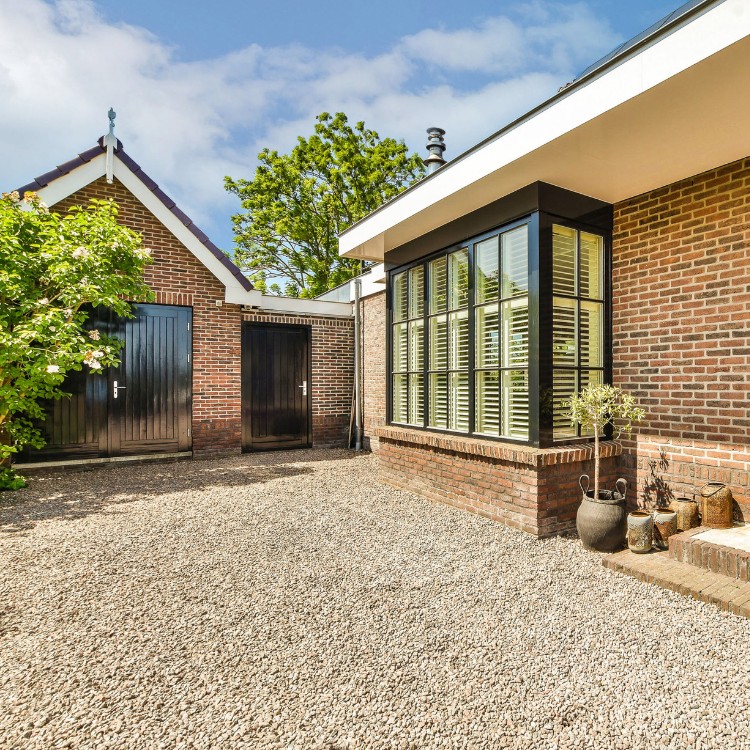
The first thing the real estate agent noticed wasn’t the fresh paint on the trim or the new landscaping beds. It was the driveway. A plain strip of cracked concrete ran from the street to the garage, instantly dulling the impression of an otherwise charming McKinney, TX home. A few months later, the same house hit the market again—but this time, a thoughtfully designed gravel driveway framed by clean concrete borders greeted visitors. The difference in curb appeal was dramatic. The home felt intentional, inviting, and upscale before anyone even reached the front door.
Gravel driveways have a reputation for being rustic and basic, but that’s only half the story. When matched with the right layout, edging, and materials, gravel can become a design feature that transforms the entire front of your property. From sleek, modern lines to relaxed, country-inspired entries, gravel is one of the most flexible driveway materials available—and when installed correctly by a professional like TopCore Concrete in McKinney, it can be both beautiful and durable.
If you’re tired of staring at a bland or crumbling driveway, rethinking your design with gravel opens up a world of options. Instead of treating the driveway as a purely functional strip of ground, you can approach it like an outdoor design element that sets the tone for your home. Let’s look at how gravel driveway designs can elevate curb appeal and what choices matter most when you live in a North Texas climate.
Why Gravel Works In McKinney
Before diving into patterns and aesthetics, it helps to understand why gravel is such a smart choice for driveways in McKinney, TX. Our region sees intense summer heat, occasional heavy storms, and clay-heavy soils that expand and contract with moisture. Solid slab driveways can crack and heave under these conditions, leaving unsightly lines and trip hazards that drag down curb appeal. Gravel, on the other hand, has built-in flexibility. It moves slightly with the ground instead of fighting it, which can mean fewer structural problems over time when installed over a proper base.
Another major advantage is drainage. North Texas storms can dump a lot of water in a short time. A well-designed gravel driveway allows water to permeate through the surface rather than pooling on top. This reduces the risk of standing water, erosion around the edges, and the muddy mess that can occur with poorly graded dirt or worn-out asphalt. When TopCore Concrete prepares the base and grades the driveway correctly, the gravel surface not only looks good but also manages stormwater in a way that protects your yard and foundation.
Cost is also a factor for many homeowners. Compared to decorative concrete or pavers, a gravel driveway can deliver a high-end look at a more approachable price point. That means you can allocate some of your budget to design upgrades like concrete borders, lighting, or extended parking areas without overspending. In McKinney’s growing neighborhoods, where style and value both matter, this balance of function, beauty, and cost makes gravel an especially appealing option.
Finally, gravel gives you creative freedom. Instead of being locked into one color and texture, you can choose from a range of stone sizes and hues, then pair them with different edging materials to achieve a look that matches your home’s architecture—whether it’s a brick traditional, a modern farmhouse, or a clean-lined contemporary design.
Choosing The Right Gravel
Not all gravel is created equal, especially for driveways. The stones you might see in a casual garden path are not necessarily the best choice for a surface that will support vehicles. To get both curb appeal and performance, you need the right combination of size, shape, and composition. In general, angular gravel locks together better than rounded river rock, creating a more stable surface that doesn’t shift as easily under tires.
For driveways in McKinney, many homeowners gravitate toward crushed limestone or decomposed granite. Crushed limestone offers a light, clean look that pairs nicely with brick and stone homes common in North Texas. It compacts well and reflects sunlight, which can help the driveway stay a bit cooler under the harsh summer sun. Decomposed granite, on the other hand, has a warm, earthy tone that works beautifully with modern farmhouse and rustic designs. Its fine texture creates a smoother, more refined surface that still drains effectively.
Color is another design tool. A bright white or light gray gravel can create a crisp, upscale look that makes landscaping and the home’s façade pop. Darker gravels, like charcoal or deep brown blends, can feel more grounded and contemporary, especially when contrasted against light-colored concrete borders or stucco. The key is to consider the color of your roof, siding, brick, and trim, then choose a gravel that complements rather than competes. TopCore Concrete often helps McKinney homeowners narrow down options by looking at sample stones on site, in natural light, against the existing exterior materials.
Stone size matters as well. A common choice is a 3/8″ to 3/4″ crushed stone, which is large enough to stay put but small enough to walk on comfortably. Oversized rock can be difficult to drive over and tends to scatter more, while very fine gravel may feel too loose without proper base preparation. The goal is a surface that feels stable underfoot, tracks minimally into the house, and looks consistent from the street.
Designing Shape, Flow, And Layout
Once you’ve chosen your gravel, the next step is to treat the driveway like a design element, not just a path for your car. The shape and layout of the drive have a huge impact on how your home presents itself from the curb. In many McKinney neighborhoods, lots are wide enough to allow for creative layouts beyond a simple straight strip. A curved driveway, for example, can soften the look of a boxy front yard, create a more gracious approach to the house, and offer better views of landscaping.
Circular and semi-circular driveways are another option that can dramatically upgrade curb appeal. A circular drive provides a sense of formality and convenience, letting guests pull in and out easily without backing into the street. When surfaced with gravel and framed by concrete or stone borders, a circular drive can look like something out of a custom estate, even on a modestly sized lot. TopCore Concrete can shape the base to create gentle, flowing curves that feel natural and intentional, rather than forced.
For narrower lots or homes set closer to the street, a widened parking pad or a side parking bay can be integrated into the gravel design. Instead of a basic two-tire-track driveway, you might create a wider fan-shaped area near the garage that allows for easier maneuvering and extra parking. Visually, this can help balance the home’s façade by giving the driveway a defined, well-proportioned footprint that doesn’t feel like an afterthought.
The transitions also matter. Where the driveway meets the street, you can create a defined apron with concrete or a different gravel blend to signal entry and reduce scattering. Near the garage, a concrete pad or apron paired with gravel leading up to it combines the clean look and stability of concrete at the threshold with the softer visual of gravel for the main run. This hybrid approach is popular in McKinney because it offers both practicality and style.
Elevating Edges, Borders, And Details
One of the easiest ways to make a gravel driveway look intentional and upscale is to pay attention to the edges. Without a defined border, gravel can slowly migrate into lawns or planting beds, making the driveway look messy. With proper edging, the surface stays contained and the driveway takes on a crisp, finished appearance. Concrete borders are particularly effective because they are durable, customizable, and visually clean. TopCore Concrete often pours continuous concrete curbs or bands along the sides of gravel drives to define the space and protect the edges.
These borders can be simple and straight, or they can be shaped with gentle curves that echo the driveway layout. You can choose a color and finish that coordinates with your home—plain gray for a subtle frame, or tinted concrete that echoes the tones of your brick or stone. For a more decorative look, stamped concrete borders can mimic the appearance of natural stone at a fraction of the cost, giving your gravel driveway a tailored, high-end look without losing the relaxed charm of gravel.
In addition to concrete, other materials like steel edging, brick, or natural stone can be combined with gravel for unique curb appeal. A low brick border, for example, can tie the driveway directly into a brick façade, creating a cohesive look from street to front door. Steel edging offers a minimalist, almost invisible line that holds the gravel in place while keeping the focus on the driveway’s shape and the surrounding landscaping. The choice depends on your aesthetic goals and maintenance preferences.
Don’t overlook small details like transitions to walkways and front entries. A gravel driveway that blends seamlessly into a concrete or paver walkway looks intentional and polished. Creating a defined threshold with a narrow band of concrete or stone where people step out of vehicles can keep shoes cleaner and reduce gravel tracking. These subtle touches signal craftsmanship and care—both of which contribute directly to curb appeal.
Lighting, Landscaping, And Finishing Touches
Once the gravel, borders, and layout are in place, the finishing touches are what turn a nice driveway into a standout feature. Lighting is one of the most impactful upgrades. Low-voltage path lights or in-ground fixtures along the edges of a gravel driveway not only improve safety at night but also highlight the texture of the gravel and the shape of the drive. The soft glow of lights washing over the stone can make your home look warm and welcoming from the street after dark.
Landscaping is another powerful partner to a gravel driveway. Because gravel has a natural, textural quality, it pairs beautifully with plantings. In McKinney’s climate, drought-tolerant grasses, native shrubs, and seasonal color beds can be arranged alongside the driveway to create a layered, attractive approach. Planting beds that follow the curves or angles of the driveway help integrate it into the yard, rather than having it feel like a separate, utilitarian strip. Mulch, stone, and edging can be coordinated with the driveway gravel for a unified look.
Trees and focal points also play a role. A circular gravel driveway with a central planting island—maybe a crepe myrtle, a sculptural tree, or a low-maintenance bed of ornamental grasses—can become a signature feature of the property. Even a straight driveway can benefit from a focal point at the end, such as a well-framed garage, a pergola, or a carefully positioned light fixture. The idea is to think of the driveway as part of the arrival experience, not just the road to the garage.
Finally, consider how the driveway connects with the practical aspects of your property, such as drainage and grading. Proper slope and base preparation, handled by professionals like TopCore Concrete, ensure that the beautiful design you see on day one continues to perform and look good for years. Integrating driveway work with broader site improvements like Foundation grading can protect both your curb appeal and your home’s structure.
Working With A Professional Installer
While gravel might seem like a simple material, designing and installing a driveway that truly elevates curb appeal is a detailed process. The base must be excavated and compacted correctly, the right gravel blend chosen, and the borders formed and poured with precision. In McKinney, TX, where soil movement and drainage are real concerns, professional installation by a company like TopCore Concrete can make the difference between a driveway that quickly ruts and washes out and one that stays attractive and functional.
A good installer will start with a conversation about how you use your property. Do you need extra parking for guests? Do you back a boat or trailer into the driveway? Are there existing drainage problems during heavy storms? These practical questions shape the layout, thickness of the base, and even the type of gravel used. From there, the focus shifts to aesthetics: how the driveway aligns with the house, where borders will go, what color and style best match your vision for curb appeal.
TopCore Concrete can also help you think long-term. Gravel driveways do require periodic maintenance—topping off low spots, re-compacting high-traffic areas, and occasionally refreshing the surface layer. By designing with maintenance in mind, your driveway can be easy to care for without losing its charm. That might mean choosing a gravel that compacts well but doesn’t turn to dust, or designing subtle swales and slopes that direct water away from vulnerable areas.
When installed thoughtfully, a gravel driveway becomes more than a place to park. It’s a defining feature of your property, setting the tone for every arrival and creating an impression that sticks with guests, neighbors, and potential buyers alike.
Frequently Asked Questions
Will a gravel driveway wash away in heavy McKinney storms? When a gravel driveway is installed over a properly graded and compacted base, with attention to drainage paths, it should not wash away under normal storm conditions. The key is directing water across and away from the surface rather than allowing it to channel through the gravel. Professional installers like TopCore Concrete design the sub-base and slope to prevent erosion, and may use different layers of stone to lock the surface in place. In extreme weather, minor redistribution of gravel can occur, but this is typically addressed with simple maintenance rather than major repairs.
How often does a gravel driveway need maintenance? Maintenance frequency depends on traffic levels, the type of gravel used, and how well the driveway was installed initially. Most McKinney homeowners find that a light refresh every 1–3 years keeps their driveway looking and performing its best. This might include adding a thin layer of new gravel, filling low spots, and re-compacting high-traffic areas. Regularly raking or smoothing tire ruts and keeping borders clear of encroaching grass also helps maintain a neat, high-appeal appearance.
Is gravel a good option if I plan to sell my home? A well-designed gravel driveway can absolutely boost resale value and marketability, especially when paired with clean concrete borders and attractive landscaping. Many buyers appreciate the character and warmth of a gravel drive, particularly in neighborhoods where every other home has the same plain concrete. The key is quality: a sloppy, uneven gravel driveway can hurt curb appeal, while a tailored, professionally installed one can set your property apart and create a memorable first impression.
Can gravel driveways work with modern or contemporary homes? Yes, gravel is not limited to rustic or country styles. By choosing a uniform, angular stone in a neutral tone—such as light gray, off-white, or deep charcoal—and pairing it with straight concrete borders, steel edging, and minimalist landscaping, you can achieve a very modern look. Clean lines, consistent texture, and thoughtful lighting help gravel feel intentional and contemporary. TopCore Concrete often uses hybrid designs that combine concrete aprons and crisp gravel sections to complement modern architecture in McKinney.
What’s the difference between a DIY gravel driveway and a professional installation? A DIY gravel driveway usually involves spreading stone over existing ground, which may not be properly graded, compacted, or stabilized. This often leads to ruts, puddles, and uneven surfaces that quickly detract from curb appeal. A professional installation includes excavation, base preparation, compaction, edge installation, and careful selection of gravel size and type. The result is a driveway that not only looks significantly better from the street but also functions reliably under everyday use, making it a smarter long-term investment.