
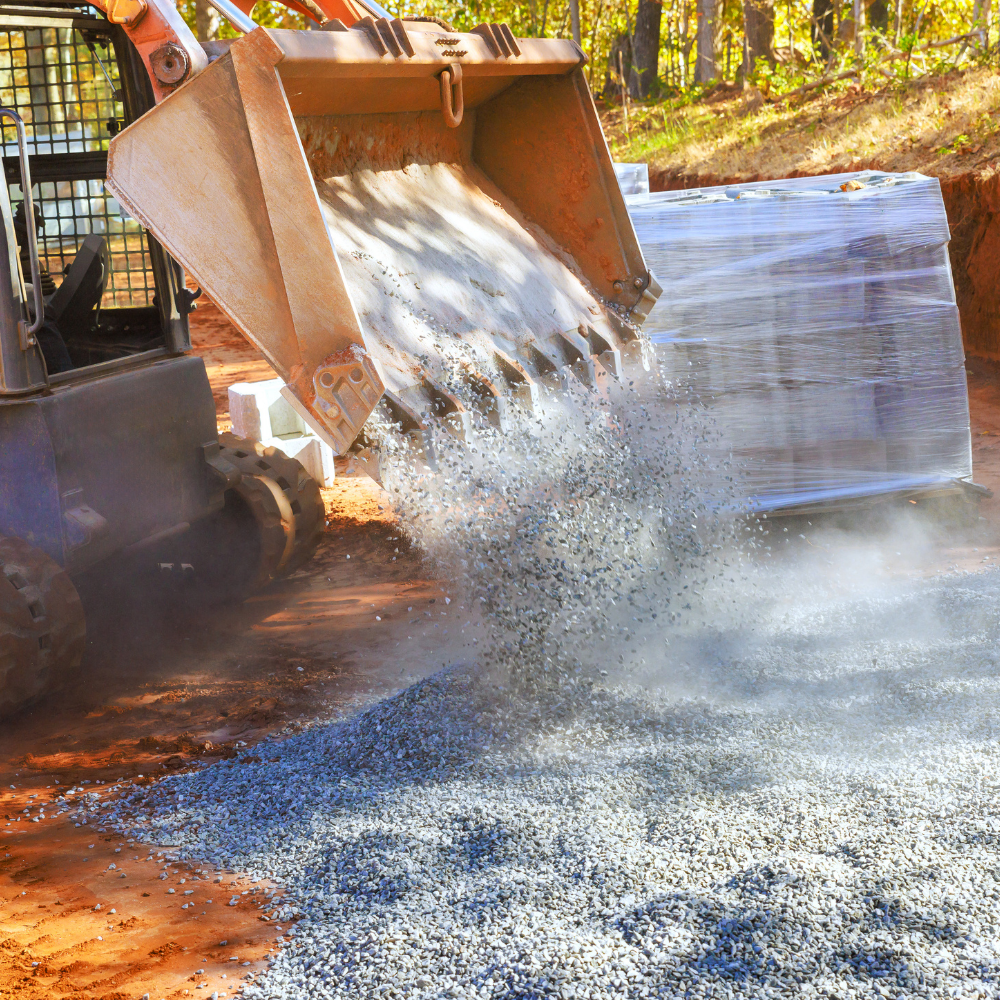
Most homeowners don’t actually misjudge gravel driveways on cost or appearance; they misjudge them on balance. People either romanticize gravel as the charming, rustic, low-maintenance solution that solves everything, or they dismiss it as noisy, dusty, and cheap-looking. The reality sits in the middle. Gravel can be an excellent driveway surface in North Texas, but only if you understand both the strengths and tradeoffs before you commit. Evaluating the pros and cons properly means looking beyond the first installation quote and thinking about how that surface will behave under Texas weather, regular traffic, and your specific property layout.
In McKinney, TX, where soil shifts, storms roll through in bursts, and temperatures swing from blazing hot to occasional freezes, gravel behaves differently than it does in milder climates. A gravel driveway that looks perfect the day it’s installed by a contractor like TopCore Concrete may evolve quickly once heavy rain, delivery trucks, and daily commuting take their toll. That evolution is not necessarily bad—gravel is meant to be adjusted, topped up, and shaped over time—but you need to walk into the decision knowing what kind of care it demands, what it saves you upfront, and where it may cost you later. This is where a clear, honest evaluation of pros and cons becomes more valuable than any single price quote.
Instead of asking, “Is a gravel driveway good or bad?” it’s more useful to ask, “Is gravel the right match for my property, my budget, and my tolerance for maintenance?” What works wonderfully on a large rural lot outside McKinney may drive a busy cul‑de‑sac homeowner crazy. Some people don’t mind re‑grading their driveway every year; others want a set‑it‑and‑forget‑it surface. By breaking down the advantages and disadvantages in detail, you can decide whether gravel is the smart, long‑term choice for your home—or whether you’d be better off with concrete or another hard surface.
Cost And Budget Realities
The first point in gravel’s favor is almost always cost. Compared to concrete or asphalt, gravel has a significantly lower upfront price per square foot. For homeowners in McKinney with long driveways, circular drives, or wide parking areas, that difference can be dramatic. You might be able to cover a large area in gravel for a fraction of what a poured concrete surface would cost. This makes gravel especially appealing if you’re developing a property in stages, managing a tight budget, or trying to get a functional driveway in place quickly without taking on financing.
However, low upfront cost does not mean “no cost” over the life of the driveway. Gravel shifts, migrates, and gets pushed into the soil. Over a few years, you may find yourself adding more material, paying for re‑grading, or renting equipment to smooth out ruts. These periodic expenses can be modest, but they add up. When TopCore Concrete walks homeowners in McKinney through driveway options, part of the conversation is always about total cost of ownership—what you pay today versus what you can expect to spend in five or ten years on upkeep, repairs, and potential upgrades.
Another budget factor many people overlook is the indirect cost of inconvenience. If your driveway washes out after a heavy storm and becomes difficult to drive on, you may have to address it immediately, even if it’s not in the budget that month. A concrete driveway, once properly installed, tends to have more predictable costs—occasional sealing or crack repair—while gravel costs can come in bursts after unusual weather or increased traffic. Gravel is still usually cheaper over the long term, but the spending pattern is less uniform and requires some flexibility.
Finally, you should consider how your driveway budget interacts with your overall property plans. If you are planning major landscaping, a future garage addition, or additional concrete flatwork like walkways or parking Lots, starting with gravel can be a smart interim solution. It allows you to keep access to the property without committing to a final layout. Once the rest of the site is finished, you can decide whether to keep the gravel, upgrade portions to concrete, or redesign the drive entirely. In that sense, gravel can be a budget‑friendly stepping stone in a larger property improvement plan.
Installation, Design, And Site Conditions
One of gravel’s big advantages is speed and flexibility of installation. A competent crew can prepare the subgrade, install edging if needed, and place and compact the gravel relatively quickly, often faster than it would take to form, pour, and cure a concrete driveway. For McKinney homeowners dealing with new construction or a major remodel, this speed can be crucial—especially if you need reliable access to the home during the project. Gravel doesn’t require curing time; once it’s spread and compacted, you can generally drive on it right away.
That speed, however, should not be confused with simplicity. A durable gravel driveway still relies on proper base preparation. The soil beneath the gravel needs to be graded for drainage, compacted, and sometimes reinforced with a base layer of larger stone or geotextile fabric to prevent blending of soil and gravel. In areas of North Texas with expansive clay, like parts of McKinney, a poorly prepared base can lead to soft spots, sinkage, and chronic rutting. TopCore Concrete and similar professional installers pay close attention to subgrade conditions because a gravel driveway is only as good as the foundation beneath it.
Design flexibility is another strong point in gravel’s column. Curved driveways, multiple parking bays, and split entrances are much easier to shape with gravel than with rigid concrete. You can adjust the layout slightly over time, widening a turn or adding a parking pad without the disruption of demolition. This is particularly useful on larger lots or semi‑rural properties around McKinney where the driveway may need to navigate trees, drainage channels, or sloped terrain. Gravel conforms to the landscape rather than forcing the landscape to conform to it.
Site conditions, though, can also expose gravel’s weaknesses. Steep slopes can be challenging because gravel tends to migrate downhill under braking and acceleration, no matter how well it’s compacted. Areas with poor drainage may cause gravel to sink and mix with mud, leading to messy, unstable surfaces. In some cases, installing French drains, culverts, or re‑grading adjacent soil is necessary to make a gravel driveway truly functional. That means your decision isn’t just “gravel or concrete”; it’s also “what does my site require to make gravel perform well?” A professional evaluation in McKinney’s specific soil and drainage context is invaluable here.
Everyday Use, Comfort, And Appearance
From day to day, a gravel driveway feels very different from concrete. The sound of tires on gravel can be reassuring to some homeowners; you hear when someone pulls in. Others find the crunch noisy or disruptive, especially late at night. Walking on gravel in dress shoes or with a stroller can be less pleasant than a smooth surface, and if you frequently work on your vehicles at home, a stable, flat concrete pad is often easier to manage. These comfort factors are small on paper but loom large in daily life.
Dust and loose stones are another part of the user experience. In dry North Texas summers, vehicle traffic on gravel can kick up dust, which may settle on cars, outdoor furniture, and landscaping near the driveway. At the same time, small stones can be tracked onto adjacent sidewalks, porches, or into the garage. Regular raking and occasional sweeping of transition areas can mitigate this, but if you want a pristine, low‑dust environment, gravel may require more effort than you expect. McKinney’s occasional windstorms can also move dust and fine gravel particles beyond the drive itself.
Visually, gravel can be attractive and versatile. There are different colors, stone sizes, and textures available, allowing you to complement your home’s exterior, from rustic farmhouse styles to more modern designs. A well‑edged gravel driveway with clean lines can look intentional and high‑end rather than “temporary.” However, that appearance depends heavily on maintenance. Over time, ruts, low spots, and scattered stones at the edges can make the driveway look neglected. Concrete, by contrast, tends to maintain a more uniform look with less frequent intervention once installed properly.
For homeowners concerned about curb appeal and resale value, the visual dimension matters. Some buyers in McKinney view a gravel driveway as a plus—especially on acreage or properties with a country feel. Others may perceive it as a cost they will eventually incur to upgrade to concrete. Working with a contractor like TopCore Concrete, you can design edging, entry aprons, and transitions that make gravel feel like a deliberate design choice rather than a budget compromise, improving both daily satisfaction and long‑term value.
Maintenance, Durability, And Weather
Maintenance is where many misconceptions about gravel driveways live. Gravel does not crack like concrete, and it is not as vulnerable to issues like surface spalling or joint failure. However, it does move. Over months and years, traffic patterns carve shallow channels where tires repeatedly pass. Rainwater follows those paths, deepening them and sometimes washing material away. Periodic re‑grading with a tractor or professional equipment is necessary to restore a smooth surface, especially on longer or heavily used driveways in McKinney.
Weather plays a major role in how often that maintenance is required. In North Texas, intense rainstorms can move large amounts of gravel in a single event, especially if the driveway slopes toward the street or a drainage area. Freeze‑thaw cycles, though less frequent than in colder climates, can still affect the subgrade and cause subtle shifting. On the positive side, gravel handles heat very well; it doesn’t soften like asphalt, and it reflects more sunlight than dark surfaces, which can help keep the immediate area around your driveway slightly cooler.
Durability for gravel is more about preserving function than preserving a particular exact surface. A well‑built gravel driveway can last for decades if it’s periodically refreshed and maintained. You’re not likely to “wear out” the driveway itself; you’re more likely to simply lose material over time and need to add more. By contrast, a concrete driveway installed by a company like TopCore Concrete is aiming for a long, stable lifespan with minimal change to its surface, but once it reaches the end of that lifespan or suffers major cracking, repairs are more involved and expensive than just adding another load of gravel.
Homeowners who enjoy a bit of hands‑on property care often find gravel maintenance manageable. Raking out small problem spots, filling low areas, and managing drainage can become part of seasonal yard work. Those who prefer not to think about their driveway at all may find the ongoing attention frustrating. Evaluating the pros and cons honestly means matching the maintenance profile of gravel with your personality, schedule, and willingness to either do the work yourself or budget for periodic professional service.
Safety, Practicalities, And Local Considerations
Safety is another angle that often gets overlooked in the gravel driveway debate. Traction on gravel can be good under many conditions, especially compared to smooth wet concrete. However, loose stones can also roll underfoot, creating a slip hazard for those with mobility issues, young children, or anyone carrying heavy items. Snow and ice, when they do occur in McKinney, can be trickier to manage on gravel because plow blades or shovels can dig into the surface and move the rock along with the snow. In practice, many North Texas homeowners simply rely on the sun to clear occasional winter events, but it’s worth considering how you’d handle a rare icy day.
Vehicle wear is another practical consideration. Gravel can occasionally chip paint on lower body panels or undercarriages, especially at higher speeds, and can be tough on bicycle tires or smaller wheeled equipment. If you frequently have delivery trucks, trailers, or work vehicles using the driveway, the gravel must be properly compacted and deep enough to support the loads. Otherwise, you may see ruts form more quickly. TopCore Concrete often discusses load expectations with homeowners around McKinney to determine whether gravel alone is sufficient or whether concrete aprons or pads should be integrated at high‑stress points like garage entries.
Local regulations and neighborhood expectations can influence your choice as well. Some HOAs in the McKinney area have guidelines on driveway materials, appearance, and edging. Before committing to gravel, it’s wise to confirm what is allowed and whether there are standards for thickness, containment, or transitions to sidewalks and streets. Even outside of HOA areas, proper containment—using edging, timbers, or curbing—helps keep gravel off public roads and neighboring properties, reducing both safety issues and potential complaints.
Finally, think about long‑term plans. If you anticipate converting a gravel driveway to concrete later, the groundwork you do now matters. A properly graded and compacted gravel base can become the foundation for a future concrete pour, potentially reducing later costs. Working with an experienced contractor like TopCore Concrete in McKinney allows you to plan in phases: start with a well‑engineered gravel drive that meets today’s budget and function, and design it so it can be upgraded smoothly when the time is right.
Frequently Asked Questions
Is a gravel driveway a good idea for McKinney’s climate? Generally, yes—gravel can perform well in McKinney’s hot summers and occasional storms if it is installed with proper grading and drainage. It doesn’t soften in heat like asphalt and is less affected by the limited freeze‑thaw cycles we see in North Texas. The key is managing runoff so heavy rains don’t wash out sections of the driveway. A well‑prepared base and appropriate gravel size help the surface stay stable despite the weather extremes.
How often will I need to add more gravel or re‑grade? The frequency depends on traffic, slope, and rainfall, but many homeowners find they need a light touch‑up every year or two and a more substantial refresh every few years. Driveways with many delivery trucks, trailers, or steep sections may need attention more frequently. In practice, minor ruts can often be addressed with simple raking, while larger issues may require equipment and a fresh layer of material. A contractor like TopCore Concrete can help you estimate a realistic maintenance schedule based on your specific property.
Can I park heavy vehicles or RVs on a gravel driveway? Yes, but the driveway must be designed for that load. This usually means a thicker base layer, proper compaction, and sometimes a larger stone layer beneath the surface gravel. If heavy vehicles are parked in the same spot repeatedly, you may also want to incorporate concrete pads or reinforced sections where the tires rest. Without that planning, heavy loads can cause deep ruts and soft spots, especially after rain, making the driveway uneven and harder to use.
Will a gravel driveway hurt my home’s resale value? It depends on the neighborhood and buyer expectations. In more rural or larger‑lot areas around McKinney, a well‑maintained gravel driveway is often seen as normal or even desirable, particularly for properties with long drives. In more suburban settings, some buyers may prefer concrete for its clean look and lower day‑to‑day maintenance. If resale is a major concern, focusing on neat edging, consistent grading, and an attractive gravel color can help present the driveway as a thoughtful design choice rather than a temporary solution.
How do I decide between gravel and concrete for my driveway? Start by clarifying your priorities: budget, maintenance tolerance, appearance, and long‑term plans. If you need to cover a large area affordably and don’t mind occasional maintenance, gravel can be an excellent fit. If you want a smooth, low‑maintenance surface that you rarely have to think about, concrete installed by a professional like TopCore Concrete may be worth the higher upfront cost. In many cases, a hybrid approach—gravel for longer runs and concrete at the garage, entry, or high‑stress points—offers a balanced solution tailored to both your property and your lifestyle.