
Patio installation is one of those projects that looks simple from the outside but reveals its true complexity once you start planning the details. Homeowners in McKinney, TX are discovering that a well-built patio is not just a slab of concrete; it is an outdoor room, an investment in property value, and a daily upgrade to how you relax, entertain, and live at home. Getting a “perfect finish” is not about a single final step with a trowel—it is the result of a series of well-planned, carefully executed stages that begin long before the concrete truck ever arrives.
Right now, as more people are spending time at home and looking for ways to extend their living space outdoors, the quality of patio installation matters more than ever. A rushed or poorly planned project can leave you with drainage issues, surface cracks, uneven slabs, and a patio that never quite feels “finished.” On the other hand, a patio installed with precision—like those done by TopCore Concrete in McKinney—can deliver a smooth, level, beautifully finished surface that stands up to Texas heat, shifting soils, and years of use. Understanding the steps involved is the key to making smart decisions, asking the right questions, and ending up with a space you actually love to use.
Whether you are imagining a simple concrete pad for a grill and a couple of chairs, or a large, decorative patio with room for dining, lounging, and a fire pit, the path to that finished space follows the same core stages. From site evaluation and subgrade preparation to reinforcement, concrete placement, finishing, and curing, each step builds on the last. Skipping or shortcutting any one of them is where problems begin. Let’s walk through those steps and look at what a careful, professional patio installation really involves—and how TopCore Concrete approaches each stage for McKinney homeowners who want a flawless result.
Planning And Design
A perfect patio finish starts at the planning table, not at the concrete mixer. The first decision is size and layout, which should be based on how you truly intend to use the space. Do you host large gatherings, or is it more of a quiet morning coffee spot? Will you add an outdoor kitchen, hot tub, or fireplace later? TopCore Concrete encourages McKinney homeowners to think ahead about furniture placement, traffic flow, and shade patterns throughout the day. This early conversation helps determine not just square footage, but also the shape and orientation of the patio.
Design also includes choosing the right elevation and tie-in points with your existing home and yard. The patio needs to sit at a height that works with door thresholds, step-downs, and landscaping. If this is overlooked, you can end up with awkward transitions or, worse, water flowing toward the home. A thoughtful design phase includes assessing existing slopes, potential low spots, and how rainwater currently moves across the property. From there, the planned patio can be integrated into that natural flow instead of fighting against it.
Another big design decision is surface appearance. Concrete patios today are far from plain gray slabs. You can choose from broom finishes, smooth troweled finishes, stamped patterns, exposed aggregate, or colored concrete. Each option has different traction levels, maintenance needs, and visual effects. For example, in the hot McKinney sun, lighter colors and certain textures can keep the surface cooler underfoot. TopCore Concrete often walks clients through sample photos and real-world examples so they can visualize the final look before any forms go in the ground.
Finally, the planning stage is where budget and scope are aligned. It is usually more cost-effective to build the patio to your ideal footprint from the start rather than adding awkward extensions later. By mapping out electrical conduit for future lighting, gas lines for a future grill, or footings for pergolas during the initial design, you avoid cutting into fresh concrete down the road. A clear, detailed plan becomes the roadmap for every step that follows, reducing surprises and ensuring the finished patio matches your expectations.
Site Evaluation And Preparation
Once the design is set, the real groundwork begins—literally. Site evaluation is where a professional installer like TopCore Concrete studies the existing soil, vegetation, and grades to understand what is happening beneath the surface. McKinney’s clay-heavy soils can expand and contract with moisture changes, so understanding soil behavior is critical to preventing future cracking or heaving. The installer will identify any soft spots, organic material, or debris that must be removed before the patio can be built.
Clearing and excavation follow the evaluation. Grass, roots, topsoil, and any old concrete or pavers in the way must be removed. The depth of excavation depends on the patio design and local conditions, but a common approach is to dig deep enough to allow for a compacted base layer plus the concrete thickness itself. This is where DIY projects often fall short; skimping on excavation can leave organic material under the slab that decomposes and creates voids, leading to settling and cracks over time.
After excavation, the subgrade is shaped to create a consistent, stable base. If needed, additional base material such as compacted gravel is added and mechanically compacted in layers. The goal is a firm, even surface that will support the concrete evenly across the entire patio. Proper compaction is one of the least glamorous but most important steps in patio installation. In McKinney’s climate, where temperature swings and occasional heavy rains are a reality, a well-compacted base helps the patio resist movement and maintain its finished appearance.
Site preparation also includes establishing the correct slope for drainage. A typical patio is sloped away from the home at about 1/8 to 1/4 inch per foot, directing water toward the yard or a designated drain. This slope is built into the subgrade and then mirrored in the concrete itself. TopCore Concrete carefully checks elevations with levels or lasers to make sure water will not pool on the surface or flow back toward the foundation. This attention to drainage at the preparation stage is essential for both the longevity of the patio and the protection of the home.
Forming, Reinforcement, And Layout
With the base prepared, the next step is building the forms that define the patio’s shape and edge lines. Forms are typically made from wood or specialized form materials and are staked securely into the ground. They must be straight, true to the design, and set at the correct height to achieve the desired thickness and slope. This is where the abstract design becomes physically visible in the yard, and any adjustments to curves, corners, or transitions can be fine-tuned before concrete is placed.
Reinforcement is then added to increase the patio’s strength and reduce the risk of cracking. Depending on the project, this may involve rebar laid in a grid pattern, welded wire mesh, or fiber reinforcement mixed directly into the concrete. In areas like McKinney, where soil movement and temperature changes are common, reinforcement is particularly important. TopCore Concrete evaluates the span, thickness, and expected load on the patio to choose the right reinforcement strategy. For larger patios or those supporting heavy features like hot tubs, more robust reinforcement may be needed.
Control joints are another critical part of layout. Concrete will crack; the goal is to control where it cracks. By planning and cutting control joints at specific intervals, the installer encourages the concrete to crack along those predetermined lines instead of randomly across the surface. Joints can be tooled into the surface while the concrete is still plastic or saw-cut shortly after hardening. Proper joint spacing is based on slab thickness and dimensions, and a professional installer understands how to balance structural needs with aesthetics so the joints blend into the overall design.
During this stage, any embedded features are also planned and placed. This might include sleeves for future utilities, anchor points for pergolas, or edge details for steps. Getting these details right before the pour prevents the need for invasive modifications later. A well-executed forming, reinforcement, and layout phase sets the stage for the actual concrete placement to go smoothly, making it easier to achieve that perfect finish homeowners in McKinney are looking for.
Concrete Placement And Finishing
When concrete day arrives, timing and coordination become everything. The mix design is chosen based on the patio’s needs, local weather, and desired finish. Factors like strength, workability, and set time all come into play. In the Texas heat, for example, TopCore Concrete may adjust mix components or schedule pours earlier in the day to avoid rapid drying and surface issues. Once the truck arrives, the crew works efficiently to place the concrete into the forms, spreading it evenly to avoid voids and ensuring it fully encapsulates the reinforcement.
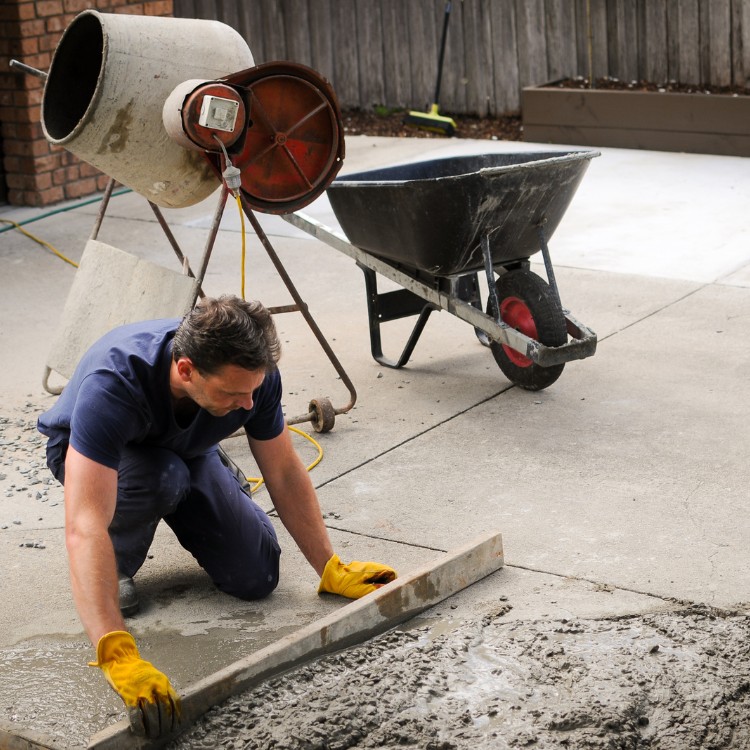
After placement, the concrete is screeded to establish the correct elevation and slope. This step levels the surface and removes excess material. Next, the surface is bull-floated to embed aggregate slightly below the surface and bring up a cream of cement paste, which is essential for later finishing. During these early stages, care is taken not to overwork the concrete, especially in hot or windy conditions, as this can cause surface weaknesses or scaling later on.
As the concrete begins to set, the finishing work becomes more detailed. Depending on the chosen look, the crew might apply a broom finish for slip resistance, steel trowel the surface for a smoother, more refined appearance, or begin the process of stamping patterns into the surface. Decorative finishes require precise timing; the concrete must be firm enough to hold the pattern but plastic enough to accept the impression. For colored concrete, integral color may be mixed into the batch, or color hardeners and release agents may be used during finishing to achieve specific tones and textures.
Edges and details are also refined during finishing. Edge tools create clean, rounded or beveled borders that resist chipping and give the patio a professional appearance. Control joints are installed or marked according to the layout plan. Throughout this stage, the crew monitors the surface for bleed water and environmental conditions. In McKinney, with its sun and wind, TopCore Concrete pays close attention to prevent premature drying, which can lead to surface cracking. The care taken during finishing is what most homeowners see and appreciate, but it only works properly because of all the earlier steps done correctly.
Curing, Sealing, And Long-Term Care
Many people think the job is done once the finishing tools are put away, but curing is one of the most important steps in achieving a strong, durable patio. Curing is the process of maintaining adequate moisture and temperature so the concrete can gain strength properly over time. Without proper curing, the surface can become weak, dusty, or prone to cracking. TopCore Concrete often uses curing compounds, water curing methods, or coverings, depending on the weather conditions in McKinney at the time of the pour.
The curing period typically lasts at least several days, with concrete continuing to gain strength over weeks. During this time, heavy traffic, furniture placement, or dragging items across the surface should be avoided. Homeowners are usually advised when it is safe to walk on, place furniture, or park vehicles on adjacent areas. This short window of patience pays off in the form of a patio that reaches its full designed strength and resists early damage.
Once curing is complete or well underway, sealing is often recommended, especially for decorative or colored patios. A quality concrete sealer helps repel water, resist stains, and protect against freeze-thaw cycles and UV exposure. In North Texas, where sun and occasional storms are the norm, a sealer can significantly extend the life and appearance of the patio. Different sealers provide different levels of gloss and color enhancement, so TopCore Concrete can match the sealer type to the homeowner’s aesthetic goals and maintenance preferences.
Long-term care is the final piece of achieving and maintaining a perfect finish. Regular cleaning to remove dirt, leaves, and stains helps keep the surface looking fresh. Resealing every few years, depending on wear, preserves protection. Avoiding harsh de-icing chemicals and using gentle cleaning methods will prevent unnecessary surface damage. By following simple maintenance guidelines, McKinney homeowners can enjoy their patios for many years, keeping that “just finished” look far longer than an unprotected, neglected slab.
Working With A Local Specialist
While it is possible to pour a small concrete pad as a DIY project, achieving a truly polished, long-lasting patio finish is where professional experience makes a visible difference. Local specialists like TopCore Concrete bring a deep understanding of McKinney’s soil conditions, weather patterns, and building practices. They know how local clay soils behave after heavy rain, how summer heat affects set times, and how to design drainage that works with North Texas storms, not against them.
Working with a professional also means access to a wider range of design options. From decorative finishes and custom shapes to integrated steps, retaining edges, and transitions to driveways or walkways, a skilled concrete team can turn a basic idea into a cohesive outdoor living area. Their familiarity with related services—such as driveways, walkways, and even a future Gravel Driveway—helps ensure that the patio fits into a broader plan for your property rather than feeling like an isolated add-on.
Communication is another major advantage. A good contractor will walk you through each step of the process, explain timelines, and set realistic expectations. They will discuss how weather might impact scheduling, when you can begin using your patio, and what maintenance will look like. TopCore Concrete’s approach in McKinney emphasizes this collaborative process so that homeowners are not left guessing what is happening in their own backyard.
Ultimately, a perfect patio finish is the result of dozens of small, correct decisions made throughout the project. From soil compaction and reinforcement spacing to the angle of a broom finish or the timing of a sealer application, expertise shows up in the details. Partnering with a local, experienced concrete company turns those details into a finished patio that looks great on day one and continues to perform year after year.
Frequently Asked Questions
How thick should a concrete patio be for long-term durability? For most residential patios in McKinney, a thickness of 4 inches is common and usually sufficient for standard use like foot traffic and typical outdoor furniture. However, if you plan to place heavier loads, such as a hot tub, outdoor kitchen with masonry components, or large stone features, increasing thickness to 5 or 6 inches and adding more robust reinforcement is wise. TopCore Concrete evaluates the intended use of your patio and recommends the appropriate thickness and reinforcement to avoid premature cracking or settling.
How long does a patio installation typically take from start to finish? The overall timeline depends on the size and complexity of the project, as well as weather conditions. Many standard patios can be formed, poured, and initially finished within a few days of on-site work. However, you should also account for planning, permitting if required, and curing time. In general, expect one to two weeks from the start of site preparation to the point where you can comfortably use the patio for normal activities, with full strength continuing to develop over several weeks. TopCore Concrete will provide a more precise schedule based on your specific design and the time of year in McKinney.
Will my new patio crack, and can anything be done to prevent it? All concrete has the potential to crack over time due to shrinkage, temperature changes, and soil movement. The goal is to minimize cracking and control where it occurs. Proper base preparation, reinforcement, and control joint placement greatly reduce random cracking. TopCore Concrete designs patios with joints at calculated intervals and uses reinforcement strategies suited to local soil conditions. While hairline cracks can still occur and are often only cosmetic, these preventive measures keep them small, controlled, and usually unnoticeable in everyday use.
How soon can I place furniture or grills on my new patio? Light foot traffic is often acceptable within 24 to 48 hours after the pour, depending on weather conditions. However, placing heavy furniture, grills, or planters should typically wait at least 7 days, and sometimes longer, to allow the concrete to gain sufficient strength. Very heavy items like hot tubs may require an even longer wait and special design considerations from the start. TopCore Concrete will give you specific guidance tailored to your project and the conditions at the time of installation in McKinney.
Do I really need to seal my patio, and how often? While sealing is not strictly mandatory, it is highly recommended if you want to protect your investment and maintain a clean, attractive surface. A good sealer helps prevent water penetration, staining from spills or leaves, and damage from UV exposure. In North Texas, many homeowners choose to seal their patios shortly after curing is complete and then reapply every 2 to 4 years, depending on wear, sun exposure, and the type of sealer used. TopCore Concrete can suggest the best sealer for your finish and provide a maintenance schedule that keeps your patio looking its best.