
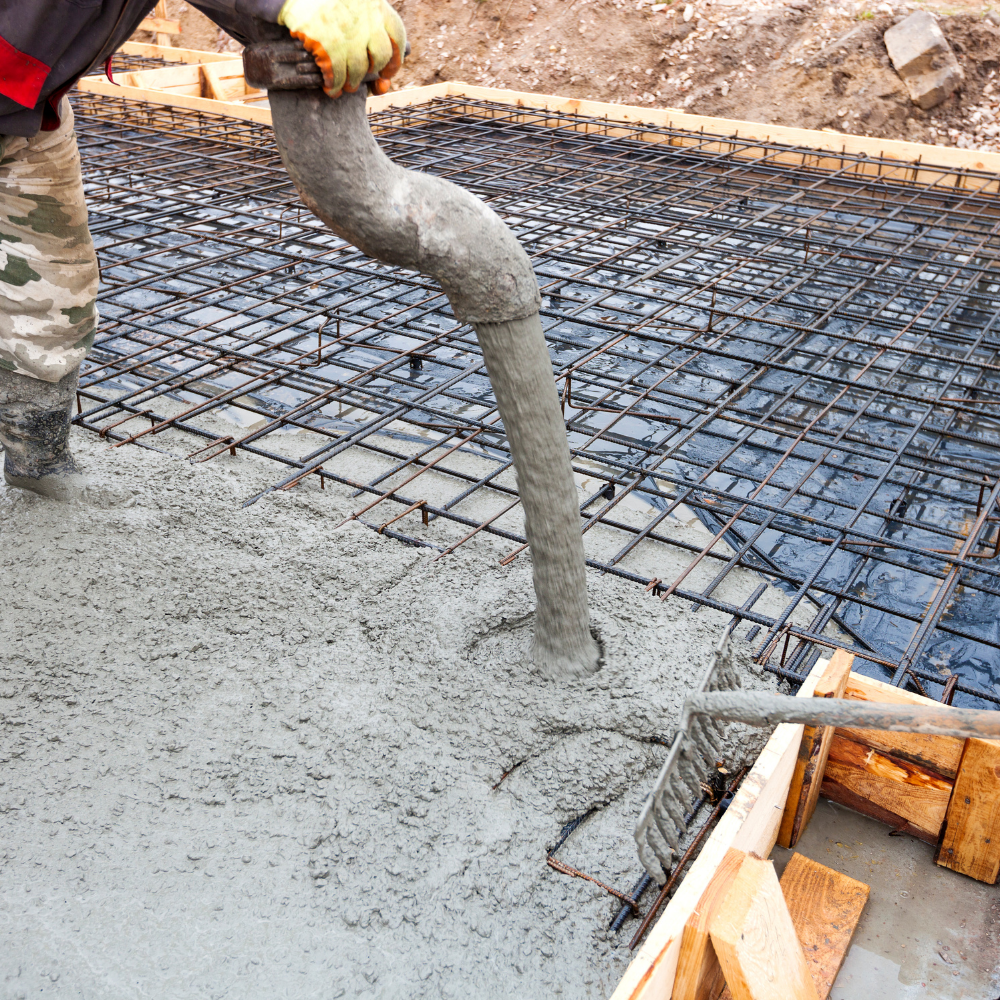
The first time a homeowner in McKinney, TX stands on the freshly poured surface of a new slab foundation, there’s often a moment of quiet relief. The noise of the concrete trucks has faded, the forms are still in place, and for the first time, the outline of the future home feels real and solid underfoot. That single, continuous plane of concrete doesn’t just mark the footprint of a house; it represents the structural backbone that will carry every wall, every cabinet, and every memory for decades to come.
Slab foundations are deceptively simple at a glance. You see a flat concrete surface and might assume it’s just a big, heavy pad. In reality, a well-designed slab foundation is a carefully engineered system that responds to soil conditions, moisture patterns, and local building practices. In growing North Texas communities like McKinney, where expansive clay soils and rapid development are the norm, choosing the right foundation type is one of the most important decisions a homeowner or builder can make. Slab foundations have become a solid, dependable choice here—not just because they are common, but because they are specifically suited to the region when installed correctly.
TopCore Concrete works with these realities every day in McKinney and surrounding areas. The company’s crews don’t simply pour concrete; they help shape foundations that must perform under intense summer heat, shifting soils, and the weight of modern construction. To understand why slab foundations are often the preferred solution, it’s worth exploring what they are, how they work, and what makes them such a strong option for homes and small commercial projects in this part of Texas.
What A Slab Foundation Is
At its core, a slab foundation is a single, thick layer of concrete poured directly on prepared soil or on a compacted gravel base. There is no crawlspace beneath and no basement below; the structure rests on this monolithic slab. Typically, the slab is thickened at the edges, creating what is often called a turned-down footing that helps transfer the building’s load into the soil more efficiently. Within that concrete, steel reinforcing bars (rebar) or post-tensioned cables are strategically placed to resist cracking and movement.
Before any concrete is poured, a significant amount of preparation happens. The soil is graded, compacted, and often treated with a layer of gravel to promote drainage. In many North Texas slab designs, a moisture barrier or vapor retarder is installed to reduce the movement of water vapor from the ground into the structure. Plumbing lines, electrical conduits, and other utilities are laid out within this footprint so that once the slab cures, the home’s systems can connect seamlessly to the foundation.
There are also variations in slab design. Some slabs are purely monolithic, meaning the entire slab and thickened edges are poured at once. Others may use grade beams or incorporate post-tensioning cables that are stressed after the concrete cures to create a tighter, more resilient structure. In McKinney, where soil movement is a constant challenge, TopCore Concrete often works with engineered designs that account for local conditions, ensuring that the slab is not just a flat surface, but a tailored structural solution.
Why Slabs Fit North Texas
The soils in and around McKinney, TX are notorious for their expansive clay content. These clays swell when they absorb moisture and shrink when they dry out, causing the ground to move seasonally and sometimes dramatically. This natural phenomenon can be hard on any foundation, but slab foundations, when properly engineered, are designed to distribute loads broadly and resist differential movement across the footprint of a building.
Because slab foundations are wide and continuous, they can accommodate some degree of soil shifting without catastrophic failure. The key is design and preparation: adequate site grading to move water away from the foundation, appropriate thickness and reinforcement, and correct placement of control joints or post-tension cables. A well-built slab can respond to minor soil changes by flexing slightly rather than cracking severely or settling unevenly.
Another reason slabs are so prevalent in North Texas is climate. Winters are relatively mild, so there is less concern about frost heave compared with colder regions where deep footings and basements are more common. Without the need to dig deep below frost lines, slab-on-grade construction becomes a cost-effective and practical choice. TopCore Concrete leverages this climate advantage by focusing on slab systems that address moisture and soil issues, rather than cold-weather concerns that drive foundation design in other regions.
Advantages For Homeowners
For homeowners in McKinney, slab foundations carry several practical benefits that go beyond structural performance. One of the biggest advantages is cost efficiency. Compared with full basements or complex pier-and-beam systems, slab foundations typically require less excavation, less formwork, and fewer materials. That can translate into lower upfront construction costs, which is particularly appealing in rapidly growing neighborhoods where every dollar counts.
Slab foundations also allow for faster construction timelines. Because there is no crawlspace or basement to build out, crews can prepare the site, set forms, place reinforcement, and pour the slab in a relatively short period. Once the concrete has cured to appropriate strength, framing can begin. This efficiency helps builders stay on schedule and allows homeowners to move into their homes sooner, a big advantage in competitive markets like McKinney.
Another advantage is the simplicity of living on a slab. There is no crawlspace for pests to inhabit, fewer concerns about moisture condensing under the house, and no need to access dark, tight spaces for basic maintenance. Finished floors can be installed directly over the slab, creating a solid, stable feel underfoot. Some homeowners even choose polished or stained concrete as their finished floor, turning the slab itself into a design feature rather than just a hidden structural component.
Key Considerations And Trade-Offs
Despite their many benefits, slab foundations are not perfect for every situation, and understanding the trade-offs is important. One consideration is access to plumbing and utilities. Because many of these systems are embedded within or beneath the slab, repairs can be more complex if a leak or failure occurs. Instead of simply crawling under the house, contractors may need to cut through the concrete to reach certain lines, which requires careful diagnosis and skilled repair.
Comfort is another factor. Homes on slab foundations can sometimes feel cooler underfoot, especially in winter, because of the direct contact between the concrete and the ground. This can be mitigated with proper insulation, flooring choices, and sometimes radiant heating systems, but it is a consideration during design. In North Texas, where summers are hot and long, the thermal mass of a slab can actually help stabilize indoor temperatures, but the seasonal comfort balance should still be addressed.
Drainage and moisture management also demand attention. If the ground around a slab is not graded to move water away properly, or if gutters and downspouts are neglected, water can collect around the foundation and potentially lead to movement or moisture intrusion. TopCore Concrete emphasizes site preparation and homeowner education, reminding clients in McKinney that a good slab is only as effective as the drainage and landscape maintenance that support it over time.
How TopCore Concrete Builds Better Slabs
Not all slab foundations are created equal. The quality of the final product depends on design, materials, workmanship, and timing. TopCore Concrete approaches slab projects in McKinney with a process that starts long before the first truck arrives. The team evaluates soil reports when available, reviews building plans, and coordinates with builders and engineers to ensure that the slab design aligns with the structure’s load paths and the site’s characteristics.
On site, meticulous preparation is the rule. Proper compaction of the subgrade, accurate placement of formwork, and careful installation of reinforcement all play critical roles in the slab’s performance. Attention is also paid to details like vapor barriers, control joints, and edge thickening. These may seem like small steps, but collectively they determine how well the slab resists cracking, moisture intrusion, and long-term movement.
Timing and curing are equally important. Pouring concrete in North Texas heat requires knowledge of mix design, placement techniques, and curing practices that prevent rapid drying and surface cracking. TopCore Concrete uses proven methods to protect fresh concrete, such as appropriate curing compounds or moisture-retention strategies, so that the slab gains strength evenly and predictably. The result is a foundation that is not just functional on day one, but durable for years to come.
Slabs Beyond The House
When people hear “slab foundation,” they often think only of the primary structure of a home. In reality, slab construction extends to many other parts of a property, from garages and workshops to patios and outdoor living areas. In a community like McKinney, where outdoor spaces are heavily used for much of the year, well-built concrete slabs can transform backyards into functional extensions of the home.
Flatwork for driveways, walkways, and patios follows many of the same principles as structural slab foundations: proper subgrade preparation, drainage planning, and reinforcement where needed. TopCore Concrete brings the same level of care to these projects, ensuring that surfaces stay level, resist cracking, and integrate smoothly with the main structure. A poorly planned patio slab, for example, can cause water to flow toward the house rather than away from it, which is why professional layout and slope design matter.
For homeowners considering upgrades like covered patios, outdoor kitchens, or additional detached structures, consulting with a concrete specialist early is wise. The slab thickness, reinforcement, and layout should anticipate the loads and uses that space will see in the future. Whether it is a structural foundation or a beautifully finished outdoor surface such as a new Patio Installation, the underlying concrete work remains fundamental to long-term performance and satisfaction.
Frequently Asked Questions
Are slab foundations durable enough for McKinney’s expansive soils? Yes, when they are properly designed and installed, slab foundations perform very well on expansive soils like those found in McKinney. Engineers account for soil characteristics by specifying slab thickness, reinforcement, and sometimes post-tensioning to help the slab act as a unified system. TopCore Concrete follows these engineered plans and focuses on site preparation and drainage, which are critical to minimizing movement caused by soil swelling and shrinking.
Will my home be colder on a slab foundation? Homes on slab foundations can feel cooler at floor level, especially during the colder months, because concrete conducts heat more readily than a raised wood floor. However, this effect can be reduced with appropriate flooring materials, area rugs, and in some cases insulation or radiant heating systems. In the hot McKinney summers, the thermal mass of a slab can actually help moderate interior temperatures, making the home feel more stable and comfortable overall.
What happens if plumbing under the slab leaks? If a plumbing line embedded in or under the slab develops a leak, professional diagnosis is essential. Specialists can use listening devices, pressure tests, and sometimes cameras to pinpoint the issue. Repairs may involve tunneling under the slab or selectively cutting and patching the concrete from above. While this can be more involved than accessing pipes in a crawlspace, experienced contractors manage these repairs routinely, and proper slab design helps limit the need for such interventions in the first place.
How long does it take to install a slab foundation? The timeline varies with project size and weather, but generally, the process from site preparation to a cured, ready-for-framing slab can range from several days to a couple of weeks. Preparation includes grading, compaction, formwork, reinforcement, and utilities. The concrete pour itself usually happens in a single day, followed by curing time to allow the slab to reach the strength required for building. TopCore Concrete works closely with builders in McKinney to schedule each step efficiently while still allowing the slab to cure properly.
Can slab foundations be repaired if they crack or settle? Yes, most issues with slab foundations can be addressed with appropriate repair methods. Hairline surface cracks are often cosmetic and can be controlled with proper maintenance and joint placement. More significant movement may be corrected using underpinning systems, piers, or slab leveling techniques such as mudjacking or polyurethane injection. The best approach is to have a qualified foundation specialist evaluate any concerns early so that minor issues do not become larger structural problems over time.