
In North Texas, a single inch of rain falling on a 2,000-square-foot roof can produce more than 1,200 gallons of water rushing toward the ground around your home. If that water isn’t guided away properly, it doesn’t just make muddy spots in the yard – it can slowly erode the soil, undermine your foundation, and trigger expensive structural repairs. Foundation grading is the quiet, often overlooked system that decides whether that water becomes a problem or passes safely by.
Many homeowners in McKinney, TX think of drainage as something you fix with gutters, French drains, or a few extra downspout extensions. Those are helpful tools, but they’re only part of the story. The shape and slope of the soil around your foundation – the grading – is the base layer of protection that determines how water behaves every time it rains. When the grade is wrong, even the best drainage products struggle to keep up. When the grade is right, your whole property works with gravity to guard your slab or pier-and-beam foundation.
Understanding foundation grading for better drainage isn’t just about meeting code or passing an inspection. It’s about learning how soil, water, concrete, and landscaping interact over time. For a company like TopCore Concrete, serving homeowners and builders across McKinney, TX, grading is as fundamental as the concrete itself. Done correctly, it extends the life of your foundation, reduces movement in our expansive clay soils, and keeps patios, driveways, and walkways from cracking or settling prematurely.
Why Grading Matters
At its core, grading is simply the intentional shaping of the ground so water flows where you want it to go. Around a home, that usually means gently sloping the soil away from the foundation on all sides. Even a subtle slope – often 5% or so (about 6 inches of drop over the first 10 feet) – can make a dramatic difference in how water behaves. Without that slope, rain can sit against the foundation, soak into the soil, and create the conditions that lead to movement and cracking.
In McKinney, the native clay soils expand when wet and shrink when dry. This constant expansion and contraction creates powerful forces against your concrete slab or grade beams. Poor grading magnifies this movement by allowing water to pond and over-saturate specific areas. Instead of uniform soil moisture, you get wet spots and dry spots, each pushing and pulling differently on your foundation. Over time, that uneven pressure shows up as cracks in brick, sticky doors, and sloping floors.
Good grading also protects more than just the main foundation. Patios, walkways, driveways, and outdoor living areas depend on stable, well-drained subgrade to stay level and crack-free. When TopCore Concrete installs or repairs concrete surfaces in McKinney, TX, the crew looks beyond the slab itself. They evaluate how the surrounding yard slopes, where water is likely to run, and whether the adjacent soil will help or hurt long-term performance. A beautifully finished slab poured on poorly graded soil is a short-term solution at best.
Key Principles Of Proper Slope
To understand what “good grading” really means, it helps to break it down into simple principles. The first is direction: water must always be encouraged to move away from the foundation, not toward it. That usually means the highest point of the yard should be near the home, with a gradual, continuous slope outward. Any low spots or “bowls” near the foundation are red flags because they collect water instead of moving it along.
The second principle is consistency. A yard can’t be graded correctly in one small area while ignoring the rest. The slope needs to be continuous enough that water doesn’t dead-end in the middle of the lawn. In practical terms, this often involves tying the grading around the house into a broader drainage pattern that leads to the street, a swale, or a designated drainage easement. TopCore Concrete frequently works with homeowners in McKinney to adjust grades not just beside the house, but across the entire functional yard space.
The third principle is compatibility with existing features. Gutters, downspouts, AC pads, walkways, and patios all influence how water moves. The grade must work with these features, not against them. For example, downspouts should discharge onto soil that already slopes away, or into extensions that carry water to a lower area. If a concrete patio is flat or slightly back-pitched toward the house, the surrounding soil must be shaped carefully so that surface water doesn’t run toward the foundation. Every element needs to cooperate with the others.
How Poor Grading Damages Foundations
When grading fails, the results are often subtle at first. You might notice a damp strip of soil along the slab after rain, or a small puddle that lingers for a day or two near the side of the house. Over time, these small signals add up to bigger problems. Water that sits against the foundation wall or slab edge softens the soil and increases hydrostatic pressure – the sideways force of water pushing against concrete. This can lead to small shifts that eventually become visible damage.
In McKinney’s expansive clay, persistent moisture near one part of the foundation causes that area of soil to swell more than the drier sections. The result is differential movement – some parts of the foundation rise or stay stable while others sink or heave. This is why homeowners often see diagonal cracks in drywall, separations at window corners, or gaps between baseboards and floors. These are not just cosmetic flaws; they are signs that the underlying support is moving.
Poor grading also contributes to erosion around the foundation. When water flows too quickly in a concentrated path, it strips away soil along the route. Over time, this can expose portions of the footing, undercut sidewalks, and create voids beneath concrete slabs. TopCore Concrete often encounters these issues when called out to assess cracked or sunken patios and driveways in McKinney, TX. The visible damage is in the concrete, but the root cause is often long-term erosion from uncontrolled runoff.
Evaluating Your Home’s Grading
Homeowners don’t need special equipment to get a basic sense of whether their grading is working. One simple test is to walk around the house during or immediately after a moderate rain. Look for spots where water is standing within a few feet of the foundation, or where you can see a visible path of runoff cutting through the soil. Any location where water lingers longer than the rest of the yard deserves attention.
On dry days, you can also inspect the soil line against the foundation. The soil should gently slope away from the slab or stem wall for at least several feet. If you see areas where the soil is level or, worse, sloping back toward the house, that is a concern. In some cases, landscaping beds, edging stones, or improperly placed mulch can trap water against the foundation even if the original grade was correct. Adjusting these features to allow water to escape is an important part of an evaluation.
For a more precise assessment, professionals like TopCore Concrete use levels, lasers, and experience to measure slope and identify problem areas. This is especially valuable when planning new concrete work such as driveways, walkways, or a new outdoor slab. By examining the existing grading and the behavior of water on the property, they can design surfaces and surrounding slopes that work together. In McKinney, where sudden downpours are common, this kind of planning makes the difference between a project that looks good on day one and one that still performs well a decade later.
Improving Grading Around Your Foundation
Correcting grading problems can range from simple DIY fixes to more involved regrading projects. In mild cases, adding soil to build up low spots near the foundation and shaping it to create the proper slope is often enough. The key is to use quality fill material that compacts well, and to avoid covering any siding or brick above the original grade line. Soil should never be piled so high that it traps moisture against wood or finishes that were not meant to be buried.
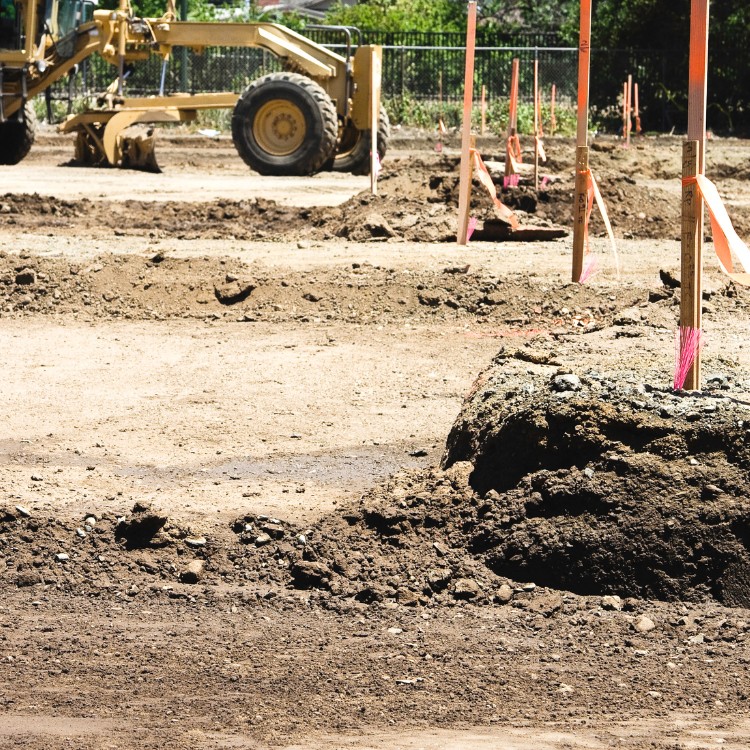
For more significant issues, especially where water is pooling in multiple locations or flowing directly toward the house, broader regrading may be needed. This can involve removing and redistributing soil, creating shallow swales to guide water, and tying in downspouts or surface drains to safer discharge points. When concrete is already in place, such as an existing patio or driveway, TopCore Concrete may recommend adjustments to adjacent soil heights, adding trench drains, or in some cases replacing sections of concrete that were poured with the wrong pitch.
It’s also important to coordinate grading improvements with landscaping goals. Plants, trees, and beds can either help stabilize soil and absorb water or make drainage worse if they obstruct flow. In McKinney, where homeowners often invest heavily in outdoor spaces, integrating grading with landscape design is critical. Decorative borders should include openings that let water escape, and new plantings should not create unintended dams against the foundation. A well-graded yard doesn’t have to look like a construction site; it can be attractive, functional, and protective at the same time.
Grading, Concrete Work, And Outdoor Projects
Any time new concrete is added to a property, grading should be part of the conversation. A new driveway that sends water rushing toward the garage, or a backyard slab that channels runoff against the back wall, can undo an otherwise solid drainage plan. TopCore Concrete integrates grading into the design and installation of concrete surfaces throughout McKinney, TX, making sure each project improves, rather than harms, the overall water management on site.
For example, when installing a patio, the slab is typically pitched slightly away from the house so that water runs off in the desired direction. But that is only half the equation. The soil beyond the edge of the slab must also be shaped to receive that water and carry it farther away. If the yard beyond the patio is a low spot, water will still collect near the home, just a few feet farther out. Proper grading ensures that the entire system – slab plus soil – works together.
Homeowners considering upgrades like a new driveway, walkway, or Patio Installation should view grading as a built-in part of the project budget, not an optional add-on. Addressing drainage at the same time as concrete work is more efficient and far less disruptive than trying to correct problems after cracking or settlement appears. In a climate like McKinney’s, where heavy rainfall and intense summer heat both stress concrete, a solid grading plan is one of the best long-term investments you can make.
Frequently Asked Questions
How much slope should I have away from my foundation? In most residential situations, a slope of about 5% for the first 5 to 10 feet away from the foundation is recommended. That translates to roughly 3 to 6 inches of drop over that distance. The exact numbers can vary based on local codes and site conditions, but the principle is the same: water should not sit against the house. In McKinney, TX, where clay soils are sensitive to moisture, maintaining this slope is especially important to reduce foundation movement.
Can I fix minor grading issues myself? Yes, small low spots or gentle back-slopes near the foundation can often be corrected by adding and shaping soil. Use a compactable topsoil or fill, and make sure you maintain clearance between the soil and any siding or brick ledge. Rake the soil to create a smooth, even slope away from the house, then water lightly to help it settle and compact. For larger issues, or if water is entering the home or causing visible foundation damage, it is wise to consult a professional like TopCore Concrete for a more comprehensive solution.
Do I still need grading if I have gutters and drains? Absolutely. Gutters and drains are supplemental systems that work best when the grading is already doing its job. Gutters help capture roof runoff and deliver it to specific locations, but if those locations are flat or sloped back toward the house, the water will still cause problems. Proper grading ensures that water leaving downspouts or surface drains continues moving away from the foundation instead of pooling nearby.
How often should grading be checked around my home? It is a good idea to visually inspect your grading at least once a year, and after any major landscaping or construction project. Over time, soil can settle, roots can lift areas, and new features can disrupt original slopes. In McKinney, where heavy rains can reshape the yard in a single storm, periodic checks help you catch issues early. If you notice new standing water, erosion channels, or exposed concrete at the base of your foundation, it is time for a closer look.
When should I call a professional about grading and drainage? You should contact a professional if you see recurring standing water near your foundation, visible erosion, cracks forming or widening in your concrete, or signs of foundation movement such as sticking doors and windows. When planning new concrete work, it is also smart to involve a contractor experienced in grading, like TopCore Concrete in McKinney, TX, from the very beginning. Addressing grading and drainage as part of the design process will protect your investment and help keep your foundation stable for years to come.