
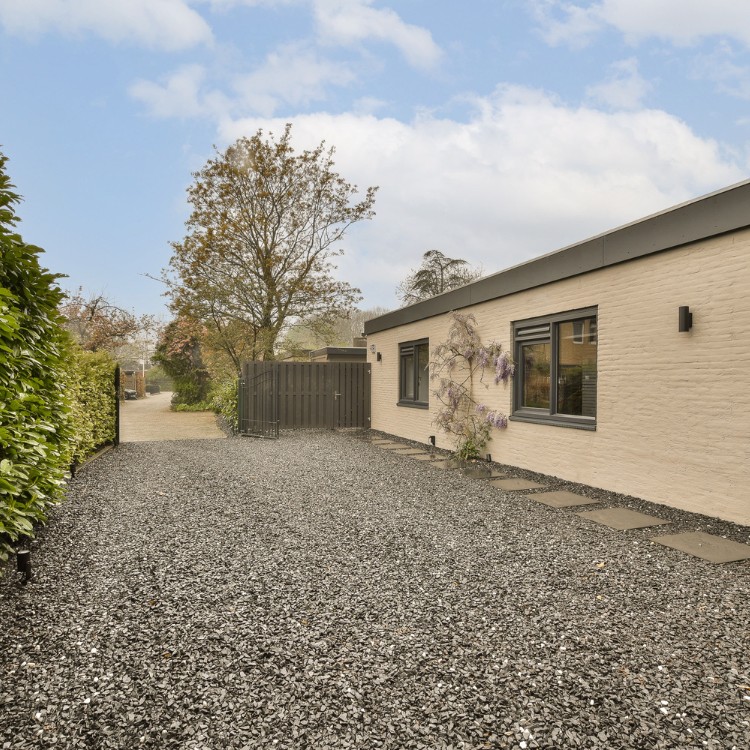
Gravel Driveway Layouts Supported by Strong Concrete
If your driveway keeps rutting, pumping fines into the yard, or looks uneven after storms, the layout is often the missing piece. This guide walks you through driveway geometry, drainage choices, and how strong concrete elements can support a long-lasting gravel driveway in McKinney, TX.
After a heavy rain, you notice dark streaks where water runs across the gravel, and the wheel paths look softer than the rest of the driveway. A week later, the surface looks “okay,” but the edges start to crumble and spread toward the lawn.
You’re not imagining it. Gravel driveways are sensitive to slope, layout, and how water leaves the site. Add vehicles, turn angles, and seasonal soil movement around McKinney, TX, and small planning gaps can become big maintenance problems.
This guide helps you understand what to check before you build or upgrade, which layout features matter most, and where concrete foundations, slab installation details, and flatwork like driveways and curbs can support a stable gravel surface.
Quick Answer
A strong gravel driveway layout depends on controlling water and supporting the stress points. Start by planning the route so vehicles do not “cut corners” onto soft shoulders, then design drainage so runoff does not flow through the gravel. In many McKinney, TX driveways, concrete curb installation and concrete flatwork at key transitions (like the apron or edge control) help keep gravel contained and reduce edge breakdown. Before you commit, ask a concrete service team to review site preparation, grading, and any existing settlement issues.
What to Check First
Before you pick gravel depth or the look of the driveway, check the site conditions that control long-term performance. These items usually determine whether the layout will stay stable through wet seasons and repeated vehicle traffic.
1) Water path and low spots
Walk the driveway after rain. If water concentrates in wheel tracks or runs toward the garage door, the layout needs drainage and grading adjustments, not just more gravel.
2) Edge containment
Loose edges lead to gravel migration. Edge control features like concrete curb installation or a supported border can keep material where it belongs.
3) Turn radius and vehicle behavior
Where tires cut across corners, the gravel gets churned. Layout geometry should match how you drive, not just how the property line looks on paper.
If you’re also dealing with settling, uneven surfaces, or foundation concerns, it helps to understand how other concrete systems interact with the driveway area. For related work that may affect site grading, see foundation grading.
Professional observation: In driveway projects, the surface “problem” is often a drainage and layout problem. When water is guided correctly and the edges are supported, gravel typically performs better with less reshaping over time.
Main Things Customers Should Understand
“Gravel driveway layout” is more than choosing a path. It’s about engineering the route so the driveway takes load evenly, water exits the right way, and transitions are stable. Here are the key decisions homeowners and property managers usually need to make.
Driveway geometry: keep wheels on the strong zone
Plan the line so tires stay within the reinforced area. Sharp turns, narrow entrances, or steep offsets often cause vehicles to ride the shoulder. That churn weakens the edge and creates ruts that deepen after each wet cycle.
Slope and drainage: design for how water actually moves
Even a well-built gravel base can fail if runoff flows through it. A practical layout includes:
- Consistent pitch away from structures and toward approved discharge points.
- Clear direction for surface water during storms.
- Prevention of concentrated “channels” that carve through gravel.
Concrete support at transitions: where concrete helps the most
Concrete can be used to stabilize the points that see the most stress and movement. Think of it as support for the layout, not a full replacement of the gravel look.
Common concrete-supported locations include:
- Driveway apron and entry to reduce gravel loss where vehicles first load the surface.
- Edge control to limit gravel migration and maintain a clean border.
- Connections to sidewalks, patios, and other flatwork so transitions do not create trip or settlement points.
If you’re integrating other outdoor surfaces, pairing driveway layout with a coordinated plan for driveways and sidewalks can prevent mismatched elevations and drainage conflicts.
A decision table: gravel-only vs. gravel with concrete support
| Option | Best fit when | Layout focus | Concrete involvement |
|---|---|---|---|
| Gravel-only layout | Traffic is light, edges are naturally stable, and drainage can be directed away from the driveway surface. | Keep vehicles centered, maintain consistent pitch, and prevent water from cutting channels. | Minimal to none, but edge containment still matters. |
| Gravel with concrete support | You want a gravel look but need stronger containment at stress points, transitions, or problem edges. | Design for wheel paths, protect corners, and control runoff at entry and sides. | Concrete curb installation and targeted concrete flatwork for stability. |
| Concrete driveway replacement | You’re tired of maintenance, want maximum durability, and your property needs a more uniform surface. | Design for straight, efficient vehicle routes and long-term drainage control. | Full concrete driveway system planning. |
Why This Matters in McKinney, TX
In McKinney, TX, driveway performance is often tested by cycles of heavy rainfall followed by drying. When that happens, water can loosen fines and expose weaknesses at the edges and transitions. That’s exactly where layout meets materials.
One common local pattern we see is water runoff that wants to travel downhill across the driveway and then toward the garage or landscaping. When the route is planned without a clear “exit path,” gravel gets pushed around and wheel ruts become deeper over time. Concrete elements such as edge control and transitions can help keep the gravel where it belongs, while good grading supports a consistent surface.
If you’re also managing slopes or retaining features on your property, it may connect to driveway layout planning. See retaining walls for how slope control can affect surface drainage and stability.
Local takeaway: A driveway layout that “looks fine” on a dry day may fail during storms if runoff concentrates in wheel tracks. Planning the water path is as important as the gravel surface.
Common Mistakes to Avoid
Most driveway problems do not come from one dramatic error. They come from a few predictable oversights that show up months later.
- Adding more gravel without changing drainage: If water is still channeling through the surface, the gravel will keep breaking down and moving.
- Ignoring edge containment: Uncontained edges crumble first, then the wheel paths widen and ruts form faster.
- Designing turns that force tire cutting: When vehicles scrape shoulders, the driveway loses stability along the “outside of the turn.”
- Skipping site preparation and grading coordination: Gravel needs a properly prepared foundation. If the subgrade is uneven or unsettled, the layout will show it.
- Overlooking connections to other flatwork: Mismatched elevations at driveways, sidewalks, and patios can trap water and create weak transition zones.
For projects that include broader surface coordination, patio installation can be planned alongside driveway transitions so the whole exterior system drains consistently.
Customer Checklist
Use this before you start your gravel driveway layout. If you can answer these items clearly, you’ll be much closer to a driveway that stays stable in McKinney, TX.
- Do you know where stormwater will go during and after rain?
- Have you identified wheel paths and confirmed the layout keeps tires on the main driving zone?
- Are the driveway edges protected from gravel migration (especially at the entry and corners)?
- Does the route avoid pushing runoff toward the garage, foundation area, or low landscaping spots?
- Have you reviewed site preparation and grading needs so the base stays level under traffic?
- Are transitions to nearby surfaces planned so you do not create trip points or water traps?
Representative scenario: the “after-rain rut” driveway
A homeowner in McKinney noticed that after heavy rain, water pooled in the wheel tracks and the driveway edges started to spread. The original layout had a tight angle near the entry, so vehicles cut slightly onto the shoulder. The homeowner chose to upgrade the layout with improved grading and targeted concrete support at the entry and edges to keep gravel contained where the stress was highest.
Instead of focusing only on surface thickness, the project corrected the water path and protected the transitions. The result was a driveway that stayed more consistent between maintenance seasons because the layout supported how vehicles and runoff actually behaved.
Need help planning a gravel driveway layout?
TopCore Concrete can help you think through grading, transitions, and concrete-supported details for a driveway that looks good and holds up. Tell us what your current driveway does during rain and where the weak spots appear.
Call TopCore Concrete at (469) 885-8590Frequently Asked Questions
Will a gravel driveway really last if we use concrete only at the edges?
Using concrete selectively can help most when the problem is edge breakdown and gravel migration. Concrete curb installation or supported concrete transitions can keep material from spilling outward, especially at the entry and corners where tires and water concentrate. That said, durability still depends on site preparation and grading that guides runoff away from the driveway surface. If water is channeling through wheel tracks, edge support alone will not fix the root layout issue.
What should I prioritize: driveway slope or the gravel depth?
For long-term performance, drainage and slope usually come first. Gravel depth matters, but if the driveway layout allows runoff to travel through the surface, the gravel can shift and fines can wash into problem areas. A well-planned slope helps keep water from concentrating in wheel paths and reduces the “rutting cycle.” Once the water path is right, the base and surface can be built to handle the traffic your household and visitors generate.
How do concrete slab installation details affect a gravel driveway?
When concrete is used for transitions, it can reduce settlement and movement at the exact points where gravel meets other surfaces. Proper concrete slab installation details help create stable connections that do not trap water or create sudden elevation changes. Those transitions can be especially important if your driveway connects to patios, sidewalks, or other flatwork with different settling behavior. The goal is to protect the layout at stress points, so the gravel stays contained and the surface stays more uniform.
Can foundation grading or foundation repair work be related to driveway issues?
Yes, sometimes. If the area around the driveway is affected by settlement or uneven grading, stormwater may not flow the way you expect, and transitions can shift over time. Foundation grading can be part of correcting site drainage so water moves away from the foundation and does not undermine exterior surfaces. If you suspect foundation level issues, TopCore Concrete can help you connect driveway concerns to the broader concrete and grading picture, including options like foundation repair and foundation leveling when applicable.
What’s the difference between a driveway layout problem and a materials problem?
A layout problem usually shows up as consistent patterns: water always runs the same way, ruts form in the same wheel paths, or edges fail first near corners and turns. A materials-only fix often helps briefly but does not stop the recurring cause. The most reliable approach is to confirm how vehicles move across the driveway and where water goes during storms. Then you can choose the right combination of grading, edge support, and concrete-supported transitions for the way your property behaves.
Ready to upgrade your driveway with a layout that holds up?
Whether you’re planning a gravel driveway with concrete support or considering a driveway replacement, TopCore Concrete can guide your next steps. Share your driveway goals and the problem areas you want to eliminate.
Explore gravel driveway services