
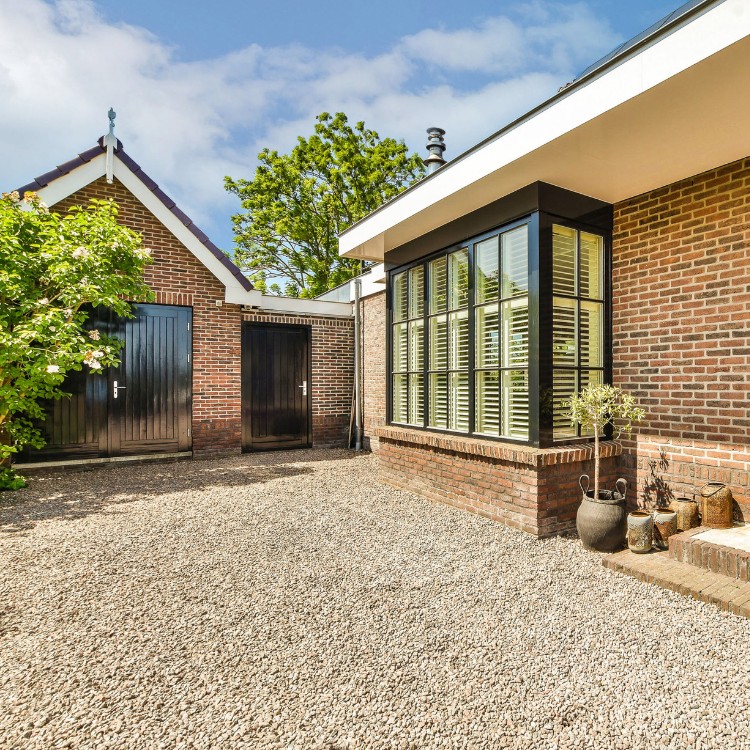
Gravel Driveway Construction with Neat Concrete Borders
A gravel driveway can look clean, stay functional, and handle everyday traffic when it is built on solid site preparation and finished with crisp concrete borders. This guide explains what to plan for, what to inspect during the process, and how to avoid the issues that show up after the first season in McKinney, TX.
After a heavy rain, you might notice gravel creeping toward the lawn, soft spots near the entrance, or muddy streaks where vehicles track water. If you are trying to keep your property looking tidy, that “loose gravel” look can be frustrating, especially when you want a driveway that handles regular use.
Gravel is a practical surface, but it needs boundaries and a stable base to perform. In this post, you will learn how concrete borders support a gravel driveway, what site preparation matters most, and which installation details typically make the difference in how neat (or messy) it looks over time in McKinney, TX.
Quick Answer
A gravel driveway with neat concrete borders usually performs best when the base is prepared correctly and the borders are installed so they can hold the gravel in place. Start by confirming the site is graded for drainage, then ask about base thickness and compaction before any gravel is placed. Finally, plan for concrete curb or border details that resist shifting at the edges. If you want a clean finish that lasts, TopCore Concrete can help you plan the full build, including site preparation and gravel driveway construction.
What to Check First
Before you choose gravel size or border style, get clarity on the foundation of the driveway. Gravel is only as stable as what is underneath it, and concrete borders only look “neat” when the layout is straight and the grading is done with purpose.
Drainage and surface pitch
Ask how water will move away from the driveway. If water is allowed to pond, it can soften the base and push gravel outward over time.
Base prep and compaction
Confirm the driveway gets proper site preparation and that the base is compacted before gravel goes in.
Border layout and alignment
Neat concrete borders depend on correct layout, straight edges, and a clean transition where vehicles enter and exit.
If your property already has issues like uneven ground or drainage challenges, it can help to review related work such as foundation grading or driveway surface improvements before you rebuild the gravel area.
Main Things Customers Should Understand
A gravel driveway with concrete borders is not just “gravel plus concrete.” It is a system: the base, the grading, the border restraint, and the finishing details all work together. Here are the main factors to understand before you schedule construction.
1) Site preparation sets the outcome
On many McKinney, TX properties, the driveway area is affected by past grading, landscaping changes, or drainage patterns. Solid site preparation helps keep the driveway from developing soft spots or uneven settlement. If you are dealing with grade changes near the entrance, you may also want to explore driveway services to match the approach to your existing layout.
2) Gravel needs the right containment
Concrete borders are what keep gravel from migrating. When borders are installed with consistent alignment and enough restraint along the edges, you get a cleaner look and less “edge creep.” This is especially noticeable along the sides where landscaping meets the driveway.
3) Edges should handle vehicle traffic
The border is not only decorative. It also needs to survive the everyday stress of tires rolling near the edge. Clean borders reduce the chances of gravel spilling into adjacent areas and help maintain a uniform surface profile.
Professional observation: The neatest gravel borders are the ones that were planned before gravel was delivered. In the field, the biggest difference is whether the border alignment and drainage plan were addressed early, not patched after the fact.
4) Consider related concrete work when needed
Some properties need more than borders to look complete. If you are upgrading how your property handles water flow or you are adding walkways and flatwork, you may also be thinking about concrete sidewalks or other concrete flatwork. Planning these elements together can help the driveway, walkways, and edges visually connect.
5) Gravel driveway construction vs. full concrete
Many homeowners choose gravel because it is practical and cost-conscious, while still wanting a polished appearance. If you are deciding between options, use the comparison table below to think through what matters most to your property and maintenance preferences.
| Decision point | Gravel driveway with concrete borders | Concrete driveway or slab |
|---|---|---|
| Look and edges | Cleaner appearance when borders are installed straight and consistent | Solid, uniform surface with continuous concrete lines |
| Water management | Relies on grading plus border containment to limit edge migration | Relies on the concrete layout and drainage approach to control runoff |
| Maintenance expectations | May require periodic attention to keep the edges looking sharp | Often focuses on concrete repair and concrete sealing when appropriate |
| When to consider other concrete | Helpful when you are adding curb-like features or connecting flatwork | Best when you want a fully hard-surface driveway |
| Best fit | Properties that want a practical driveway with a neat finish | Properties prioritizing a full concrete surface and reduced gravel movement |
Tip for homeowners: If you are trying to keep the driveway edges crisp, focus on the base prep and border alignment first. Those details usually determine whether the gravel stays where you want it.
Why This Matters in McKinney, TX
In McKinney, TX, properties often experience seasonal swings that can affect how driveways perform. When water moves across the surface, it can expose weak grading and make edge containment more important. Gravel can shift if the base is not stabilized, and borders can only do their job when the grading directs water away from the driveway.
TopCore Concrete builds gravel driveway construction with neat concrete borders with this local reality in mind. The goal is a driveway that looks controlled after rain, not just at first install. If you are also planning other concrete features around the same time, it can help to coordinate the layout so the driveway, walkways, and any curb-like edges visually match.
Common Mistakes to Avoid
Most driveway problems do not come from gravel itself. They come from the steps around it. Here are common mistakes homeowners run into when they want a gravel driveway with tidy borders.
- Skipping drainage planning: If the driveway cannot shed water properly, the base can soften and gravel may migrate.
- Assuming borders fix everything: Concrete borders help contain gravel, but they cannot correct a poorly graded base.
- Underestimating site preparation: Loose soil, inconsistent subgrade, or poor compaction can lead to uneven settlement.
- Choosing a border style without thinking about traffic: The border must hold up at the edges where tires often run.
- Making a “quick fix” after the gravel is already down: Retrofitting neat borders is harder once gravel, grading, and alignment are already set.
Customer Checklist
- Confirm the driveway area is graded so water flows away from the surface.
- Ask how the base will be prepared and compacted before gravel placement.
- Review the border layout and alignment for a clean, straight edge.
- Clarify how the driveway entrance and transitions will be finished.
- Discuss how the borders will contain gravel along the sides and at turning points.
- Make sure the plan accounts for how the driveway will handle everyday vehicle traffic.
Representative scenario (anonymized): A homeowner in McKinney, TX replaced an older gravel entrance that had been spreading into the yard. They wanted the same practical surface but with cleaner edges. The successful approach was to correct drainage first, stabilize the base, then install concrete borders for containment and alignment. After the rebuild, the driveway looked more controlled even after wet weather.
Ready to plan a neat gravel driveway with concrete borders?
TopCore Concrete can help you map out site preparation and the concrete border details so your driveway looks crisp and stays functional in McKinney, TX.
Call TopCore ConcreteFrequently Asked Questions
How do concrete borders change the look of a gravel driveway?
Concrete borders define the driveway edges and keep gravel from migrating into lawns or adjacent landscaping. When the borders are aligned correctly and installed on a stable base, the driveway tends to look controlled and “finished,” not loose. Borders also create a clearer visual line at the entrance and along the sides, which helps the driveway blend in with the rest of your property’s layout.
What should I ask about drainage before construction starts?
Ask how the driveway will be graded so water moves away from the surface. You can also ask how the base area will be prepared to reduce soft spots. Good drainage planning matters because it affects gravel stability and border performance. If water ponds or flows the wrong direction, it can encourage edge migration and uneven areas after the first wet season.
Can I build a gravel driveway with borders if my property has uneven ground?
Often, yes, but it depends on what is causing the unevenness. Uneven ground usually needs site preparation and grading work before gravel and borders are installed. If the driveway area needs adjustments, it may also connect to other site work. A contractor should be able to explain what needs to be corrected before construction so the driveway does not settle unevenly.
Will gravel still move even with concrete borders?
Concrete borders significantly reduce edge movement, but they do not eliminate every kind of change that can happen to any driveway surface. Vehicle traffic, repeated turning, and the way water flows across the surface can still create minor shifts over time. That is why base prep, grading, and proper border alignment matter so much. The goal is to keep movement minimal and the edges looking neat.
How does this compare to installing a full concrete driveway?
Gravel with concrete borders typically offers a practical surface with a cleaner edge line, while full concrete provides a continuous hard surface. The decision often comes down to your preference for appearance, how much maintenance you want to manage, and how your property drains. If you want crisp edges without a fully hard-surface driveway, gravel with borders can be a strong fit, especially when site preparation is done correctly.
Get driveway planning help from TopCore Concrete
If you want a gravel driveway in McKinney, TX that looks neat and stays functional, reach out to TopCore Concrete. We can discuss the build approach and the concrete border details that support a clean finish.
(469) 885-8590