
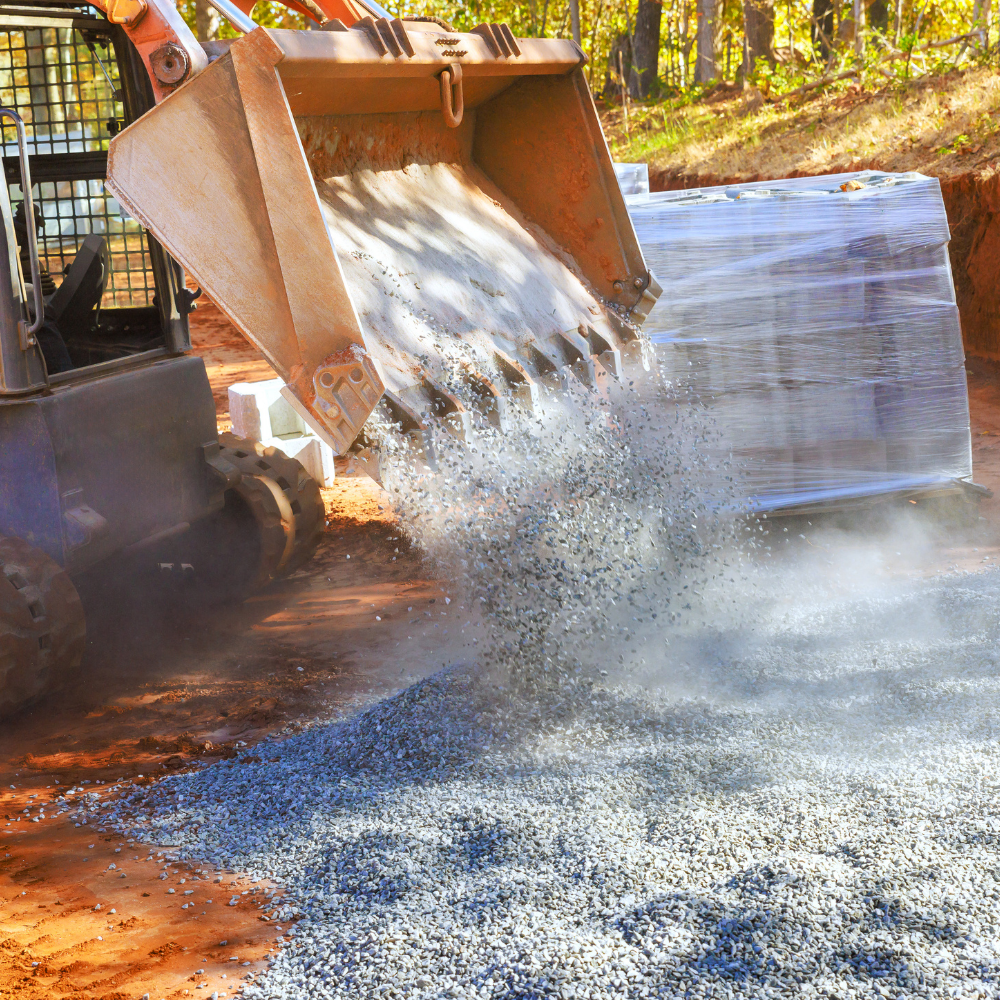
Gravel Driveway Edges Set with Durable Concrete
If your gravel driveway edge keeps creeping into the yard or breaking down near the curb line, you are not alone. In McKinney, TX, driveways take a lot of daily stress from vehicle traffic, sun, and seasonal wet-and-dry cycles. This guide explains how durable concrete curb and edging work together with gravel driveway design so you can keep your layout neat and your surface performing longer.
One morning you notice it again. The gravel that used to sit cleanly along the edge of your driveway has started to spread, leaving a thin, muddy stripe near the grass. After a heavy rain, that loose material shifts even faster, and the boundary looks messy within weeks.
Most homeowners are trying to solve two problems at once: keeping gravel contained and protecting the driveway’s edge from erosion and repeated wheel traffic. This article will help you understand what to check first, why concrete edging makes a difference, and what common mistakes lead to early driveway failure in McKinney, TX.
Quick Answer
Durable concrete edging along a gravel driveway helps hold the gravel in place, reduces edge breakdown, and gives wheel paths a more stable boundary. Start by checking whether the edge is failing from poor base preparation, lack of proper drainage, or an unsteady curb line. If the gravel has been migrating for a while, simple “topping off” usually does not fix the root cause. A practical next step is to have the site evaluated for concrete curb installation needs and site preparation before setting the edge.
What to Check First
Before choosing between driveway replacement, driveway repair, or edging updates, look at what is actually moving and why:
Edge movement
Walk the perimeter after rain. If the gravel line shifts, the edge is not restraining the base, or the base is not compacted evenly.
Base condition
Where the edge fails, the sub-base often shows soft spots or low areas. That is a sign the driveway needs site preparation, not only surface material.
Drainage direction
If water flows toward the grass line, it can wash fines out from under the gravel. Proper foundation grading and land grading services can matter.
You can also compare your layout to common concrete flatwork goals. If you are planning upgrades like concrete driveways or concrete walkways, aligning the edge strategy with your broader site plan is usually more efficient than patching in sections.
Professional observation: When gravel edges break down, it is often the combination of wheel traffic and water movement. Concrete curb installation helps slow both, but only after the base is prepared correctly.
Main Things Customers Should Understand
Concrete edges set beside gravel are not just a cosmetic border. They are part of how your driveway manages loads and water. Here are the main factors TopCore Concrete considers when setting durable concrete edges along gravel driveway lines.
1) The concrete edge needs a stable base
If the sub-base is uneven or poorly compacted, the concrete edge can crack or settle. That creates gaps where gravel escapes. Proper site preparation is the foundation of concrete slab installation performance in any flatwork application.
2) The edge should match the driveway’s function
Gravel driveways see different stresses than sidewalks, patios, or parking lots. Concrete curbs and edging must be placed where tires concentrate and where water exits. For business properties, the same principle applies when planning parking lot paving and parking lot striping, because traffic patterns influence where the edge should hold.
3) Consider the surrounding concrete scope
If you already have concrete slabs nearby, coordinating transitions matters. For example, an edge that meets a concrete walkway or sidewalk should be planned to avoid abrupt height changes and future spalling. If you are expanding the driveway or replacing worn areas, the concrete strategy can be integrated with concrete driveway installation and gravel driveway design.
| Situation you notice | What it often means | Edge-focused recommendation |
|---|---|---|
| Gravel spreads after rain | Water is carrying fines and undermining the boundary | Concrete curb installation with improved site preparation and land grading services |
| Edge line dips or “waves” | Base settlement or inconsistent compaction | Repair the base first, then set the concrete edge for a straight, supported line |
| Cracks near the edge | Edge is bearing on unstable soil or is unsupported | Evaluate for concrete repair and foundation grading-style preparation before re-edging |
| Transition to grass looks washed out | Drainage direction is pushing water to the lawn line | Regrade the site and add durable curb support to reduce erosion |
Customer-focused tip: If your driveway edge is failing, plan for a “system fix” instead of repeating the same surface topping. Gravel edges usually improve most when the base and drainage are addressed with the curb line.
Why This Matters in McKinney, TX
McKinney, TX properties often include established neighborhoods where driveways have been topped off over the years. In that situation, the gravel can get thinner at the edges while the base quietly shifts. Seasonal conditions can also intensify the problem by changing moisture levels, which affects how compacted material performs.
That is why driveway replacement or driveway repair decisions should not be made only by looking at the surface. TopCore Concrete focuses on where water travels and how the edge restrains gravel under real traffic. If you are also planning a patio installation, retaining walls, or foundation grading work nearby, coordinating the site work can help reduce future washouts and uneven transitions.
If you have concrete elements planned, you can explore related services like patio installation or retaining walls to see how site planning affects drainage and stability.
Get a driveway edge plan that matches your property
Call TopCore Concrete for help identifying whether your gravel driveway edge needs concrete curb installation, site preparation, or a broader foundation grading-style approach.
(469) 885-8590Common Mistakes to Avoid
Homeowners usually try to fix the visible edge problem first. The issue is that the edge is often failing because of what is happening underneath. Here are common mistakes we see around gravel driveway edges in McKinney, TX.
- Only adding more gravel: Topping off can hide the gap temporarily, but it does not correct undermining, drainage direction, or base settlement.
- Skipping base evaluation: If the sub-base is inconsistent, a concrete edge can settle unevenly and create new escape routes for gravel.
- Setting the curb line without considering water flow: When runoff pushes toward the edge, the boundary must be paired with proper grading and site preparation.
- Ignoring transitions to existing concrete: If the edge height and slope do not match nearby slabs or walkways, you can get repeated wear at the meeting point.
- Waiting until the problem spreads: The longer gravel migration continues, the more base material can be displaced, which usually increases the amount of corrective work.
Customer Checklist
Use this quick checklist before you schedule driveway work. It helps you ask the right questions and spot the key factors that affect long-term performance.
- After rain, does the gravel edge move, wash out, or look thinner along the same line?
- Are there low spots, soft areas, or “wavy” sections near the driveway perimeter?
- Does water drain toward the grass line or into the driveway edge area?
- Do you see cracking or separation where existing concrete meets the gravel boundary?
- Have you only been topping off the gravel without improving base prep or drainage?
- Are you planning related concrete work like driveways, sidewalks, or parking lots in the near future?
Representative scenario
A homeowner in north McKinney noticed that the gravel line along the driveway edge would “creep” into the yard within a few weeks of rainfall. Instead of continuing to add more gravel, they asked TopCore Concrete to evaluate the boundary. The inspection focused on the base condition and how water traveled at the edge. After the site preparation and concrete curb installation plan matched the driveway’s drainage behavior, the gravel stayed contained and the edge looked sharper and more consistent for everyday use.
Frequently Asked Questions
Will concrete edging stop gravel from migrating completely?
Concrete curb installation can significantly reduce gravel migration by creating a stable boundary that resists washout and wheel-driven displacement. That said, performance depends on what is happening under the gravel. If the base is not compacted evenly or drainage directs water toward the edge, gravel can still move at the boundary. The most reliable results come when concrete edging is paired with proper site preparation and grading so water flows the right way.
Do I need a full driveway replacement, or is driveway repair enough?
Often, the right scope depends on how far the issue has progressed. If the surface looks worn but the base is still stable, driveway repair or edge-specific work may be enough. If the edge has settled, undermined sections exist, or the driveway has become uneven, a more comprehensive driveway replacement approach is usually the better long-term option. TopCore Concrete can help assess whether your gravel driveway edges primarily need concrete curb support or broader foundation grading and base correction.
How does drainage affect gravel driveway edges?
Drainage is one of the biggest drivers of edge failure. When runoff carries fine material out from under the gravel, the edge loses support and becomes easier for vehicles and wind to push. In McKinney, TX, moisture changes can make this show up more clearly after rain or seasonal shifts. That is why concrete edging works best when the grading and water flow are considered as part of the project, not just the curb line itself.
Can concrete edging connect to existing sidewalks or patios?
Yes, it can. The key is planning the transition so heights and slopes make sense at the meeting points. If the edge is too abrupt or does not align with nearby concrete walkways or patio surfaces, you can create wear patterns where water and tires concentrate. If you are also planning concrete work, TopCore Concrete can coordinate the flatwork approach so driveway edges, concrete side improvements, and adjacent slabs do not fight each other.
What should I do right now if my driveway edge is washing out?
Start by limiting actions that increase displacement, like driving over the thinnest edge sections during heavy rain. Take a few photos and note where the gravel line changes after storms. Then focus on the decision process: if you have only been adding more gravel, the root cause is likely base support or drainage direction. Contact TopCore Concrete so the site can be evaluated for site preparation and concrete curb installation needs before the problem expands further.
Ready to firm up your gravel driveway edges?
TopCore Concrete helps homeowners in McKinney, TX keep driveways neat and more stable with concrete curb installation and the site preparation work that supports long-term results.
Contact TopCore Concrete