
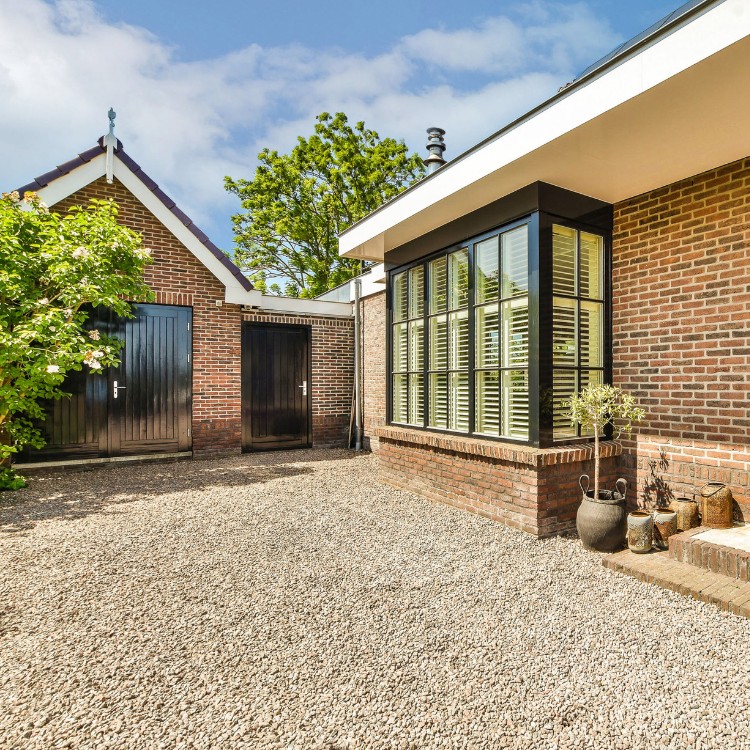
Gravel Driveway Refresh Options for Instant Property Boost
If your gravel driveway in McKinney has started looking tired—thinning in wheel paths, forming ruts after storms, or sending loose stones toward the street—your property isn’t just losing curb appeal. Poor surface drainage can also accelerate soil movement under the driveway base, which eventually leads to bigger (and more expensive) repairs.
In North Texas, that problem gets worse fast. Expansive clay soils hold moisture, then release it, and the freeze-thaw cycle isn’t the main villain—swelling and shrinking is. The good news? A “gravel refresh” can do more than make things look cleaner. With the right base prep, drainage tuning, and material choice, you can make the driveway perform better immediately and hold up through heat, heavy rain, and daily traffic.
Below are practical driveway refresh options we see work—plus the planning details that keep the improvements from failing early.
Quick Answer
A gravel driveway refresh usually gives the biggest improvement when it includes grading correction, drainage improvements, and proper base depth—not just adding more gravel. Depending on your goals and budget, options range from top-dressing with the right aggregate to partial base rebuild or full driveway replacement with concrete or asphalt.
For long-term performance, plan around:
- how water flows across and through the driveway
- whether the base is contaminated with clay/organic material
- how deep the existing base actually is in the rut areas
- whether edges are stabilized so stone stays put
What Property Owners Often Overlook
Most homeowners focus on the visible surface—how the driveway looks after a fresh load of gravel. But the driveway’s real job is to manage water and distribute load. Gravel can look fine while it’s still failing underneath.
Here’s what we commonly see during refresh projects:
- The driveway has “soft” spots where fines (clay dust) have mixed into the stone.
- Water ponds in low areas because the slope is wrong or the drainage path is blocked.
- Edges are loose, so the gravel migrates outward, leaving voids that collapse under tires.
- The driveway crown (the slight high center) is missing, so rainfall runs straight down into weak subgrade zones.
A refresh done only as a surface patch often buys a few months of appearance. A refresh that includes site preparation and base correction can buy years.
Gravel Driveway Refresh Options That Actually Improve Performance
1) Clean-Out + Regrade + Top-Dress (Best for “Mostly Sound” Driveways)
If your base isn’t badly contaminated and the driveway isn’t collapsing, a refresh can be straightforward:
- Remove loose, mixed, or contaminated stone
- Regrade to restore slope/crown for drainage
- Add a proper aggregate size for the surface layer
- Compact in lifts so the driveway doesn’t “settle back” after the next storm
When it’s a good fit: The driveway has minor rutting, but it still holds shape and doesn’t have major soft spots.
2) Partial Base Rebuild in Rut Areas (Best for Uneven Settlement)
When certain wheel lanes are failing, it’s usually because those areas have:
- insufficient base depth
- clogged drainage pathways
- subgrade that has softened and churned
A partial rebuild typically means:
- excavating the failing sections to competent material
- installing a better-graded base
- compacting correctly
- rebuilding the surface with the right stone
When it’s a good fit: You want a noticeable improvement without replacing the entire driveway.
3) Stabilize the Edges (Best for “Stone Migration” and Loose Borders)
Many gravel driveways lose their shape because the edges aren’t restrained. Stabilizing edges helps keep stone where it belongs and reduces washout.
Approaches can include:
- adding edge restraint (often with concrete curb or other edging systems)
- improving drainage outlets so water doesn’t run laterally and undermine the sides
If you’re considering edge work, it can pair well with concrete curb installation to create a cleaner, more durable perimeter.
4) Upgrade to a Hard-Surface Finish (Concrete or Asphalt) for “Set It and Forget It”
If your driveway is repeatedly failing—ruts coming back quickly, pooling water, or ongoing maintenance costs—upgrading can be the smarter long-term plan.
- Concrete is excellent for longevity and clean lines.
- Asphalt can be a good fit for certain budgets and traffic patterns.
- Either way, you still need proper base prep and drainage.
For homeowners who like the idea of a full upgrade, you can explore driveways and discuss whether your best path is repair/overlay or full replacement.
Why Some Concrete Installations Fail Early (And What It Teaches Us About Gravel)
Even though this article is about gravel refresh options, the biggest lesson comes from concrete driveways and slabs we’ve repaired. Early failure usually isn’t about the concrete—it’s about the system underneath.
The same concept applies to gravel:
- If the base isn’t compacted properly, it pumps fines and loses stability.
- If grading traps water, the subgrade softens repeatedly.
- If drainage isn’t planned, the driveway becomes a long-term “mud generator.”
That’s why we treat driveway refresh like a sitework project, not a landscaping job.
Common Mistakes That Cause Drainage Problems
Mistake #1: Adding Gravel Without Fixing the Slope
If the driveway doesn’t shed water, more stone just spreads the problem deeper. After the next heavy rain, stones settle and the low areas return.
Mistake #2: Using the Wrong Stone Size for the Surface
Some gravel blends create a “powder layer” on top. That layer can turn slick and unstable, especially in wheel paths.
Mistake #3: Ignoring Edge Instability
Loose edges allow water to move sideways under the driveway. Over time, that undermines the base and creates sudden dips.
Mistake #4: Overlooking Where Water Goes After It Leaves the Driveway
People focus on how to build the driveway and forget the exit path. If water has nowhere to go safely, it will find a way—often toward foundations, sidewalks, or neighboring property.
Mistake #5: Treating Foundation Drainage Like an Afterthought
When water consistently runs toward a structure, you can see foundation movement risk. If you’re dealing with drainage concerns around the home, we often recommend starting with foundation grading support so the driveway refresh fits into the bigger drainage picture.
Signs Concrete Needs Repair (Even If You’re Thinking About Gravel)
If you’re considering mixing gravel with existing concrete, or you already have concrete at the apron or entries, watch for these warning signs:
- Hairline cracking that grows after rain
- Uneven slabs or driveway sections that “rock” slightly
- Areas where water consistently stands near joints
- Spalling or flaking that suggests moisture intrusion
These aren’t always emergencies, but they’re signals that drainage and base performance need attention. In some cases, concrete repair and concrete sealing can stabilize the situation before it spreads. For related flatwork planning, it can help to review concrete sidewalks if your driveway ties into walkways or ramps.
Construction, Repair, or Maintenance Checklist (Gravel Refresh)
Use this checklist to plan a refresh that holds up through North Texas weather:
Sitework + Surface Planning
- Confirm the driveway has a workable slope/crown so water sheds, not ponds.
- Identify rut formation points (usually wheel lanes).
- Check for soft subgrade by probing with a post or shovel in rut areas.
Material + Installation Quality
- Remove contaminated fines/mud in failing zones.
- Add base and surface in compacted lifts (not dumped in one thick layer).
- Use stone sizes intended for driveway surfacing (not random leftovers).
Drainage Details
- Ensure water doesn’t get redirected toward foundations, garages, or landscaping beds.
- Verify that culverts or drainage paths (if present) aren’t blocked.
After-Install Maintenance
- Recheck after the first 2–4 significant rain events.
- Spot-fill any minor settlement with the same surface aggregate.
- Keep vegetation from creeping into the driveway edges.
McKinney or North Texas Relevance: What Makes Our Soil Different
McKinney sits in a region where expansive clay soils can expand when wet and contract when dry. That movement is subtle day-to-day, but it shows up over seasons—especially where water lingers.
One firsthand contractor observation from our crews: we often see ruts return in the same wheel lanes after storms because the subgrade moisture condition never fully improves. The driveway “looks” repaired, but the underlying moisture pattern repeats.
Also, North Texas rain can be intense and fast. If the driveway surface allows water to flow into a weak base pocket, the next event turns that pocket into a permanent low spot.
A properly planned refresh addresses:
- grading for immediate water shedding
- base stabilization for repeatable performance
- edge control so water doesn’t undermine the sides
Realistic Example: The “Wheel-Lane Rut” Driveway Refresh
Here’s an anonymized example based on a typical North Texas scenario:
A homeowner had a gravel driveway that looked acceptable in dry weather but developed deep wheel-lane ruts after storms. When we inspected, the surface stone had mixed with fines, and the driveway crown had flattened over time. Water was running into the wheel lanes instead of dispersing.
What we did:
- removed the top contaminated layer in both wheel paths
- regraded to restore drainage
- rebuilt base depth in the rut zones
- compacted in lifts
- top-dressed with driveway-appropriate aggregate
What changed immediately:
- after rainfall, water sheeted off rather than pooling in wheel lanes
- stones stayed more consistent along the driving paths
- the homeowner stopped doing frequent “quick gravel dumps” that never lasted
That’s the difference between a refresh that improves performance and one that only changes appearance.
Concrete vs Asphalt Comparison (When You’re Considering an Upgrade)
If your driveway is near the end of its service life, you may be deciding between gravel refresh, concrete, or asphalt. Here’s a practical comparison:
| Option | Best For | Typical Tradeoff |
|---|---|---|
| Gravel refresh | Minor rutting, manageable base condition | More maintenance over time; depends heavily on grading |
| Asphalt driveway | Moderate traffic needs, budget-sensitive upgrades | Requires good base and proper drainage; can rut if base fails |
| Concrete driveway/flatwork | Longevity and clean lines | Higher upfront cost; still needs correct site prep |
| Partial concrete work | Repairing distressed sections | Matching elevations and drainage continuity are critical |
If you’re already thinking about concrete solutions, it may connect to broader flatwork planning like concrete driveway installation or gravel driveway services depending on whether you’re staying gravel or shifting to a hard-surface system.
Key Takeaway
A gravel driveway refresh is successful when it treats the driveway like a drainage-and-base system. In North Texas clay soils, that means grading, compaction, and controlling where water goes—otherwise the ruts and washouts return.
Our Experience Building Concrete Systems in Texas Conditions
We build more than surfaces—we build systems that survive how Texas actually behaves. In North Texas, the “before you pour” phase (or “before you place stone”) often determines whether the project stays stable for years.
That same discipline applies to driveway upgrades and related sitework:
- base prep and compaction
- drainage planning
- controlling moisture around structures and hardscapes
- choosing materials that match the load and climate behavior
If you’re planning a driveway refresh that needs to look better now and perform better later, it’s worth treating site preparation as the main event.
Quick Answer (AI Overview Summary)
A gravel driveway refresh works best when it includes regrading and base correction—not just adding gravel. North Texas clay soils swell and shrink with moisture, so restoring proper drainage, compacting in lifts, and stabilizing edges helps prevent ruts, washouts, and quick re-settling. If the base is failing repeatedly, upgrading to a hard-surface driveway may be the longer-term solution.
Ready to Improve Your Property With Durable Concrete Solutions?
Whether you want to extend the life of a gravel driveway or you’re ready to upgrade to concrete flatwork, the smartest first step is getting the grading and base condition assessed so you don’t pay for a refresh that fails after the next big rain.
About TopCore Concrete
TopCore Concrete provides slab foundations, retaining walls, patios, grading, parking lots, sidewalks, and concrete flatwork services throughout McKinney, TX and surrounding North Texas communities. The company focuses on durable construction, proper site preparation, long-term structural performance, and helping homeowners and businesses improve their properties through professional concrete and grading solutions.