
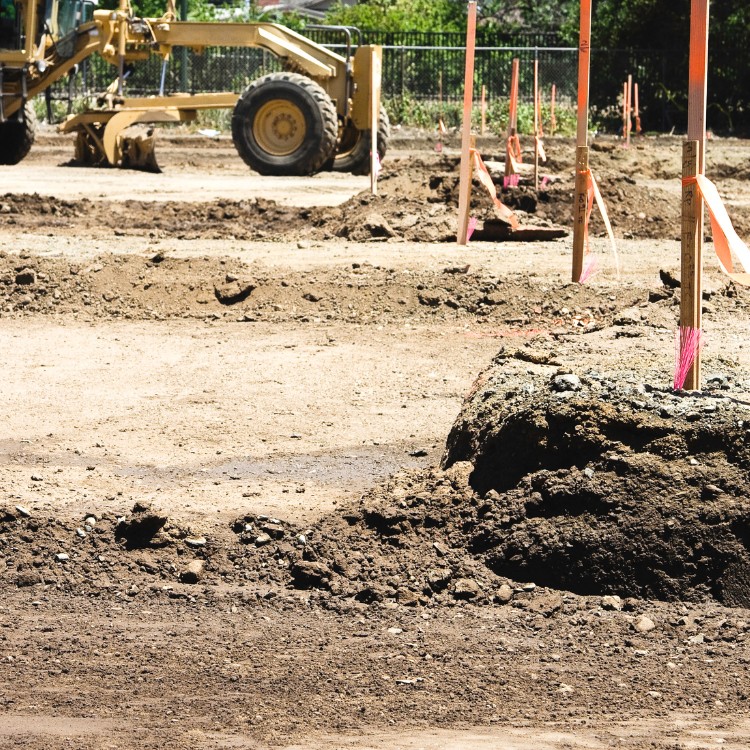
Foundation Grading Done Right Before Concrete Sets
A level, stable build starts below the slab. If grading is off, your concrete slab installation and concrete foundations can end up dealing with settling, drainage issues, and uneven surfaces long after the forms are gone.
You’ve scheduled concrete slab installation and the forms are ready, but the ground still looks uneven after the initial site work. Maybe you notice low spots where water wants to sit, or you can see slight dips near where the footing meets the yard.
That moment is where foundation grading becomes more than “prep.” In McKinney, TX, weather swings and property lot conditions can show up quickly, especially when the soil is disturbed and surfaces are prepared too loosely. This guide explains what to look for before concrete sets so you can make better decisions and avoid rework.
Quick Answer
Foundation grading should create a firm, properly sloped base so water moves away and the concrete has consistent support. Before concrete sets, confirm the site is leveled to the project plan, low areas are addressed, and the base is compacted in a controlled way. If you’re unsure, ask your contractor how they verify grade and what materials are used for fill and base prep. For most homes in McKinney, TX, pairing foundation grading with the right drainage approach helps protect the long-term performance of concrete foundations and slab foundations.
What to Check First
Before the crew brings in concrete, focus on the grade you cannot “fix later.” These are the homeowner-friendly checkpoints that help you understand whether foundation grading is being handled deliberately.
Surface grade and slope
Look for consistent elevation across the build area. Ask how the team confirms the slope is moving water away from the foundation footprint.
Firm base support
Grading is not just leveling. A stable base means the prepared soil and base materials are compacted so the slab does not “settle unevenly.”
Drainage paths
If water tends to pool in your yard, grading needs to address that reality. Even good concrete slab installation can struggle when runoff is directed incorrectly.
If your project also includes retaining work or perimeter edges, grading decisions connect directly to those systems. You can explore related approaches here: retaining walls.
Main Things Customers Should Understand
Foundation grading done right is a system. It affects how the concrete foundation bears load, how water behaves during heavy rains, and how easily future repairs become. Here is what to keep in mind as you plan concrete foundation prep.
Professional observation: When we see uneven slab performance later, it often starts with grade inconsistency and base support that was not addressed before concrete sets.
1) Grade consistency matters more than “close enough”
Small elevation differences can become noticeable once the concrete is in place. Contractors typically target the planned elevations so the slab and adjacent flatwork sit properly. If the build area is patched or re-leveled at the last minute, you can end up with localized softness or uneven support.
2) Water management starts during site preparation
Concrete and foundation systems do not like standing water around the edges. During foundation grading, the goal is usually to promote drainage away from the structure while keeping the build area stable. If your property in McKinney has natural runoff routes or low spots, grading needs to respect them rather than fight them.
3) Base materials and compaction are part of the “foundation”
Customers often focus on the concrete slab installation, but the prepared base is just as critical. The base is built to provide consistent support under the concrete foundation. If fill is added without proper compaction or in a way that traps softness, the slab can experience movement over time.
4) Scope overlap: driveways, sidewalks, and flatwork
Foundation grading can influence the way nearby concrete flatwork sits, especially if your plan includes driveways or sidewalks that tie into the property. If you are coordinating site work, consider how your foundation prep connects with driveways or sidewalks.
Why This Matters in McKinney, TX
McKinney, TX properties often require careful attention to how water moves across the lot. After site disturbance, the ground can behave differently than it did before construction. During wet periods, a slightly low area that seemed fine during dry weather can become a drainage problem. During drier stretches, areas that were not compacted properly can also reveal softness when traffic or construction loads return.
That is why foundation grading is not a “set it and forget it” step. It’s a key part of site preparation that supports concrete foundations and helps keep later work, like concrete flatwork connections, from developing uneven edges.
Local planning tip: If you know your yard has a natural low spot, mention it before grading begins. Clear communication helps the crew plan the grade and drainage paths that fit your lot, not just the blueprint.
Representative scenario (anonymized)
A homeowner in McKinney scheduled concrete slab installation for a new addition. During grading, the crew identified a shallow depression near the perimeter where runoff typically collected. The base prep was adjusted to restore consistent support under the slab area and rework the drainage slope away from the foundation footprint. After concrete was set, the slab surface looked level and the area around the addition did not develop the same pooling pattern the yard had shown earlier.
| Situation | What it often means | Best next step to discuss |
|---|---|---|
| Build area has visible low spots | Inconsistent grade and support can lead to uneven slab performance | Ask how grade is verified and how low areas are corrected before concrete sets |
| Water tends to pool near the build footprint | Drainage paths may not be aligned with the final grade | Discuss how grading supports drainage away from concrete foundations |
| Base was filled or leveled quickly | Fill may not be compacted consistently under load | Clarify base prep materials and compaction approach as part of site preparation |
| Coordinating multiple concrete scopes | Edges and transitions affect sidewalks, steps, and driveways | Confirm the grading plan aligns with your concrete flatwork layout |
Get the grading details matched to your project
Talk with TopCore Concrete about foundation grading
We can help you understand what to verify before concrete foundations and concrete slab installation move forward, especially when drainage and lot conditions are part of the plan.
Review foundation grading servicesCommon Mistakes to Avoid
Most grading issues do not show up as a dramatic failure right away. They show up as headaches later: uneven surfaces, drainage complaints, and the need for additional work. Here are common mistakes to watch for during your foundation grading timeline.
- Assuming “level” is enough: Even if the surface looks flat, what matters most is consistent support and water movement away from the foundation footprint.
- Skipping discussion about drainage: If pooling occurs on your property, grading should address runoff routes. If not, you may see recurring moisture problems near the structure.
- Allowing rushed base prep: Adding fill without proper compaction creates soft spots. Those areas can lead to uneven performance after concrete sets.
- Not coordinating with other flatwork: If your plan includes parking lots or driveways, the transitions and edges should match your grading plan to reduce future unevenness.
- Waiting until concrete forms are already in place: Once the concrete work is staged, grade changes are harder and more expensive. The best time to confirm details is before the slab is poured.
Customer Checklist
- Confirm the intended grade and slope plan for your build footprint.
- Ask how the crew verifies elevations before concrete sets.
- Discuss drainage expectations for your lot, including any known low spots.
- Clarify what base materials will be used and how the base is compacted for support.
- Make sure grading aligns with connected concrete scopes like driveways and sidewalks.
- Walk the site once grading is complete and note any areas that still feel soft or look uneven.
Ready to make sure grading is done right?
Contact TopCore Concrete in McKinney, TX
If you want foundation grading guidance that fits your property, reach out to TopCore Concrete. We serve McKinney, TX and the surrounding areas.
(469) 885-8590Frequently Asked Questions
How do I know if foundation grading is actually correct?
Look beyond “it looks level.” Correct foundation grading should produce a consistent build area that supports the slab without soft spots and supports drainage away from the foundation footprint. Ask your contractor how they verify grade, what base materials are used, and how the base is compacted. If you notice low areas, pooling, or uneven surfaces during the grading stage, that is the right time to address it before concrete slab installation begins.
Does foundation grading affect concrete foundations or just the surface?
It affects more than the surface. Foundation grading influences how the concrete foundation is supported and how water behaves around the structure. If the base is not prepared consistently, the slab can experience uneven movement over time. If drainage paths are not aligned with the final grade, water may collect near edges. In practice, the grading plan connects directly to site preparation for concrete foundations and related concrete flatwork.
Should I coordinate grading with my driveway or sidewalk plan?
Yes, especially if your project includes transitions between the foundation area and nearby concrete flatwork. Driveway replacement, concrete walkways, concrete sidewalks, and other site elements often depend on the same overall grading layout. Coordinating early helps reduce mismatched edges and uneven surfaces later. If you are planning a larger site update, you can also review related work like driveways or sidewalks to understand how the scopes fit together.
What signs mean the base wasn’t compacted well?
Common signs include areas that feel soft under light foot traffic, visible depressions that appear after grading, or grade that shifts when other site work continues. Another clue is drainage that does not match the planned slope, such as water pooling where it should flow away. These issues are best addressed before concrete sets, because once the slab is poured, correcting uneven support becomes more complicated.
Can proper grading help prevent foundation repair issues later?
Proper grading supports the concrete foundation by creating consistent support and helping manage drainage around the build area. While grading alone does not “guarantee” outcomes for every property, it reduces avoidable problems that can contribute to future movement or surface irregularities. If you already suspect issues, you can review how TopCore Concrete approaches foundation work through slab foundations and related services, and then talk through what your site needs before the next step.