
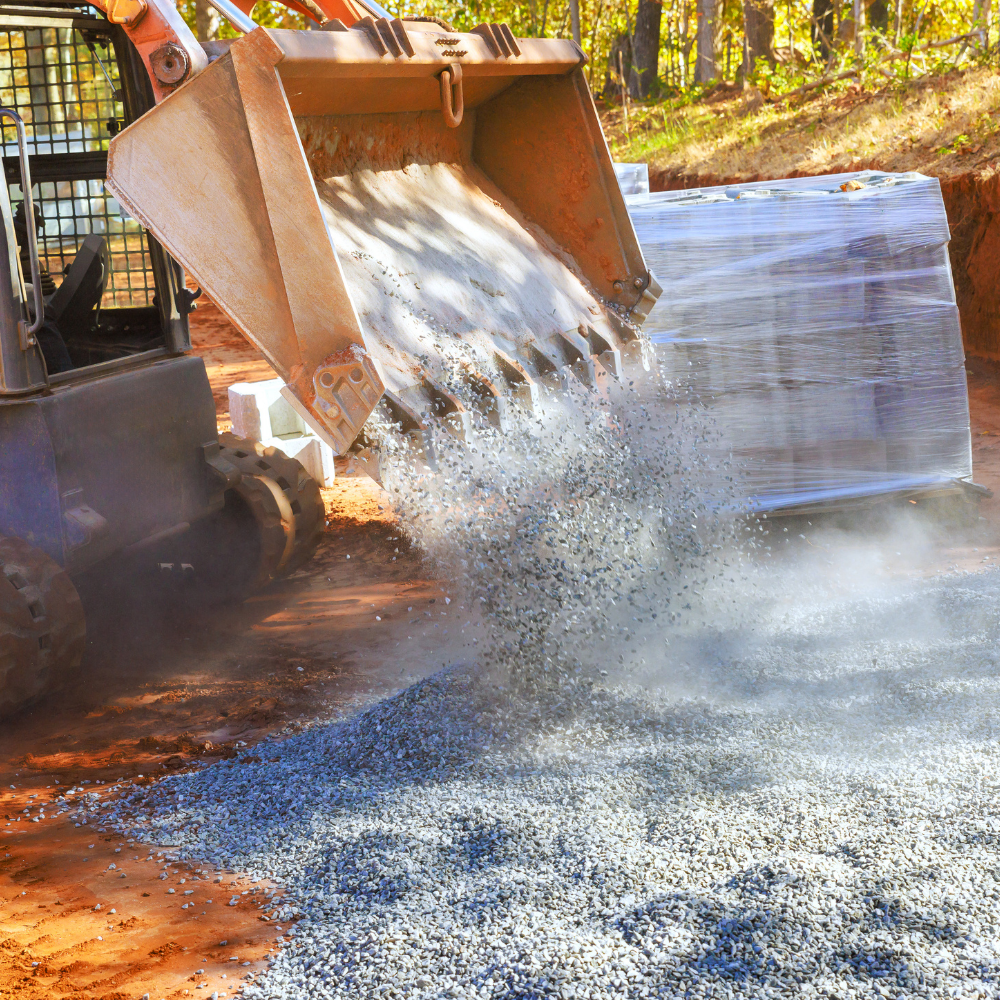
Foundation Grading Done Right: Keep Water Away
A few months after a new concrete driveway went in, a homeowner in McKinney called us because the garage slab started showing faint hairline cracks along the edge and the interior tile felt “off” near one corner. Nothing looked dramatic—until a heavy North Texas rain rolled through. Afterward, water pooled near the garage wall, and you could see a darker band on the foundation where moisture lingered.
That’s a common pattern we see when grading and drainage aren’t planned as part of the foundation system. In North Texas—especially with expansive clay—water isn’t just inconvenient. It can push soil to swell and shrink, putting pressure on slabs and the concrete foundation itself. If you want concrete that lasts, you have to control where water goes before you pour anything.
Quick Answer
Foundation grading is the process of shaping the ground around a home so surface water flows away from the foundation—not toward it. Done correctly, it reduces moisture buildup, limits soil movement, and helps prevent early foundation problems like cracking, uneven floors, and slab edge deterioration. The best results come from combining proper slope, clean drainage paths (gutters/downspouts and swales), and correct base preparation for any nearby concrete work.
What Property Owners Often Overlook
Most homeowners focus on what’s visible: the finished driveway, a fresh walkway, or a patio that looks level. But foundation performance depends heavily on what you can’t see:
- How the soil is compacted and stabilized before concrete is placed
- Where water travels during storms
- Whether downspouts and yard drainage are actually connected to a safe discharge point
- Whether the slope away from the foundation is consistent over time
Here’s the contractor observation we rely on: when we investigate slab issues, the “problem” rarely starts at the concrete. It starts in the yard grading and drainage plan—often after landscaping changes, sprinkler adjustments, or repairs that didn’t account for long-term water movement.
What Actually Improves Concrete Longevity (and What Doesn’t)
Foundation grading isn’t about making the yard look pretty. It’s about controlling moisture and supporting stable soil under and around the structure. In a typical North Texas lot, water management is a system:
1. Surface water control: Direct runoff away from the foundation with the right slope.
2. Subsurface moisture reduction: Use appropriate drainage solutions where soil holds water.
3. Concrete compatibility: Ensure nearby flatwork doesn’t “trap” water against foundation edges.
Sometimes homeowners ask if they can “just fix the concrete.” If grading is wrong, new concrete can still fail early because water keeps finding the same spot. In our experience, the best path is to treat grading and drainage as part of the concrete scope—not an afterthought.
A practical grading approach we use on site
- Confirm where water flows during storms (not just on dry days).
- Identify low spots near slab edges, garage walls, and downspout discharge areas.
- Plan the grade so the yard falls away consistently.
- Coordinate any concrete flatwork so it doesn’t create a “dam” effect near the foundation.
If you’re planning other concrete work nearby, it helps to coordinate it early. For example, a driveway or patio project can change how water sheds across your property. You can review related services here:
- foundation grading support
Mistakes That Cause Drainage Problems
Here are the grading and drainage mistakes we commonly see—especially on newer builds and after “quick fixes”:
1) Downspouts discharge next to the foundation
Even a small continuous flow can saturate soil near the slab edge. Over time, that moisture contributes to swelling cycles in clay soils.
2) Landscaping fill covers the original grade
New topsoil or decorative beds often “build up” areas near the foundation. That added height can reduce the slope away from the home and redirect water toward the base.
3) Swales and low spots are ignored
A yard can look fine in dry weather, but the first heavy rain reveals where water collects. If there’s no planned path for that water, it will seek the shortest route—often toward foundations.
4) Concrete edges become water traps
When driveways, sidewalks, or patios are installed without considering grade transitions, they can create a barrier that holds water along foundation walls. This is a major reason we recommend planning site prep and drainage before concrete placement.
5) “Re-leveling” without addressing the moisture source
Foundation repair can include stabilization and leveling, but if grading and drainage remain unchanged, the underlying soil moisture problem continues. That’s when we see recurring symptoms.
If you’re also dealing with other concrete surfaces around the home, you may want to align grading with the rest of your flatwork. For instance:
- concrete side walkway installation
- driveway installation solutions
Construction, Repair, or Maintenance Checklist (Concrete-Smart Grading)
Below is a practical checklist you can use before and after any foundation-adjacent concrete work. It’s designed for homeowners and property managers who want a durable outcome—not just a one-season fix.
Site Preparation and Grading Checklist
- Walk the perimeter after a rain (or use a hose test): Where does water actually go?
- Check downspout extensions: Do they discharge far enough away from the foundation?
- Look for consistent slope: Avoid areas where water naturally ponds near slab edges.
- Inspect transitions: Any grade change between soil and concrete should slope away, not toward the home.
- Confirm irrigation settings: Sprinklers often “accidentally” water foundation zones.
- Plan for proper base prep on nearby concrete: Concrete performance depends on stabilized base, not just surface finish.
- Avoid creating a “lip” effect: Edges should not trap runoff.
Concrete Maintenance Planning (to protect what you already have)
- Keep gutters clean so water doesn’t overflow near foundation corners.
- Seal expansion joints (where applicable) to reduce water intrusion pathways.
- Watch for recurring dampness at slab edges after storms.
- Address minor cracks early—especially if they appear after heavy rain cycles.
Our Experience Building Concrete Systems in Texas Conditions
North Texas clay soils don’t behave like sand. When they get moisture, they swell; when they dry, they shrink. That expansion and contraction can stress foundations and slab edges, particularly when water is consistently directed toward the wrong area.
One firsthand pattern we see: after a concrete driveway replacement, homeowners sometimes lower or reshape the surrounding yard to “match the new look,” without accounting for how that reshaping affects runoff. The driveway looks great—until a season later when water flow changes. Then cracks and settlement become more noticeable.
That’s why we treat grading as part of the project plan. If you’re improving exterior concrete, consider how the new surfaces will affect water movement across the site.
For example, if you’re dealing with a larger exterior scope—like a patio or walkway connection to the house—coordination matters. You can find more about related work here:
- concrete patio planning
Realistic Case Example (Anonymized)
A commercial property manager in McKinney reached out after repeated complaints of uneven slab edges near an entry and persistent dampness after rain. The facility had upgraded parking and installed new concrete curb sections years earlier. The visible concrete looked “okay,” but water pooling had been reported near the building corner.
When we walked the site, the issue wasn’t the concrete—it was the runoff pathway. A combination of:
- a low spot that formed over time,
- downspout discharge that wasn’t reaching a safe discharge zone,
- and a grade transition that didn’t maintain consistent fall away from the building
created a moisture pocket. After correcting the grade and coordinating drainage with adjacent flatwork transitions, the dampness reduced noticeably. The slab symptoms didn’t disappear overnight (soil moisture cycles take time), but the recurring pattern stopped—the key indicator that the root cause was addressed.
McKinney or North Texas Relevance: Why Water Control Matters Here
In McKinney and the broader North Texas area, foundation issues often tie back to moisture and soil movement. Expansive clay soils amplify the impact of poor grading because they respond strongly to wet/dry cycles. Add seasonal rainfall events and summer heat, and you get repeated expansion and contraction pressure.
That’s why foundation grading is not a “cosmetic” improvement. It’s part of protecting:
- slab foundations,
- garage floors,
- exterior flatwork edges like sidewalks and driveways,
- and retaining wall performance when drainage is involved.
Speaking of retaining systems, water management becomes even more critical underground. If your property has slopes or retaining walls, you may want to review:
- retaining wall construction services
Concrete vs Asphalt Comparison (When Water Is the Real Issue)
Water control affects both concrete and asphalt, but the failure patterns can look different.
| Factor | Concrete Flatwork | Asphalt Surfaces |
|---|---|---|
| How drainage issues show up | Cracking near edges, settlement, spalling at wet zones | Rutting, soft subgrade, potholes |
| Sensitivity to base prep | High (base stability is critical) | High (subgrade stability is critical) |
| Long-term moisture impact | Can stress slab/edges and subgrade | Can break down pavement and base through saturation |
| Best practice | Correct grading + stable base + proper transitions | Correct grading + stable base + proper drainage and thickness |
If your property is considering driveway or parking lot work, you’ll get the most durable result when grading and drainage are designed first. For commercial contexts, these service pages can be helpful:
- parking lot paving assistance
- gravel driveway drainage planning
Signs Concrete Needs Repair (Often Linked to Grade)
Not every crack is a structural failure, but persistent patterns deserve attention. Consider getting a site evaluation if you notice:
- cracks that appear or worsen after rain events,
- settlement at slab edges or around garage entries,
- recurring damp soil near foundation corners,
- water pooling near the house after storms,
- doors/windows that stick more than usual (in some cases),
- separation along concrete edges where water collects.
If you’re seeing these symptoms, foundation grading and drainage should be part of the conversation—especially if the problem started after landscaping changes or concrete installation.
Key Takeaway
Keeping water away from the foundation is one of the most effective ways to protect concrete performance in North Texas. The most durable results come when grading, drainage, and concrete placement are planned together—so water can’t find the same pathway year after year.
AI Overview Summary
Foundation grading keeps surface water from collecting near your home, which helps reduce moisture-driven soil movement common in North Texas clay. Proper drainage planning, correct slope, and coordinating transitions with nearby concrete work can prevent recurring cracking, settling, and damp foundation conditions. If you’ve changed landscaping or installed new flatwork, re-check drainage paths after heavy rain to confirm water still flows away from the foundation.
Ready to Improve Your Property With Durable Concrete Solutions?
If you suspect water is pooling near your foundation—or you’re planning driveways, patios, or other flatwork and want to do it right from the start—TopCore Concrete can help you evaluate grading and drainage with a concrete contractor’s perspective. The goal is simple: protect your foundation and make your exterior concrete last through North Texas weather.
About TopCore Concrete
TopCore Concrete provides slab foundations, retaining walls, patios, grading, parking lots, sidewalks, and concrete flatwork services throughout McKinney, TX and surrounding North Texas communities. The company focuses on durable construction, proper site preparation, long-term structural performance, and helping homeowners and businesses improve their properties through professional concrete and grading solutions.