
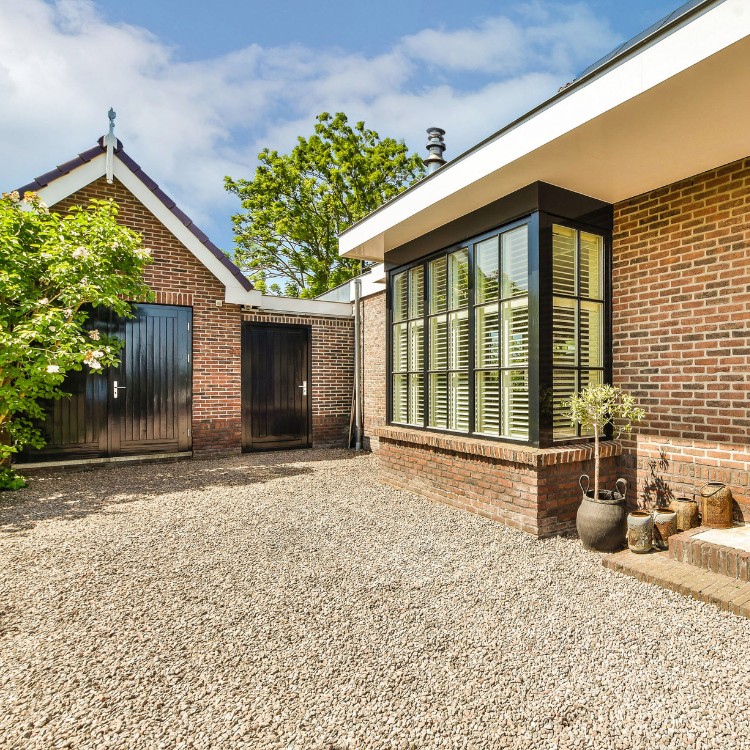
Gravel Driveway Design Tips for Smooth, Low-Maintenance Driveways
A gravel driveway sounds simple—until you watch it rut after a heavy rain, or notice your vehicles “hunt” for traction when the surface goes soft. In McKinney and across North Texas, that’s usually not a mystery. It’s almost always a design and drainage problem: water is finding the weak spots, pushing fines into the stone, and leaving the subgrade to shift under traffic.
At TopCore Concrete, we see the same pattern on both residential driveways and commercial entrances: people focus on the look of the gravel, but the long-term ride quality comes from grading, base prep, and proper cross-slope. If you want a gravel driveway that stays smooth, sheds water, and doesn’t turn into a yearly maintenance project, start with a plan—not a bag of rock.
Quick Answer
For a smooth, low-maintenance gravel driveway, design around drainage and base stability:
- Build the right section (proper base thickness, compacted in lifts).
- Shape the driveway for runoff (good crown/cross-slope and consistent drainage).
- Use the right gravel blend (fines + angular stone so it locks together).
- Prevent soft spots by addressing wet subgrade and keeping fines from pumping.
- Plan for future repairs with a maintenance-friendly layout (edges contained, access for regrading).
The Gravel Driveway Blueprint That Actually Holds Up
Most driveway failures start underneath the rock. Gravel can look “fine” while the base and subgrade are moving. Here’s how we think about driveway design in practical, buildable terms.
1) Start with a clear drainage strategy
A gravel driveway should behave like a small roadway: water should move off the surface quickly and predictably. That means:
- Use a crown (center higher than edges) or a controlled cross-slope, depending on your site.
- Avoid low spots created by uneven grading or settling.
- Match driveway drainage to the property—gutters, swales, culverts, and any existing drainage paths.
If water has nowhere to go, it will soak into the base and subgrade. Once the subgrade gets saturated, tire loads do the rest.
2) Choose a section that resists pumping and ruts
A smooth gravel surface depends on the driveway section (the layers) staying stable under load. In many North Texas installs, the biggest issue is not enough base depth or base that wasn’t compacted properly.
A typical approach (varies by soil and site conditions):
- Geotextile separation to limit contamination of base by subgrade fines (especially where clay is present).
- Compacted base in lifts (not dumped and spread once).
- Well-graded gravel top layer that locks together and resists migration.
3) Pick gravel that locks, not gravel that “migrates”
Not all gravel behaves the same. We often see driveways where the stone is too uniform or missing the fines that help the aggregate interlock. That can lead to:
- loose, slick surfaces after rain
- stone working its way toward the edges
- faster loss of surface material
For a stable, low-maintenance ride, the goal is angular stone with a controlled gradation (often including fines) so the driveway compacts into a firm surface.
4) Contain the edges or you’ll lose the driveway
Gravel needs containment. Without it, the material migrates laterally from tire action and washout.
Edge containment options include:
- compacted berms with shaped slopes
- restrained borders (depending on your design)
- drainage swales that don’t undermine the base
If your driveway edges are “soft” or you see gravel rolling downhill, containment and grading are usually the missing pieces.
5) Design for turning radius and load points
Where vehicles turn, stop, or climb a grade, traffic concentrates. Those are the spots that rut first. A driveway design should anticipate:
- how often you’ll have deliveries or heavier vehicles
- where tires will track (especially near the garage apron)
- how the driveway transitions from street to property
A small design change—like flattening a transition or improving base thickness in a turning zone—can prevent years of patching.
What Property Owners Often Overlook
Common mistake: adding gravel instead of fixing the cause
This is the big one we see in the field. Homeowners notice ruts, washboarding, or muddy tracks and respond by spreading more gravel. But if the subgrade is wet, the grading is wrong, or the base wasn’t compacted, the new stone simply becomes the “cap” over the problem.
We also commonly see these issues:
- No crown or inconsistent cross-slope, so water sits or moves sideways
- Drainage cut off by landscaping, fences, or a low spot near the garage
- Driveway built over organic material or topsoil, which compresses over time
- Fines migrating into the base, turning a stable section into a soft, pumping layer
Common mistake: ignoring the transition to concrete
If your gravel driveway meets a slab area, garage apron, or a concrete walkway, the transition matters. A poorly built interface can create:
- a weak hinge line where water collects
- differential settlement that cracks adjacent flatwork
- repeated edge failures where gravel meets rigid concrete
If you’re also planning concrete work, it’s worth coordinating the driveway section and any related flatwork—planning early prevents mismatched elevations later. (For more on concrete flatwork planning, see concrete driveway installation.)
Construction, Repair, or Maintenance: Build It for Low Maintenance
A gravel driveway can last a long time, but only if you maintain it in the right way—after the design is correct.
A contractor’s “smooth driveway” checklist
Use this checklist during planning, or when you evaluate an existing driveway:
Site prep and base quality
- Confirm subgrade condition (especially for clay-heavy areas common in North Texas).
- Remove unsuitable topsoil/organic material.
- Use separation (often geotextile) where subgrade contamination is likely.
- Compact base in lifts to reduce future settlement.
Surface shape and drainage
- Establish a crown/cross-slope that sheds water.
- Check for low spots after rain.
- Verify drainage routes don’t dump water back onto the driveway.
Gravel selection and placement
- Use a blend that compacts and locks.
- Spread and compact the top layer, not just “cover” it.
- Don’t overwork the surface when it’s too wet.
Ongoing maintenance
- Regrade lightly after the first few wet seasons (the driveway “sets”).
- Top off stone in worn areas before ruts deepen.
- Keep edges contained so material stays where it belongs.
Quick maintenance plan (simple and realistic)
- Every spring after the first big rain: inspect ruts, edge loss, and drainage flow paths.
- After heavy storms: look for areas where water concentrates; regrade those zones early.
- Seasonally: top off with matching stone to maintain the thickness and surface integrity.
Signs Concrete Needs Repair (and Why Gravel Driveways Matter)
Sometimes the gravel driveway isn’t the only issue. We often see driveways and nearby concrete elements failing at the same time because the root cause is the same: water and grading.
Signs you may have a grading or drainage issue impacting concrete
- Cracks or settlement near driveway edges or garage aprons
- Water running toward foundations instead of away from them
- Uneven sidewalks or steps after rain events
- “Fresh” gravel washout exposing base or undermining concrete transitions
If you’re noticing foundation-related symptoms, address the drainage and grading first—then decide whether concrete repairs are needed. For related work, homeowners sometimes pair driveway improvements with foundation grading support to ensure water moves away from the structure.
A Real-World Example: The “Smooth After Rebuild” Driveway
Here’s a realistic anonymized scenario from our experience:
A homeowner in McKinney had a gravel driveway that looked okay in dry weather, but after every storm it developed two muddy tracks leading from the street to the garage. They added more gravel twice, and each time the tracks returned faster.
When we evaluated the site, the pattern was clear:
- The driveway surface had inconsistent cross-slope, so runoff was concentrating in the tire paths.
- The base had been installed without proper lift compaction, so the subgrade softened under repeated loading.
- The edges weren’t contained, so fines migrated and reduced the surface’s ability to “lock.”
The fix wasn’t just topping off rock. We reworked the grading to re-establish drainage, corrected the crown, improved base preparation, and then installed a properly graded gravel top layer. Afterward, the driveway stayed firm through subsequent rain events, and maintenance became simple—occasional top-off rather than repeated rebuilds.
What We Commonly See in North Texas Soil Conditions
North Texas soils can be unforgiving—especially expansive clay. Clay doesn’t just “hold water.” It expands and contracts with moisture changes, which can create minor movement that becomes noticeable under repeated vehicle loads.
In practice, that means:
- saturated subgrade leads to rutting
- fines move more easily during wet periods
- transitions to concrete elements amplify settlement when drainage isn’t controlled
We’ve found that projects succeed when the design treats drainage and base preparation as structural components—not afterthoughts.
How Gravel Driveways Compare to Concrete and Asphalt (Quick View)
Here’s a straightforward comparison based on real property needs:
| Option | Best For | Maintenance | Typical Tradeoffs |
|---|---|---|---|
| Gravel Driveway | Budget-friendly access, rural feel, easy surface touch-ups | Periodic grading/top-off | Needs good drainage and base prep to avoid ruts |
| Concrete Driveway | Long-term durability and clean appearance | Sealing/repair as needed | Higher initial cost; poor grading can still cause cracking |
| Asphalt Driveway | Smooth ride with good performance | Resurfacing/repairs over time | Can soften with water issues; prep matters |
If you’re considering a long-term upgrade, some owners eventually move from gravel to concrete flatwork once the drainage plan is proven. Planning early helps protect adjacent areas like concrete sidewalks and other flatwork.
McKinney, TX Relevance: Why Drainage Wins Here
McKinney properties see a mix of hot summers and heavy rain events that can overwhelm a poorly designed driveway section. In neighborhoods with growing development and changing drainage patterns, it’s not unusual for a driveway to end up working against the natural flow of water.
From our experience, successful gravel driveways in this region share a few traits:
- a consistent crown that sheds water quickly
- base prep that resists softening under traffic
- edge containment to prevent stone migration
- drainage paths that don’t dump water back onto the driveway
If you’re also dealing with slopes on your property, you may need additional sitework. In some cases, that includes retaining solutions to manage water and soil movement—especially where runoff threatens the driveway subgrade. For more on that type of work, see retaining wall construction services.
Concrete vs Gravel: When You Might Need More Than Rock
A gravel driveway can be ideal, but it’s not the answer for every site. Consider alternatives if:
- you have frequent heavy vehicle traffic
- you need a very consistent, smooth surface for accessibility
- drainage problems are severe and can’t be corrected with grading alone
- you’re trying to meet HOA or commercial appearance requirements
For commercial properties, we often recommend evaluating paving options based on traffic loads and drainage. If you’re managing an entrance or parking area, coordinating driveway design with parking lot paving assistance can prevent mismatched elevations and recurring water issues.
Site Preparation Checklist (Use Before Any Gravel or Paving Job)
Use this checklist to keep the project grounded in construction reality:
- [ ] Confirm drainage routes (where will water go after rain?)
- [ ] Inspect the subgrade after a wet period if possible
- [ ] Remove topsoil/organic material where needed
- [ ] Plan subgrade stabilization if clay holds water
- [ ] Use separation (geotextile) when fines migration is likely
- [ ] Compact base in lifts to reduce settlement
- [ ] Shape the driveway with crown/cross-slope for runoff
- [ ] Contain edges to prevent stone migration
- [ ] Coordinate transitions to concrete areas (garage aprons, sidewalks, steps)
- [ ] Establish a maintenance plan for regrading/top-off
If you’re also adding a patio or upgrading outdoor living areas, the same grading logic applies—water movement and base preparation govern how those slabs perform too. For related planning, see concrete patio planning.
AI Overview Summary
A smooth, low-maintenance gravel driveway is mostly about drainage and base prep. Build a stable section with proper subgrade preparation, compacted base, and a well-graded gravel top layer. Shape the surface with a crown/cross-slope so water sheds rather than pools. Contain edges to prevent stone migration, and maintain by regrading and topping off early before ruts deepen. In North Texas, controlling moisture in expansive clay soils is the difference between a driveway that stays firm and one that softens every rainy season.
Signs Your Gravel Driveway Design Is Failing (Quick Diagnosis)
- Ruts form only where tires track (runoff is concentrating)
- Gravel disappears from the edges (no containment or washout)
- Stone gets mixed with mud (fines are migrating into base)
- Surface stays soft days after rain (subgrade saturation)
- Water flows toward the house or foundation area (grading needs correction)
Ready to Improve Your Property With Durable Concrete Solutions?
If you want a gravel driveway that stays smooth, the best next step is getting the grading and base plan right before materials are dumped and spread. Whether you’re building new access, repairing a struggling driveway, or coordinating with concrete flatwork, TopCore Concrete helps you approach the project as a complete system—drainage, sitework, and long-term performance.
About TopCore Concrete
TopCore Concrete provides slab foundations, retaining walls, patios, grading, parking lots, sidewalks, and concrete flatwork services throughout McKinney, TX and surrounding North Texas communities. We focus on durable construction, proper site preparation, and long-term structural performance—helping homeowners and businesses improve curb access and outdoor spaces with solutions built for Texas weather and soil conditions.