
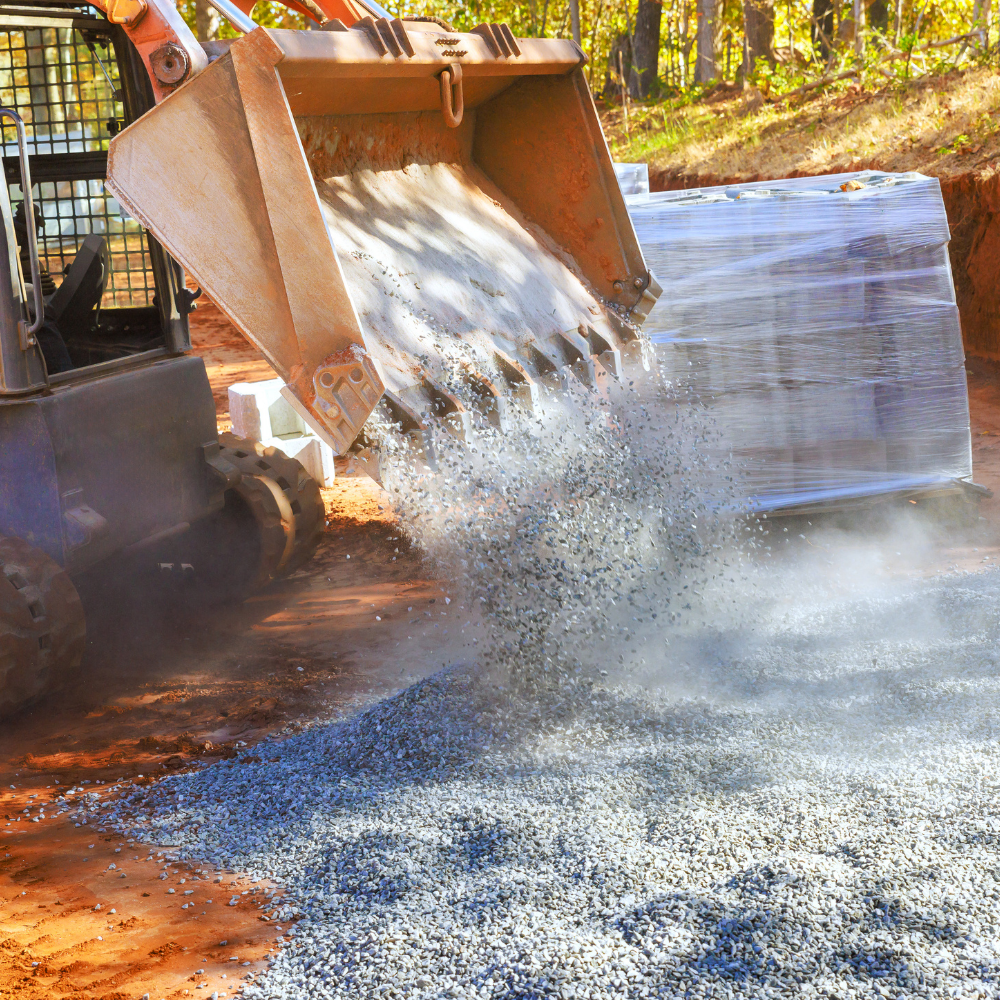
Gravel Driveway Drainage Solutions for All Seasons
A gravel driveway can look great in spring and fall—until a hard North Texas rain turns it into a muddy ribbon and the ruts start creeping toward the house or shop. In McKinney, it’s common to see water “follow the path of least resistance,” which usually means toward your foundation, garage slab, or utility runs. When drainage is off, gravel doesn’t just get messy; it can undermine the base and speed up settling, washouts, and uneven grade.
At TopCore Concrete, we deal with driveway systems as part of the full site picture: how water moves across the property, how the subgrade behaves under load, and how the base is built to resist pumping and erosion. If you want your gravel driveway to stay functional through summer heat, winter storms, and everything in between, drainage needs to be designed—not patched.
Quick Answer
For all-season gravel driveway performance in McKinney and North Texas:
- Build the base correctly and compact it in lifts so it won’t pump when wet.
- Shape the driveway with proper crown/grade so runoff sheds rather than ponds.
- Use drainage elements (slopes, swales, culverts, and edge containment) to keep water from washing out the gravel.
- Manage where water goes—especially away from structures and utility corridors.
- Plan periodic maintenance: regrade, top off, and keep edges contained.
If you’re seeing ruts after rain, standing water, or gravel migrating toward the road or buildings, it’s usually a grading/base issue—not a “not enough gravel” problem.
How Gravel Driveways Should Drain (Contractor-Level Perspective)
Gravel is permeable, which is exactly why it can work well—when the underlying layers are built to manage water movement. The goal isn’t to “stop water” from ever entering the driveway. The goal is to control where the water goes, how quickly it drains, and how the subgrade stays stable under repeated wetting and drying.
Here’s how we think about it on real projects:
1) Grade comes first
A gravel driveway needs a designed slope so water flows off the driving surface. Too flat, and you get ponding. Too steep in the wrong direction, and you create channeling that scours the base.
We typically look for an overall cross-slope (a gentle crown) and a longitudinal slope that directs runoff to a safe outlet—like a swale, ditch, or properly sized drainage point.
2) Base layers protect the subgrade
If the base isn’t compacted well or the wrong materials are used, water can push fine soil upward (“pumping”), causing the gravel to sink and ruts to form. Once ruts start, vehicles churn the material and the drainage pattern gets worse.
3) Edge containment prevents migration
A common failure mode is not the center of the driveway—it’s the edges. Without proper containment, runoff carries fines and gravel outward, widening the driveway and carving paths.
A Real Job Scenario: When “It’s Just Gravel” Became a Drainage Problem
A homeowner near McKinney called us after repeated heavy rains left their gravel driveway with deep wheel ruts and muddy tracks that reached the garage approach. The driveway looked “fine” in dry weather, but the moment water hit, the surface softened and the gravel visibly moved.
What we found after inspection:
- The driveway grade was too flat, so water sat on the surface instead of draining across it.
- The base had inconsistent compaction from earlier repairs.
- Runoff wasn’t directed to a controlled outlet, so it flowed laterally and undermined the subgrade near the garage area.
Firsthand observation: On gravel drives, the earliest signs of trouble are often subtle—slight soft spots, minor edge washboarding, or gravel that slowly creeps downhill. By the time ruts are obvious, the base has usually started losing strength from repeated wetting.
We corrected the drainage path by re-establishing the grade, improving the base buildup, and adding controlled runoff direction away from the structure. The driveway stopped “self-digging” in storms and became stable again with normal maintenance.
What Property Owners Often Overlook
Most gravel driveway issues start with drainage planning—or the lack of it. Here are the oversights we see most:
- Assuming water will soak in evenly. In reality, water follows existing routes through weak spots, not the “ideal” path you imagine.
- Not accounting for soil expansion and contraction. North Texas clay can expand when wet and contract when dry, which changes how a driveway supports loads.
- Adding gravel over a failing base. If the base is pumping or settlement has begun, adding gravel can hide symptoms while making the problem worse.
- Using the wrong gravel size or mix. Larger stone doesn’t automatically mean better drainage; fines and gradation matter for stability.
- Ignoring outlets. Even perfect driveway grading fails if the water has nowhere safe to go.
If you’re also dealing with nearby concrete structures, don’t overlook grading transitions. For example, if you’re planning new concrete work, you may need foundation grading support to ensure runoff won’t undermine slab areas or create moisture imbalances.
Mistakes That Cause Drainage Problems
1) Flat or “almost flat” driveways
A driveway that’s close to level can still trap water. Gravel may absorb some moisture, but if evaporation can’t keep up and the base is weak, the surface softens under traffic.
2) No controlled runoff path
Water needs a destination. If it flows toward the house, it increases the risk of settlement and moisture issues around foundations and slab edges.
3) Poor base preparation
Compaction isn’t optional. We commonly see older installs where the base was placed quickly or compacted inconsistently. Under traffic and rain, that turns into ruts.
4) Edge neglect
Even if the center drains well, unconstrained edges can wash out and create channels. Once a channel forms, it becomes the new drainage route—usually toward the wrong place.
5) Waiting too long to fix early symptoms
A small washout today can become a larger rebuild tomorrow. Early regrading and outlet corrections are far cheaper than repairing a base failure after it has expanded.
Concrete Repair & Maintenance Planning for Gravel Driveways
Gravel drives often intersect with concrete elements—garage slabs, steps, sidewalks, or patios—so drainage changes can affect those too. If your gravel driveway connects to concrete, here’s how we plan around durability.
Maintenance checklist (seasonal, practical)
Use this as a simple routine:
- After heavy rain: Walk the driveway and look for ruts, edge washouts, or areas where water pools.
- Check transitions: Where the driveway meets concrete slabs or garage approaches, confirm there’s no “water pocket” effect.
- Regrade as needed: Light regrading keeps slopes consistent and prevents channeling.
- Top off with the right stone: Add material to maintain the designed thickness—especially at edges.
- Keep outlets clear: If you use swales or culverts, remove debris before the next storm cycle.
- Inspect for settlement: If the driveway is sinking in the same spots repeatedly, it’s a base/subgrade issue, not a surface issue.
When concrete is involved, plan the system
If you’re considering a concrete upgrade—like new concrete driveway installation or a driveway replacement—use drainage design as the starting point. Concrete can last decades, but only if water is managed and the base is stable.
If you’re seeing signs that your concrete near the driveway needs attention, you may also need foundation repair or related stabilization work before expanding the hardscape. Moisture problems and settlement can show up under nearby flatwork long before they become obvious at the foundation itself.
Concrete vs. Asphalt Parking Lots (Quick Comparison for Businesses)
If your business uses gravel for overflow parking, you may be wondering what happens when you harden the surface. Gravel works, but it demands ongoing grading. Asphalt or concrete can reduce maintenance—if the base is built correctly.
| Surface Type | Best For | Drainage Considerations | Typical Maintenance |
|---|---|---|---|
| Gravel | Lower traffic, temporary solutions | Must be graded and edged; needs stable base | Regrading, top-offs, outlet clearing |
| Asphalt | Medium traffic | Needs proper slope and base prep to avoid rutting | Patch repairs, resurfacing over time |
| Concrete | Higher durability needs | Excellent when base + drainage are engineered | Sealing, targeted repairs |
If you’re evaluating upgrades for commercial use, it may make sense to review parking lots planning and paving options. Proper drainage design is still the deciding factor, regardless of the surface.
McKinney and North Texas Relevance: Why Drainage Matters Here
North Texas weather patterns are tough on driveways. We deal with:
- Expansive clay soils: They expand and contract, changing support conditions under repeated wet/dry cycles.
- Intense rain events: Stormwater volume can overwhelm “natural drainage,” especially where the driveway sits on or near weaker subgrade.
- Rapid suburban growth: Properties often undergo grading changes during development—sometimes leaving drainage paths altered or incomplete.
In McKinney, we also see driveways experience heavy seasonal demand: spring rains expose weak spots, summer heat dries things out and can make settlement look “random,” and winter storms can stress slopes and outlets that were barely adequate.
Contractor recommendation: If you’re planning any hardscape improvements around your driveway—like sidewalks, patios, or retaining features—address drainage before the concrete goes in. That’s what keeps the system from failing early.
Construction Case Example: Fixing a Gravel Drive Base Before Replacing Flatwork
Here’s an anonymized example similar to what we often see:
A small property owner had a gravel driveway leading to a workshop. Over time, the driveway developed a soft zone near the workshop approach. After repeated ruts, they decided to replace a nearby concrete walkway that had begun to show uneven settlement.
We approached it as a single drainage system:
- Corrected the driveway grade so water couldn’t pool near the workshop approach.
- Rebuilt the base section where settlement had started.
- Improved drainage direction away from the concrete path area.
- Then proceeded with the concrete flatwork scope with stable base support.
The key outcome: the concrete didn’t just look better—it performed better, because the underlying water problem was addressed first.
Quick Answer: Key Takeaway
A gravel driveway in North Texas lasts when it’s built like a drainage system, not just a pile of stone. Grade, base compaction, edge containment, and a reliable outlet usually determine whether you’ll be regrading every season—or enjoying a stable, usable driveway for years.
Ready to Improve Your Property With Durable Concrete Solutions?
If your gravel driveway is rutting, washing out, or directing water toward the wrong areas, it’s time to correct the system at the source. We’ll help you evaluate existing drainage patterns, base condition, and the best path forward—whether that’s targeted driveway work, gravel driveway improvements, or coordinating drainage with concrete additions.
About TopCore Concrete
TopCore Concrete provides slab foundations, retaining walls, patios, grading, parking lots, sidewalks, and concrete flatwork services throughout McKinney, TX and surrounding North Texas communities. The company focuses on durable construction, proper site preparation, long-term structural performance, and helping homeowners and businesses improve their properties through professional concrete and grading solutions.