
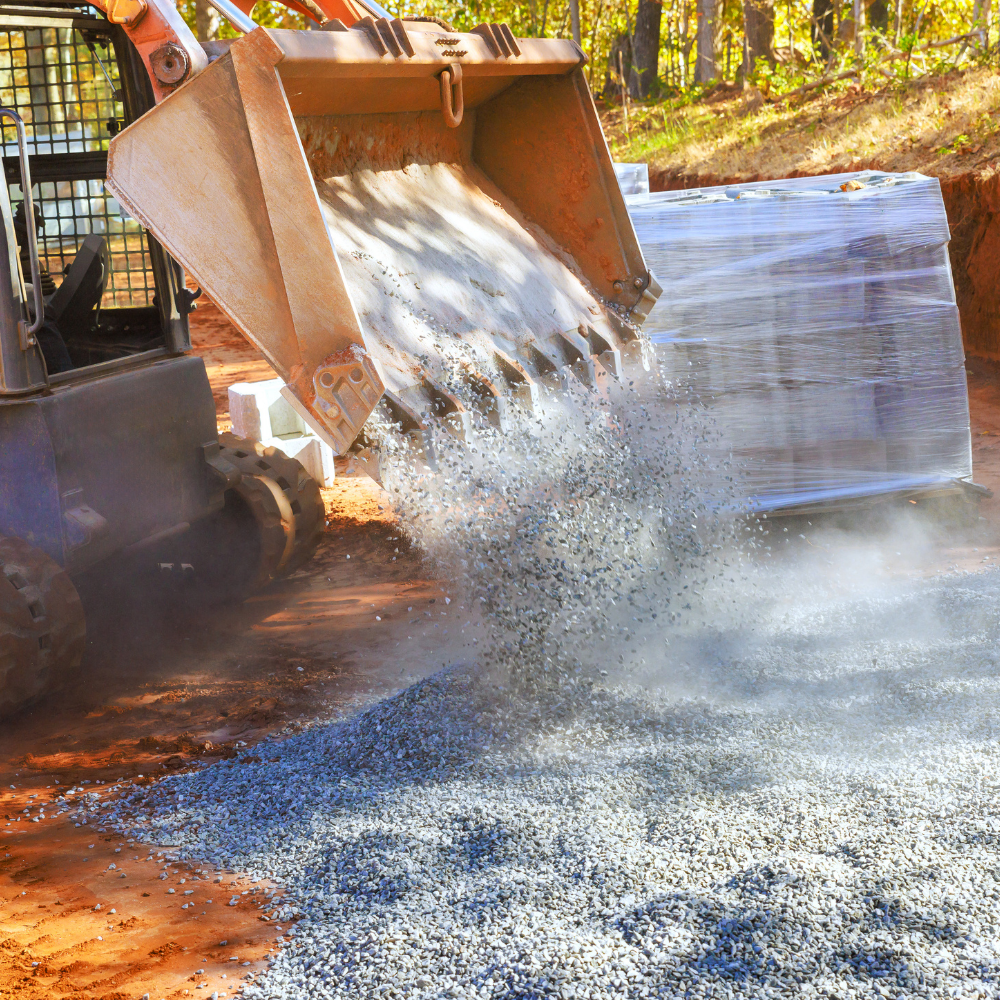
Gravel Driveway Drive-Through Durability with Concrete Edges
If your gravel driveway keeps “walking” outward or getting rutted where cars turn and travel through, concrete edging can help keep the gravel contained, improve stability, and create a cleaner transition to the rest of your property. This guide explains what to look for in a drive-through layout in McKinney, TX and how concrete edges work alongside gravel.
After a few rainy weeks in McKinney, TX, it’s common to notice your gravel driveway looks different than it did last month. The edges may be spreading, the surface can get uneven, and tire tracks can turn into shallow ruts where vehicles drive through and turn around.
If you’re deciding whether to replace gravel, rebuild the base, or upgrade the driveway edges, you probably want a plan that holds up to daily traffic without constant re-grading. This guide will help you understand how concrete curb-style edges can improve drive-through durability, what to check before work starts, and which details matter most for long-lasting results.
Quick Answer
For a gravel driveway that sees regular drive-through traffic, concrete edges help keep the gravel contained and reduce edge washout and spreading. The most durable results usually start with solid site preparation: a properly graded base, controlled drainage, and compacted materials before any edging is installed. If your main issue is ruts, uneven areas, or gravel migrating outward, ask about concrete curb installation or concrete edging that matches your driveway layout. TopCore Concrete can help you choose an approach that fits your property and traffic patterns in McKinney, TX.
What to Check First
Before deciding on concrete edges, take a quick look at what’s actually failing in your driveway. The goal is to address the cause, not just the surface appearance.
- Where the gravel is moving: Is it mainly at the outer edges, around a turn, or in the drive-through lane where tires track repeatedly?
- How water behaves after rain: Do you see puddling, muddy spots, or runoff cutting channels along the edges?
- Whether the base is holding up: Ruts that keep returning often point to base issues or compaction problems, not only a need for more gravel.
- How much area needs correction: If the driveway has dips, uneven slopes, or inconsistent grades, you may need foundation grading-style site work to bring the profile back in line.
Practical observation: If you can push gravel into an “edge gap” with a shovel or see repeated washout after storms, the driveway is asking for restraint at the perimeter. Concrete edges are designed to provide that containment while you maintain the gravel surface on top.
Main Things Customers Should Understand
Concrete edges are not just a cosmetic upgrade. In a drive-through gravel layout, they influence how the gravel performs under turning loads, how water runs off, and how the surface stays consistent over time.
1) Containment at the perimeter
Drive-through traffic tends to push aggregate outward. Concrete curb installation or curb-like edging helps keep the gravel where it belongs, which reduces the “spreading” look and keeps the driveway width more consistent.
2) Drainage and grade control
Even the best edging can’t fix standing water. A stable grade and controlled drainage help water leave the surface instead of eroding the edges and undermining the base.
3) Base preparation and compaction
Concrete edges work best when the area underneath is prepared correctly. If the base is weak, ruts will form and the driveway will keep shifting, edging included.
When you’re planning a drive-through section, it helps to think in “lanes” rather than the driveway as a single flat area. The lane that sees repeated tire paths will experience the most load and the most movement. That means your edging and grading should reflect the reality of how vehicles travel.
To compare options, here is a practical decision table for common driveway outcomes and how concrete edges typically fit in.
| What you’re noticing | Likely underlying cause | Concrete-edge benefit | Related service to consider |
|---|---|---|---|
| Gravel spreading beyond the driveway line | Edge containment is weak and vehicles push aggregate outward | Creates a defined boundary that helps hold the gravel in place | Gravel driveway upgrades |
| Ruts in the drive-through lane | Base and compaction may need correction, plus grade may be off | Helps protect perimeter, while the base work prevents recurring ruts | Foundation grading and site prep |
| Water carving channels along edges | Drainage and slope are not guiding water effectively | Reduces edge washout and helps maintain a cleaner transition | Driveway improvement planning |
| Driveway border looks uneven or deteriorated | Existing edges have settled, cracked, or separated from the base | Restores a consistent perimeter and improves long-term stability | Gravel driveway rebuild approach |
Why This Matters in McKinney, TX
In McKinney, TX, many properties combine mature landscaping, irrigation plans, and driveway traffic patterns that change seasonally. After heavier rain periods, gravel can shift more noticeably at turns and at the drive-through path where tires repeatedly travel. Concrete edges help reduce how far aggregate migrates, which means less frequent re-shaping and a more consistent driveway surface.
One local detail homeowners often overlook is how water moves from the driveway toward surrounding lawn or landscaping. If runoff has a “favorite path,” it can undermine the edge over time. A good driveway edge solution pairs containment with site prep so the driveway drains the way it should.
Professional observation: A drive-through gravel driveway doesn’t fail all at once. It usually starts with edge movement, then ruts appear where tires track, and water eventually finds weak spots. Addressing the perimeter with concrete edges plus correcting grade and base conditions is how you interrupt that cycle.
Ready to tighten up your gravel driveway edges?
TopCore Concrete can help you plan concrete curb installation and driveway edge improvements that fit how vehicles actually move across your property in McKinney, TX.
Call (469) 885-8590Common Mistakes to Avoid
Most drive-through durability problems come from skipping a step or choosing the wrong fix for the real cause. Here are the mistakes we see most often.
- Adding more gravel without addressing base stability: If the base is weak or uneven, the driveway will continue to rut. Gravel can look “fixed” for a short time and then fail again.
- Installing edging on a poorly graded surface: Edging helps containment, but water still follows the grade. If drainage is off, runoff can undermine the perimeter.
- Ignoring the drive-through lane: A driveway is not one uniform wear zone. The lane where tires track repeatedly needs attention to grade and base, not just more surface material.
- Using mismatched transitions: If the edge transitions poorly to adjacent areas, you can end up with recurring separation or debris buildup. Planning the boundary matters.
- Waiting until the problem is “everywhere”: Edge movement often starts locally. Catching it early can mean fewer corrections later.
Customer Checklist
- Identify the exact spots where gravel spreads or ruts form (edges, turns, or drive-through lane).
- Check drainage after rain: note puddling, muddy channels, and where water runs.
- Confirm the driveway grade feels consistent when you walk the surface (dips and humps can contribute to movement).
- Ask whether the base needs correction before installing concrete edges.
- Discuss concrete curb installation or edging that matches your driveway width and traffic flow.
- Plan for a clean transition between the driveway surface and adjacent areas.
- Decide on maintenance expectations: topping gravel may still be part of upkeep.
Representative scenario: a McKinney drive-through that keeps shifting
A homeowner in McKinney, TX reported that their gravel driveway looked fine right after it was re-leveled, but within a few weeks the edges started to creep outward. The drive-through path where vehicles passed multiple times a day developed shallow tracks, and after rain the water seemed to “dig” along the perimeter.
The solution approach focused on correcting the driveway profile and improving perimeter containment. Concrete edges were added where the aggregate was migrating most, paired with the site preparation needed to support the gravel base under repeated tire loads. The end result was a driveway that stayed closer to its intended width and maintained a more even surface through the drive-through lane.
Frequently Asked Questions
Will concrete edges stop all gravel movement?
Concrete edges are designed to contain gravel and reduce edge washout and spreading, but they are not a substitute for proper base prep and drainage. If the underlying base is unstable or the grade directs water toward the edges, you can still see surface issues over time. The most durable results pair concrete edging with correct site preparation so water leaves the driveway the right way and the gravel stays supported under repeated tire loads.
Is concrete edging the same as a full concrete driveway?
No. Concrete edging is typically used as a boundary system around a gravel surface. A full concrete driveway replaces the gravel with concrete flatwork across the drive area. If your goal is drive-through durability while keeping gravel, concrete edges can be a practical middle step. TopCore Concrete can help you decide whether edging alone fits your situation or whether a larger concrete scope makes more sense based on how your driveway is performing.
What should I expect during site preparation?
Site preparation focuses on getting the driveway profile and support layer right before any concrete edging is installed. That usually means addressing grade, preparing the surface to support the gravel, and correcting areas that contribute to ruts or water pooling. If you already have uneven sections, the work may include adjustments that bring the driveway back into alignment so the edging can do its job. This step is what helps your driveway hold up longer between re-grading.
How do I know if my driveway needs concrete edges or driveway replacement?
Look for patterns. If the primary problem is edge spreading and perimeter washout, concrete edges often address the root issue. If the drive-through lane is deeply rutted, the surface is consistently uneven, or the drainage is failing across a larger portion of the driveway, you may need a broader repair or replacement plan. A driveway that keeps changing after short periods usually needs more than surface-level adjustments. Having an on-site review helps clarify whether edging, grading, or a full driveway approach is the better fit.
Can this help with parking lot style wear on residential properties?
Yes, in many cases. If your property sees frequent vehicle entries, deliveries, or heavier drive-through traffic patterns, the driveway experiences “parking-lot-like” wear. Concrete edging can help manage gravel containment at the boundaries and support cleaner transitions. If your situation is closer to a commercial parking area, TopCore Concrete also offers parking lots and parking lot paving approaches that may be more appropriate. The key is matching the solution to the way vehicles use your space.
Get a driveway edge plan for your property in McKinney, TX
If you’re tired of re-grading and watching gravel migrate after rain, TopCore Concrete can help you evaluate concrete curb installation and the site prep needed for drive-through durability.
Contact TopCore Concrete