
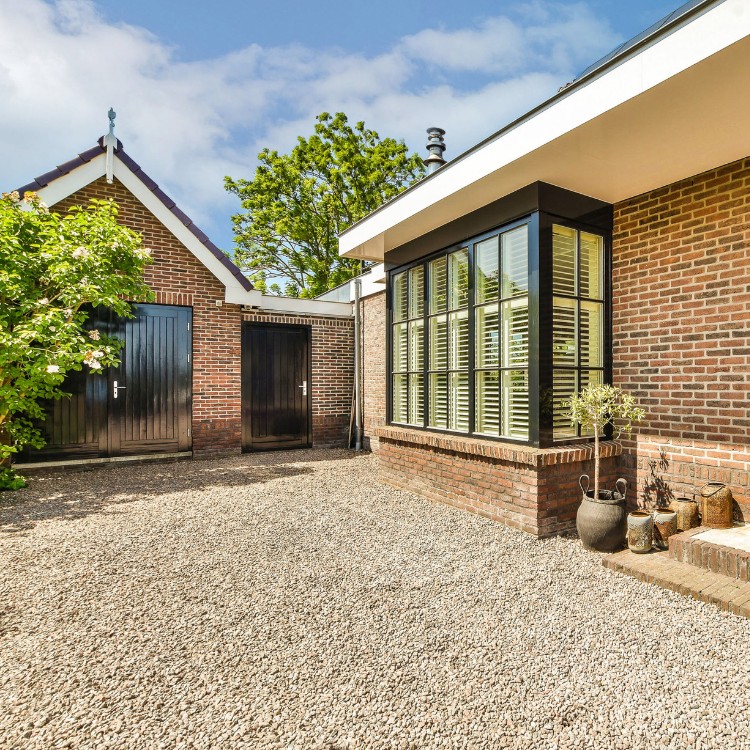
Gravel Driveway Excellence: Even Grade, Stable Surface
On a hot summer afternoon in McKinney, you can spot the difference between a well-built gravel driveway and a problem waiting to happen. One sheds water cleanly and stays solid under delivery trucks and work vehicles. The other has ruts, washouts, and dust clouds that never seem to settle. For commercial properties, warehouses, and rural businesses around Collin County, that difference shows up in maintenance costs, liability risks, and first impressions.
Across North Texas, unpaved access roads and drive lanes are common, but not all are designed with proper grading and base preparation. The Federal Highway Administration notes that poor drainage is a leading cause of early pavement failure, and the same principle applies to gravel surfaces: water and traffic will find any weakness.
This guide walks through how to achieve an even grade and a stable surface for your gravel driveway, from subgrade prep and drainage to material selection and long-term maintenance. You’ll see what works, what fails, and what it takes to get commercial-grade performance from what many people think is a “simple” gravel drive.
Key Insight: A stable gravel driveway isn’t about the rock on top; it’s about the structure, grading, and drainage underneath—done to the same standard as quality Concrete Foundations and commercial pavements.
Building from the Ground Up: Subgrade and Base Preparation
The most expensive problems in a gravel driveway usually start where you can’t see them: in the soil and base layers. North Texas soils around McKinney are notorious for clay content and seasonal movement, which means a driveway that looks fine in April can be rutted and soft by September if the subgrade isn’t handled correctly.
A professional gravel driveway installation begins with:
- Stripping organics (grass, topsoil, roots)
- Compacting the subgrade to a uniform density
- Shaping the surface with proper crown or cross-slope
- Installing a compacted base layer of larger aggregate
This is the same mindset used for Concrete Slab Installation and commercial Land Grading Services. If the subgrade can’t support the load, no surface fix will last.
“Most gravel driveway failures are blamed on the rock, but the real culprit is almost always poor base preparation.” — Field Superintendent, TopCore Concrete
Local Example: Warehouse Access in McKinney
A small distribution business near Highway 380 called TopCore because their trucks were bogging down after heavy rains. The original drive was simply spread rock over native soil. TopCore’s crew removed the failed surface, re-graded and compacted the subgrade, installed a graded aggregate base, and then topped it with a tighter surface layer.
After rework, the owner reported zero stuck trucks through an entire rainy season and less than half the dust they’d seen before.
A solid base is also critical if you ever plan to upgrade to Concrete Driveway Installation or asphalt in the future. Think of it as investing once in the “bones” of your access, then choosing your surface finish over time.
Grading for Drainage: Keeping Water Working for You
Even the best rock will fail if water has nowhere to go. In McKinney’s intense storm events, a poorly graded gravel driveway can become a channel for runoff, eroding sections, undermining edges, and pushing fines out of the structure.
Proper grading focuses on two goals:
- Getting water off the driveway surface quickly
- Moving water away from buildings, parking areas, and foundations
For gravel driveways, that usually means a crown (higher in the middle, falling to both sides) or a consistent cross-slope to a ditch or swale. This approach mirrors the standards used for Foundation Grading and Parking Lot Paving.
CALLOUT: A flat gravel driveway is rarely a good driveway. Slight, controlled slope is your best defense against rutting and washouts.
Case Study: Protecting a Slab and Retaining Wall
On a commercial site near McKinney’s industrial corridor, a long gravel access drive sloped directly toward a building’s slab and adjacent Retaining Walls. Over time, stormwater was cutting channels that threatened the structure’s edge and undermined the wall footing.
TopCore’s solution:
- Re-shaped the driveway with a consistent crown
- Cut shallow swales on the downhill side
- Added compacted aggregate shoulders to protect edges
- Coordinated with the owner’s engineer to ensure water was directed away from the Slab Foundations
After the regrade, surface water no longer reached the building, and erosion along the wall stopped. This kind of integrated drainage thinking is crucial when your driveway sits near critical structures or parking areas.
Choosing the Right Gravel Mix for Stability and Comfort
Not all gravel is created equal. The mix you choose affects:
- Load-bearing capacity under heavy vehicles
- Resistance to rutting and washboarding
- Dust levels during dry spells
- Comfort and appearance for customers and staff
For commercial or high-use drives in McKinney, a layered approach often works best:
- A base layer of larger, angular aggregate for strength
- A surface layer of smaller, well-graded stone for tight interlock and smoother travel
This mirrors how a quality Asphalt Parking Lot or Parking Lots are built: structure first, then riding surface.
“Rounded rock rolls. Angular aggregate locks.” — Senior Project Manager, TopCore Concrete
Local Example: Mixed-Use Drive and Parking
A small business on the outskirts of McKinney needed a shared gravel drive that also served as overflow parking. They wanted stability for delivery trucks but a reasonably smooth surface for customer vehicles and foot traffic.
TopCore installed:
- A 4–6″ base of larger crushed stone
- A 2–3″ cap of smaller, more tightly graded aggregate
- Compaction between layers to create a unified structure
The result was a driveway that felt firm underfoot, minimized dust, and held up under regular box-truck traffic. Later, when the owner expanded, TopCore tied in a small Concrete Patio Installation and short Concrete Walkways directly to the gravel drive, maintaining good drainage and access.
Traditional “Spread and Pray” vs. Engineered Gravel Driveways
Many property owners in North Texas have experienced the “spread and pray” method: a truck dumps rock, it’s roughly spread with a tractor, and everyone hopes it holds. It usually doesn’t—especially under commercial traffic.
Here’s how that compares to a more engineered approach:
| Aspect | Traditional “Spread and Pray” | Engineered Gravel Driveway by TopCore |
|---|---|---|
| Subgrade preparation | Minimal or none | Stripped, compacted, and shaped |
| Drainage planning | Rarely addressed | Designed crown/cross-slope and outlets |
| Aggregate selection | Whatever is cheapest/available | Sized and graded for load and use |
| Compaction | Little to none | Layered compaction with proper equipment |
| Life expectancy (commercial) | 1–3 years before major issues | 5–10+ years with routine maintenance |
| Upgrade path (to concrete/asphalt) | Often requires full rebuild | Base can often be re-used |
For businesses that may later invest in Driveway Replacement with concrete or asphalt, the engineered approach pays off twice: now, with better performance, and later, when the existing base can support new surfacing.
Local Cost Perspective
In the McKinney area, an engineered gravel driveway typically costs more upfront than a quick rock spread, but it often saves:
- Regrading and re-rocking every year or two
- Downtime from impassable access during storms
- Premature work when transitioning to Driveways in concrete or asphalt
For one local contractor yard, TopCore rebuilt a failing gravel entrance that had been re-rocked three times in five years. After proper subgrade and base installation, the owner has gone four years with only minor touch-ups.
Integrating Gravel Drives with Concrete, Parking, and Site Features
Most commercial properties don’t exist in isolation. Your gravel driveway usually connects to something: a public street, a concrete apron, Parking Lot Striping zones, walkways, patios, or building entries. Poor transitions between these elements are common sources of trip hazards, standing water, and accelerated wear.
TopCore often designs gravel drives as part of a broader site plan that can include:
- Concrete Sidewalk Installation from parking to entries
- Stamped Concrete Patios for employee or customer areas
- Concrete Curb Installation to control edges and water
- Concrete Steps Installation where grade changes occur
“Every transition is a chance to either solve a problem or create one. Good site design makes the driveway, parking, and walkways work together.” — Project Designer, TopCore Concrete
Example: Rural Business with Mixed Surfaces
A rural business outside McKinney had:
- A gravel access road
- A small concrete parking pad
- A separate concrete patio for customers
Each element had been installed independently, and water pooled where gravel met concrete. TopCore re-graded the gravel, added a compacted shoulder against the slab, and installed a short Concrete Walkway to tie parking and patio together.
The result was cleaner drainage, less mud tracked inside, and a more professional appearance—without replacing the entire gravel drive.
Maintenance, Repair, and When to Upgrade
Even a well-built gravel driveway needs periodic care. The goal is to perform small, timely maintenance rather than waiting for major failure.
Common maintenance tasks include:
- Light regrading to remove minor ruts and restore crown
- Adding small amounts of surface aggregate where needed
- Addressing drainage blockages in ditches or culverts
- Spot-compacting high-traffic or turning areas
This routine approach is similar to how you’d maintain Asphalt Parking Lots with Parking Lot Paving and Concrete Sealing for concrete flatwork. Small, consistent efforts prevent bigger structural issues.
Repair and Upgrade Triggers
You may need more than basic maintenance if you see:
- Persistent standing water or mud pumping through the surface
- Deep, recurring ruts in the same locations
- Significant loss of aggregate after each storm
- Settlement near buildings, patios, or Foundation Repair areas
At this point, TopCore often evaluates whether a deeper repair is warranted or if it’s time to upgrade segments to concrete or asphalt—especially near entrances, loading zones, or frequently used parking. Existing gravel bases, if properly built, can often be re-used under new Driveway Repair, concrete flatwork, or even Parking Lot Paving.
Gravel vs. Concrete vs. Asphalt for McKinney Businesses
Many owners in McKinney want to understand how a well-built gravel driveway stacks up against concrete and asphalt options.
| Feature / Factor | Engineered Gravel Driveway | Concrete Driveway / Lot | Asphalt Driveway / Lot |
|---|---|---|---|
| Upfront cost | Lowest | Highest | Mid to high |
| Load capacity | Good with proper base | Excellent, ideal for heavy and static loads | Very good, especially for vehicle traffic |
| Maintenance frequency | Moderate (regrading, rock additions) | Low to moderate (Concrete Repair, sealing) | Moderate (sealcoating, patching) |
| Dust and tracking | Higher, can be mitigated | Very low | Low |
| Surface smoothness | Fair to good | Excellent | Very good |
| Best use cases | Long drives, rural access, overflow parking | Primary Driveways, loading areas, ADA paths | High-traffic vehicle lanes and Parking Lots |
For many McKinney properties, the most cost-effective strategy is a hybrid: gravel for long access runs and lower-traffic areas, with concrete or asphalt at entry points, main Parking Lots, and critical loading zones.
What This Means for Businesses in McKinney, TX
McKinney’s rapid growth and mixed urban-rural character create unique demands on access roads and driveways. You may have a metal building on acreage, a contractor yard off a county road, or a small commercial property just outside city limits. In all these cases, an uneven, rutted driveway doesn’t just look bad—it affects operations.
Delivery trucks need reliable access, customers expect safe, clean entry, and your team can’t afford downtime every time a storm rolls through. With our local clay soils and intense rain events, a gravel driveway built without attention to grading and structure is almost guaranteed to cause headaches.
By treating your gravel driveway with the same seriousness as a concrete slab or paved lot—proper subgrade prep, engineered grading, and planned maintenance—you can:
- Reduce long-term maintenance costs
- Protect nearby Slab Foundations, patios, and retaining walls
- Improve safety and accessibility for vehicles and pedestrians
- Keep your property looking professional to customers and partners
TopCore Concrete has worked on projects from small rural drives to integrated sites with Gravel Driveway systems, concrete parking, and Concrete Sidewalk Installation across the McKinney area. Local experience matters: understanding how Collin County soils behave, how local drainage patterns work, and how to phase upgrades as businesses grow.
Frequently Asked Questions
Q: How thick should a gravel driveway be for commercial traffic in McKinney?
A: For light residential use, 4–6 inches of compacted gravel might be enough, but commercial traffic is a different story. Around McKinney, where soils can be soft and clay-heavy, TopCore typically recommends a minimum of 6–8 inches of well-compacted aggregate for light commercial use, and 10–12 inches or more for heavier trucks or frequent deliveries. This is often built in layers, similar to a base for Concrete Driveway Installation or Asphalt Parking Lots. The exact thickness depends on soil conditions, drainage, and expected loads, which is why a site visit and evaluation are essential.
Q: How do I stop my gravel driveway from washing out during heavy Texas rains?
A: Washouts are almost always a grading and drainage issue, not just a rock problem. The driveway should have a consistent crown or cross-slope so water runs off quickly rather than channeling down the wheel paths. In McKinney, where intense thunderstorms are common, TopCore often pairs proper grading with roadside ditches, swales, or culverts to carry water away. In some cases, adding edge protection or tying into nearby Retaining Walls or Land Grading Services helps manage runoff. Simply adding more rock without correcting the grade usually leads to repeat failures.
Q: Can I convert my existing gravel driveway to concrete later without starting over?
A: Often, yes—if the existing gravel structure is properly built. A well-compacted gravel base can serve as a strong foundation for future Concrete Foundations, Driveway Replacement, or even Parking Lot Paving. TopCore frequently designs gravel drives with this in mind, ensuring adequate thickness, compaction, and drainage so the base can be re-used. If the current driveway has chronic rutting, soft spots, or drainage issues, some remediation will be needed before concrete is placed. A site assessment can determine whether your existing gravel can be salvaged or needs partial rebuilding.
Q: How much maintenance does a well-built gravel driveway really need?
A: Compared to neglected drives, a properly constructed gravel driveway in the McKinney area requires relatively modest upkeep. Most commercial owners schedule light maintenance once or twice a year: minor regrading to restore crown, adding small amounts of surface aggregate where needed, and clearing ditches or culverts. These tasks are similar in spirit to Concrete Resurfacing or Concrete Repair for paved areas—small interventions that prevent bigger issues. If you find yourself re-rocking entire sections every year, that’s a sign the original base or drainage needs professional attention.
Q: Is gravel a good choice for areas with customer foot traffic?
A: It can be, if designed carefully and paired with the right hard surfaces. For example, long access drives and overflow Parking Lots can be gravel, while primary walk paths, entries, and ADA routes should be hard surfaces, such as Concrete Walkways or Concrete Patio Installation. In McKinney’s mix of rural and suburban properties, this hybrid approach is common. TopCore often uses tighter surface aggregates in gravel areas near buildings to make walking more comfortable and then connects them directly to concrete sidewalks, steps, or patios for accessibility and aesthetics.
Q: How do I know if my gravel driveway problems are linked to foundation issues?
A: Persistent settlement, standing water near the building, or erosion exposing the edge of a slab can be warning signs. If your gravel driveway slopes toward your structure instead of away, water can collect near Slab Foundations, potentially contributing to movement or the need for Foundation Repair. In McKinney’s expansive clay soils, this is a real concern. TopCore looks at the entire site—driveway grade, downspouts, retaining walls, and surrounding terrain—to make sure the driveway is helping, not hurting, your foundation. Adjusting driveway grading is often part of a broader Foundation Leveling and drainage strategy.
Q: When should I consider upgrading parts of my gravel drive to concrete or asphalt?
A: Good candidates for upgrade are areas with heavy turning, frequent braking, or concentrated loads—entry aprons, loading docks, dumpster pads, and primary customer parking. These spots experience more stress than the rest of the drive and may justify Concrete Flatwork or Asphalt Parking Lots. In McKinney, many owners keep long access roads in gravel for cost reasons but invest in concrete at the building face for durability and appearance. TopCore can phase these upgrades so you don’t have to tackle everything at once, preserving as much of your existing gravel base as possible.
Ready to Get Started?
North Texas weather and soils won’t wait, and neither will the wear and tear from daily operations. If your gravel driveway is already showing ruts, washouts, or drainage problems, each storm and truckload only accelerates the damage. Addressing the structure and grading now is far more cost-effective than reacting to repeated failures or potential access shutdowns.
TopCore Concrete designs and builds gravel driveways to the same standard we use for concrete slabs, Parking Lots, and Concrete Sidewalk Installation. That means proper site evaluation, thoughtful grading, and a clear plan for how your driveway ties into buildings, patios, and future improvements. Whether you need a brand-new access road, a rebuild of a failing drive, or a phased plan that leads toward concrete or asphalt, our team can help you chart the right path.
Schedule a site visit, walk your property with a local expert, and get a straightforward plan and estimate tailored to your McKinney location and business needs.
About TopCore Concrete
TopCore Concrete is a locally focused concrete and sitework contractor serving McKinney, TX and the surrounding North Texas communities. Our team brings years of experience in Concrete Foundations, Driveways, Parking Lots, Sidewalks, and Gravel Driveway construction and repair. From small business properties to larger commercial sites, we focus on doing the fundamentals right—grading, drainage, and durable construction—so your concrete and gravel surfaces perform for years. Learn more about our services and local projects at https://topcoreconcrete.com/.