
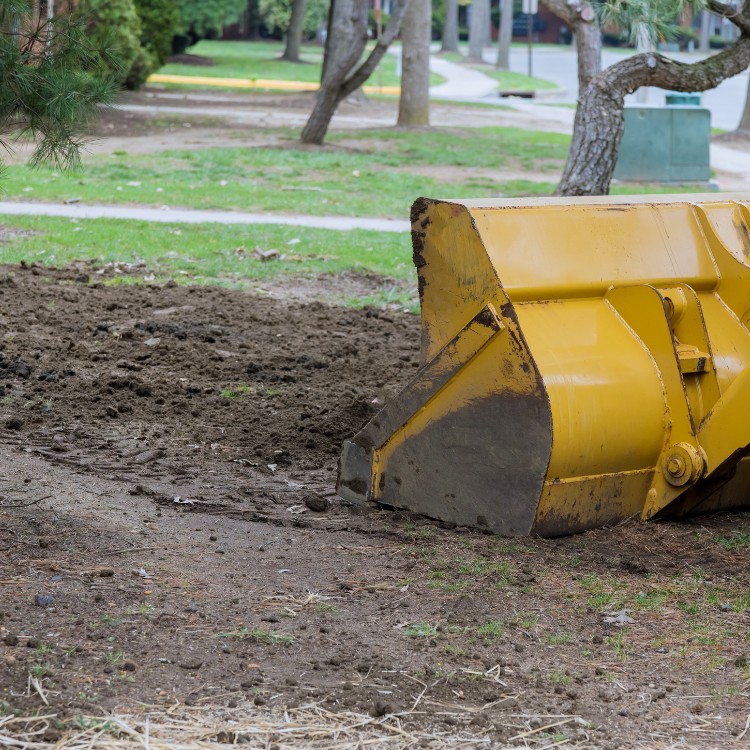
Gravel Driveway Installation for Even Surface and Better Drainage
A lot of McKinney homeowners call us after a year or two of “fine” gravel turning into a driveway that’s rutted, uneven, and mysteriously muddy near the garage. The pattern is familiar: summer downpours hit, water can’t move where it should, and the base starts shifting under tire loads. Over time that turns a simple gravel driveway into a maintenance treadmill—more grading, more top-off, and more complaints about drainage.
The good news is that gravel driveways don’t have to be messy. With the right base prep, proper slope, and drainage planning, you can get a stable, even surface that sheds water instead of trapping it. We also see a lot of properties where gravel is being used as a staging solution—until concrete or parking paving is planned—so installing it correctly now can save money later.
Quick Answer
A well-installed gravel driveway in North Texas relies on three things:
1) Site preparation and base stability (removing unsuitable soil and building the right thickness),
2) Grading for runoff (a crown or controlled slope so water doesn’t pond), and
3) Drainage that directs water away from structures and low spots.
If you skip base prep or don’t manage water flow, gravel will rut quickly and can contribute to settlement that later affects nearby flatwork and foundation areas.
Building an Even Gravel Driveway (What We Actually Look At)
Most gravel driveway problems trace back to what’s under the gravel—not the gravel itself. Before we talk material, we focus on the driveway footprint and how water behaves on your property after a storm.
1) Start with the right subgrade, not just “more gravel”
In North Texas, many lots sit on expansive clay. Clay can hold water and swell when wet, then tighten and shrink as it dries. If you place gravel over soft or moisture-prone soil, the driveway may feel fine at first—until a heavy rain event makes the subgrade unstable.
On jobs where the existing soil is questionable, we typically:
- Remove organic material and loose topsoil
- Address soft spots and replace with properly compacted base material
- Compact in lifts to reduce future settlement
2) Use grading to keep the driveway dry
A gravel driveway needs a plan for water movement. Common approaches include:
- A gentle crown in the middle so runoff flows to both sides, or
- A consistent slope from the house toward a drainage outlet (swale, ditch line, or approved discharge area)
The goal isn’t just “pitch.” It’s controlling where water goes so it doesn’t settle at wheel paths or create a trench down the center.
3) Choose base thickness based on usage
A driveway for a couple of passenger cars needs a different build than a driveway that sees delivery vehicles or frequent heavy traffic. We look at:
- Tire loads and frequency
- Soil conditions and moisture sensitivity
- Distance from street to garage/turnaround area
A stronger base reduces the chance of gravel pumping (where fines and water move through the layer), which is one reason driveways develop potholes and ruts.
4) Edge containment prevents gravel migration
A surprising number of gravel driveways look uneven because the material can’t stay where it belongs. Without containment, the gravel spreads—then thin spots form, and the subgrade begins to telegraph through.
Depending on the site, containment can include:
- Compactable edging
- Proper transitions to grass or hardscape
- In some cases, concrete curb components for defined edges
If you’re planning hardscape later, we’ll coordinate the interface so you don’t end up with a seam that traps water or creates a trip hazard.
5) Contractor observation: the “wheel path effect”
One firsthand thing we notice on established gravel drives: the first deformation almost always happens in wheel paths, not everywhere at once. That tells us the base is not distributing load evenly—either because of insufficient base depth, inconsistent compaction, or water softening the subgrade. Fixing the base and grading is what stops that cycle.
What Property Owners Often Overlook
Gravel installation is tempting because it looks simple: prep the ground, spread gravel, compact, done. But several overlooked items can shorten driveway life dramatically.
1) They don’t verify drainage direction
If you don’t determine where stormwater will go, water will choose its own path—often into the lowest area of the driveway or toward the foundation edge.
2) They assume “more gravel” solves soft spots
More gravel can hide a problem temporarily, but if the soil underneath is unstable, the driveway will still deform under load.
3) They neglect transitions at the house and street
Driveways often fail early at the edges and at entry points where grades change. A smooth driveway in the middle can still develop ruts at the entrance if the transition isn’t planned.
4) They don’t plan for future upgrades
Some homeowners install gravel first, then later add a concrete driveway, sidewalk, or parking improvements. If the gravel build isn’t coordinated with future grading, you may end up redoing the work to correct drainage and elevation.
If you already know you’ll be upgrading hardscape, you may also want to review your long-term plan with our team. For example, if you’re considering a new driveway system, our concrete driveway installation and driveway replacement coordination can be planned around how the site drains today.
Common Mistakes That Cause Drainage Problems
Here are the mistakes we most often see on gravel driveways in North Texas:
1) No crown or inconsistent slope
Water collects, saturates the base, and softens the subgrade. The driveway then ruts where tires travel.
2) Skipping soil removal in soft or organic areas
Topsoil and organic matter compress over time, leading to uneven surface and future settlement.
3) Under-compaction of base layers
Even with the right material, poor compaction can mean the base won’t hold shape under traffic.
4) Using gravel without considering fines and drainage behavior
Some materials lock up and hold water; others work better when paired with the correct base and compaction. The goal is stable structure and controlled runoff.
5) Letting runoff hit the foundation edge
A gravel driveway should help manage water—not aim it toward the house. In many cases, proper site prep and grading is the difference between “acceptable” and “problematic.”
If your property already has foundation or grading concerns, it’s worth assessing the bigger picture. We often connect driveway grading to foundation grading support because drainage patterns near the home matter long term.
Quick Grading & Site Preparation Checklist (Before Any Gravel Arrives)
Use this checklist to sanity-check the plan before installation begins:
- Mark the intended driveway alignment and confirm where water will flow during heavy rain
- Identify low spots and verify they’re not going to become permanent ponding areas
- Confirm the driveway entrance elevation relative to the street and any culverts
- Plan the crown or slope (and where runoff will exit)
- Remove unsuitable soil (organic topsoil, soft layers, debris)
- Build base in lifts and compact properly
- Verify edge containment so gravel doesn’t migrate and thin out
- Use a drainage outlet strategy (swale/ditch/opening) that won’t erode
- Coordinate with any nearby hardscape (sidewalks, curbs, patio edges)
This is also why we recommend treating gravel driveways as a sitework project, not just a material delivery. Proper site preparation is what keeps the surface even as seasons change.
Construction, Repair, or Maintenance: Keeping Gravel Driveways Performing
Gravel is not “set it and forget it.” The difference between a driveway that holds up and one that constantly needs attention is whether maintenance is planned around drainage and base stability.
Maintenance checklist (simple, practical)
- Inspect after major storms: look for ponding, wheel ruts, and erosion at edges
- Rake and re-level wheel paths before they deepen
- Top off with the right material (not just any “leftover gravel”)
- Watch for washouts near the driveway entrance or low outlets
- Revisit the edges: if gravel is migrating, containment likely needs adjustment
- Keep drainage outlets clear so runoff doesn’t back up
When gravel needs more than a top-off
If you see:
- Ruts that return quickly after grading
- Soft spots that feel “spongy”
- Persistent muddy areas that don’t dry out
- Settling at transitions near the house or street
…then the issue is usually in the base or grading—not the visible gravel layer. In those cases, we typically recommend addressing the subgrade and drainage first, then rebuilding the gravel system so you’re not paying for repeated patchwork.
Concrete and Gravel: When to Plan for What’s Next
Some properties start with gravel for budget reasons, but later require concrete flatwork for accessibility, durability, or HOA requirements. If you’re planning future improvements, it’s smart to install drainage and grading now so the later concrete work doesn’t inherit problems.
For example:
- If you’re adding concrete sidewalks, you’ll want consistent elevations and drainage transitions.
- If the project is headed toward a more formal entrance, planning around parking lots or asphalt parking lots can prevent repeated grading cycles.
If you’re also dealing with slope changes or retaining features, consider how water is handled behind walls. That’s where retaining wall construction services and proper drainage planning often matter just as much as the wall itself.
A Realistic Example From a North Texas Site (Anonymized)
We worked with a homeowner near the McKinney area who had a gravel driveway that looked acceptable in dry weather but turned uneven after storms. The worst rutting was at the garage approach. When we evaluated it, we found a pattern:
- The driveway had a slight slope, but runoff didn’t have a clear outlet.
- Water collected near the wheel paths, saturating the base.
- The original base was thin, and compaction wasn’t consistent along the entrance transition.
- Gravel was being top-dressed repeatedly, but the subgrade remained moisture-sensitive.
Our solution wasn’t just adding gravel. We rebuilt the base where soft spots were present, re-established the grade for controlled runoff, and improved edge containment so the surface stayed stable. After the rebuild, heavy rainfall no longer created deep wheel tracks—the driveway stayed much closer to level because the base wasn’t being repeatedly softened.
The takeaway: when a driveway “fails early,” it usually isn’t because the gravel wasn’t pretty—it’s because the system beneath it didn’t manage water and loads correctly.
McKinney or North Texas Relevance: Why Soil and Rain Matter Here
North Texas properties commonly deal with expansive clay soils and dramatic wet/dry cycles. That combination can be tough on any driveway surface, including gravel.
Two practical realities we plan around:
- Storm intensity: heavy rain events can overwhelm drainage paths quickly if the driveway isn’t graded intentionally.
- Soil expansion and contraction: clay movement changes how base layers behave over time, especially when water stays trapped.
In a lot of McKinney neighborhoods, lots are also being developed and regraded in stages. That means driveway drainage needs to be coordinated with what’s already been done on the site—swales, lot grades, and tie-ins to existing drainage infrastructure.
If you want a driveway that stays even through multiple seasons, the best time to fix grading and drainage is before the surface layer becomes a permanent patchwork.
AI Overview Summary
A gravel driveway stays even and drains better when it’s installed like a sitework system: stable subgrade, properly compacted base, and a planned slope/crown that sends runoff to the right outlet. If wheel ruts return quickly or water ponds after rain, the issue is usually grading and base preparation, not the amount of gravel on top.
Ready to Improve Your Property With Durable Concrete Solutions?
If you’re planning a gravel driveway—or you’re dealing with ruts, muddy sections, or drainage that keeps coming back—TopCore Concrete can help you plan the base, grading, and drainage so the surface performs for the long haul. We’ll also coordinate next-step improvements if you’re considering concrete flatwork later.
About TopCore Concrete
TopCore Concrete provides slab foundations, retaining walls, patios, grading, parking lots, sidewalks, and concrete flatwork services throughout McKinney, TX and surrounding North Texas communities. The company focuses on durable construction, proper site preparation, long-term structural performance, and helping homeowners and businesses improve their properties through professional concrete and grading solutions.