
Patio Installation Techniques for Weather-Ready Outdoor Spaces
A patio can look perfect the day it’s poured—then a few heavy North Texas storms roll through, water starts to pool near the slab edges, and you begin seeing hairline cracks or uneven spots after the first season. In McKinney, that cycle is common because expansive clay soils move with moisture, and summer heat accelerates shrinkage while winter cold snaps can stress the surface.
If you’re planning a concrete patio installation—or replacing one that’s already settling—your success will come down to what happens before the concrete ever hits the forms: site preparation, base design, and drainage grading. That’s where weather-ready patios are won.
Quick Answer
A weather-ready patio is built on three essentials:
1) correct site preparation and base thickness,
2) controlled drainage/grading so water doesn’t sit on or under the slab, and
3) durable concrete detailing (reinforcement, joints, and proper curing).
If your patio will connect to a home, retaining elements, or walkways, plan the drainage path first—then build the slab to match.
What Actually Makes a Patio “Weather-Ready”
From the contractor side, we treat a patio like a small pavement system, not just a concrete pour. The slab is the visible part, but the performance comes from the layers underneath and how water is managed.
1) Start with the drainage plan (not the finish)
In North Texas, the most damaging water behavior is slow ponding. Even if the slab doesn’t flood, repeated wetting at the edges can soften subgrade and encourage settlement.
A typical approach is to create a gentle slope away from the home (commonly around 1/8″ per foot, though the final plan depends on site constraints and where downspouts discharge). We also check for low spots where water collects after a rain—those areas usually dictate where the slab needs additional attention in grading and base prep.
2) Choose a base system that matches local soil behavior
McKinney-area clay can expand when wet and shrink when dry. If the base is thin, poorly compacted, or contains organics/variable fill, the slab will “tell on itself” later—usually as edge settlement, random cracking, or uneven sections.
On most residential patios, we focus on:
- removing unsuitable material and organics (if present),
- building a compacted aggregate base in lifts,
- verifying compaction density during prep (not just “we rolled it”),
- and keeping the subgrade stable long enough to avoid construction delays that leave it exposed to repeated wetting.
3) Reinforcement and jointing should match the patio size and use
A common misconception is that “more steel means better.” In reality, reinforcement and joints work together.
For larger patios, heavy furniture layouts, or areas near foot traffic paths, we’ll typically plan:
- reinforcement strategy appropriate to thickness and layout,
- control joints placed in a way that helps cracks occur where they’re least noticeable,
- and expansion considerations depending on adjacency to structures.
4) Surface finishing affects durability in Texas heat
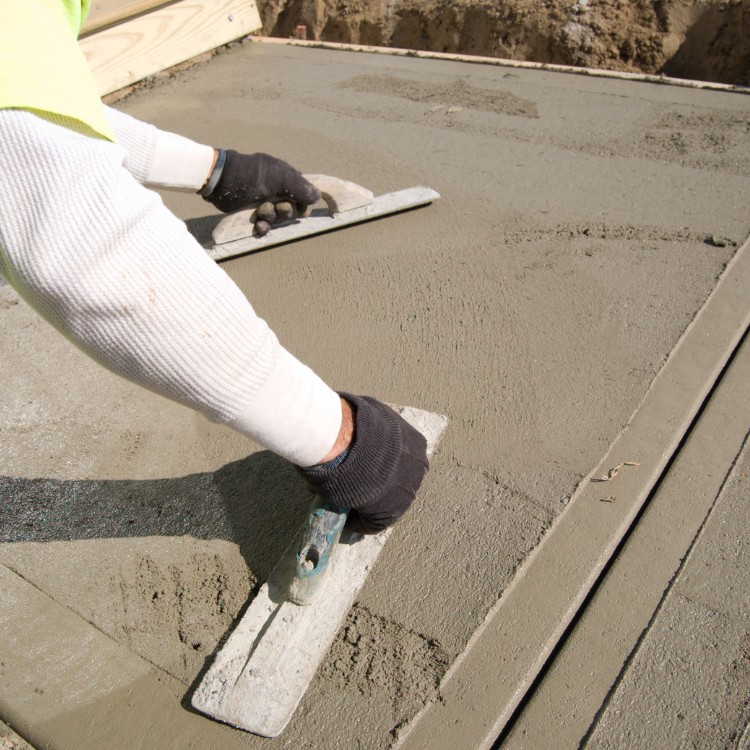
Finishing isn’t just aesthetics. Proper timing, finishing technique, and curing influence how the surface holds up to:
- rapid evaporation under summer sun,
- freeze/thaw cycles (less severe than northern climates, but still present),
- and de-icing or cleaning chemicals if used near walkways.
If you’re considering stamped concrete patios, the same rule applies: the stamping process and curing schedule must be consistent so the top layer doesn’t become weak or overly brittle.
Why Some Concrete Installations Fail Early
I’ll share a firsthand scenario we’ve seen more than once. A homeowner in the area wanted a quick patio turnaround and chose a date that overlapped a week of rain. The subgrade was graded “to look right,” but it wasn’t protected from repeated wetting. The crew poured once materials looked workable, and the slab cured normally—but within months, the patio developed uneven edges where water had likely softened the base.
The takeaway isn’t that concrete “can’t handle Texas weather.” It’s that moisture-sensitive subgrade needs stability before placement. Once the slab is poured, the system has no way to correct what the ground was doing.
What Property Owners Often Overlook
Most homeowners focus on what the patio will look like—color, stamp, and thickness on paper. But we regularly see issues start because of the layers underneath and the water path around the slab.
Common omissions include:
- not accounting for how downspouts and yard drainage flow toward the patio,
- skipping or minimizing base prep due to budget pressure,
- placing the patio too low relative to adjacent landscaping or walkways,
- assuming old soil under an existing slab is stable enough for new concrete,
- and treating joints like an afterthought.
If you’re also planning other flatwork—like concrete walkways or concrete side walk installation—the drainage and elevations should be coordinated so water doesn’t end up trapped between slabs.
Mistakes That Cause Drainage Problems
Here are the mistakes we most often address during repair calls or patio rebuilds:
1) “Level” patio grading
A patio that’s perfectly level can still trap water. The goal is controlled drainage, not a bubble-level surface.
2) No plan for water leaving the site
If water can’t exit properly, it will seek the path of least resistance—often underneath edges or through weak areas in the base.
3) Base placed over unstable material
Even good concrete can fail if the subgrade is inconsistent or contains organics.
4) Ignoring adjacency to the home
If the patio sits too close to structures or doesn’t coordinate with exterior grading, you can end up with water near foundation walls. That’s where a broader foundation grading support plan becomes valuable.
5) Underestimating the “soft zone”
We often see settlement initiate at the perimeter where compaction and thickness are easiest to short. The slab doesn’t fail in the middle first—it fails where the soil system is most vulnerable.
A contractor’s grading recommendation
When we lay out patio elevations, we verify:
- how water moves from the patio back toward the yard,
- where it could impact door thresholds or nearby surfaces,
- and whether any retaining elements or slope changes will cause localized pooling.
That’s also why we’ll often coordinate with other sitework elements like land grading services and, when needed, structural features such as retaining walls. If you’re building near a grade change, it’s worth planning both systems together—retaining structure drainage failures can indirectly affect nearby slabs.
Construction, Repair, or Maintenance Checklist
A weather-ready patio is built to last, but it still needs thoughtful planning and basic upkeep. Here’s a practical checklist you can use before and after installation.
Pre-Construction Planning Checklist
- Confirm the patio slope away from the home and away from any critical areas.
- Identify downspout discharge points and planned drainage routes.
- Decide on a surface approach (smooth, broom finish, or stamped concrete patios) and discuss curing expectations.
- Verify base prep requirements: removal of unsuitable material, aggregate base thickness, and compaction approach.
- Plan control joints and reinforcement based on patio size and layout.
- Coordinate patio elevations with nearby flatwork (walkways, steps, driveway tie-ins).
Concrete Maintenance Checklist (After Installation)
- Keep debris from clogging drainage paths at edges and around the patio.
- Reapply sealant when the surface shows signs of increased absorption or fading (timing depends on product and exposure).
- Clean with appropriate methods—avoid harsh chemicals that can damage finishes.
- Inspect seasonally for early signs of movement: separation at edges, widening cracks, or persistent damp spots.
- If you see minor cracking, address it promptly with the right repair approach so water doesn’t keep migrating into the base.
If your patio connects with a larger system—like a driveway or parking area—maintenance becomes even more important. Concrete flatwork works best when the drainage and surface conditions are treated as one continuous plan.
Optional Comparison: Concrete Patio vs. Other Surface Choices
Not every outdoor space needs concrete, but in Texas, concrete’s predictability under heat and moisture often wins. Here’s a simple comparison you can use when you’re deciding.
| Option | Best For | Weather Performance | Maintenance | Notes |
|---|---|---|---|---|
| Concrete patio | Most homes, custom designs | Strong with correct base + drainage | Sealing and occasional repairs | Great longevity when built on stable base |
| Asphalt-style surfaces | Larger areas needing faster installs | Can soften with water if drainage is poor | More frequent resurfacing | Often needs more frequent maintenance |
| Pavers | Decorative layouts | Good if base is engineered | Weed control + leveling | Joints can shift if drainage isn’t managed |
For larger commercial or mixed-use properties, many owners compare concrete and asphalt for parking lots and paving, then choose based on traffic loads and drainage requirements. If you’re planning a full property refresh, it may help to review options for parking lot paving and related work like striping.
McKinney or North Texas Relevance: Why Patio Failures Happen Here
North Texas weather patterns—especially summer heat and moisture cycles—turn small construction shortcuts into visible problems. Expansive clay can create movement even when the slab looks fine initially.
In McKinney, we also see:
- rapid suburban growth leading to frequent changes in grading and landscaping, which can redirect water toward new flatwork,
- heavier downpours that test drainage paths,
- and HOA standards that push homeowners toward certain finishes—without always requiring a matching drainage plan.
That’s why we prefer to evaluate the whole site, not just the patio footprint. If the patio is part of a bigger upgrade—like driveways or sidewalk replacements—it’s worth aligning the site prep and drainage so everything performs together.
If you’re already considering adjacent improvements, you may want to coordinate your patio plan with:
- patio installation solutions
- concrete sidewalk installation
- concrete driveway installation
- foundation grading support
(When elevations and drainage are aligned, you typically reduce the chance of water “migrating” to the weakest point.)
A Realistic Project Example (Anonymized)
A common case we handle is a backyard patio replacement where the old slab had uneven edges. The homeowner noticed the patio didn’t drain well after storms and that the surface felt damp near one corner.
Our approach included:
- removing the existing concrete and reviewing the condition of the underlying material,
- stabilizing the subgrade and rebuilding with properly compacted base,
- reworking grading so water would exit away from the home and toward a planned drainage route,
- adding jointing and reinforcement appropriate to the slab layout,
- and finishing with a texture that supports slip resistance in wet conditions.
The new patio wasn’t just smoother—it was designed to keep water moving. That’s what changed the performance, not just the appearance.
If your property also has slope changes, it may be wise to plan around structural elements like retaining wall construction services so drainage isn’t forced to cross the patio area.
Concrete vs. Asphalt Comparison for Outdoor Spaces
If you’re deciding between concrete and asphalt for an outdoor area (especially near drive lanes), here’s how the tradeoffs usually look.
- Concrete tends to hold up better over the long term when the base and drainage are done right. It’s also easier to match elevations with sidewalks and patios.
- Asphalt can work well for certain large-area applications, but it’s more sensitive to drainage issues. When water sits, performance can decline faster.
For commercial properties with heavier vehicles, owners sometimes compare options including asphalt parking lots versus concrete—then choose based on traffic patterns and subgrade stability. If you’re exploring paving work, it helps to discuss site preparation early, not after you’ve already selected a finish.
Signs Concrete Needs Repair
Even the best patio system can need attention over time. Watch for:
- cracks that widen after rain or season changes,
- separation at joints or edges,
- recurring damp spots that don’t dry within a reasonable time,
- spalling or surface scaling,
- trip hazards from uneven settlement.
If you catch issues early, many repairs are localized. If you wait until water has repeatedly undermined base material, the fix often becomes more complex.
Ready to Improve Your Property With Durable Concrete Solutions?
If you want a patio that stays flat, drains correctly, and looks great through North Texas weather, the best first step is planning the site conditions before construction begins. We’ll help you evaluate grading, drainage, base preparation, and slab design so your outdoor space performs season after season.
About TopCore Concrete
TopCore Concrete provides slab foundations, retaining walls, patios, grading, parking lots, sidewalks, and concrete flatwork services throughout McKinney, TX and surrounding North Texas communities. We focus on durable construction, proper site preparation, long-term structural performance, and helping homeowners and businesses improve their properties with practical, weather-ready concrete systems.