
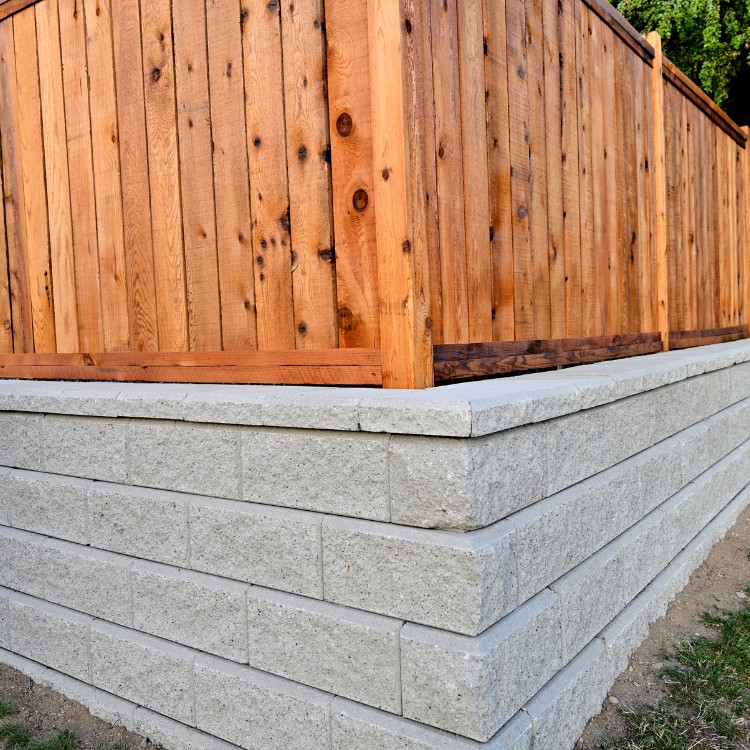
Retaining Walls That Blend Naturally with Your Yard
If you’ve ever watched heavy rain turn your yard into a slow-moving “river” along the slope, you already know why retaining walls matter. In McKinney and across North Texas, it’s common to see water break down topsoil, wash out mulch and gravel, and eventually undermine patios, walkways, and even foundation edges. The result is more than cosmetic—erosion and shifting soils can create settlement, cracks, and recurring drainage problems.
A well-built retaining wall doesn’t just hold soil back. It supports a cleaner grade, protects surrounding concrete flatwork, and looks like it belongs in your landscape instead of feeling tacked on.
Quick Answer
A natural-looking retaining wall starts with correct grading and drainage planning—not just the wall material. In North Texas clay-heavy soils, water management is crucial because saturated soil expands and loses strength. The best walls include:
- Proper subbase and compaction behind the wall
- Drainage layers (like gravel and weep systems) to relieve water pressure
- Correct wall embedment and reinforcement where needed
- A finish that matches your yard (stone, block, or architectural concrete treatments)
When these elements are right, the wall holds up longer and blends better with your property.
Why the “Looks Good” Wall Still Fails (Unless Drainage Is Right)
I’ll share a contractor observation we see repeatedly: homeowners focus on the visible face—stone color, block pattern, or the top cap style—while the real performance depends on what’s behind the wall. Retaining walls are basically soil- and water-management systems. If water can’t move through and away from the structure, pressure builds behind the wall and can push it out over time.
In North Texas, that risk is higher because of our seasonal swings—hot summers, periodic intense storms, and clay soils that expand and contract. Even if the wall face looks straight after install, trapped moisture can reduce soil strength and accelerate movement.
A Natural Blend Starts With Layout, Not Material
The most natural-looking walls usually come from designing the wall to match how your yard already flows:
- Use the existing slope as a guide. If the wall is placed where the ground “wants” to drop, it will look intentional rather than forced.
- Step the grading gradually. Sudden grade changes create stress and can make the wall look visually abrupt.
- Plan for plantings and maintenance access. A wall that’s too close to beds or fences often gets neglected, which leads to clogged drainage and faster deterioration.
Case example (anonymized project)
We worked with a homeowner who wanted a stone-faced wall to level a backyard for a new patio. The initial idea was to build the wall higher than necessary to “fully fix” the slope in one shot. After reviewing how water moved during storms, we recommended a more gradual grade with improved drainage behind the wall. The finished wall still looked exactly like what they wanted—natural stone, clean lines—but it performed better because the plan respected the site, not just the visual goal.
What Property Owners Often Overlook
Retaining walls fail for practical reasons, and most of those reasons show up before the first stone is set.
Common oversights we see:
- Skipping drainage design (no gravel backfill, no weep holes/relief, or blocked pathways)
- Underestimating soil conditions (clay that holds water, weak layers near the slope, or inconsistent fill)
- Poor compaction behind the wall
If backfill isn’t properly compacted in lifts, it can settle and leave voids—then the wall face “shifts” later.
- Treating the wall like landscaping instead of engineering
A wall that’s structurally sound from day one is much easier to maintain than a wall that starts moving early.
- Ignoring how water hits the property
Gutters, downspouts, and yard grading need coordination. Otherwise, you’re feeding the wall the very water it’s supposed to manage.
What We Commonly See in North Texas Soil Conditions
North Texas soils can be tough on flatwork and walls, especially where clay is present. Clay can hold moisture longer than sandy soils, and that changes how it behaves under load.
In the field, we often see:
- Saturated backfill after storms: water migrates behind the wall and stays there
- Expansion/contraction cycles: movement over time, especially if drainage is limited
- Erosion at the top edge: water flowing over the slope can undercut the wall area if grading doesn’t direct runoff away
A wall can be built correctly and still perform poorly if surface water isn’t handled. That’s why retaining wall projects usually connect to grading and site preparation—sometimes more than homeowners expect.
Why Some Retaining Walls Fail Early
Retaining wall issues typically start underground. Here are the most common failure paths:
- Water pressure build-up behind the wall
Without drainage relief, the soil acts like a sealed mass under pressure.
- Inconsistent base preparation
If the foundation/subbase isn’t excavated properly and leveled, the wall may settle unevenly.
- Backfill that wasn’t engineered for retaining structures
Using random fill or too much fine material can trap water and reduce stability.
- No plan for surface runoff
Even good drainage systems can be overwhelmed if downspouts and yard slopes send constant flow to the top of the wall.
Mistakes That Cause Drainage Problems
Let’s talk about a few “small” choices that can create big problems later.
1. Letting gutters drain toward the wall
If runoff is aimed at the top of the slope, it will infiltrate and saturate backfill.
2. Using landscape fabric improperly
Landscape fabric can clog over time and trap fines where you need drainage movement.
3. Planting in a way that blocks weep paths
Roots and soil accumulation can reduce drainage effectiveness.
4. Assuming the wall will “handle” water by itself
Retaining walls manage pressure, but they’re not substitutes for proper yard grading.
To protect nearby concrete flatwork, we also pay attention to how the wall project ties into surrounding areas. If you’re planning other site improvements, coordinating the work reduces the chance of repeat disruption.
For example, if you’re upgrading outdoor spaces, you may want to review concrete patio planning so the patio’s elevation and drainage don’t fight the wall.
Our Experience Building Concrete Systems in Texas Conditions
On a typical retaining wall job, we treat the project like a coordinated system:
- Excavate to stable material (or to the planned base depth)
- Build a compacted subbase with the right materials and lift method
- Install drainage layers behind the wall face
- Backfill and compact in controlled lifts
- Finish the face and top edge with a plan for runoff control
That sequence matters. It’s also why retaining walls often connect to other concrete and grading work on the same property—especially when homeowners are fixing sloped yards, uneven areas, or water pooling near slab edges.
If your yard includes existing slabs and you’re dealing with settlement or drainage-related movement, it may overlap with foundation grading support and related sitework.
Concrete Maintenance or Planning Checklist
A retaining wall is designed to be durable, but it still needs basic care—especially in North Texas where storms are intense and the ground shifts with seasonal moisture.
Retaining wall planning checklist (use this before construction)
- Confirm the drainage plan (backfill type, gravel layers, and relief/weep system)
- Verify compaction requirements behind the wall
- Check how surface runoff will be directed away from the wall
- Plan for top-of-wall drainage (so water doesn’t infiltrate)
- Ensure the wall height and design align with local requirements and site conditions
- Coordinate adjacent concrete so elevations don’t create “water traps”
(patios, walkways, and steps should flow correctly)
Ongoing maintenance checklist (simple, practical)
- After big storms, watch for muddy seepage or new wet spots behind/near the wall
- Keep the top edge clear of standing water
- Remove debris from areas that can clog drainage pathways
- Inspect for small cracks or bulging and address early
- Replenish mulch/groundcover carefully so it doesn’t block drainage
Construction, Repair, or Maintenance: What to Do If You Already Have a Wall
If your wall is already installed and you’re seeing movement, don’t wait until the face looks dramatically damaged. Early intervention usually costs less than emergency repairs.
Here’s what we typically recommend as a first step:
- Identify whether the issue is water-related (wet areas, staining, seasonal bulging)
- Check whether the slope above is sending runoff directly toward the wall
- Evaluate nearby concrete flatwork for settlement that could indicate soil movement
- Determine whether repairs require drainage correction, rebuilding sections, or stabilization
If your property also has slab areas or concrete foundations that may be affected by drainage and soil movement, you may need additional support like slab foundations expertise to ensure the wall and the structure aren’t being undermined by the same water pathway.
AI Overview Summary
Retaining walls that blend naturally are built on grading and drainage first. In North Texas clay soils, trapped water behind a wall increases pressure and can lead to movement even when the face looks fine. The most durable, natural-looking results come from proper excavation, compacted backfill, engineered drainage layers, and surface runoff control—often coordinated with patios, walkways, and foundation grading.
McKinney or North Texas Relevance: Why This Matters Here
McKinney-area properties commonly deal with:
- Expansive clay soil that holds moisture and changes volume with seasonal conditions
- Heavy rain events that test drainage systems
- Suburban growth and changing grades where new construction can alter how water flows across a lot
When water behavior isn’t accounted for, retaining walls can become recurring maintenance problems. But when grading and drainage are handled correctly, the wall becomes an asset—helping protect your yard, your concrete, and your investment.
If your goal is a full outdoor upgrade, it’s worth coordinating the wall with other concrete work. For instance, if you’re adding or updating driveway access, you may find it beneficial to plan around concrete driveways and how runoff will travel across the property.
Retaining Wall + Concrete Flatwork: How They Work Together
Many homeowners don’t realize how closely retaining walls and flatwork are linked. If you’re building a patio, sidewalk, or steps near a slope, the wall project often determines how those concrete surfaces should be elevated and drained.
For example:
- A patio that sits too low can become a water collection area.
- Uneven grades can cause settling and cracking in nearby slabs.
- Poor transitions between wall edges and flatwork can create infiltration points.
If you’re planning patio improvements, review concrete patio installation so the elevations and drainage are designed as one system.
Concrete vs Asphalt Comparison (Why It’s Not the Same Decision)
Retaining walls aren’t a “concrete vs asphalt” choice the way driveways and parking lots are. Walls are built to manage soil and water pressure, not just to create a surface.
Still, many property owners compare materials when they’re also planning nearby pavement. Here’s a quick reality check:
| Area | Primary Job | Typical Best Approach |
|---|---|---|
| Retaining wall | Stabilize soil + manage water pressure | Engineered drainage + proper backfill/compaction |
| Driveways | Provide a durable travel surface | Concrete for longevity or asphalt for flexibility (depends on base prep) |
| Parking lots | Handle heavy traffic loads | Base prep + correct surfacing system (concrete or asphalt) |
If you’re also upgrading access areas, it may be helpful to align site grading and base prep with work like parking lot paving assistance so drainage doesn’t get redirected into the wrong places.
Ready to Improve Your Property With Durable Concrete Solutions?
A retaining wall that blends naturally is more than a finish choice—it’s a drainage-first project that protects your yard and the concrete around it. If you’re dealing with a slope, erosion, or water pooling, the right next step is planning the grading and drainage so the wall doesn’t just look good at install, but holds up through Texas weather.
About TopCore Concrete
TopCore Concrete provides slab foundations, retaining walls, patios, grading, parking lots, sidewalks, and concrete flatwork services throughout McKinney, TX and surrounding North Texas communities. The company focuses on durable construction, proper site preparation, long-term structural performance, and helping homeowners and businesses improve their properties through professional concrete and grading solutions.