
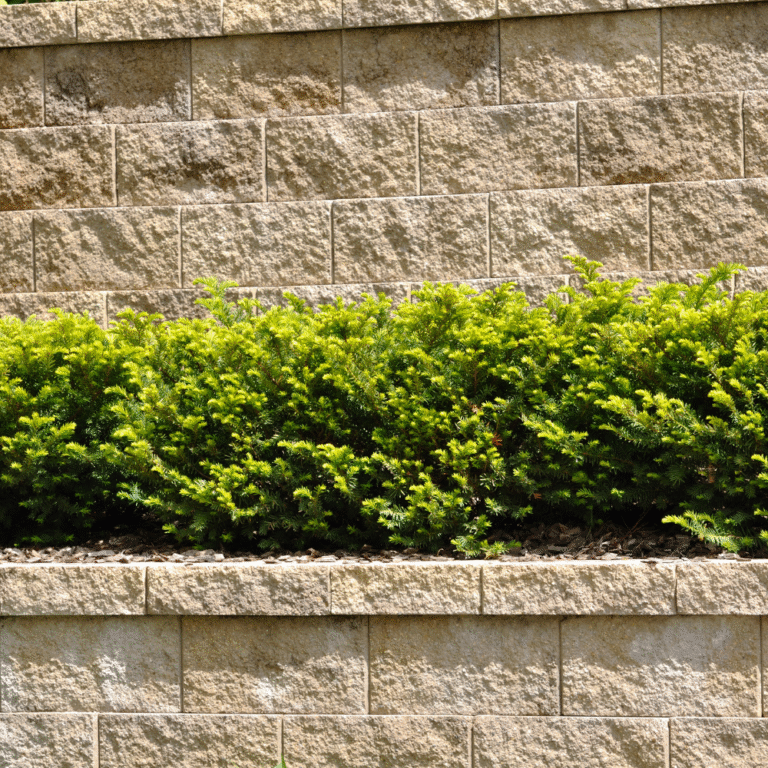
Retaining Walls Built for Stability, Style, and Safety
If you’ve ever watched water stream down a slope after a North Texas storm and then noticed new cracks in a nearby walkway—or worse, a driveway edge that seems to “creep” downhill—you’ve already seen how quickly drainage problems can turn into structural headaches.
In McKinney and the surrounding North Texas area, retaining walls are more than a visual upgrade. They’re part of your property’s drainage system and soil management plan. Done right, a wall protects usable yard space, prevents erosion, and keeps heavy rain from undermining slabs, sidewalks, and foundations. Done poorly, it can create the exact problems homeowners try to avoid: bulging, settlement, and water pressure building behind the wall.
Quick Answer
A stable retaining wall depends on three things: proper base preparation, correct reinforcement/material selection, and drainage design (so hydrostatic pressure doesn’t build up behind the wall). When we build retaining walls in North Texas conditions—especially with expansive clay soils and intense rain events—we plan for movement, not perfection. The result is a wall that looks sharp, holds grade, and supports the concrete flatwork around it.
What Retaining Walls Are Really Responsible For
Most people think retaining walls “hold soil back.” That’s true, but it’s only half the story.
A retaining wall is also responsible for controlling these forces:
- Lateral soil pressure from retained earth
- Water pressure from runoff and groundwater infiltration
- Erosion at the toe (bottom) and around joints
- Settlement at the base if the subgrade isn’t stabilized
In practice, we often see problems start underground. A wall might look straight at first, but if the base isn’t compacted to the right density, or if drainage rock and weep pathways are missing, the first heavy storm can expose the weak link.
A contractor’s observation we see often
One firsthand pattern: many failing walls aren’t “bad materials” failures—they’re drainage failures. When there’s no engineered drain behind the wall (or it’s installed incorrectly), water accumulates, increasing pressure behind the face. Over time, the wall slowly pushes outward and undermines itself from the bottom edge.
What Property Owners Often Overlook
Homeowners tend to focus on the wall’s face—brick color, stone style, height, and curb appeal. Those matter, but the stability comes from what you can’t easily see:
- Site preparation and compaction under the base
- Correct drainage layer thickness and placement
- Backfill selection (the wrong soil behind the wall can hold water and increase pressure)
- Water management above the wall (gutters, downspouts, and surface grading)
- Connection to surrounding concrete (sidewalks, steps, driveways, and slabs)
Common Mistakes That Cause Drainage Problems
Below are the mistakes we see most often on North Texas properties—often after landscaping has been installed or after a wall has already started to move.
1) No engineered drainage behind the wall
Without a proper drainage system (typically including drainage aggregate and a way for water to exit), retained soil turns into a water reservoir. The pressure increases dramatically during heavy rain.
2) Using the wrong backfill material
Some backfills are fine for gardens but not for retaining structures. Soil that holds water can increase lateral load and speed up settlement.
3) Skipping base preparation and compaction
A retaining wall needs a stable foundation. If the base isn’t excavated properly and compacted in lifts, the wall can settle unevenly—especially on clay subgrades that expand and contract with moisture.
4) Pouring/connecting concrete without accounting for movement
If a wall is built and then concrete is poured against it without considering settlement and drainage behavior, you can end up with cracking or separation at the wall-to-concrete interface.
5) Ignoring how water reaches the wall
It’s common to see roof runoff, irrigation overspray, or surface grading send water right toward the retained area. The wall becomes the “backup” drainage system—whether it was designed for that or not.
Construction, Repair, or Maintenance: How We Keep Walls Performing
A retaining wall should be built as a system: subgrade → base → reinforcement/materials → drainage → backfill → surface water control. Here’s what a quality build typically includes.
Sitework plan that supports long-term stability
Base and excavation
- Excavate to stable material and remove unsuitable soils
- Grade and compact in lifts so the base doesn’t “pump” under load
- Confirm the wall footprint matches design and site conditions
Drainage design (the stability driver)
- Install drainage aggregate behind the wall
- Include provisions for water to exit (commonly through weep holes or drainage layers that lead to a safe discharge area)
- Keep filter fabric and drainage layers consistent to prevent fines migration
Backfill and compaction
- Use appropriate backfill material
- Compact in lifts to reduce voids and minimize future settlement
Surface water control
- Ensure downspouts and surface grading direct water away
- Consider how driveways, sidewalks, and adjacent flatwork will behave during wet cycles
Concrete connection matters: protecting nearby flatwork
Retaining walls and concrete work often overlap on real projects. For example, if you’re planning a patio or walkway near grade changes, you want consistent drainage and a stable subbase. If the area behind the wall shifts, concrete flatwork can reflect that movement.
If you’re also considering concrete improvements, it helps to coordinate planning across scopes. You can review our approach to retaining wall construction services and related site preparation so the drainage system and concrete flatwork work together instead of fighting each other.
Signs Concrete and Retaining Walls Need Attention
If you’re not sure whether your wall is still “healthy,” look for these red flags:
Signs a retaining wall is under stress
- Bulging or leaning wall face
- Gaps appearing at the base or between blocks/units
- New or worsening cracks in adjacent concrete
- Damp soil, muddy discharge, or persistent wet areas behind/near the wall
Signs your drainage plan is failing
- Water ponding near the wall after storms
- Erosion channels forming at the toe
- Surface runoff routes are feeding toward the retained area
“Common mistake” property owners make
A very common mistake is treating the problem as cosmetic—re-leveling the face or refreshing landscaping—while leaving the drainage issue untouched. The wall often re-fails because the pressure and saturation conditions remain the same.
McKinney / North Texas Relevance: Why Local Conditions Matter
North Texas soils can be unforgiving. Expansive clay expands when saturated and contracts when it dries. Add frequent freeze-thaw cycles in winter and intense summer storms, and you get conditions that punish poorly planned base prep and drainage.
In McKinney specifically, many properties sit on variable soils due to neighborhood development patterns and grading history. That means two yards only a few streets apart can behave differently under the same rainfall. We treat retaining walls as site-specific structures—because the soil and water path are what determine performance, not just the wall height.
Also, rapid suburban growth means more landscaping changes after initial construction. When irrigation systems or grading gets modified later without coordinating with the wall’s drainage system, we often see premature movement.
A Realistic Example: Retained Yard + Cracking Patio
Here’s an anonymized scenario we’ve encountered in North Texas:
A homeowner planned a backyard patio near a sloped area they wanted to “level.” After installing a retaining wall, they noticed the patio started settling slightly along one edge within a few months. The wall looked okay at first, but during heavy rain, water pooled behind the wall and the retained area stayed wet longer than expected.
What we found during assessment:
- The drainage layer behind the wall was inconsistent
- Backfill compaction wasn’t uniform
- Surface grading directed runoff toward the wall toe
What we recommended:
- Correct the drainage system behind the wall
- Improve site grading so water moves away from the retained area
- Address the patio edge connection so future minor movement wouldn’t force uncontrolled cracking
If you’re planning concrete improvements near grade changes, coordinating drainage and site preparation is the difference between a patio that lasts and one that becomes a recurring repair.
For patio-focused planning, you may find it useful to explore concrete patio installation considerations alongside retaining wall work.
Quick Comparison: Retaining Wall vs. “Fixing It Later” With Patches
Retaining walls don’t usually fail instantly. That’s why homeowners sometimes delay. But once movement begins, it can accelerate because water and soil conditions keep changing.
| Approach | What it solves | What it doesn’t solve | Typical outcome |
|---|---|---|---|
| Cosmetic face repair | Appearance | Pressure + water behind wall | Returns after storms |
| Full drainage + base correction | Stability | Root cause of hydrostatic pressure | Strong, long-term performance |
| Partial fix without water control | Minor movement | Saturation and pressure conditions | Cracks and settlement continue |
Concrete Maintenance Checklist (for walls and surrounding flatwork)
Retaining walls are built for durability, but maintenance keeps them working the way they were designed to.
Maintenance checklist you can follow seasonally
- After storms: Check for wet spots, muddy discharge, or pooling near the wall toe
- Inspect joints/units: Look for new gaps, shifting, or loose sections
- Keep drainage outlets clear: Ensure drains/weeps are not clogged by landscaping debris
- Maintain surface grading: Confirm mulch/soil hasn’t washed into low spots
- Check nearby concrete edges: Watch for new cracks at patio/sidewalk/step interfaces
Planning checklist before any new work
- Confirm where runoff goes during heavy rain
- Coordinate any new landscaping, irrigation, or drainage modifications
- Plan concrete elevations with expected site behavior
Signs You May Need Foundation or Grading Support
Sometimes a retaining wall problem is actually a grading or foundation problem showing up nearby. If water is being directed toward a structural area, it can contribute to foundation moisture issues and related settlement.
If your property has signs of foundation distress, it can be helpful to review foundation grading support so drainage and site slope are corrected at the source.
And if you’re dealing with driveway/flatwork in the same area, connecting the dots early often prevents repeated repairs. For example, if a driveway edge is being affected by grade changes, it may be worth discussing driveways and concrete flatwork planning as part of the overall site stabilization strategy.
Concrete Foundations and Retaining Walls: How They Work Together
In many McKinney properties, the retaining wall is part of a larger ground-water and soil-stability plan around a home or commercial building. When drainage is corrected and the base is stabilized, it protects more than just the wall—it can protect the concrete foundation system too.
If you’re evaluating the scope of work around your building, take a look at slab foundations so you understand how grading and moisture control tie into long-term performance.
Ready to Improve Your Property With Durable Concrete Solutions?
A retaining wall should do its job quietly—keeping soil stable and water controlled—while you enjoy a clean, usable landscape. If you’re planning a new wall or noticing movement, start with the drainage and base preparation plan. That’s where long-term stability is won.
About TopCore Concrete
TopCore Concrete provides slab foundations, retaining walls, patios, grading, parking lots, sidewalks, and concrete flatwork services throughout McKinney, TX and surrounding North Texas communities. The company focuses on durable construction, proper site preparation, long-term structural performance, and helping homeowners and businesses improve their properties through professional concrete and grading solutions.
FAQ
How do I know if my retaining wall needs drainage improvements?
If you see wet soil behind the wall, water pooling after storms, erosion at the toe, or new gaps and bulging developing, drainage is usually the first thing to investigate. Even a visually solid wall can fail early when hydrostatic pressure builds behind it. A site assessment should check the backfill, drainage layers, and how surface runoff is routed.
Will a retaining wall affect my patio, sidewalk, or driveway?
Yes—especially when a wall is near grade changes. If the wall or retained soil settles or moves, nearby concrete flatwork can crack, lift, or separate at joints. Coordinating the retaining wall build with the concrete elevation plan and drainage strategy helps prevent repeated repairs.
What’s the biggest cause of retaining wall failure in North Texas?
Poor drainage and inconsistent base preparation are among the most common causes. North Texas expansive clay can hold moisture and shift with wet/dry cycles, and intense rain events increase water pressure behind walls. If water can’t exit safely, the wall is forced to absorb pressure it wasn’t designed for.
Can I fix a small wall issue with landscaping or patching?
Landscaping patches can improve appearance, but they don’t correct the underlying forces driving movement. If the problem is water pressure, saturation, or base instability, cosmetic repairs typically fail again after the next heavy storm. Addressing drainage and structural sitework first is usually the safest path.
How long does a properly built retaining wall last?
With correct base prep, drainage design, and appropriate backfill/compaction, retaining walls can perform for decades. The exact lifespan depends on site conditions, water management, and whether surface runoff is controlled over time. Regular inspections after major storms help catch small issues before they become expensive structural repairs.