
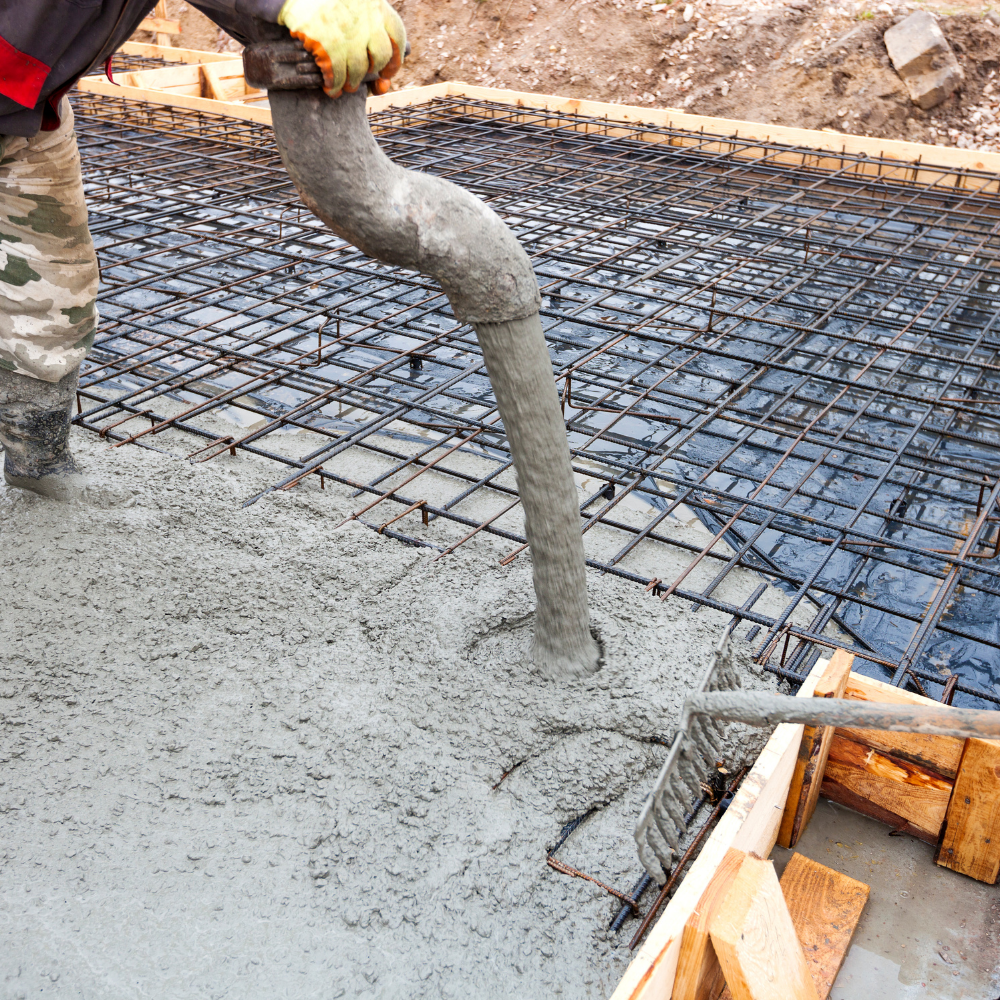
Seamless Slab Foundations: Precision Finishing for Longevity
A few years after a new home goes up in McKinney, it’s not unusual for owners to notice small “tells” around the slab—doors that start to stick, hairline cracks near exterior corners, or uneven floors after a heavy rain. Most people blame the concrete itself. In my experience, the real story usually starts earlier: grading, base prep, drainage direction, and how the slab was finished and protected during the first days after pour.
Slab foundations are built to last, but they’re not forgiving when the site work is rushed. In North Texas—where clay soils can expand and contract and where intense storms can overwhelm shallow drainage—precision matters at every step. That’s why TopCore Concrete approaches slab work as a complete system: site preparation, foundation grading, concrete slab installation, and finishing practices that support long-term performance.
Quick Answer
A long-lasting slab foundation depends on more than a “smooth finish.” For durability, we focus on proper foundation grading and site preparation, stable base layers, correct moisture control, and finishing/curing practices that reduce shrinkage cracking and surface weakness. If you’re seeing cracks, sticking doors, or recurring moisture around the perimeter, it’s often a drainage or foundation repair issue—not a cosmetic concrete problem.
Why Seamless Finishing Starts Before the Pour
When homeowners picture foundation work, they think about rebar, concrete, and the final surface. But the slab’s longevity is mostly determined by what happens before the concrete ever touches the forms.
The contractor’s reality: the base controls the slab
On slab jobs, we spend a lot of time checking:
- soil stability and moisture consistency
- compaction of the base
- thickness and placement of layers under the slab
- how water will move across and away from the property
One firsthand observation: the most “perfect-looking” slab can still develop settlement or cracking if the base prep and moisture pathway weren’t handled correctly. I’ve seen slabs with clean edges and sharp corners still show early cracking patterns that trace back to subgrade variability—especially where fill was brought in without proper stabilization.
Finish quality is part structural, part protective
Even with a sound base, the slab surface can fail early if finishing and curing are rushed or inconsistent. We aim for:
- correct timing for finishing operations
- consistent finishing texture (especially for future flooring and moisture control)
- curing practices that reduce surface shrinkage and improve strength development
What Property Owners Often Overlook
1) Drainage direction is treated like an afterthought
A slab foundation is surrounded by a built environment—driveways, patios, walkways, and landscaping. If those surfaces don’t shed water away from the foundation, the slab perimeter becomes the first place moisture collects.
2) “Looks level” doesn’t mean “built stable”
Some properties appear flat after landscaping, but the grading beneath hardscape tells a different story. Settling can be subtle at first, and it often shows up later as interior door alignment issues.
3) They plan for concrete, not for water
Concrete is durable, but it can’t compensate for repeated saturation or poor drainage. When water cycles in and out of clay-rich soils, expansion and contraction can stress the slab over time.
4) They confuse surface cracks with foundation movement
Hairline cracks can be part of normal shrinkage, but patterns matter:
- cracks concentrated near exterior corners
- widening gaps after storms
- cracks paired with floor slope changes
- recurring moisture staining at the perimeter
Those are the moments we shift from “concrete repair” to “foundation repair” and “foundation leveling” conversations.
What We Commonly See in North Texas Soil Conditions
McKinney sits within a broader North Texas region known for expansive clay soils. That means the ground doesn’t just get wet—it swells, then shrinks as it dries. The seasonal cycle can be more dramatic when:
- drainage is shallow or blocked
- downspouts discharge near foundations
- grading creates low spots where water lingers
- driveways or patios are installed too high against foundation edges
A practical example we handle often: a homeowner notices that after heavy rain, water pools briefly near the garage side. The slab looks fine at first, but later you see minor cracking and slight floor unevenness. When we evaluate the site, the grading and drainage pathway usually tells the real cause.
Why Some Concrete Installations Fail Early
Early failures aren’t usually about the concrete mix alone. They’re commonly tied to base preparation and finishing workflow.
Common early failure drivers
- Insufficient compaction under the slab leads to localized settling.
- Moisture imbalance changes how expansive soils behave.
- Finishing too early or too late increases shrinkage cracking risk.
- Inadequate curing leaves the surface vulnerable during the hottest weeks.
- Water intrusion at edges keeps the soil cycling and stresses the slab over time.
These issues can show up as cracks, scaling, or surface deterioration—but the fix often begins with sitework rather than patches.
Common Mistakes That Cause Drainage Problems
This is the section I wish every property owner read before major concrete work, because drainage mistakes are expensive to undo.
Mistake #1: Installing flatwork without matching grades
Driveways, sidewalks, and patios are not independent projects. If the finished elevations don’t align with the drainage plan, water will find the path of least resistance—often toward the slab.
For example, if a driveway is later replaced or resurfaced and raised slightly, the perimeter drainage pattern can change immediately. That’s why we coordinate slab/grading decisions with the rest of the property improvements, including foundation grading support and site preparation for the surrounding hardscape.
Mistake #2: Ignoring how water moves during storms
North Texas storms can be intense. If the site plan assumes “it’ll soak in,” but the soil is already saturated (or compacted poorly), water backs up and presses against the slab perimeter.
Mistake #3: Overlooking downspout discharge locations
Roof runoff isn’t trivial. Discharge too close to foundation edges can keep the soil in a wet state longer than it should be.
Mistake #4: Treating repairs as cosmetic
If movement is driven by soil moisture, sealing a crack without addressing drainage is like painting over a roof leak.
Mistake #5: Skipping proper base prep to “save time”
On slab and flatwork projects, cutting corners in compaction and layer thickness is one of the fastest ways to invite settlement.
Our Experience Building Concrete Systems in Texas Conditions
We approach slab foundations as part of a full property drainage and hardscape system. That’s also why we frequently connect slab decisions to other concrete and sitework needs—especially when a property is still in the “build and refine” phase.
For instance, if a new home has a future plan for outdoor living, we often coordinate early so that the patio and walkway elevations don’t unintentionally create drainage problems. If you’re building or reworking outdoor spaces, our team supports concrete patio planning and other related flatwork considerations to keep water movement consistent.
And if you’re dealing with older properties where the foundation is already showing signs of distress, we’ll talk honestly about foundation repair strategy and how to stabilize the environment around the slab before new concrete is placed.
Construction, Repair, or Maintenance: A Practical Checklist
Most foundation longevity comes down to what you do in the first year after construction—and what you check each season after.
Concrete maintenance & planning checklist
Use this list to stay ahead of moisture and surface deterioration:
- Inspect after heavy rain: Look for pooling near foundation edges, garage sides, or low spots.
- Check downspouts and gutters: Confirm runoff discharges away from the slab perimeter.
- Watch landscaping contact points: Avoid mulch or soil piled directly against foundation walls.
- Monitor crack patterns: Note width changes, length growth, and whether cracks follow a consistent path.
- Verify slope away from structures: The ground should shed water outward, not inward.
- Maintain expansion joints and transitions: If driveways or walkways meet other surfaces, transitions matter.
- Keep surfaces sealed when appropriate: For certain flatwork, sealing can reduce moisture intrusion—but it’s not a substitute for grading fixes.
- Plan repairs early: Small issues are easier and cheaper to stabilize than problems that progress.
A Realistic Case: “Everything Looked Fine—Until the Rain”
Here’s an anonymized scenario we see more often than people expect:
A North Texas homeowner noticed hairline cracks near the front exterior corners about a year after move-in. The cracks weren’t dramatic, but they seemed to reappear after storms. The interior doors began sticking slightly during humid months.
During evaluation, we found:
- minor low spots near where the driveway met the lawn
- downspout runoff that discharged too close to the foundation line
- inconsistent surface elevations leading to water lingering longer than it should
Instead of jumping directly to concrete patching, the repair plan focused on correcting drainage and stabilizing the grading pathway. After the moisture issue was addressed, the cracking progression slowed, and the homeowner avoided repeated “band-aid” repairs.
Quick Recommendation: What Helps Slabs Last Longer
If you’re building new or addressing early signs of movement, here are recommendations grounded in what we see work:
- Prioritize foundation grading before concrete finishing decisions get locked in.
- Confirm base compaction and layer thickness rather than assuming the subgrade is uniform.
- Plan drainage for the entire property, including driveway transitions and patio elevations.
- Don’t treat perimeter moisture as normal. In clay soils, “normal” can turn into recurring movement.
If the foundation is already showing symptoms, a comprehensive plan that includes slab foundations evaluation and targeted foundation repair strategy is usually the most practical path toward long-term stability.
McKinney or North Texas Relevance: Why This Matters Here
In McKinney, the combination of expansive clay soils, heat-driven drying, and heavy rain events creates a repeating moisture cycle. That cycle is hard on any slab system where drainage isn’t controlled.
We also see rapid suburban growth and frequent property turnover, which means:
- older drainage patterns may have been altered by landscaping
- driveways and walkways get replaced without matching grades
- new construction adds impervious surfaces that change where water flows
So the “best” concrete installation in North Texas isn’t just about smooth finishing—it’s about understanding how water and soil interact through the seasons.
Concrete vs. Asphalt Comparison (When It’s Part of the Foundation Story)
If you’re thinking about driveway or parking lot paving near a slab, the material choice matters—but so does base prep and drainage.
| Feature | Concrete | Asphalt |
|---|---|---|
| Longevity (properly built) | Often long service life when base is correct | Can last long, especially with good maintenance |
| Crack pattern | Can crack, but good joints/finishing reduce early failures | Can develop rutting and fatigue cracking |
| Water sensitivity | Works well with proper drainage; poor drainage accelerates issues | Poor drainage can lead to base failure and potholes |
| Repair approach | Usually patching/sections; may require leveling if movement occurs | Resurfacing and patching common, depends on base condition |
| Long-term performance | Strong when grading and curing are handled right | Strong when the base remains stable |
For commercial sites, water management is just as critical. If you’re working on shared property improvements, we also support parking lot paving assistance where base prep and drainage planning prevent early deterioration.
Signs Concrete Needs Repair
Sometimes it’s not the slab itself—it’s what’s happening around it. Watch for:
- cracks that widen after rain
- repeating settlement at the same spots
- uneven floors or door alignment changes
- scaling, soft spots, or surface breakdown near edges
- moisture staining or persistent dampness at perimeter areas
Those signs typically justify a site evaluation focused on grading, moisture pathways, and whether foundation leveling or foundation repair is needed.
FAQ
Why do concrete driveways crack in Texas?
In North Texas, driveway cracking is often driven by soil movement and moisture cycling, especially with expansive clay. Poor base prep, inadequate compaction, and drainage that allows water to pool under or beside the slab can accelerate cracking. Heat and shrinkage also contribute, but the most avoidable failures usually trace back to site preparation and how water is managed.
How can I tell if cracks are cosmetic or foundation-related?
Hairline shrinkage cracks can be relatively normal, but foundation-related issues often show patterns—especially cracks near exterior corners, cracks that change width after storms, or cracks accompanied by sticking doors and uneven floors. If you notice moisture issues around the perimeter alongside cracking, it’s usually time for a more thorough slab foundation evaluation.
What’s the biggest mistake homeowners make with foundation-related concrete?
The most common mistake is treating repairs as purely cosmetic. Sealing or patching a crack without fixing grading, downspout discharge, or surface elevations around the slab can allow the underlying soil moisture problem to continue. In expansive clay conditions, that moisture cycling can bring the issue back quickly.
Is grading more important than the concrete mix?
For long-term performance, grading is often more critical than homeowners expect. The concrete mix contributes to strength, but the base and drainage determine how stable the slab remains over time. If water is directed incorrectly or the subgrade isn’t properly prepared, even high-quality concrete may crack or settle early.
Ready to Improve Your Property With Durable Concrete Solutions?
If you’re planning a new slab foundation—or you’re dealing with signs of movement, cracking, or drainage problems—start with a site plan, not just a surface finish. Precision finishing helps, but longevity comes from getting grading, drainage, and early construction decisions right.
About TopCore Concrete
TopCore Concrete provides slab foundations, retaining walls, patios, grading, parking lots, sidewalks, and concrete flatwork services throughout McKinney, TX and surrounding North Texas communities. We focus on durable construction, proper site preparation, long-term structural performance, and helping homeowners and businesses improve their properties through professional concrete and grading solutions.