
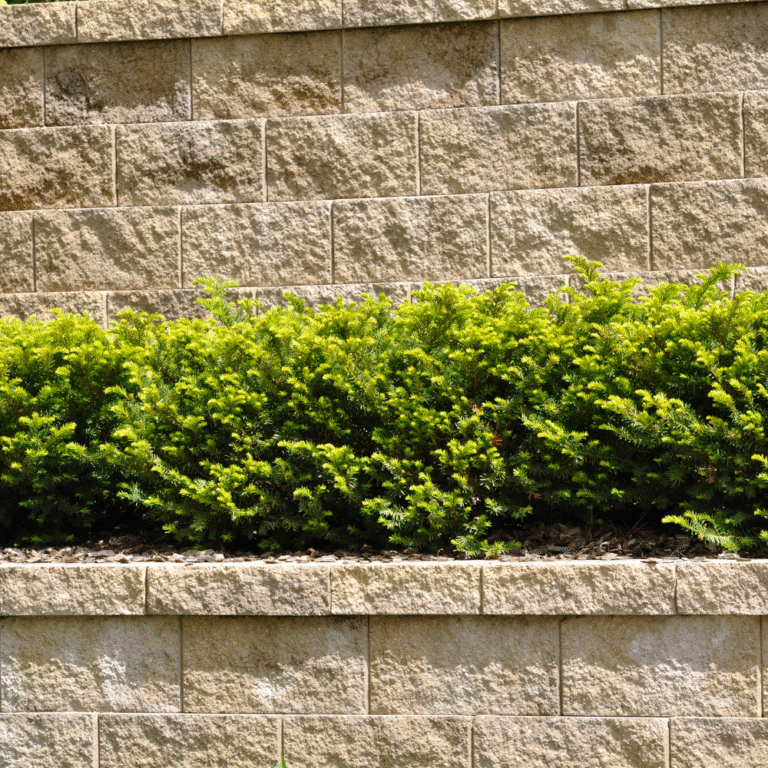
Retaining Walls Crafted to Manage Slopes Beautifully
If you’ve ever watched heavy rain sheet down a backyard slope and pool near the foundation, you already know how quickly “small” drainage issues become expensive problems. In McKinney and across North Texas, we see it often: a property sits on uneven grade, water finds the low spot, and soil gets saturated—then the slope starts creeping, fences lean, and concrete around the home begins to settle or crack.
That’s where a properly designed retaining wall earns its keep. But the best-looking wall isn’t just about blocks or concrete panels. The real work happens below grade: compacted base, correct drainage, and a plan that anticipates soil movement in Texas conditions.
Quick Answer
A retaining wall should be built like a system, not a decorative feature. For slopes to stay stable, the wall needs:
- solid base preparation and compaction,
- proper reinforcement (when required by height/design),
- controlled drainage (weeps, gravel backfill, and proper grading),
- and a plan for how water will move away from the home and slab areas.
Retaining Walls That Actually Hold: What We Build Into the Design
A retaining wall’s job is simple to describe and complex to execute: it resists lateral earth pressure. In practice, that means water management and base preparation matter as much as the visible face.
What makes a retaining wall “durable” in North Texas?
From our sitework experience, we focus on three things:
1. Base and soil preparation
- We remove unsuitable material and build from stable subgrade.
- We compact in lifts so the wall doesn’t settle unevenly after installation.
2. Drainage behind the wall
- Saturated soil increases pressure dramatically.
- A wall without drainage often looks fine at first—then starts bowing or developing cracking as water collects behind it during storms.
3. Backfill and compaction
- The backfill is selected and placed to support the wall and reduce hydrostatic pressure.
- In many cases, we use a granular drainage layer behind the wall, then cap/transition to match the rest of the site grading plan.
A realistic scenario we handle all the time
A homeowner in a North Texas subdivision calls after noticing a slope behind their garage is “soft” after rain. The fence line starts to shift, and water runs toward the driveway apron. When we inspect, the soil is staying wet because the grading directs runoff incorrectly—and there’s no reliable path for subsurface water to escape.
The retaining wall solution isn’t just building a taller face. It’s creating a stable grade profile, adding the right drainage behind the wall, and making sure water routes away from slab areas. If you skip any part of that, you’re paying for a wall that may fail early.
Contractor observation from the field
One of the most consistent patterns we’ve seen: when retaining wall failures start, they rarely begin with the wall face. They begin behind the wall—where drainage was overlooked, backfill wasn’t compacted properly, or water was allowed to sit and expand soil. The visible movement is the result, not the cause.
What Property Owners Often Overlook
Retaining walls are commonly treated like a “finish” job, but they’re really a site stability and drainage project. Here are the oversights we run into most frequently:
Common mistake property owners make
Building a wall without planning for drainage and long-term water movement.
It’s easy to think the wall is the answer because it’s what you can see. But in Texas, water plus expanding clay soils can create pressure that your wall can’t “finish away.” If runoff and subsurface moisture aren’t managed, the wall becomes the barrier water pushes against.
Other issues we see
- Ignoring drainage swales and downspout routing (water gets trapped at the wall line)
- Using the wrong backfill material (fine soils hold water rather than draining)
- Skipping compaction (settlement later creates gaps and misalignment)
- Assuming “more height” fixes a slope (the pressure increases; the design must handle it)
Construction, Repair, or Maintenance: The Checklist That Prevents Headaches
A retaining wall is only as good as what happens before and after installation. Use this as a practical planning checklist.
Site Preparation Checklist (for retaining wall projects)
- Confirm the direction of runoff during storms (walk the property after rainfall if possible).
- Identify downspout discharge points and whether they’re tied into a safe drainage route.
- Verify soil conditions: expansive clay behavior, moisture retention, and any prior settling.
- Plan base removal to stable subgrade where needed.
- Specify drainage components behind the wall (including backfill drainage layers).
- Confirm compaction requirements by lift (we compact in controlled stages).
- Ensure the wall ties into existing grade smoothly—no abrupt transitions that create washouts.
- Inspect nearby concrete flatwork and slab areas for early signs of settlement or cracking.
Maintenance that keeps the wall looking good
Retaining walls don’t need constant attention, but they do need basic upkeep:
- Keep vegetation trimmed so roots don’t invade joints or drainage outlets.
- Remove debris from weeps/drainage paths.
- Watch for early warning signs: new damp spots, bulging, or recurring wash lines after rain.
- Re-check grading after major landscaping changes.
Signs Concrete Needs Repair Around Slopes and Wall Lines
Even when the wall is built correctly, adjacent concrete can show stress if water management or foundation grading is off. If you’re seeing any of the following, it’s worth addressing before it spreads:
Signs Concrete Needs Repair
- Hairline cracks that widen after heavy rain
- Uneven slabs or settled driveway edges near the slope
- Spalling or flaking where water repeatedly pools
- Doors or garage thresholds that suddenly feel tighter (possible soil or grading movement)
- Repeated “mud track” patterns indicating runoff is escaping in the same spot
If you’re also dealing with slab performance issues, you may want to review related sitework and foundation planning—especially where grading impacts concrete foundations and slab interfaces. For more on that broader system, explore foundation grading support.
Retaining Walls and Concrete Systems: How They Work Together
In many North Texas properties, the retaining wall isn’t the only element under stress. Slopes often affect driveways, patios, sidewalks, and foundation areas. Treating everything as one coordinated site plan reduces rework later.
For example:
- If the wall improves yard grade but the driveway still routes water incorrectly, you may shift the problem rather than solve it.
- If patio elevations aren’t matched to new drainage flow, you can end up with recurring pooling under covers or near doorways.
Where we often coordinate work
- Retaining wall projects paired with retaining wall construction services for consistent grade control.
- Concrete patios and flatwork that need elevation adjustments after wall installation, including concrete patio planning.
- Areas where drainage changes require additional site preparation and controlled runoff, often tied to foundation grading support and long-term slope management.
And when properties need new or restored vehicle access, we commonly coordinate with site paving too—like driveway replacement planning—because a driveway that drains wrong can undermine the work you just paid for.
McKinney or North Texas Relevance: Why Slopes Behave Differently Here
McKinney sits in a region where expansive clay soils and seasonal moisture changes can move more than homeowners expect. Add in intense North Texas rain events and the situation becomes predictable: soil absorbs water, expands, and can lose strength when it dries and re-wets repeatedly.
Here’s what that means for retaining walls and concrete nearby:
- Water is the trigger. If drainage is delayed or misdirected, pressure builds behind the wall.
- Freeze isn’t the main driver, but wet/dry cycling is. Concrete and soil respond to moisture shifts and can settle unevenly.
- Suburban growth increases runoff loads. New development upstream or changes in landscaping can alter how water arrives at your property.
Our approach accounts for these realities by designing for how water moves—not just how the wall looks on day one.
A Realized Case Example (Anonymized)
A commercial property manager contacted us after repeated complaints about a sloped yard behind a service entrance. After storms, water ran across the slope and saturated the soil near the walkway, which then led to uneven concrete and debris buildup. Maintenance teams were patching concrete areas repeatedly, but the underlying issue stayed the same.
We reviewed the site flow and found:
- runoff was being directed toward the low area,
- the slope wasn’t matched with safe drainage routes,
- and the existing wall line (where present) lacked the drainage layers needed to relieve pressure.
The fix wasn’t “patch and pray.” We planned a coordinated approach:
- improved grade and drainage routing,
- installed a retaining system to stabilize the slope,
- and adjusted the adjacent concrete flatwork to match the new elevations and drainage patterns.
After completion, the problem shifted from recurring emergency patching to routine maintenance—exactly what property owners want: fewer surprises and less long-term deterioration.
Quick Concrete Planning Recommendation (So You Don’t Pay Twice)
If your retaining wall project connects to concrete foundations, driveways, patios, or sidewalks, plan the sequence carefully. In most cases, you want the grading and drainage corrected first, then the concrete elements adjusted to match the final elevations.
That sequence helps avoid:
- new cracks caused by settlement after a pour,
- trip hazards from slab edge movement,
- and recurring pooling that shortens concrete lifespan.
If you’re also dealing with a broader foundation issue, it’s worth reviewing options like concrete foundation leveling and repair planning. We see these problems most often where water has been consistently directed toward foundation edges—especially near slopes and wall lines.
What Actually Improves Concrete Longevity
Concrete around slopes doesn’t last just because it was poured well. Longevity comes from controlling water and preventing soil-driven movement.
What improves performance over time
- Correct drainage and grading so water doesn’t pool at slab edges
- Proper base prep under any concrete flatwork
- Joint placement and finishing that match expected movement
- Sealing and surface protection when appropriate for the application
- Repairs done early—before small cracks let water reach deeper layers
If you’re currently dealing with concrete that’s starting to fail, consider reviewing concrete foundations and slab solutions to understand how grading and foundation performance connect.
Concrete vs. Asphalt Comparison (Where Water Management Matters)
Some properties consider replacing or upgrading drive lanes and parking areas alongside slope stabilization. Here’s a practical comparison focused on how each option interacts with drainage and base prep.
| Feature | Concrete Flatwork | Asphalt (as a comparison) |
|---|---|---|
| Strength under stable base | Excellent | Good, but sensitive to base quality |
| Response to poor drainage | Cracks and spalling can appear if water pools | Rutting and surface failure can accelerate |
| Repair approach | Targeted repairs and resurfacing | Resurfacing or partial patching depending on base |
| Long-term appearance | Can look sharp with proper sealing/maintenance | Can fade and oxidize without maintenance |
Either material can perform well when drainage and base preparation are done right. When they’re not, both systems suffer—but concrete often makes the “problem” more visible through cracking patterns.
FAQ
Why do retaining walls sometimes bow even after installation?
Most bowing issues trace back to pressure behind the wall—usually from poor drainage, incorrect backfill, or inadequate compaction. When water can’t escape, hydrostatic pressure increases and pushes laterally. In North Texas conditions, moisture cycling can worsen the problem. A well-built wall includes drainage layers and proper routing so water doesn’t build up behind the structure.
Can I fix a failing slope with a retaining wall alone?
Sometimes, but not always. If the slope is receiving too much runoff from downspouts, grading from neighboring areas, or a driveway/patio that directs water incorrectly, a wall may be overwhelmed. Retaining wall projects often need coordinated grading changes and adjustments to concrete flatwork elevations to prevent recurring water exposure.
How long should concrete around a wall area last?
There’s no universal timeline, but concrete longevity strongly depends on drainage and base preparation. If water routinely pools at slab edges or the subgrade settles unevenly, cracks and trip edges can appear sooner than expected. Early repairs—paired with grading correction—usually outperform repeated patchwork.
What’s the biggest mistake homeowners make with slope drainage?
Directing water toward the low spot and assuming the wall will handle it. Even a strong wall can’t eliminate the effects of repeated water saturation behind it. The best outcomes come from planning where water goes before construction begins, including surface runoff and subsurface drainage.
Ready to Improve Your Property With Durable Concrete Solutions?
If your slope is causing drainage headaches—or if you’re seeing concrete settling, cracking, or pooling near a wall line—TopCore Concrete can help you plan a retaining wall and the surrounding sitework as one coordinated system. The goal is simple: stability now, and fewer repairs later.
About TopCore Concrete
TopCore Concrete provides slab foundations, retaining walls, patios, grading, parking lots, sidewalks, and concrete flatwork services throughout McKinney, TX and surrounding North Texas communities. We focus on durable construction, proper site preparation, long-term structural performance, and helping homeowners and businesses improve their properties through practical concrete and grading solutions.