
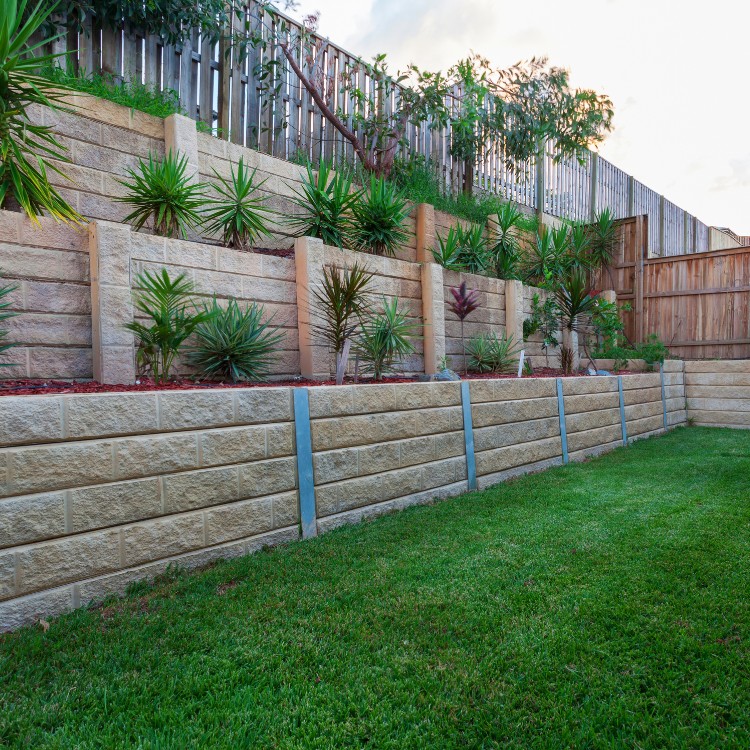
Retaining Walls: Smart Drainage for Lasting Landscape Control
A backyard slope that looks fine for a couple of seasons can turn into a real headache in North Texas—especially after a heavy rain. We’ll often see homeowners in McKinney call us because a retaining wall “looks like it shifted,” grass keeps washing out from behind it, or muddy water starts finding new paths across the yard. Sometimes the problem isn’t the visible wall at all—it’s what’s happening underground: water pressure building up behind the block or poured wall.
Retaining walls do more than hold back soil. When they’re paired with smart drainage, they protect driveways, patios, walkways, and even nearby structures from settlement and moisture damage. With the right base preparation and drainage plan, the wall becomes part of a stable, long-term system—not a recurring repair project.
Quick Answer
A retaining wall lasts when it’s built as a complete drainage system. That means proper base prep, compacted backfill, and water management behind the wall (typically a drainage layer, weep holes, and/or a perforated drain pipe). In North Texas—where expansive clay soils and intense storms are common—water trapped behind the wall can increase hydrostatic pressure, forcing the wall to bow, crack, or fail prematurely.
Why Retaining Wall Drainage Is the Real “Structural” Work
From the jobsite, the most important part of a retaining wall isn’t the block layout or the finish—it’s the conditions behind it.
When water gets into the soil behind a wall and can’t escape, it increases pressure where the wall is weakest: the backfill and the interface between soil and wall. Over time, that pressure can:
- push the wall outward (bowing or leaning)
- wash fine material out from behind the wall (loss of support)
- accelerate freeze/thaw damage cycles in colder months elsewhere (less of a factor here than in other regions, but moisture still matters)
- promote settlement that eventually shows up as cracks or misalignment
In our experience, the “warning signs” show up after rainfall. A wall may look sturdy right after installation, but if drainage was underestimated, the next wet season reveals the issue.
A realistic site scenario we commonly see
A homeowner builds a raised patio area and adds a retaining wall to hold back a sloped yard. The wall looks straight for a few months. Then after a downpour, they notice:
- water flowing from unexpected spots along the wall line
- damp soil and soft ground behind the wall
- small gaps opening at joints or seams
- a patio edge beginning to settle slightly
That pattern usually points to trapped water behind the wall and insufficient drainage outlets or backfill design—not just “movement” in the wall materials.
What Actually Improves Concrete Longevity (and Retaining Wall Performance)
Even though retaining walls can be built with different materials, the drainage principles are consistent. Contractors like us treat the wall as a system: wall + base + backfill + drainage + surface grading.
Here are the core elements that tend to produce long-lasting results:
- Compacted base and backfill
You can’t compensate for weak support later. Proper lift compaction and stable base prep reduce settlement and keep loads predictable.
- A drainage layer behind the wall
A clean, free-draining aggregate layer helps water move away from the wall instead of saturating the soil.
- Perforated drain pipe (where appropriate)
Installed correctly, it collects seepage and routes it to an outlet instead of letting water build up behind the wall.
- Weep holes or drainage outlets
These create a path for trapped water to escape. Without outlets, pressure has nowhere to go.
- Correct surface grading
Water should flow away from the wall—not toward it. That includes directing downspouts and managing runoff paths.
If you’re also planning other work nearby—like a patio or flatwork—make sure the drainage plan supports the whole site. For many properties, that coordination is where projects succeed or fail.
If you’re planning concrete surfaces as part of the same landscape upgrade, you may also want to review concrete patio planning so the patio elevations and runoff pathways don’t conflict with the wall’s drainage needs.
Mistakes That Cause Drainage Problems
Most retaining wall failures start underground. Here are the mistakes we see most often in North Texas:
1) Backfill that’s too “fine”
Using soil that holds water (or mixing in fines) can turn a drainage layer into a sponge. Even if a drain pipe is present, the wrong backfill can clog, saturate, and reduce drainage effectiveness.
2) Skipping drainage outlets
Property owners sometimes assume that block gaps or surface seams will “let water through.” In reality, water needs a controlled route—weep holes, drainage outlets, and a properly designed backfill zone.
3) No outlet plan for the drain line
A perforated drain pipe is only helpful if it discharges to a safe location. If it daylights into a low area that later erodes—or into a place that feeds the same saturated zone—pressure can return.
4) Grading that sends stormwater to the wall
Downspouts, yard swales, and irrigation overspray can all increase water load behind the wall. Even a well-built wall can struggle if the surrounding grading keeps redirecting runoff toward it.
5) Treating cracks like cosmetic issues
If you see cracking or bulging after storms, it’s tempting to seal or patch. But if the underlying cause is water pressure and soil saturation, surface fixes don’t address the structural driver.
Signs Concrete Needs Repair (and When to Act)
Not every issue means the wall is failing, but certain signs deserve attention quickly—especially before the next rainy season.
Common warning signs
- Bulging or leaning wall face
- Cracks that widen after storms
- Soil washout behind the wall or at the base
- Persistent wet spots or muddy ground behind the wall line
- Uneven settlement near adjacent concrete (patios, walkways, driveway edges)
What we check on site
When we evaluate a retaining wall system, we look for:
- evidence of saturated backfill
- signs of erosion at the base
- drainage discharge patterns (where water actually goes)
- interface conditions between wall materials and base layers
A firsthand observation we make often: homeowners focus on the visible wall, but the most telling evidence is usually the backfill condition and the “wet footprint” after rain. If the ground behind the wall stays damp for days, drainage design needs adjustment.
Site Preparation Checklist for Retaining Wall Projects
A retaining wall is only as good as the site work that supports it. If you’re planning a wall, here’s a practical checklist to discuss with your contractor:
Site Preparation Checklist
- Confirm existing grade and how stormwater currently flows across the property
- Identify high-water areas (low spots, downspout discharge points, irrigation zones)
- Verify the wall location relative to nearby concrete flatwork (patios, sidewalks, driveways)
- Plan the base excavation depth and compaction strategy
- Specify backfill material (clean, free-draining where required)
- Plan drainage layer + perforated drain pipe (if used) and an outlet location
- Include weep holes or drainage outlets as part of the wall design
- Protect discharge points with erosion control and stable runoff routing
- Re-check surface grading after installation to ensure water moves away from the wall
If your project includes broader grading and concrete coordination, it may help to explore foundation grading support so the site elevations and drainage patterns are consistent across the property.
McKinney, TX and North Texas Soil Conditions: Why Drainage Matters Here
North Texas soils can be especially demanding. Many areas around McKinney include expansive clay, which swells when saturated and shrinks as it dries. That cycle can create movement in both soil and concrete systems—particularly when water management is inconsistent.
We also see intense rainfall events that can overwhelm drainage plans designed for “average” storms. The takeaway is simple: if the wall design doesn’t account for water movement and controlled discharge, the wall has to fight pressure and saturated soil repeatedly.
And when that happens near other structures—like concrete patios or slab foundations—settlement and moisture issues can show up as cracks, uneven edges, or ongoing repairs.
If your retaining wall connects to a home’s broader concrete system (like a slab or driveway area), it’s wise to coordinate the drainage and elevations with slab performance. For related project planning, you can review slab foundation considerations so grading and water control align with how concrete foundations behave in expansive clay.
A Case Example: Fixing a Wall That Kept “Coming Back”
Here’s an anonymized example based on a type of project we’ve handled in North Texas:
A commercial property had a landscaped slope behind a retaining wall near a walkway. After heavy rains, the walkway began settling slightly at one corner, and the soil behind the wall stayed wet longer than surrounding areas. The original wall design didn’t include a robust drainage zone and had limited outlet control.
Our approach was to treat it like a drainage repair project, not a cosmetic wall repair:
- We assessed where water collected after storms and how runoff moved across the slope.
- We reviewed the backfill condition and how fines may have migrated over time.
- We designed an improved drainage path behind the wall and corrected surface grading so water didn’t keep feeding the saturated zone.
- We coordinated the wall area with the nearby concrete walkway so settlement risks were reduced.
After the drainage corrections, the wet footprint behind the wall reduced significantly, and the adjacent concrete stopped showing new movement. The project wasn’t “instant”—it stabilized as the soil dried and drainage performed as intended—but the improvement was clear once water behavior changed.
Concrete vs Asphalt Comparison (When Retaining Walls Affect Drive Lanes)
Retaining walls often show up in the same planning conversations as driveways, parking lots, and flatwork—because grading changes usually come with access changes.
Here’s a quick, practical comparison for properties where drainage control and surface performance both matter:
| Option | Strengths | Watch-outs |
|---|---|---|
| Concrete flatwork | Durable, strong load capacity, long service life when base prep is right | Requires solid base + correct drainage; poor grading can still cause cracking/settlement |
| Asphalt | Flexible surface, easier to patch in some scenarios | Can soften in saturated subgrades; drainage problems can shorten lifespan |
If the retaining wall project is part of a larger site upgrade—especially drive lanes—make sure your paving design supports the grading plan. For example, if you’re evaluating concrete driveway installation or asphalt parking lot paving options, the base and drainage requirements should be discussed up front rather than after the surface is placed.
Quick Recommendation: The Best Drainage Plan Is Done Before the Wall Goes Up
A common contractor-level rule: once the wall is built, it’s much harder to correct drainage without major excavation. That’s why we recommend planning drainage early—before the first base lift and before any concrete or block placement.
For most retaining wall systems, the “best practice” is to:
- stabilize the base,
- use appropriate backfill and drainage material,
- provide a controlled path for water,
- and finish with surface grading that directs runoff away from the wall.
If you’re also dealing with a property where concrete edges are already showing settlement or where water is affecting nearby surfaces, coordinating repairs and drainage improvements together often costs less than repeated patching.
What Property Owners Should Know
Retaining walls aren’t purely landscaping features. They’re structural earth-retention systems. The moment water gets involved, the design becomes more engineering-focused than it looks.
A good wall contractor will talk about:
- how water gets into the soil,
- where it goes,
- and what prevents pressure build-up behind the wall.
That’s the difference between a wall that “holds for a while” and one that holds for years.
Ready to Improve Your Property With Durable Concrete Solutions?
If your retaining wall is showing signs of bulging, cracking after storms, or recurring muddy runoff, don’t wait for the next season to confirm the problem. The right drainage plan protects not only the wall, but also the concrete flatwork and slope stability around it.
About TopCore Concrete
TopCore Concrete provides slab foundations, retaining walls, patios, grading, parking lots, sidewalks, and concrete flatwork services throughout McKinney, TX and surrounding North Texas communities. The company focuses on durable construction, proper site preparation, long-term structural performance, and helping homeowners and businesses improve their properties through professional concrete and grading solutions.
FAQ
How do I know if a retaining wall problem is drainage-related?
If the wall face cracks or bulges more after rain, or if you notice persistent wet soil, mud, or erosion at the base, drainage is usually the culprit. Surface patching won’t fix saturated backfill or hydrostatic pressure. A contractor should check the backfill zone and outlet/discharge points to confirm where water is going.
What’s the most common mistake homeowners make with retaining walls?
One of the biggest mistakes is assuming “the wall will handle water.” In practice, water management behind the wall—drainage layer, proper backfill, weep outlets, and a controlled outlet path—must be designed intentionally. When that’s skipped or done with the wrong materials, the wall can fail even if the visible face looks fine.
Can a retaining wall affect a nearby patio or walkway?
Yes. Retaining walls change how soil is supported and how moisture moves through the ground. If drainage isn’t controlled, soil behind the wall can settle or stay saturated, which can cause adjacent concrete edges to lift or sink. Coordinating the wall system with nearby flatwork is key.
Should I repair a failing wall or replace it?
It depends on how far the issue has progressed. Small drainage corrections may be possible if the wall isn’t significantly displaced. However, if the wall is leaning, the base has lost support, or movement is ongoing, replacement or major reconstruction is often the safer long-term path.
How long does drainage correction take to show results?
You’ll usually notice improvements after the next significant rain—especially if the drainage path is corrected and surface grading is fixed. Soil that was previously saturated may take time to dry and stabilize, so movement can slow gradually rather than instantly.