
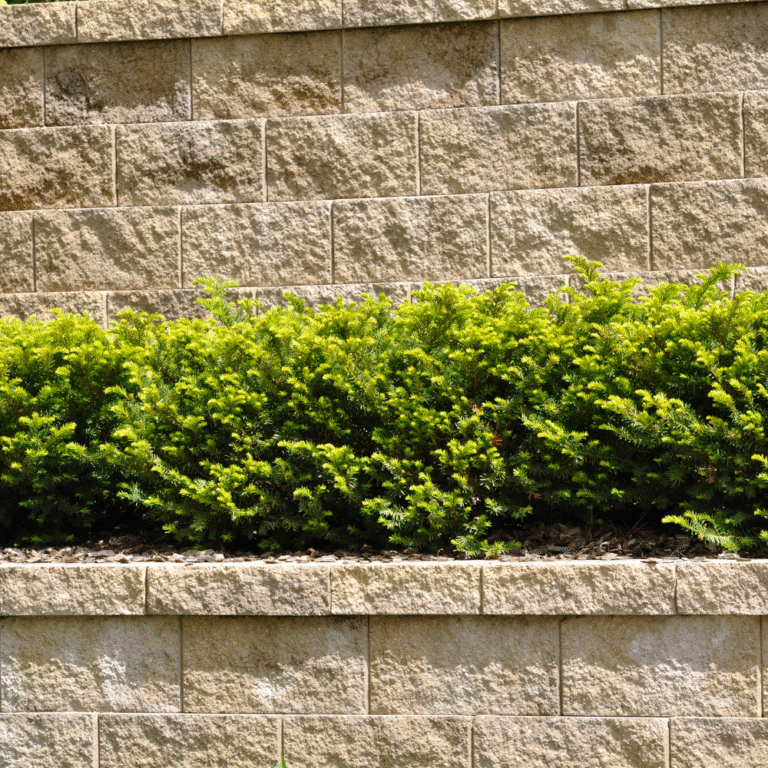
Retaining Walls That Prevent Erosion and Elevate Views
North Texas soil doesn’t sit still for long. Between sudden downpours, long dry spells, and the clay-heavy ground we have across McKinney and Collin County, slopes can wash out fast. For commercial properties, HOAs, and large residential lots, that erosion doesn’t just look bad—it can threaten buildings, parking areas, and access roads.
Studies from the Texas A&M AgriLife Extension have shown that unmanaged slopes can lose several tons of soil per acre per year. On developed sites, that soil doesn’t just disappear; it clogs drainage systems, undercuts pavements, and exposes foundations. At the same time, many properties in McKinney sit on rolling terrain with great potential for upper-level patios, tiered lawns, and elevated views—if the slopes are properly contained.
This is where well-engineered retaining walls earn their keep. In this guide, you’ll learn how modern retaining wall systems prevent erosion, protect Concrete Foundations, and create valuable outdoor spaces. You’ll also see how thoughtful design ties into grading, drainage, patios, and access areas to keep your site safe, attractive, and functional for the long term.
Key Insight: The best retaining walls in North Texas don’t just hold back soil—they work as part of an integrated system that stabilizes your site, protects structures, and unlocks usable, high-value outdoor space.
Why Retaining Walls Matter So Much in McKinney’s Soil and Climate
McKinney sits on expansive clay soils that shrink in drought and swell when saturated. That movement puts enormous pressure on unreinforced slopes and any structures built near them. Add in heavy storm events and you have a recipe for washouts, sink areas, and long-term foundation issues.
Engineered retaining walls act like a pressure relief system for these conditions. When designed and installed correctly, they:
- Reduce lateral pressure on Concrete Slab Installation and nearby structures
- Control the path of stormwater so it doesn’t scour your property
- Create level, buildable pads for parking, patios, or play areas
- Protect landscaping investments from being literally washed away
“North Texas properties with unmanaged slopes face a double hit—loss of soil and long-term structural movement.” — Regional Geotechnical Insight
One commercial client off US-75 in McKinney experienced repeated washouts behind their building. A steep, bare slope funneled water directly toward their rear entry and caused cracking in the adjacent pavement. By installing a tiered concrete block retaining wall system with integrated drainage and regrading the slope above, we:
- Reduced erosion to near zero
- Diverted water safely to a designed outlet
- Protected the adjacent Parking Lots from further damage
Retaining walls in McKinney are not a cosmetic upgrade; they’re a key part of managing the soil and water behavior that defines our region.
Designing Retaining Walls as Part of a Complete Site Strategy
A retaining wall that looks good but ignores drainage, grading, and nearby structures is a problem waiting to surface. Effective erosion control starts with how the entire site is shaped and how water is directed across it.
That’s why retaining wall design should be integrated with:
- Foundation Grading around buildings
- Overall site Land Grading Services
- Drainage paths and discharge points
- Future patios, walkways, and driveways
For a hillside home near Stonebridge Ranch, the backyard dropped off steeply just 10 feet from the back door. The homeowner wanted a usable patio and lawn without risking the stability of their foundation. Our team developed a plan that included:
- Regrading the yard to create a stepped layout
- A reinforced concrete retaining wall with proper weep holes and drainage aggregate
- A new Concrete Patio Installation directly behind the home
- A second, lower terrace supported by a shorter wall for lawn and plantings
“Retaining walls should be engineered like any other structural element on your property—not treated as oversized landscaping.” — Structural Concrete Specialist
By approaching the property as a whole system, we preserved the home’s foundation, created two usable outdoor levels, and gave the owner a clear path for future improvements like walkways and garden beds.
Materials and Methods: Traditional vs. Modern Retaining Wall Approaches
Retaining walls in North Texas have come a long way from basic stacked railroad ties or unreinforced stone. Today, the choice of material and construction method significantly affects performance, appearance, and lifespan.
Here’s a simplified comparison:
| Approach | Typical Materials | Pros | Cons | Best Use Cases in McKinney |
|---|---|---|---|---|
| Traditional Gravity Wall | Natural stone, large block, timbers | Rustic look, simple concept | Bulky, limited height without reinforcement | Small garden walls, low landscape features |
| Modern Reinforced Concrete Wall | Cast-in-place concrete, rebar | High strength, customizable finish, long life | Higher upfront cost, needs proper design | Near buildings, taller walls, structural support |
| Segmental Block Wall (SRW) | Interlocking concrete blocks, geogrid | Flexible, attractive, cost-effective | Requires correct installation and drainage | Terraced yards, parking lot edges, culvert areas |
| Timber Walls | Treated wood | Lower initial cost, warm appearance | Shorter lifespan, not ideal near structures | Temporary solutions, light residential use |
For a commercial site along Eldorado Parkway, a segmental block system was selected to retain a parking area above a drainage channel. Geogrid reinforcement extended back into the soil, creating a composite mass that could resist the lateral loads generated by the saturated clay. Because the wall faced a public street, the property owner chose a textured block finish for a more polished appearance.
Meanwhile, for a tight site behind a McKinney office building, we used a reinforced cast-in-place concrete wall. Space constraints and proximity to the existing Slab Foundations made this the safer and more durable option.
CALLOUT: Material choice isn’t just about looks. It affects how tall your wall can be, how it handles water, and how it interacts with nearby structures and pavements.
In every case, modern methods focus heavily on drainage. Behind the wall, free-draining aggregate and perforated perforated pipe systems help move water away from the structure, reducing pressure and prolonging its life.
Protecting Foundations, Pavements, and Access with Integrated Walls
Erosion rarely damages just one element on a property. A failing slope can undermine foundations, crack pavements, and compromise access routes all at once. Retaining walls are often the first line of defense for:
- Building foundations
- Driveways and entry aprons
- Parking Lots and loading areas
- Sidewalks and walkways
A local warehouse facility in McKinney experienced repeated cracking along an interior access road. Inspection revealed that the outside edge of the road was slowly sliding downhill due to a lack of lateral support and drainage. Our solution included:
- Installing a reinforced retaining wall system along the downhill side
- Rebuilding the edge of the road with proper base and compaction
- Adding subdrainage to relieve water pressure beneath the pavement
By combining wall construction, Concrete Driveway Installation techniques, and drainage improvements, we stabilized the entire corridor. The owner avoided more costly Foundation Repair and major pavement replacement.
“Many pavement failures blamed on ‘bad concrete’ or ‘bad asphalt’ actually start with poor support and uncontrolled water in the surrounding soils.” — Pavement Engineer
Retaining walls can also protect:
- Lower-level garage entries from slope washouts
- Stair systems built into hillsides through proper Concrete Steps Installation
- Perimeter Asphalt Parking Lots where the edge is exposed to drop-offs
Elevating Views and Usable Space with Terraces, Patios, and Walkways
The benefits of retaining walls don’t stop at erosion control. Properly designed walls can transform awkward slopes into signature outdoor spaces that add value and appeal.
Common upgrades that pair well with retaining walls include:
- Upper-level Stamped Concrete Patios with seating walls
- Mid-slope landings connected by Concrete Walkways
- Lower terraces with play areas, fire pits, or gardens
- View platforms that look out over greenbelts or ponds
For a property backing up to a creek in McKinney, we developed a series of three terraced levels. The top level featured a covered patio with decorative concrete surfacing. The middle terrace, supported by a shorter wall, became a lawn and play area. The lowest level, closest to the creek, was a gravel path and natural planting zone designed to tolerate occasional flooding.
The transformation:
- Stabilized the slope and reduced erosion into the creek
- Gave the homeowners multiple outdoor “rooms” with different uses
- Protected the home’s foundation with appropriate Foundation Leveling and grading work
“Retaining walls can turn a steep, unused slope into a sequence of spaces that feel intentional and inviting.” — Landscape Design Consultant
For commercial and multifamily properties, similar terraced designs can create:
- Outdoor seating areas for tenants or employees
- Safe step systems integrated into walls for access
- Visual interest along building frontages that would otherwise require tall, blank walls
Access, Maintenance, and Cost: Getting Real About Long-Term Value
Retaining walls are an investment, and in McKinney’s active soil environment, cutting corners often leads to higher costs down the line. Still, owners need to balance performance with budget and ongoing maintenance.
Here’s a practical cost and value comparison for typical local scenarios:
| Scenario | Upfront Cost (Relative) | Maintenance Needs | Risk if Underbuilt | Long-Term Value in McKinney |
|---|---|---|---|---|
| Minimal wall, basic drainage | Low | Higher (monitoring, repairs) | Moderate to high (movement, cracking) | Short- to medium-term solution |
| Engineered wall with full drainage | Medium to High | Low (inspection, cleaning) | Low (if installed correctly) | High – protects structures and pavements |
| Integrated terraces with patios/walkways | High | Medium (surface care, sealing) | Low | Very high – functional and aesthetic gain |
For a small business on a sloped lot in McKinney, we were asked to “just get a wall in as cheaply as possible.” After reviewing the site, we recommended an engineered segmental block system with proper drainage instead of a basic gravity wall. The owner chose the engineered option. Two years later, after multiple heavy rain events, the wall remains stable, and the adjacent Parking Lot Paving has shown no distress.
In terms of ongoing care, well-built walls require:
- Occasional inspection for movement or cracking
- Keeping surface drains and weep holes clear
- Periodic Concrete Sealing or surface protection for exposed concrete elements
What This Means for Businesses in McKinney, TX
For McKinney businesses and property managers, retaining walls sit at the intersection of compliance, risk management, and site appeal.
Locally, many commercial sites are required to manage stormwater on-site. Poorly contained slopes can lead to:
- Sediment leaving your property and affecting neighboring lots or public drainage
- Trip hazards and uneven surfaces in high-traffic areas
- Liability exposure if erosion undermines Concrete Sidewalk Installation or parking areas
On the positive side, well-designed retaining walls:
- Protect your investment in Asphalt Parking Lots, curbs, and drives
- Allow you to add more usable square footage for outdoor seating, display areas, or employee spaces
- Present a finished, professional appearance that supports your brand
For example, a retail center along Virginia Parkway used a combination of retaining walls and Concrete Curb Installation to carve out additional parking and a small plaza space on a sloped site. The walls allowed them to meet city requirements while adding tenant-friendly features like outdoor seating and safe pedestrian routes.
In a competitive market like McKinney’s, where new developments and renovations are constantly reshaping the landscape, properties that manage slopes effectively simply perform better. They look more finished, age more gracefully, and avoid the disruption and cost of emergency repairs after major storms.
For owners, that means a well-planned retaining wall isn’t just a line item—it’s a long-term asset.
Frequently Asked Questions
Q: How do I know if my property in McKinney actually needs a retaining wall?
A: Signs you may need a retaining wall include visible soil movement on slopes, gullies forming after storms, cracking at the edges of Driveways or parking areas, and standing water against structures. If your building or Concrete Foundations sit close to a drop-off, a wall may also be needed for long-term stability. In McKinney’s expansive clay soils, what looks like a minor washout can accelerate quickly during wet seasons. A site assessment can determine whether grading alone will solve the issue or if a structural wall is recommended for safety and code compliance.
Q: Can’t I just regrade my slope instead of building a wall?
A: Sometimes. Land Grading Services and improved drainage can solve mild erosion on gentle slopes. However, when you need to maintain a certain elevation—such as keeping a parking lot or patio level while the ground falls away—a retaining wall becomes necessary. In many McKinney properties, lot lines, utilities, and building locations limit how much you can regrade. An experienced contractor will look at slope angle, soil type, and nearby structures to determine whether regrading alone is safe or if a wall is required to prevent long-term movement and protect your investment.
Q: Are timber or railroad tie walls a good option in North Texas?
A: Timber walls can work for small, non-critical applications, but they’re not ideal near buildings, Concrete Foundations, or major pavements. Our climate’s heat and moisture cycles shorten the life of wood, even when treated. In expansive clay, any movement can also quickly distort a timber wall. For most McKinney applications—especially where you’re supporting Parking Lots, Driveways, or structures—segmental block or reinforced concrete systems provide far better durability, lower long-term maintenance, and improved safety. Timber is best reserved for low garden walls or temporary solutions.
Q: How do retaining walls impact drainage on my property?
A: Properly designed retaining walls work with your drainage, not against it. Behind the wall, we typically install drainage stone and perforated piping to carry water away. Surface grading above and below the wall directs runoff where it can be safely discharged. In McKinney, where intense storms are common, this is critical to preventing hydrostatic pressure that can push walls outward or saturate soils under Driveway Replacement and paved areas. When we design walls, we look at your entire site’s drainage pattern to ensure the wall relieves water pressure instead of trapping it.
Q: Can I add a patio or walkway on top of an existing retaining wall?
A: Possibly, but it depends on how the wall was built and what loads it was designed to handle. Many older walls in McKinney were installed only to hold back soil, not to support additional weight from Concrete Patio Installation or Concrete Walkways. Before adding hardscape on or near an existing wall, have it evaluated. Sometimes minor reinforcement and drainage improvements make upgrades feasible; in other cases, replacing the wall with a properly engineered system is the safer, more cost-effective choice. The goal is to avoid overloading a structure that wasn’t designed for it.
Q: What’s the difference between a decorative landscape wall and a structural retaining wall?
A: Decorative walls are typically shorter and built to define spaces or create visual interest. They may not be designed to resist significant soil or water pressure. Structural retaining walls, on the other hand, are engineered to hold back soil at higher elevations, often near buildings, Concrete Foundations, or Asphalt Driveways. They involve reinforcement, geogrid, or other measures and are built to specific standards. In McKinney, local codes and good practice dictate when a wall must be engineered. Using a decorative system where a structural wall is needed can lead to movement, cracking, or sudden failure.
Q: How do retaining walls integrate with other site features like driveways and gravel access roads?
A: Retaining walls often define and protect the edges of Gravel Driveway systems, Concrete Driveway Installation, and Parking Lot Striping areas. The wall supports the outer edge of the pavement or gravel and helps prevent lateral spreading or sloughing, especially on slopes. In McKinney, where heavy rain can wash out unprotected edges, combining walls, proper base construction, and edge restraints or curbs creates a more durable system. When we plan a site, we look at how walls, access routes, and drainage all interact so each element reinforces the others rather than working at cross-purposes.
Ready to Get Started?
Retaining walls are one of those improvements that only become urgent after a major rain event—when slopes fail, cracks appear, or access areas start to shift. In McKinney’s climate, waiting for “one more season” often means dealing with more extensive erosion and higher repair costs.
If you’re seeing early warning signs—soil movement, standing water near foundations, cracking at pavement edges, or unused slopes you’d like to turn into functional space—this is the ideal time to act. Our team at TopCore Concrete can assess your site, discuss your goals, and outline options ranging from straightforward erosion control walls to fully integrated terraces with patios, steps, and walkways.
We’ve worked on properties across McKinney and the surrounding area, from small businesses to larger commercial and residential sites, so we understand local soils, codes, and performance expectations. The next step is simple: schedule a site visit, review a clear plan and estimate, and decide on a solution that protects your property and elevates its appearance for years to come.
About TopCore Concrete
TopCore Concrete is a locally focused concrete and sitework contractor serving McKinney, TX and surrounding communities. Our team specializes in structural Concrete Foundations, retaining walls, Patio Installation, Driveways, Parking Lots, and comprehensive Site Preparation and grading. With years of hands-on experience in North Texas soils and weather, we focus on building concrete solutions that perform as well as they look. To learn more about our services and past projects, visit our homepage at https://topcoreconcrete.com/.