
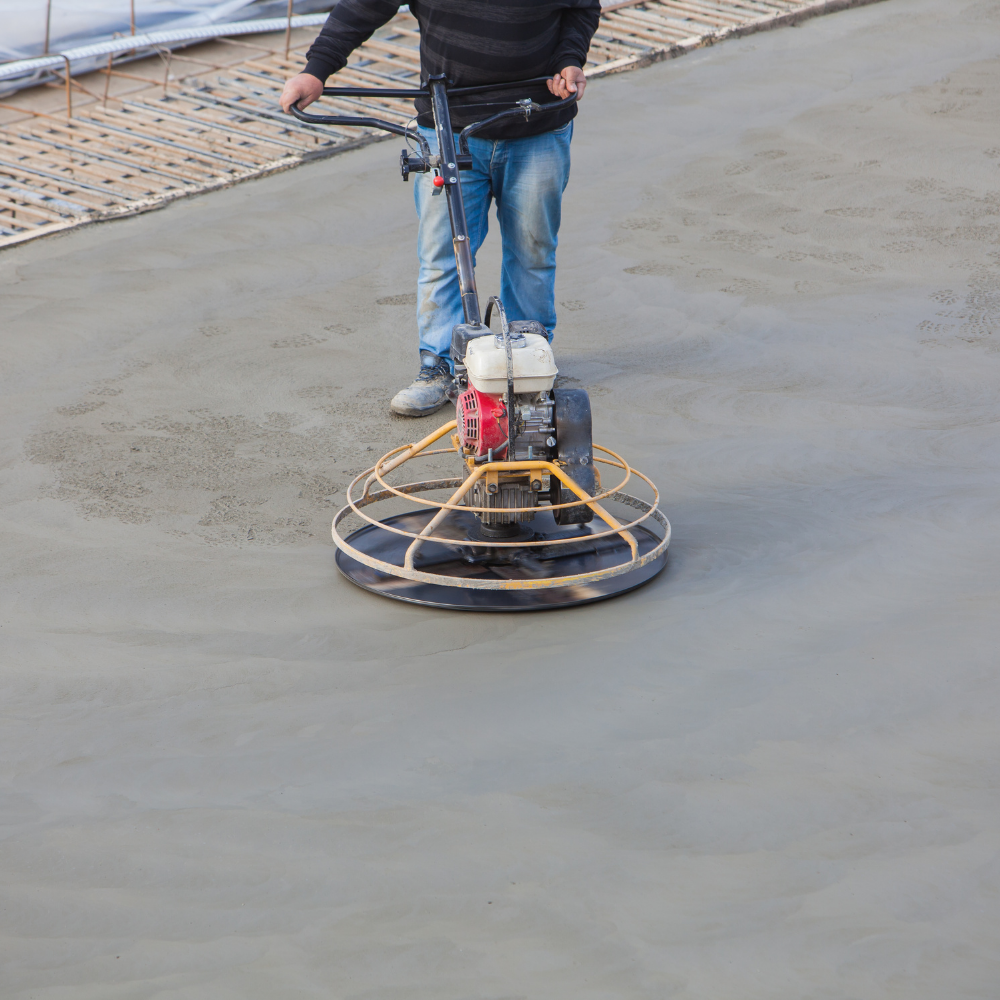
Slab Foundations with Expert Formwork and Clean Edges
A lot of homeowners in McKinney only notice foundation problems after the damage shows up—doors that don’t latch, hairline cracks near corners, or a slab that settles just enough to create a new “valley” where water always collects after storms. In North Texas, where clay soil can swell and shrink with moisture swings, that early water path is often the difference between a slab that stays true and one that slowly works loose.
We build slab foundations with a focus that goes beyond “pour day.” The real work starts before concrete ever touches the ground: formwork alignment, base preparation, vapor and drainage planning, and the details that produce clean edges and consistent thickness—because those same details also influence long-term performance.
Quick Answer
A durable concrete slab foundation depends on more than strong concrete. The foundation needs:
- Correct site prep and compaction (so the slab doesn’t settle)
- Proper drainage and foundation grading (so water doesn’t pool)
- Accurate formwork and reinforcement placement (for clean, consistent edges)
- Concrete curing practices that reduce early shrinkage cracking
If you’re building new—or troubleshooting early signs of movement—getting the grading and base prep right is usually the best starting point.
Why Formwork and Clean Edges Matter More Than Most People Think
When people picture a slab foundation, they think about the concrete. But as contractors, we spend a lot of time obsessing over the “invisible” parts:
1) Formwork controls alignment, thickness, and edge integrity
Good formwork isn’t just straight boards. It’s the system that establishes:
- The slab perimeter and load-bearing edges
- The correct slab thickness and level
- Consistent edge height for finishes and transitions
- Clear geometry so interior pours and exterior attachments (like steps or patios) don’t fight the foundation line later
If the forms are off by even small amounts, you’ll often see it in the finished floor transitions, baseboards, and how other trades fit to the structure.
2) Clean edges reduce future spalling and water intrusion
A “clean edge” is more than aesthetics. When the slab edge is properly shaped and protected by the right grading/drainage plan, you’re less likely to get:
- water running down the side and undermining soils
- early surface scaling at exposed edges
- differential wear at the perimeter where movement concentrates
In North Texas, rain events can be intense, and if the site grading doesn’t send water away quickly, the slab edge becomes a weak link.
3) Reinforcement placement and moisture control prevent the slow creep
We don’t rely on concrete alone to do the job. Steel placement, cover depth, and the moisture environment under the slab matter—especially in clay-heavy areas where seasonal moisture can change the support beneath the slab.
A firsthand contractor observation
One of the most telling things we see during site work is how often the base looks “fine” from the surface, but isn’t uniform underneath. After the first heavy rain, you can sometimes spot areas where water sat too long or where the subgrade wasn’t compacted evenly. That uneven support is exactly what later turns into settlement cracks and “stubborn” leveling problems.
What Property Owners Often Overlook
Many foundation issues don’t start with the concrete pour. They start with the plan—or the lack of it.
Common oversight #1: treating grading as a last step
A slab foundation is only as stable as the soil conditions around it. If grading is left for after the pour, it’s easy to miss:
- subtle low spots that collect water
- drainage routes that aim water toward the foundation
- slopes that don’t match the site’s natural drainage
For homeowners who want to improve the long-term performance of the structure, foundation grading is usually the highest-value work you can do before and after construction. If you’re planning a build or correcting drainage, review our foundation grading support.
Common oversight #2: focusing on finish while ignoring the base
It’s normal to care about how the slab “looks” during construction, but the base preparation and moisture strategy usually determine whether the slab stays stable for years.
Common oversight #3: assuming concrete repair is the whole fix
If water is still pooling or the soil support is still inconsistent, repairs can become temporary. Slabs can crack, but the underlying cause is often site conditions.
If you’re dealing with early movement and you suspect leveling is part of the story, it helps to explore foundation grading support first and then discuss repair options based on what’s actually happening under and around the slab.
What We Commonly See in North Texas Soil Conditions
North Texas clay soil behaves differently than many people expect. It can expand when moisture increases and shrink when it dries out—season after season.
In practice, that means:
- Slabs can experience micro-movement even when the concrete is “strong.”
- Drainage problems show up as structural stress.
- Changes like irrigation leaks, clogged gutters, or downspouts that discharge too close to the home can trigger movement.
McKinney-specific reality check (soil + weather)
During spring and summer, you can get rapid swings in moisture: heavy rain one week, hot drying conditions the next. If the site isn’t graded to shed water away from the foundation perimeter, the soil under and adjacent to the slab can cycle moisture levels faster than the structure can “settle safely.”
Why Some Concrete Installations Fail Early
Even when the concrete mix is good, early failure usually comes from one of these:
1) Poor compaction or inconsistent subgrade
If the base isn’t compacted uniformly, the slab will “find” the soft spots over time.
2) Formwork that doesn’t hold true geometry
If the forms shift during placement—because they weren’t braced correctly or the base wasn’t firm enough—the slab edge can end up irregular. That irregularity can expose more area to water pathways and create finishing challenges.
3) Drainage plan gaps
We’ll often see sites where the foundation footprint is fine, but the yard grading doesn’t match the drainage needs. Water moves downhill, and if it’s not directed away, it will seek the path of least resistance—often toward the foundation.
Mistakes That Cause Drainage Problems
Mistake: downspouts and irrigation pointed at “the easiest place”
A common field scenario: a homeowner adjusts landscaping or irrigation, and suddenly water discharges near the foundation corner. The change seems minor—but clay soil responds to moisture changes quickly.
Mistake: assuming “flat yard” means “good drainage”
Flat yards can look neat, but they often create hidden collection zones. Without proper slope and drainage planning, water will pool, saturate soils, and increase the risk of foundation movement.
Mistake: rushing to pour before site prep is complete
If site preparation isn’t finished to spec—especially compaction and base stabilization—you may not see issues right away. But the slab will eventually reflect the ground conditions beneath it.
Construction, Repair, or Maintenance Checklist
If you’re planning a slab foundation—or evaluating an existing one—use this practical checklist to keep the project on track:
Slab Foundation Planning Checklist
- Site survey + layout accuracy: Confirm elevations and slab geometry before forms go up.
- Subgrade prep: Remove unsuitable material and stabilize the base as needed.
- Compaction verification: Ensure consistent density across the build area.
- Formwork bracing and alignment: Prevent form movement during placement.
- Reinforcement placement: Maintain correct cover and positioning.
- Moisture control plan: Address under-slab moisture and drainage routes around the perimeter.
- Concrete placement sequence: Avoid cold joints and ensure proper consolidation.
- Curing plan: Protect the slab during early curing to reduce shrinkage-related issues.
- Final grading: Confirm the ground slopes away from the foundation and matches drainage expectations.
Ongoing Maintenance Checklist (simple but high impact)
- Inspect gutters and downspouts after storms; ensure discharge is directed away from the foundation.
- Check for irrigation leaks or overspray near foundation edges.
- Keep soil from washing against the foundation perimeter.
- Watch for early signs: new cracks near corners, uneven transitions, or persistent damp areas after rain.
A Realistic Project Example (Anonymized Case)
We worked with a homeowner in a North Texas neighborhood who noticed a hairline crack pattern near exterior corners and a slight door misalignment. The slab wasn’t “failing” overnight—but it was changing.
During the site evaluation, the concrete itself wasn’t the first red flag. The bigger issue was how water behaved after storms:
- The yard grading created a subtle low spot near one foundation corner.
- The downspout discharge didn’t have enough distance or proper routing.
- Clay subgrade under the affected area had likely cycled moisture more aggressively than the rest of the site.
The fix wasn’t just patch-and-paint. The homeowner improved drainage routing and grading, then addressed the foundation-related concerns based on what the movement history suggested. That approach reduced the chance of the slab continuing to “chase” water and soil moisture.
McKinney or North Texas Relevance: What Changes Here
Slab foundations in McKinney experience the same physics as anywhere else—but the local environment makes those physics show up sooner.
- Expansive clay soil: Moisture swings can be dramatic between wet and dry seasons.
- Heavy rain events: A drainage plan that’s “almost right” can still lead to pooling.
- Rapid suburban growth: New builds often sit on sites that still have variable soils and landscaping transitions that need extra attention.
Because of this, we recommend treating slab foundation performance as a system: soil + drainage + formwork + concrete + curing. When one component is weak, the others end up compensating.
Concrete vs. Asphalt Comparison (For Adjacent Flatwork)
Many foundation projects also involve driveways and walkways that connect to the home. If you’re planning upgrades around a new slab, here’s a quick comparison to help you think through durability and maintenance.
| Feature | Concrete Foundations/Flatwork | Asphalt (Common for Drives/Lots) |
|---|---|---|
| Typical lifespan | Often long with proper site prep and curing | Good lifespan, but can soften/shift with moisture and heat |
| Crack behavior | Can crack, but jointing and base prep control it | Can ravel or rut if base prep is weak |
| Maintenance | Sealing and minor repairs can extend life | Sealcoating helps, but surface wear can still progress |
| Performance in wet conditions | Depends heavily on grading/drainage | Depends heavily on drainage and base thickness |
| Best use | Structural and perimeter edges, sidewalks, patios | Driveways and parking areas (when built correctly) |
If you’re also handling exterior improvements like driveway installation solutions or considering a long-term replacement plan, the same foundation logic applies: base prep and drainage determine whether the surface holds up.
Signs Concrete Needs Repair (Before It Gets Worse)
If you’re working around a slab foundation or adjacent flatwork, watch for these indicators:
Foundation-adjacent signs
- Cracks that widen slowly over time
- Doors or windows that start sticking
- Gaps between exterior trim and the structure
- Persistent dampness near foundation edges after rain
Flatwork signs
- Uneven sidewalks or walkways
- Puddling in low areas
- Spalling at edges or around joints
When these appear, it’s usually a signal to evaluate grading and drainage first—not just patching the concrete surface.
Ready to Improve Your Property With Durable Concrete Solutions?
A slab foundation with expert formwork and clean edges is the start—but the real durability comes from getting the system right: grading, drainage, base preparation, and concrete placement details that prevent early movement.
If you’re building new or troubleshooting foundation-related concerns in McKinney and surrounding North Texas communities, we can help you plan the next steps with the right technical approach.
About TopCore Concrete
TopCore Concrete provides slab foundations, retaining walls, patios, grading, parking lots, sidewalks, and concrete flatwork services throughout McKinney, TX and surrounding North Texas communities. We focus on durable construction, proper site preparation, long-term structural performance, and helping homeowners and businesses improve their properties through practical concrete and grading solutions.