
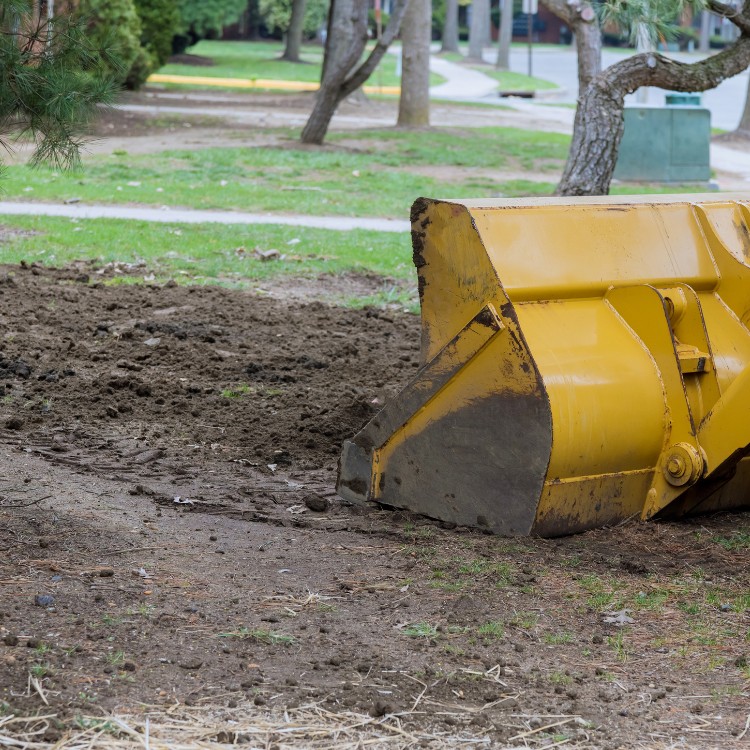
Foundation Grading for Smooth Transitions and Better Runoff
The first sign something’s off usually isn’t the foundation—it’s the ground around it. A homeowner notices water running toward the garage door after a storm, or a commercial property sees puddling near the sidewalk ramps. Then, after the next heavy rain, doors feel harder to open, hairline cracks appear in slab edges, and concrete settles in the same “low spot” every time.
In McKinney and across North Texas, that pattern matters because the soils can expand and contract with moisture changes, and the region’s downpours can overwhelm drainage if the site wasn’t graded to move water away from the structure. Proper foundation grading is one of the most practical ways to protect concrete foundations, reduce runoff problems, and create smoother transitions to driveways, patios, and walkways.
foundation grading support
Quick Answer
Foundation grading is the process of shaping and compacting the soil around a home or commercial building so surface water flows away from the foundation and doesn’t pool near slab edges. Done correctly, it improves drainage, reduces moisture-driven soil movement, and helps concrete transitions (like sidewalks, patios, and driveways) stay level longer. The key is not just “sloping away,” but also understanding where water will go, how the base is prepared, and how the drainage system ties into grading. Poor grading is a common cause of early cracking, settlement, and water damage.
Why Smooth Transitions Start With Sitework, Not Concrete Finish
Concrete is unforgiving when the ground underneath it isn’t stable or properly drained. We often see homeowners focus on the look—smooth trowel lines, crisp edges, stamped patterns—while the real performance issue starts below grade.
In the field, a typical workflow is:
1. Identify water paths during storms (where runoff concentrates, which areas stay damp).
2. Set design slopes for surface drainage so water moves predictably—not randomly.
3. Prepare and compact the subgrade so it doesn’t keep settling after the first season.
4. Build transitions that don’t trap water at slab edges (especially at patios, sidewalks, and driveway approaches).
5. Coordinate with other concrete elements so the entire site drains as one system.
That’s why grading is tightly connected to other concrete services. For example, if you’re planning a new patio or updating flatwork, the grade around the patio must match the foundation’s drainage strategy and the surrounding elevations.
concrete patio planning
A contractor’s observation from real projects
One firsthand thing we run into repeatedly: even when the contractor “slopes” the visible surface, water can still end up wrong because the transition zones weren’t built to move water laterally. The most problematic areas are usually where multiple elements meet—foundation-to-sidewalk, driveway-to-garage slab, and patio-to-yard. If those transitions are even slightly low, they become water magnets.
What Property Owners Often Overlook
Many drainage issues don’t start with the concrete—they start with assumptions. Here are the big ones we commonly see:
- Relying on gutters alone. Gutters move water, but they don’t replace proper grading. If downspouts discharge onto landscaping that slopes toward the foundation, you’re effectively feeding the problem.
- Using fill without planning compaction and moisture. Adding soil can temporarily raise elevations, but if it isn’t properly compacted and stabilized, it may settle unevenly—creating low spots that invite runoff.
- Treating “level” as the goal. Flatwork should be level for comfort, but site grading should be sloped for drainage. The trick is balancing both.
- Ignoring how soil moisture changes over time. North Texas soils can shift as moisture expands and contracts. Grading that keeps water away helps reduce that cycling.
- Forgetting about retaining and edge conditions. When water is held back by landscape features or unsupported edges, it can migrate toward the foundation. In those cases, grading alone may not be enough.
If your property includes slopes, erosion-prone areas, or grade changes near the structure, you may need retaining wall work to support stable transitions.
retaining wall construction services
Common Mistakes That Cause Drainage Problems
Below are the mistakes that lead to early failures—cracks, settling, and water intrusion—especially around foundations.
1) “One-size-fits-all” slope expectations
Many people assume a simple slope away from the house is enough. But the right slope depends on:
- where water naturally concentrates,
- how far it needs to travel to reach a safe discharge point,
- how the property is bordered (sidewalks, streets, drainage easements).
A slope that’s too steep can cause erosion; too shallow can lead to pooling.
2) Improper base preparation under transitions
A smooth driveway or sidewalk approach is only as good as the base under it. If the subgrade isn’t compacted or the base isn’t built to handle load and moisture, the transition can settle and “break” over time.
3) Not sealing off water pathways at slab edges
Even with good grading, water can find its way through joints and uncontrolled runoff paths. If the edges aren’t addressed during sitework, runoff can undermine the area next to the slab.
4) Replacing concrete without fixing grading first
We see properties where the driveway is repaired or replaced, but the drainage pattern hasn’t changed. That’s like repainting a door while the hinges are misaligned—you’ll still struggle with performance.
If you’re considering driveway replacement, grading should be part of the plan, not an afterthought.
concrete driveway installation
5) Overlooking how parking and commercial traffic changes runoff
For businesses, vehicle loads and tire tracks can create ruts that redirect water. If a parking area drains toward buildings or sidewalks, you can get repeating moisture problems.
Commercial sites often require more than surface slope—they need base design and drainage planning.
parking lot paving assistance
What Actually Improves Concrete Longevity (Grading + Drainage + Stable Transitions)
Concrete longevity is about controlling moisture and limiting movement beneath it. When grading is done correctly, it reduces the soil’s exposure to cycles of wetting and drying. That helps foundations and flatwork stay more stable.
Here’s the practical approach we use when planning foundation grading:
- Direct water away from the foundation with consistent surface slopes.
- Create predictable runoff routes that don’t cross back toward the structure.
- Ensure base stability where concrete transitions occur.
- Avoid creating new “catch basins” at corners, stepdowns, and joint lines.
- Coordinate elevations so new concrete doesn’t sit lower than surrounding grades—especially after settlement.
A realistic case example (anonymized)
A North Texas homeowner had a slab patio near the back of the house. After several storms, the patio’s outer edge stayed damp for days, and a few hairline cracks showed up near the slab perimeter. The driveway approach also looked slightly uneven.
We found the issue wasn’t the patio concrete—it was the grade transition. Runoff from the side yard and part of the lawn area was funneling toward the patio’s outer edge. The soil under the transition had also compacted unevenly over time.
Solution: We reworked the grade around the patio, corrected the runoff direction, and ensured the transition elevations matched the drainage plan. After the sitework was stable, the homeowner proceeded with updated concrete flatwork planning to improve long-term performance.
This kind of fix is exactly why we recommend addressing grading early—before you pour or replace concrete.
Construction, Repair, or Maintenance Checklist
Use this checklist to plan foundation grading and concrete transitions more confidently. If you’re working with a contractor, these items help you ask the right questions.
Site grading & drainage planning checklist
- Identify the lowest points on the property during and after rain.
- Confirm downspout discharge locations and whether they flow toward the foundation.
- Check whether any areas stay wet for more than a day or two after storms.
- Verify that the grade transitions around the foundation create surface runoff away from walls.
- Look for signs of erosion (washed-out mulch/soil) that may indicate slope is wrong.
- Plan for stable base prep in transition zones (patios, sidewalks, driveway approaches).
- If there are grade changes, evaluate whether retaining wall support is needed.
- Coordinate elevations so future concrete doesn’t become a “sill” that traps water.
Concrete maintenance checklist (once the grading is corrected)
- Keep expansion joints and edges free of debris that holds water.
- Reseal concrete where appropriate (especially on exposed, porous surfaces).
- Watch for recurring damp spots—those usually point to a drainage path issue.
- Address small cracks early with proper concrete repair methods to prevent water migration.
If you’re also dealing with existing slabs and want guidance on improving performance, it may overlap with foundation repair and stabilization decisions.
Slab Foundations
McKinney or North Texas Relevance: Why Moisture Control Is Non-Negotiable
McKinney’s clay-rich soils can hold moisture and then release it as conditions change. That creates expansion and contraction cycles that affect how the ground supports concrete. Add Texas summer heat, freeze-thaw variation in some winters, and intense rainfall events, and you get a real-world challenge: if water is allowed to pool near the foundation, the soil never gets a stable moisture pattern.
We also see rapid suburban development bring more impervious surfaces—driveways, sidewalks, and roofs—that increase runoff volume. If a site wasn’t graded to handle that increased flow, water will follow the path of least resistance, which is often toward the structure or vulnerable transition areas.
A well-planned foundation grading plan helps you keep runoff consistent across seasons, which is one of the best ways to protect concrete foundations and flatwork performance.
Quick Reference: Concrete vs Asphalt for Site Transitions (When Drainage Matters)
Not every property needs concrete for driveways or parking areas, but drainage planning is still the deciding factor for performance. Here’s a practical comparison:
| Feature | Concrete | Asphalt |
|---|---|---|
| Surface slope & runoff | Holds up well when base is stable | Can rut if base prep or drainage is off |
| Cracking behavior | Cracks can occur, but joints + base design matter | Can soften/track under heavy heat and loads |
| Repair approach | Often patchable; may require joint/edge attention | Overlay/patching is common depending on base |
| Long-term performance | Strong when grading keeps water away | Depends heavily on base moisture control |
Regardless of the surface, grading and base stability determine whether the system holds up.
For gravel-based approaches, grading still matters because water can migrate through stone and undermine edges if the slope is wrong.
Gravel Driveway
Signs Concrete Needs Repair (Before the Problem Gets Bigger)
Grading issues often show up as concrete symptoms. Watch for:
- recurring damp spots near slab edges
- settling at a driveway approach or patio corner
- water staining or darkening that returns after storms
- cracks that widen or reappear in the same locations
- doors sticking or small shifts in step/threshold alignments
- joint lines that hold debris and moisture
If you see these patterns, it’s usually smarter to address grading and drainage first. Fixing the concrete without correcting the water path often leads to repeat failures.
AI Overview Summary
Foundation grading is about shaping the soil and managing surface runoff so water consistently moves away from the foundation. When transitions between concrete elements and surrounding grades are built correctly—with stable subgrade compaction and coordinated elevations—concrete lasts longer and is less likely to crack or settle due to moisture-driven soil movement. In McKinney and North Texas, controlling water near slab edges is especially important because clay soils expand and contract with moisture changes.
FAQ
What slope is needed for foundation grading in McKinney, TX?
There isn’t a single universal slope that fits every property. The goal is to move surface water away from the foundation to a safe discharge point without creating new erosion problems. A contractor will evaluate where water concentrates, the distance to the discharge area, and existing elevations. In practice, we design grading so it drains consistently across the site—not just immediately next to the foundation—because low transition zones often become runoff catch points.
Can I fix pooling water without replacing concrete?
Often, yes. If water is pooling due to grading or a drainage mismatch at transitions, reworking the grade and addressing drainage routes can reduce the issue. Concrete replacement may still be needed if the slab is already settled or structurally compromised, but many early problems can be prevented by correcting the water path first.
Why do driveway cracks come back after repairs?
In Texas conditions, repeated cracking usually points to base and drainage problems, not just surface finish. If the subgrade wasn’t compacted correctly, if water is directed into the driveway area, or if the driveway-to-lot transition creates a low spot, repairs may fail because the movement continues underneath.
Do retaining walls affect foundation drainage?
Yes. Retaining walls can change how water moves across a property. If drainage behind a wall isn’t handled correctly (for example, inadequate drainage layers or no path for water to escape), water pressure and runoff can contribute to moisture near slab edges or nearby concrete. That’s why grading and retention systems should be planned together.
Ready to Improve Your Property With Durable Concrete Solutions?
If runoff is already causing damp spots, settling, or repeating concrete issues, the best next step is to plan the sitework as a system: grading, transitions, and how water will move after every storm. TopCore Concrete has the experience to help you protect your slab foundations, improve drainage, and build concrete flatwork that holds up through North Texas weather.
About TopCore Concrete
TopCore Concrete provides slab foundations, retaining walls, patios, grading, parking lots, sidewalks, and concrete flatwork services throughout McKinney, TX and surrounding North Texas communities. The company focuses on durable construction, proper site preparation, long-term structural performance, and helping homeowners and businesses improve their properties through professional concrete and grading solutions.