
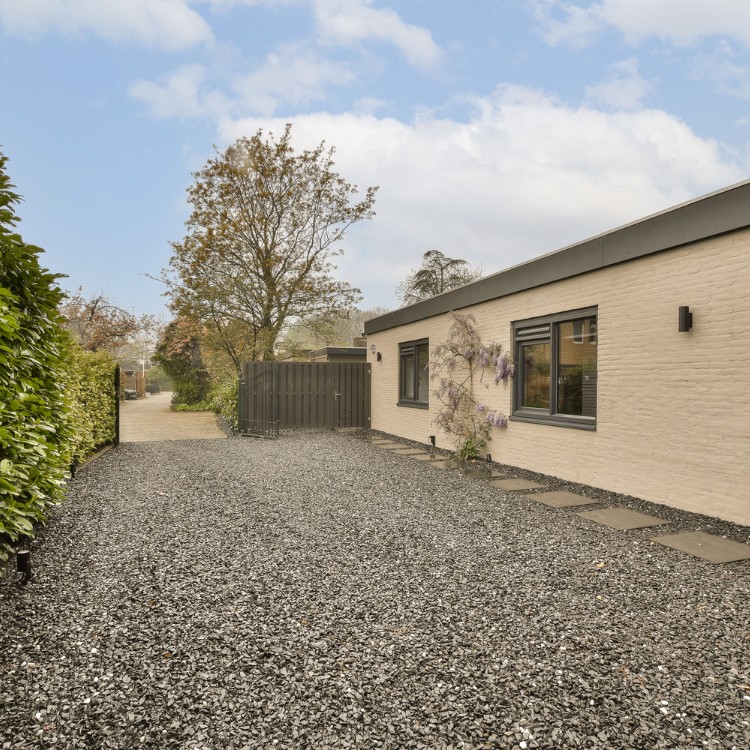
Gravel Driveway Craftsmanship for Durable, Clean Curb Appeal
A lot of McKinney homeowners start with the same frustration: the driveway “looks fine,” but after a couple of heavy rains the gravel migrates, ruts form at the wheel paths, and muddy runoff tracks onto the street. Then the grass starts creeping into the edge, weeds find the low spots, and the whole approach becomes a maintenance cycle instead of curb appeal.
A gravel driveway can absolutely be durable and clean-looking—but only when the base prep and drainage plan are built correctly. In North Texas, that means thinking ahead about expansive clay soils, summer heat, and the way water moves across a site before any rock is delivered.
Quick Answer
A long-lasting gravel driveway comes down to three things: site preparation, proper base thickness and grading, and drainage that prevents pooling. For most properties, that means stabilizing and compacting the subgrade, installing a well-graded base (not just “dumping rock”), and shaping a crown or swale so water sheds instead of sitting. If the driveway already has ruts or migrating gravel, repair usually starts by fixing the underlying base and drainage—not just adding more gravel.
Why Gravel Driveways Fail Early (and How to Build Them Right)
From my experience installing and repairing gravel driveways, the early failures usually look the same:
- Gravel ends up on the lawn or sidewalk because the edge isn’t restrained.
- Wheel paths rut because the base is thin or not properly compacted.
- Water funnels into low spots and softens the subgrade, which then pumps fines up through the rock.
- The driveway develops a “bathtub” effect where the center stays wet after storms.
Here’s the contractor reality: gravel is not a structural layer by itself. It performs when it’s placed on top of a compacted, properly graded base that can handle load and manage water. In North Texas, the clay subgrade can expand when wet and shrink as it dries—so if water is allowed to infiltrate and pool, the driveway will move over time.
The craftsmanship part: grading + base + drainage
A well-built gravel driveway is shaped to control water:
- A crown (slight high center) helps shed runoff.
- A consistent slope toward a controlled drainage area prevents pooling.
- Clean transitions at the edges keep material where it belongs.
If you’re planning multiple surfaces—like a driveway leading into a parking pad or walkway—those transitions matter too. Many driveways settle unevenly because the base is built for the driveway, but the adjacent areas weren’t planned as one system.
If you’re also considering other concrete flatwork on the property, you may want to review concrete driveway installation solutions for how transitions and base prep should align with concrete edges.
What Property Owners Often Overlook
Most homeowners focus on the visible part: the rock color, the driveway width, and how “level” it looks on day one. But the problems show up later because the driveway is a water-and-soil system.
Common “overlooked” items we address during site prep
- Edge control: Without a restrained edge, gravel spreads and the subgrade gets exposed.
- Base contamination: If topsoil, organic matter, or clay fines remain in the subgrade, the driveway can pump and rut.
- Subgrade moisture conditions: Compacting the wrong moisture content can create a weak layer.
- Drainage path compatibility: If runoff is directed toward a low spot or foundation-adjacent area, you’ll see downstream issues.
A realistic scenario we see in North Texas
A homeowner adds a gravel driveway to park a couple of vehicles near a garage. After the first big storm, they notice mud tracking onto the street and shallow ruts forming where tires stop. The driveway “settles” where water collects at the turn-in area.
When we investigate, we typically find:
- the subgrade wasn’t fully stabilized,
- the base didn’t extend far enough laterally into the wheel paths,
- and the driveway profile didn’t shed water consistently.
The fix isn’t just topping with more gravel. It’s regrading and rebuilding the base where the movement started—then matching the driveway profile so water leaves the system instead of soaking in.
Common Mistakes That Cause Drainage Problems
Here are the mistakes that most often turn a straightforward gravel driveway into a recurring repair job:
1) Adding gravel on top of a soft base
If the subgrade is pumping fines or staying wet, new rock will simply cover the symptoms. Over time, the wheel paths will sink again.
2) “Level” driveways that trap water
A driveway that looks level can still be hydraulically wrong. Water needs a path, not a place to sit.
3) Skipping proper compacting steps
Even good base material can fail if it’s not compacted in lifts to the right density. That’s where ruts and settlement begin.
4) Ignoring nearby grading that feeds runoff
Downspouts, yard slopes, and adjacent compacted areas can push water toward the driveway. We’ve seen driveways fail because the yard was graded toward the garage side after landscaping was installed.
5) No plan for future transitions
If you eventually plan concrete work—like a patio, sidewalk, or steps—your driveway edges and base should be built to support those future transitions cleanly.
If your long-term plan includes concrete additions, it may help to understand how grading works alongside concrete work through foundation grading support, since the same drainage principles protect both flatwork and foundations.
Our Experience Building Gravel Driveways in Texas Conditions
North Texas soils aren’t forgiving. Expansive clay can change volume with moisture, and summer heat accelerates drying while winter storms can saturate the ground quickly. That cycle is hard on any driveway that relies on luck.
What we watch for on every driveway build
- How water behaves during storms: Where does runoff travel? Where does it slow down?
- Subgrade stability: Is the soil uniform or does it have soft pockets?
- Base structure: Is the base properly layered and compacted?
- Edge integrity: Are there ways to keep material from migrating?
A contractor observation that keeps coming up
One pattern we see after repairs: driveways often look “okay” until the first time they get hit with both heavy rainfall and repeated vehicle loading in the same week. That combination exposes weak base prep quickly. The driveway doesn’t fail because gravel isn’t strong—it fails because the subgrade and drainage weren’t designed for repeated wetting and rolling loads.
Where gravel fits best (and where it doesn’t)
Gravel driveways are a great match for:
- rural and semi-rural lots,
- properties that want flexible surface maintenance,
- parking overflow areas,
- homes where you want easier adjustments during landscaping changes.
But if you need a surface with minimal long-term maintenance—especially for frequent daily trips—a concrete or asphalt solution may be a better fit. If you’re weighing options, you can compare paving approaches through parking lot paving assistance to understand how commercial base requirements differ.
Construction, Repair, or Maintenance Checklist (Do This to Protect Your Investment)
Whether you’re building new or rehabilitating an existing driveway, use this planning checklist.
Site preparation checklist for a new gravel driveway
- Confirm the driveway profile (crown/slope) so water sheds.
- Remove topsoil/organic material from the footprint.
- Build a compacted base in layers (not one big dump).
- Address soft spots with proper stabilization—don’t “bridge” them with thicker gravel only.
- Install edge control to reduce migration.
- Place gravel with consistent depth and distribution.
Maintenance checklist for an established driveway
- Inspect after major storms for ruts, soft areas, and pooling.
- Re-grade low spots before they become structural damage.
- Top off gravel only after confirming the base isn’t failing.
- Keep vegetation from growing into the edges (weeds create pathways for water).
- Avoid washing down the driveway toward drainage areas that can’t handle runoff.
When to consider deeper repairs
If you see recurring ruts in the same wheel path, gravel continually disappears into the lawn, or the driveway remains damp for days after rain, that’s usually a base/drainage issue—not a surface issue.
Concrete vs. Asphalt vs. Gravel (What Should You Choose?)
A gravel driveway can be durable, but the “best” option depends on your traffic, climate exposure, and how much maintenance you’re willing to do.
| Surface Type | Best For | Main Strength | Typical Tradeoff |
|---|---|---|---|
| Gravel | Homes needing flexible, lower initial cost | Easy to refresh; good permeability | Requires grading and replenishment over time |
| Asphalt | Higher traffic and smoother ride | More consistent surface feel | Less permeable; needs correct base and drainage |
| Concrete | Long-term durability and low maintenance | Strong, clean surface | Higher upfront cost; still needs proper base and drainage |
If your driveway is near areas that need concrete flatwork—like a walkway or steps—planning drainage and base alignment early can prevent uneven transitions. For concrete-related projects, see concrete sidewalk installation guidance on how grade and base affect long-term performance.
McKinney / North Texas Relevance: Why Drainage Is the Real “Material”
In North Texas, rainfall can be intense, and clay soils can hold moisture longer than homeowners expect. Add summer heat and drying cycles, and you get a driveway that’s constantly expanding and contracting at the subgrade level.
That’s why in McKinney and surrounding areas, we focus on:
- preventing water from infiltrating and staying in the base,
- shaping the driveway so runoff has a controlled path,
- and designing edges to keep materials in place.
When those pieces are done right, gravel driveways stay cleaner, hold shape longer, and reduce the “mud season” effect that frustrates property owners.
An Example Case: Turning a Rutted Gravel Drive into a Clean Curb Feature
Here’s an anonymized example based on a real driveway improvement we handled:
A homeowner had a gravel driveway that looked uneven after every storm. Vehicles were creating wheel ruts near the turn-in, and gravel was being pushed toward the side yard. The driveway also fed runoff toward a low area that stayed wet.
What we found:
- the base wasn’t consistent across the wheel paths,
- the driveway profile didn’t shed water effectively,
- and the edge wasn’t restrained, allowing migration.
What we did:
- rebuilt the base where soft spots and rutting were occurring,
- regraded the driveway to maintain a proper slope and shed water,
- added edge control to keep the gravel contained,
- and restored a clean, uniform surface thickness.
Result:
After the next heavy rain cycle, the driveway held its shape much better. The wheel paths stopped deepening, and the gravel stayed contained instead of migrating into the yard. The biggest improvement wasn’t the rock—it was the drainage and base structure underneath.
Ready to Improve Your Property With Durable Concrete Solutions?
If you’re building a new gravel driveway—or your current one is developing ruts, muddy tracking, or migrating gravel—start with the site prep and drainage plan. That’s what determines whether the driveway stays “crisp” or turns into a maintenance headache.
For properties that need gravel work plus concrete transitions (or future upgrades), TopCore Concrete can help coordinate the full sitework approach—from base prep and grading concepts to concrete flatwork planning.
About TopCore Concrete
TopCore Concrete provides slab foundations, retaining walls, patios, grading, parking lots, sidewalks, and concrete flatwork services throughout McKinney, TX and surrounding North Texas communities. The company focuses on durable construction, proper site preparation, long-term structural performance, and helping homeowners and businesses improve their properties through professional concrete and grading solutions.