
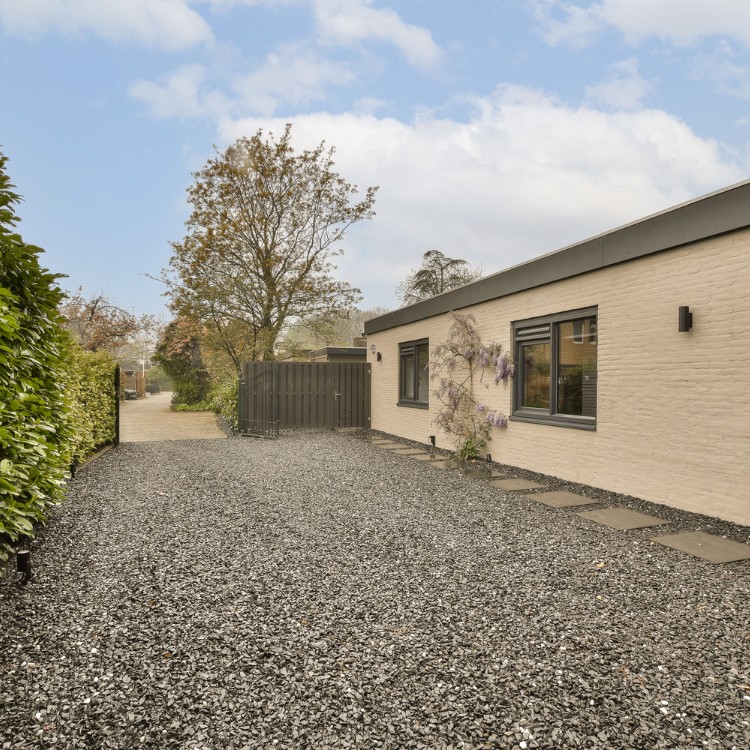
Gravel Driveway Design Tips for Lasting Texture
A gravel driveway is supposed to feel simple—dump rock, spread it, and go. But in McKinney and across North Texas, homeowners quickly learn that “simple” is only true until water, clay soil movement, and heavy traffic start working against the design.
We’ve been called out after a few seasons when a driveway looks uneven, develops ruts after rain, or loses its texture and turns into a patchy mix of mud and stone. Most of the time, the issue isn’t the gravel itself—it’s the design underneath: base thickness, drainage direction, and how the surface is shaped to shed water.
Below are contractor-style design tips that help gravel driveways keep their texture, resist rutting, and stay serviceable for years.
Quick Answer
For a gravel driveway with lasting texture, focus on four things before you choose rock sizes:
- Proper base prep and grading so water drains away instead of pooling.
- Correct base thickness for the expected vehicle weight (cars vs. trucks vs. parking).
- Layered aggregate design (fines + base stone + top rock) to lock in texture.
- Maintenance planning—regrading and refreshing stone before ruts become deep.
If the subgrade is clay-heavy and drainage is off, gravel will migrate and the driveway will soften long before the surface stone “runs out.”
What We Commonly See in North Texas Soil Conditions
North Texas soils—especially around McKinney—often include expansive clay. Clay isn’t just “wet soil.” It swells when it absorbs water and shrinks when it dries. That movement can create subtle changes in grade even when the driveway “looks fine” day-to-day.
On a gravel driveway, those tiny grade changes usually show up as:
- Soft spots after storms
- Edge breakdown where water runs off the road and carries fines outward
- Rutting where tires repeatedly compress the base
- Stone migration where top rock gets pushed into low areas
One firsthand observation from the field: when we pull back gravel after a couple of wet seasons, the failure pattern is rarely random. You can often trace it to where water collects or where the driveway crown is too flat—then see how the fines worked their way upward and reduced stability.
Gravel Driveway Design Principles That Preserve Texture
1) Start with the crown and drainage plan
A gravel driveway should shed water, not hold it. In practice, that means shaping the driveway with a gentle crown (or a consistent slope) so runoff moves toward a planned outlet—like a ditch, swale, or approved drainage route.
If water sits, fines build up, and the top layer loses that crisp “grip” you want. Texture doesn’t just come from rock size; it comes from stability and dryness at the surface.
2) Build the section like you mean it (base matters more than top rock)
Most driveway texture complaints come from insufficient base prep. A gravel surface can look good on day one and then fail because the base wasn’t engineered to handle:
- vehicle loads
- freeze/thaw cycles (less dramatic than northern climates, but Texas still sees temperature swings)
- wet-season saturation
- repeated tire paths
For car traffic, the driveway still needs a firm, compacted foundation. For frequent truck use, you’ll need a more robust base design to avoid rutting.
If you’re comparing options, it helps to understand how base and subgrade preparation connect to concrete longevity too—our team breaks down related fundamentals in gravel driveway design and construction planning.
3) Use a layered aggregate approach (not “one rock for everything”)
A durable gravel driveway typically uses:
- finer material at the sub-base or as a stabilizing layer (depending on the design)
- base stone for structural support
- top rock (commonly a gradation that provides traction and stays in place)
This layering helps the driveway resist deformation and keeps the surface from turning into slippery mud when it gets wet.
4) Choose top rock size for function, not fashion
Texture is where homeowners notice the difference, but rock size affects both traction and maintenance:
- Smaller stones can create a smoother look, but may move more if drainage is poor.
- Larger stones can resist displacement, but may feel rougher and can require more grading to keep it uniform.
The right choice depends on how the driveway is used—daily passenger cars vs. delivery vehicles vs. seasonal heavy rain patterns.
5) Add edges and transitions to control movement
Driveways fail at edges first. Without a controlled boundary, water and tire forces can push aggregate outward. That leads to:
- a wider, uneven footprint
- loss of depth in the center
- settlement near the edges
In some cases, a restrained edge or a planned transition to adjacent surfaces (like sidewalks or concrete pads) makes a huge difference in maintaining a consistent textured surface.
If your driveway connects to other flatwork, it’s worth planning the whole system. For example, we often coordinate sitework with concrete driveway installation so the transitions don’t become weak points where water collects.
Mistakes That Cause Drainage Problems
Common mistake property owners make
They re-gravel the surface without fixing the grade.
It’s a common cycle: after rain, the driveway gets rutted or muddy, so the homeowner adds more stone. The surface improves temporarily, but the underlying issue remains—water still pools, fines still migrate upward, and the driveway still compresses along tire tracks. Eventually, the stone layer ends up too thin to do its job.
Here’s what that looks like on site:
- You can see a “low lane” where tires travel.
- The driveway crown disappears over time.
- The top layer gets clogged with fines.
- The driveway becomes harder to maintain because ruts deepen faster than you can refresh the surface.
Other frequent issues we see
- Skipping compaction: gravel over loose subgrade leads to early deformation.
- Placing too much stone too quickly: without staged base work, the driveway settles and texture breaks down.
- No outlet plan: runoff has to go somewhere. If it goes nowhere, it will go into the driveway.
- Ignoring utility crossings: areas above buried lines often settle differently and need attention to base thickness and compaction.
Site Preparation Checklist for a Driveway That Holds Its Texture
Use this as a practical planning guide before construction starts:
Sitework and base prep
- Confirm expected vehicle use (passenger cars only vs. trucks/deliveries).
- Remove topsoil/organic material where necessary.
- Stabilize and compact the subgrade.
- Plan a clear drainage direction with a consistent crown/slope.
- Install or plan edge control to prevent lateral migration.
Aggregate and surface build
- Use a layered base design, not just a single gravel application.
- Compact each layer to support and lock in the section.
- Add top rock designed for traction and long-term texture retention.
- Shape the surface for drainage right after placement.
After installation
- Recheck grade and surface after the first wet season.
- Plan a light regrade before ruts become deep.
- Refresh top rock in thin, targeted areas rather than rebuilding the entire driveway.
If you’re considering other exterior improvements at the same time—like patios or walkways—good base preparation carries over. Our team’s experience with concrete patio installation and site preparation helps illustrate why drainage and compaction aren’t optional.
A Realistic Case Example (Anonymized)
A homeowner near McKinney called us after noticing that their gravel driveway looked “washed out” near the gate side after heavy rains. The driveway had been topped with additional gravel twice, but the problem returned within months.
When we investigated, the pattern was consistent:
- the driveway had an almost flat profile
- runoff from the property fed toward the driveway instead of away from it
- the base depth was shallow near the low lane
- tire compression created a rut channel that collected fines
We corrected the issue by reshaping the crown, improving drainage direction, and rebuilding the section with a more stable layered base before placing top rock. The texture returned—and more importantly, the driveway stopped turning muddy after storms because water no longer sat in the same spots.
Concrete vs. Asphalt Comparison (When Gravel Isn’t Enough)
Some properties need more than gravel—especially if you’re dealing with heavy traffic, frequent deliveries, or a driveway that must stay clean and consistent year-round. Here’s a quick reality check on material behavior:
| Option | Best For | Texture/Surface Behavior | Maintenance Reality |
|---|---|---|---|
| Gravel Driveway | Budget-conscious, flexible access | Texture changes with weather and grading | Regrade + refresh as needed |
| Asphalt Driveway | Moderate traffic, smoother ride | Surface can soften where drainage fails | Crack sealing and repairs over time |
| Concrete Driveway | Heavy use, long-term durability | Stable surface texture if base/drainage are correct | Sealing and occasional repair |
If you’re comparing materials for a commercial or high-traffic area, we also support parking lots and related sitework, where base prep and drainage design are even more critical.
McKinney or North Texas Relevance: Why Design Matters Locally
North Texas weather swings and expansive clay soil create a repeat pattern: wet seasons soften the base; dry seasons shrink it slightly; traffic then concentrates movement into the same tire paths.
In McKinney, we also see a lot of newer subdivisions where lots are still evolving—grading around the home may settle, landscaping can change runoff paths, and drainage swales may be partially obstructed. When that happens, a driveway that was “acceptable” during the first year can start failing earlier than expected.
A good gravel driveway design anticipates that reality:
- it drains quickly
- it stays stable under repeated loads
- it keeps the top layer from being overwhelmed by fines
Signs Your Gravel Driveway Needs More Than a Top-Up
If you notice any of the following, it’s usually time to evaluate grading and base conditions—not just add more rock:
- ruts that reappear after re-graveling
- muddy areas that persist after rain
- edges breaking down or stones migrating outward
- visible low lanes aligned with tire tracks
- standing water or slow drainage after storms
These symptoms often point to base depth issues, compaction problems, or drainage direction problems.
Our Experience Building Concrete Systems in Texas Conditions
Even though this article focuses on gravel, the underlying lesson from concrete work is the same: durability starts below the surface.
When we build foundation grading support or work around slab areas, we see how small drainage mistakes become big structural problems over time. Water that’s redirected the wrong way can affect soil moisture and contribute to movement. On a driveway, that same water issue shows up as settlement, loss of firmness, and texture breakdown.
That’s why we encourage homeowners to think of a driveway as part of the property drainage system—not a standalone surface.
Quick Checklist: Concrete Maintenance That Complements Gravel Planning
If you already have concrete walkways, a patio, or slab edges near the driveway, good maintenance helps prevent water from undermining adjacent areas. Here’s a practical checklist:
- Keep joints and edges free of debris so runoff can flow as intended.
- Reseal concrete surfaces when appropriate (especially in high-traffic or freeze-free weather where wear accelerates).
- Address small cracks early to prevent water infiltration at edges.
- Ensure downspouts and landscaping don’t direct water into the driveway base.
- Maintain proper slope away from slab and curb lines.
For properties with more extensive exterior work—like concrete sidewalks or curb details—coordinating transitions reduces water traps that can lead to premature repair needs.
Ready to Improve Your Property With Durable Concrete Solutions?
If your gravel driveway is losing texture, rutting after rain, or turning patchy too fast, you don’t have to guess. We can help you evaluate site drainage, base conditions, and overall driveway design so you get a surface that performs instead of just looks good for a few weeks.
About TopCore Concrete
TopCore Concrete provides slab foundations, retaining walls, patios, grading, parking lots, sidewalks, and concrete flatwork services throughout McKinney, TX and surrounding North Texas communities. The company focuses on durable construction, proper site preparation, long-term structural performance, and helping homeowners and businesses improve their properties through professional concrete and grading solutions.