
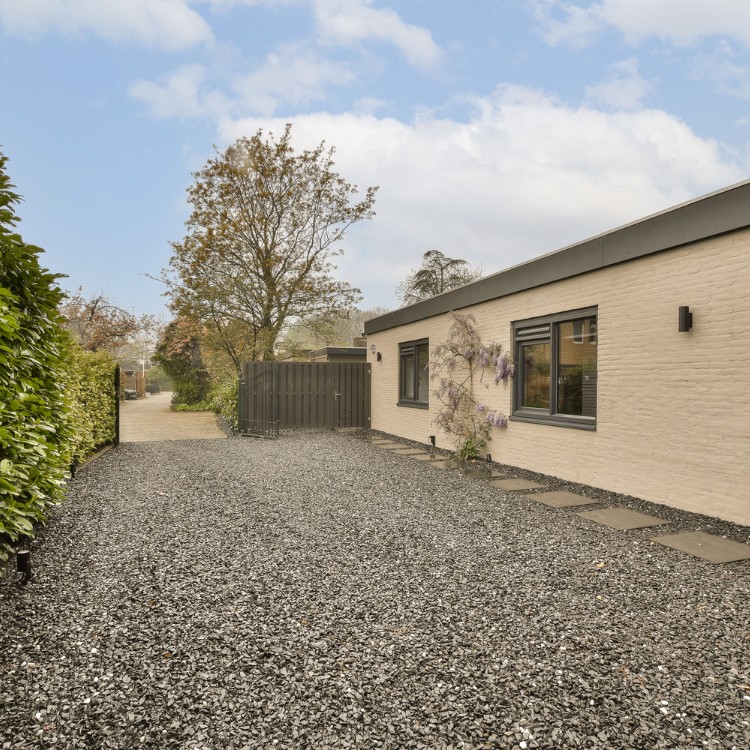
If your driveway is settling, cracking, or looking uneven after heavy rain, the issue is often the foundation beneath the surface. This guide explains how gravel driveway foundations work together with concrete support so the finished drive performs better in McKinney, TX’s real-world conditions.
After a couple of strong storms, you notice it. A gravel section near the curb looks higher in one spot and lower in another. A few months later, the concrete edging or slab nearby has hairline cracks, and the driveway doesn’t drain the way it used to.
Most homeowners assume the surface material is the problem. But with driveway failures, the “working surface” is only part of the story. The foundation layers, compaction, and drainage behavior decide whether your concrete holds up.
This article helps you understand what to look for in gravel driveway foundations, when concrete slab installation and foundation support are necessary, and how to avoid common mistakes that lead to repeat repairs in McKinney, TX.
Quick Answer
If you’re building or repairing a driveway, focus on the layers under the surface. Gravel driveway foundations should be properly graded, compacted, and drained before any concrete support is installed. Uneven settlement usually points to inadequate base prep, poor compaction, or water movement that undermines the subgrade. A practical next step in McKinney, TX is to have your site conditions assessed and your driveway plan coordinated from site preparation to concrete slab installation. TopCore Concrete can help you match gravel foundation work with the right concrete support approach for your layout and loads.
What to Check First
Before you choose materials, walk the site like you’re chasing water and load paths. These checks often reveal why the gravel foundation and the concrete support are not working together.
1) Drainage direction
Look for puddling, muddy tracks, or areas that stay damp longer after rain. If water has a “favorite path,” the foundation will too.
2) Edge behavior
Check where concrete edges, curbs, or slab sections meet gravel. If one side lifts or dips, the base under that transition may be inconsistent.
3) Surface pattern
Settlement usually shows up as repeating dips, “waves,” or cracks that track along low spots rather than random damage.
If you’re still deciding what’s needed, you can review related services like gravel driveway work to understand how the base and surface are coordinated.
Main Things Customers Should Understand
Gravel driveway foundations are not just “extra material under concrete.” They are the system that controls firmness, stability, and how water moves. When concrete support is added, the goal is to keep the concrete from being asked to compensate for foundation movement.
Professional observation: The most common reason a driveway looks fine at first is that the base can handle early traffic. Over time, water and repeated loading reveal weak spots where grading or compaction was inconsistent.
1) Site preparation comes before gravel and concrete
Good results start with proper site preparation and land grading services. That includes removing unsuitable material, building a stable base, and shaping the driveway so it drains correctly. If you skip preparation, gravel may shift and concrete support may crack as the subgrade settles.
2) Grading and foundation support work as one plan
A gravel driveway foundation needs the right slope and transition details so water does not pool at slab edges. Where concrete is installed, foundation support should be designed to reduce movement at the interface.
For projects that involve changes in elevation or slopes, you may also need foundation grading so the driveway and concrete support line up with the site’s drainage and elevation goals.
3) Concrete slab installation should match the base condition
Even strong concrete can struggle if the foundation beneath it moves. Concrete slab installation is most successful when it’s built on a prepared, stable base that has been compacted and graded for performance.
If your scope includes slab foundations or related concrete foundation work, explore slab foundations to see how concrete performance depends on the right preparation.
4) Transitions matter: where gravel meets concrete
Transitions at edges and around features often experience the most movement. Details like compaction near the interface and consistent thickness help reduce the “hinge effect” that can lead to driveway replacement needs later.
| Situation you notice | Most likely foundation issue | Concrete support approach to consider | Related service focus |
|---|---|---|---|
| Low spots after rain | Grading or drainage is not directing water away from the base | Regrade and rebuild base before adding or supporting concrete surfaces | Foundation grading |
| Cracks or separation near slab edges | Inconsistent base compaction at transitions between gravel and concrete | Address transition prep and coordinate slab support with the base | Driveway support |
| Driveway surface feels uneven underfoot | Subgrade or base has settled unevenly | Foundation repair approach that restores a stable base plane | Concrete foundation support |
| Water runs along a side edge toward the yard | Surface slope and edge drainage are not aligned with the site | Correct slope and edge transitions before concrete support work | Concrete flatwork transitions |
Why This Matters in McKinney, TX
In McKinney, TX, homeowners often deal with driveway areas that see frequent weather swings and heavy rain. When water gets under edges, along slopes, or into low spots, the gravel foundation can loosen and lose firmness. That movement then stresses any concrete curb installation, slab sections, or concrete flatwork on top.
A local-first approach is to coordinate site preparation and foundation support so water has a clear path away from the driveway. That reduces the chance of repeating repairs and helps keep your driveway looking straight and draining correctly.
Get your driveway foundation problem diagnosed
TopCore Concrete can review your driveway layout and recommend the right foundation support approach, including gravel driveway foundations and concrete slab installation coordination.
Contact TopCore ConcreteCommon Mistakes to Avoid
Driveway issues usually repeat when the root cause is missed. Here are the most common problems we see when gravel foundations and concrete support are not built as a system.
Common mistakes: Building on weak material, skipping proper grading, and assuming concrete will “bridge” foundation movement. Concrete can be strong, but it cannot fix an unstable base.
- Skipping site preparation: Leaving unsuitable material in place can lead to future settlement even if the gravel looks level.
- Under-compacting the base: Gravel that is not compacted evenly can shift under traffic, creating dips and uneven transitions.
- Ignoring water paths: If the driveway drains toward the house or pools at slab edges, the base can soften and move over time.
- Rushing transitions: The interface between gravel and concrete is often the first area to show cracking or separation.
- Choosing materials without matching the load: A driveway used for heavier vehicles needs a foundation plan that accounts for loads and repetition.
Customer Checklist
- Confirm where water goes after rain and identify any puddling or muddy tracks.
- Inspect slab edges and transitions to see if cracking or separation starts at interfaces.
- Ask whether the driveway plan includes proper site preparation and land grading services.
- Verify that the base will be graded and compacted for consistent support.
- Discuss how concrete slab installation or concrete flatwork will be coordinated with the gravel foundation.
- Review whether the approach supports long-term driveway performance, not just surface appearance.
Representative Scenario
A homeowner in McKinney, TX had a gravel driveway that looked acceptable until heavy rain events. After the water drained, a few areas remained softer, and the concrete support at a nearby edge developed small cracks. When the driveway was assessed, the team found that the base prep and grading did not consistently direct water away from the transition zone. The fix focused on correcting the drainage and rebuilding the gravel driveway foundation so the concrete support would sit on a stable base rather than a shifting interface.
Frequently Asked Questions
How do I know if my driveway problem is the gravel foundation or the concrete surface?
Start by watching patterns. If settlement shows up as low spots, repeating dips, or water pooling in the same locations, the foundation layers are often the cause. If cracks appear mainly along slab edges or transition points, the interface between gravel driveway foundations and concrete support may not have been prepared consistently. A site assessment can confirm whether the base needs regrading or rebuilding before concrete repair or resurfacing work is considered.
Do I need foundation repair, foundation leveling, or driveway replacement?
It depends on what changed beneath the surface. If the base has settled unevenly, foundation leveling or a rework of the base plane may be required before concrete can perform well. If concrete damage is widespread or movement continues, driveway replacement may be the better long-term path. The most practical approach is to match the repair scope to the root cause found during site preparation and grading review, rather than choosing the option based only on what the surface shows.
What’s the role of concrete slab installation when I’m using a gravel driveway base?
Concrete slab installation provides a stable, durable surface, but it still relies on the foundation beneath it. When the gravel driveway foundation is properly graded and compacted, the slab experiences less movement. The goal is to reduce differential settlement so cracks and edge separation are less likely. If the base is inconsistent, the slab can’t “fix” the underlying movement, and you may see recurring concrete repair needs.
Can concrete resurfacing solve driveway issues caused by poor drainage?
Resurfacing can improve appearance, but it usually does not correct foundation movement caused by water. If poor drainage is undermining the gravel base, new surface work may still experience future settlement at the same low areas. In McKinney, TX, water management and site preparation are key. A practical step is to address grading and water paths first, then consider concrete resurfacing or concrete repair as part of a coordinated plan.
What should I ask a contractor before work starts?
Ask how the project will handle site preparation, land grading services, and base compaction for gravel driveway foundations. Then ask how concrete support will be coordinated at transitions between gravel and slab sections. You can also request a walk-through of drainage direction and how the plan prevents water from pooling near edges. The goal is to confirm the driveway is built as a system, not just a surface patch.
Ready to stabilize your driveway in McKinney, TX?
TopCore Concrete helps homeowners and property owners plan gravel driveway foundations with the right concrete support approach for a driveway that stays straighter and drains better.
(469) 885-8590