
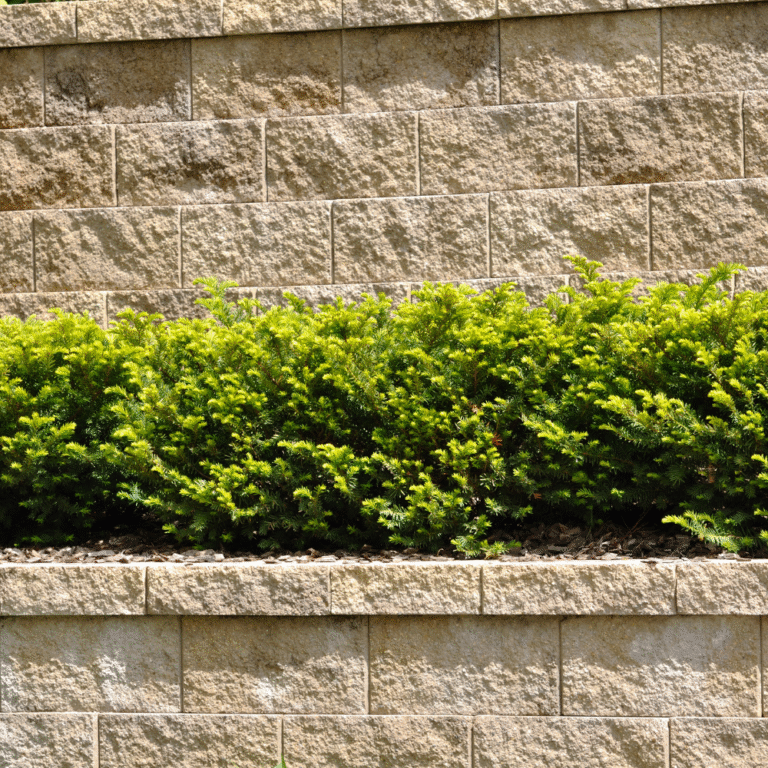
Retaining Walls Designed for Style and Soil Control
A heavy North Texas storm can drop several inches of rain over McKinney in a single night. For properties built on sloped lots or expansive clay, that water has to go somewhere—often straight toward foundations, parking areas, or landscaped spaces. The result can be erosion, standing water, and slow but serious damage to structures and pavement.
Retaining walls are one of the most effective ways to control soil movement and manage drainage, but they don’t have to look like purely functional barriers. Thoughtfully designed concrete walls can double as outdoor features that define gathering areas, frame patios, and boost curb appeal for businesses and homeowners alike.
Studies from the American Society of Civil Engineers show that poor drainage and soil movement contribute to a large percentage of non-structural foundation problems across the country—issues that are amplified in clay-heavy regions like Collin County. This guide explores how retaining walls, grading, and related concrete solutions work together to protect your property and enhance its appearance.
Key Insight: The most successful retaining walls in McKinney are planned as part of a complete site strategy—blending structural engineering, drainage, and design so your wall handles soil and water while still looking like an intentional part of your property.
Why Retaining Walls Matter in McKinney’s Soil and Weather
McKinney sits on a mix of expansive clay and loam soils that swell when wet and shrink when dry. Combine that with rapid development, more hard surfaces, and intense storm events, and you get real pressure on your landscape and structures.
Retaining walls do three critical jobs on properties here:
- Hold back soil on slopes or cut-and-fill areas
- Redirect and manage stormwater so it doesn’t pool near structures
- Create usable, level spaces for parking, patios, or walkways
“Most long-term erosion problems start as small grading or drainage issues,” — Local Concrete & Sitework Insight
Poorly managed slopes can send runoff toward your building, undermining Concrete Foundations, saturating landscaping, and washing away gravel or asphalt. Over time, that can lead to the need for costly Foundation Repair or pavement replacement.
A recent commercial project off US-75 in McKinney is a good example. The property had a steep rear slope that was eroding toward the parking area. Every heavy rain washed mud across the drive, clogged drains, and threatened the building’s Slab Foundations. By installing tiered retaining walls with integrated drainage and reworking the Land Grading Services, the owner stopped the erosion, protected the slab, and created level space for additional outdoor storage.
Designing Retaining Walls for Both Structure and Style
A retaining wall in McKinney has to do more than look good—it has to withstand lateral pressure from moist soils, temperature swings, and occasional flash flooding. That’s why proper engineering and construction methods are non-negotiable.
At the same time, walls are highly visible. They frame entrances, parking lots, and outdoor seating. Thoughtful design can transform what might have been a plain concrete barrier into a feature that complements your building and landscape.
Key design considerations include:
- Wall height and length
- Soil type and drainage patterns
- Load above the wall (parking, driveways, structures)
- Desired finish: smooth, textured, or decorative
“Function and aesthetics aren’t competing goals; a well-designed retaining wall does both exceptionally well.” — Concrete Design Professional
For a medical office near McKinney’s historic downtown, the property owner needed a wall to support a higher neighboring lot and protect newly installed Parking Lots. Instead of a plain gray wall, they chose a decorative concrete finish that echoed the stone on the building façade. Integrated steps and a wide landing created a comfortable transition between the upper and lower levels, and low landscape lighting turned the wall into an attractive evening feature.
Thoughtful design choices can include:
- Textured or stamped face to mimic stone
- Integrated Concrete Walkways or steps
- Planter pockets or terraces for greenery
- Coordination with nearby Concrete Driveway Installation or patios
Managing Water: Drainage, Grading, and Wall Performance
Most retaining wall failures are not due to concrete strength; they’re due to water. Hydrostatic pressure from trapped moisture behind a wall can push, crack, or tilt even a well-built structure. That’s why drainage and grading are as important as the wall itself.
Effective retaining wall systems in McKinney often include:
- Perforated drain pipe at the base of the wall
- Free-draining gravel backfill
- Weep holes or designated outlets
- Surface grading to steer water away from the wall and building
On a residential project just north of McKinney, a homeowner had a failing timber wall that was bowing outward. The problem wasn’t just aging wood—it was saturated soil trapped behind the wall with nowhere to go. The replacement design used reinforced concrete, proper backfill, and a French drain system tied into the property’s overall Foundation Grading strategy. The new wall not only stabilized the slope but also resolved standing water that had been threatening the home’s Concrete Slab Installation.
Here’s how a traditional approach compares with a modern, drainage-focused one:
| Aspect | Traditional “Basic” Wall | Modern Engineered Wall in McKinney |
|---|---|---|
| Backfill | Native soil | Washed gravel and geotextile fabric |
| Drainage | Minimal or none | Perforated pipe and weep outlets |
| Design | Rule-of-thumb dimensions | Based on soil type and load conditions |
| Integration with grading | Handled separately (if at all) | Designed with full-site grading plan |
| Long-term stability | Higher risk of bulging or cracking | Significantly improved performance |
| Upfront cost | Lower | Moderate, with better life-cycle value |
“Water management is the difference between a 5-year wall and a 30-year wall.” — Site Engineering Principle
By tying your wall into broader Site Preparation and grading efforts, you protect not just the wall, but also your foundations, Driveways, and parking surfaces.
Integrating Retaining Walls with Patios, Walkways, and Outdoor Spaces
Retaining walls are often installed where the terrain changes—exactly the areas that can become beautiful outdoor spaces when designed correctly. Businesses and homeowners in McKinney are increasingly using walls to carve out usable, attractive areas for employees, customers, and family.
Popular combinations include:
- Retaining wall + Concrete Patio Installation
- Wall with integrated Concrete Sidewalk Installation
- Tiered walls creating platforms for seating, planters, or signage
A recent example: a McKinney restaurant on a sloping lot wanted an outdoor dining area but had limited level ground. By installing a retaining wall to cut into the slope, then adding a large Stamped Concrete Patios surface, they created a flat, attractive space that quickly became one of their busiest areas. The wall served as both a structural element and a seating edge, and integrated steps connected the patio to the lower parking area.
Retaining walls can also:
- Define the edges of Driveway Replacement projects
- Create raised beds along storefronts
- Provide level landings for Concrete Steps Installation
“Outdoor spaces that blend structure and landscape tend to see more use and deliver better long-term value.” — Landscape & Hardscape Design Perspective
By designing walls and flatwork as a system, you get better drainage, smoother transitions, and a more polished look.
Protecting Pavement: Walls Around Driveways, Parking Lots, and Gravel Areas
Slope and water don’t just affect soil—they’re hard on pavement. In McKinney’s climate, runoff from higher ground can wash fines out of a Gravel Driveway, erode shoulders along Asphalt Driveways, and undermine the edges of Asphalt Parking Lots or concrete surfaces.
Retaining walls and curbs can be used strategically to:
- Support the high side of a drive or parking area
- Catch and direct runoff into planned drainage paths
- Prevent embankment erosion that leads to edge cracking and settlement
On a warehouse property near the McKinney airport, delivery truck traffic and stormwater were breaking down the entry drive and parking apron. The solution involved a short retaining wall and Concrete Curb Installation along the high side of the drive, combined with upgraded Parking Lot Paving and re-graded ditches. The wall stabilized the slope, and the improved grading and curbs kept water off the pavement, reducing the need for frequent Driveway Repair.
Here’s a quick comparison of leaving a slope “as is” versus integrating a retaining wall:
| Scenario | No Retaining Wall | With Retaining Wall & Grading |
|---|---|---|
| Runoff control | Uncontrolled, often toward pavement | Directed away via designed channels |
| Pavement edge stability | Vulnerable to erosion and washouts | Supported and protected |
| Maintenance frequency | Higher (patching, re-grading) | Lower over time |
| Usable parking/drive area | Limited by slope | Expanded with level surfaces |
| Long-term cost in McKinney area | Lower upfront, higher over 10–15 yrs | Moderate upfront, lower lifecycle cost |
“Protecting the edges of pavement is one of the best investments you can make in extending its life.” — Pavement Management Best Practice
If you’re planning new Parking Lots, Concrete Driveway Installation, or a Gravel Driveway, it’s worth having the slope and drainage evaluated to see where small retaining walls or curbs could prevent future problems.
Long-Term Performance: Maintenance, Repair, and Upgrades
A well-designed retaining wall requires relatively modest maintenance, but it should never be completely ignored—especially in a region with soil movement and heavy rains.
Smart maintenance practices include:
- Visual inspections after major storms
- Checking for new cracks, bulging, or leaning
- Clearing debris from weep holes and drains
- Watching for erosion at the base or top of the wall
If you do notice issues, early intervention is key. Minor settling, small cracks, or localized erosion can often be addressed with targeted Foundation Leveling-type techniques, Concrete Repair, or improved drainage—before you’re forced into full replacement.
“Small signs of movement are your wall’s way of asking for help before it becomes an emergency.” — Structural Concrete Specialist
For older properties in McKinney, upgrading walls during other projects can also make sense. For example:
- Replacing an aging timber wall when you redo Concrete Patio Installation
- Adding drainage behind a wall when you’re resurfacing Concrete Flatwork
- Extending a wall when you expand Parking Lots or loading areas
Upgrades like Concrete Sealing on adjacent flatwork, improved Site Preparation, or added landscaping can all work together to improve both performance and appearance.
What This Means for Businesses in McKinney, TX
For businesses in McKinney—whether you operate a retail center on a busy corridor, a medical office near Eldorado, or an industrial facility along the 380 corridor—retaining walls and soil control are directly tied to operational reliability and property value.
Poorly managed slopes can:
- Flood parking lots and loading docks
- Create safety hazards on Sidewalks and entrances
- Shorten the lifespan of Parking Lot Striping, pavement, and curbs
- Lead to expensive Foundation Repair down the line
By contrast, a coordinated approach that combines retaining walls, Foundation Grading, and quality Concrete Flatwork or asphalt creates:
- More usable, level space for parking or outdoor operations
- Safer, drier access routes for customers and employees
- A more polished, professional appearance that reflects well on your brand
Local building codes and drainage requirements in McKinney and surrounding jurisdictions also mean that commercial properties are expected to handle stormwater responsibly. Properly designed walls and grading help you stay compliant while avoiding costly rework after inspections.
For growing businesses, thinking ahead is crucial. If you’re planning expansions, additional Parking Lots, or new Driveways, consider:
- Where future retaining walls might be needed
- How existing walls will tie into new construction
- Whether current drainage will still be adequate
The earlier retaining walls and soil control are integrated into your plans, the more options you have—and the more you can save by avoiding retrofits.
Frequently Asked Questions
Q: How do I know if my property in McKinney actually needs a retaining wall?
A: Signs you may need a retaining wall include noticeable erosion on slopes, soil washing across Driveways or Parking Lots, standing water near your building, or visible settling near your Concrete Foundations. If you’ve cut into a slope to add a patio, drive, or structure, a wall is often required to support that grade change. In McKinney’s clay soils, even modest slopes can generate significant lateral pressure when saturated, so it’s wise to have a professional evaluate any grade changes near structures or pavement. A site visit typically includes checking soil conditions, drainage patterns, and how existing flatwork is performing.
Q: What’s the difference between a basic landscape wall and a structural retaining wall?
A: A basic landscape wall might be a short, decorative feature used for planting beds, with minimal load behind it. A structural retaining wall is engineered to hold back soil, often supporting parking, Patio Installation, or even building loads. Structural walls require proper footings, reinforcement, and drainage design, especially in areas like McKinney with expansive clay. If your wall is more than a couple of feet tall, supports a driveway, or is near a building, it should be treated as a structural element, not just a decorative feature. This ensures long-term stability and can prevent costly failures or safety hazards.
Q: Can a retaining wall help protect my foundation and slab?
A: Yes, when designed as part of a broader Foundation Grading and drainage plan, retaining walls can significantly reduce the risk of water pooling around your Concrete Slab Installation. By reshaping how water flows across your property, walls and grading keep moisture away from critical areas, reducing soil movement that can lead to foundation distress. In McKinney, where clay soils expand and contract with moisture, controlling water near the structure is one of the best ways to limit the need for future Foundation Leveling or repair.
Q: How do retaining walls tie into driveways, sidewalks, and parking lots?
A: Retaining walls often sit right next to Concrete Driveway Installation, Concrete Walkways, and Parking Lots. The design should anticipate vehicle loads, pedestrian traffic, and drainage across these surfaces. For example, a wall might support the high side of a drive, while integrated curbs and grading direct water to inlets instead of across the pavement. On commercial sites, walls can also define edges for Parking Lot Striping and traffic flow. Coordinating walls and flatwork in one plan ensures proper expansion joints, load transfer, and drainage between the structures.
Q: What materials and finishes are best for a retaining wall that will be visible to customers?
A: For high-visibility areas in McKinney—like storefronts, restaurant patios, or office entries—reinforced concrete with a decorative finish is a strong choice. It offers the structural performance needed for our soil conditions while allowing for texture, color, or patterns that match nearby Stamped Concrete Patios or building materials. You can choose from smooth, exposed aggregate, or textured forms that mimic stone. The key is to balance appearance with durability and maintenance needs. A professional contractor can help you select a finish that resists staining, works with your landscape, and ties into existing Concrete Sidewalk Installation or steps.
Q: How much does a retaining wall typically cost in the McKinney area?
A: Costs vary widely based on height, length, site access, soil conditions, and whether the wall supports loads like Parking Lots or structures. Taller, structural walls with engineered drainage and reinforcement cost more than short, decorative ones, but they also provide critical protection for your property. In McKinney, factors such as clay soils, required excavation, and integration with Land Grading Services all influence pricing. The most accurate way to estimate is through an on-site assessment, where a contractor can evaluate your specific conditions and discuss options that balance budget, appearance, and long-term performance.
Q: Can I add a retaining wall later if I’m already planning new pavement or a patio?
A: You can, but it’s usually more cost-effective and better for performance to plan the wall at the same time as new Driveways, Parking Lots, or Concrete Patio Installation. Designing everything together allows for coordinated drainage, consistent elevations, and better structural connections. Adding a wall later may require cutting into existing pavement, reworking grading, or redoing parts of your flatwork. For McKinney properties expecting growth or layout changes, it’s worth discussing future walls with your contractor during the initial planning phase.
Ready to Get Started?
McKinney’s growth isn’t slowing down, and neither are the demands on your property’s soil, drainage, and hard surfaces. Each season of heavy rain and intense sun adds stress to foundations, pavements, and landscapes—especially on sloped or poorly graded sites. Addressing retaining wall and soil control needs now can prevent more serious structural and pavement issues later.
If you’re noticing erosion, standing water, or signs of movement around your walls, foundations, Driveways, or Parking Lots, it’s time for a professional evaluation. The next steps are straightforward: schedule a site visit, review options tailored to your property and budget, and develop a phased plan if needed. Whether you need a new structural wall, upgrades to drainage, or integration with patios and walkways, a coordinated approach will deliver the best long-term results.
TopCore Concrete understands local soils, codes, and weather patterns, and designs retaining walls that work as hard as they look good. Protect your investment, improve safety, and make your outdoor spaces more functional and attractive—starting now rather than after the next big storm.
About TopCore Concrete
TopCore Concrete is a locally focused concrete and sitework contractor serving McKinney, TX and surrounding communities. Our team brings years of experience in Concrete Foundations, retaining walls, Patio Installation, Driveways, and Parking Lots, with an emphasis on proper grading and drainage. We combine practical field knowledge with industry best practices to deliver concrete and soil-control solutions that stand up to North Texas conditions. Learn more about our services and approach at TopCore Concrete.