
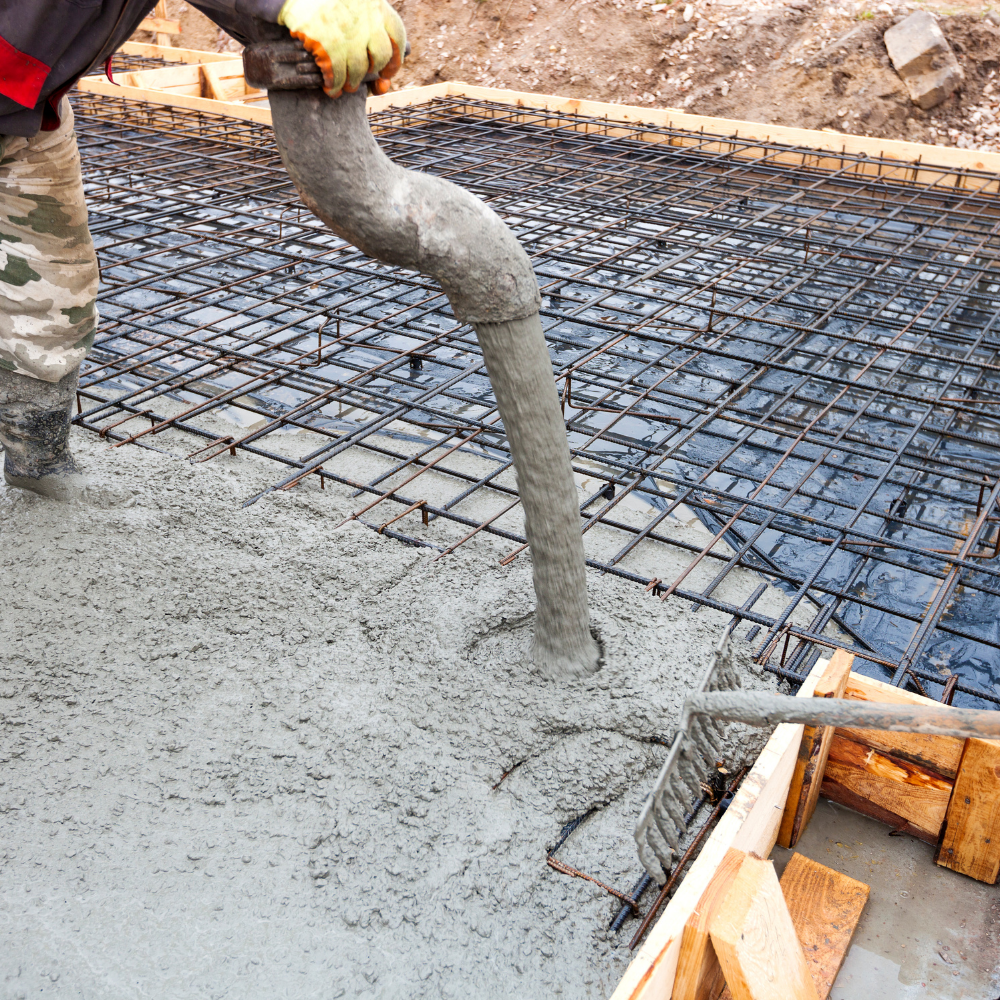
Slab Foundations for Modern Homes: Level, Strong, True
On the north side of McKinney, a homeowner called TopCore Concrete after noticing hairline cracks running across their living room floor just two summers after moving in. The culprit wasn’t a bad floor tile job—it was a slab foundation that hadn’t been designed for our clay-heavy North Texas soils. Their story isn’t rare. Across Collin County, shifting ground and extreme temperature swings put enormous stress on modern homes.
According to the Texas A&M Real Estate Center, foundation movement is one of the leading causes of major home repairs in the state, often running into tens of thousands of dollars. Yet most of these problems trace back to decisions made before the first wall went up: how the slab was designed, graded, and poured.
This guide breaks down what McKinney homeowners and builders need to know about slab foundations today—how they’re built, what makes them fail, and how to get a foundation that stays level, strong, and true for decades. You’ll also see how thoughtful site work, drainage, and flatwork around your home all work together to protect your investment.
Key Insight: In North Texas, a great slab foundation isn’t just thicker concrete—it’s smart design, proper grading, and quality concrete work across your entire property.
Why Slab Foundations Matter So Much in North Texas Clay
In many parts of the country, a basic slab might be “good enough.” In McKinney, our soils have other ideas. Much of Collin County sits on expansive clay that swells when wet and shrinks when dry. That constant movement pushes and pulls on your foundation like a slow-motion tug-of-war.
Engineers estimate that expansive clay can move several inches vertically between wet and dry seasons. If your slab doesn’t account for that, you’ll eventually see:
- Cracks in walls and ceilings
- Sticking doors and windows
- Uneven floors and trip hazards
- Gaps between brick and trim
A properly engineered slab distributes loads and anticipates movement. That means:
- Correct thickness and reinforcement
- Thoughtful placement of beams and piers
- Reliable moisture and drainage management
- Quality control during Concrete Slab Installation
One recent project in west McKinney involved a custom home where the builder wanted to “value engineer” the slab by trimming steel and beam depth. TopCore Concrete worked with the structural engineer to show how our clay soils behave over time. The design was adjusted back to spec—and the homeowner now has a slab that’s performing beautifully after multiple wet/dry cycles.
“You can’t negotiate with soil. You either build to match it, or you pay for it later.” — Senior Project Manager, TopCore Concrete
CALLOUT: If you’re building in McKinney, ask to see the foundation design and confirm it’s engineered for expansive soils—not just a generic slab detail.
From Dirt to Slab: How Proper Site Preparation Protects Your Foundation
The strength of a slab foundation starts long before any concrete truck arrives. Site preparation and grading are where most future problems are either created or prevented.
Quality Foundation Grading and Concrete Foundations work should include:
- Removing organic material and soft spots
- Compacting subgrade to engineered density
- Establishing positive drainage away from the home
- Installing moisture barriers and select fill where needed
In McKinney, we frequently see lots that look “flat” but actually slope back toward the house. That sends water under and around the slab, leading to soil heave and long-term movement. Proper land grading services correct that before the pour.
Local Case: Fixing a “Finished” Lot That Wasn’t Finished
On a recent job near Stonebridge Ranch, a builder called TopCore Concrete after the city flagged drainage issues. The lot had been graded, but water still flowed toward the future back door. Our team re-evaluated elevations, re-graded the rear yard, and installed a swale to carry water to the street. Only then did we move forward with the slab.
That extra step added a day to the schedule—but it likely added years of stability to the foundation.
Here’s how traditional “quick” prep compares to a modern, engineered approach:
| Approach | Traditional Minimal Prep | Modern Engineered Prep in McKinney |
|---|---|---|
| Subgrade Compaction | Spot-checked, inconsistent | Tested and verified across the footprint |
| Organic Material Removal | Only obvious debris removed | Full stripping of topsoil and roots |
| Drainage Planning | Assumed natural slope is fine | Designed to move water away from slab |
| Soil Type Consideration | One-size-fits-all | Adjusted for expansive clay and fill |
| Long-Term Performance | Higher risk of settlement and heave | Reduced movement and fewer repairs |
CALLOUT: If your contractor can’t explain their site preparation and grading process, you don’t really know what your foundation is sitting on.
Designing Slabs for Modern McKinney Homes: Loads, Layouts, and Lifestyle
Modern homes in McKinney aren’t simple rectangles anymore. Open floor plans, large kitchen islands, heavy stone fireplaces, and multi-slide patio doors all change how loads transfer to the slab. That’s why “standard” concrete foundations aren’t enough.
A well-designed slab considers:
- Concentrated loads (islands, fireplaces, safes)
- Plumbing and electrical penetrations
- Garage transitions and Concrete Driveway Installation tie-ins
- Future outdoor living spaces and Concrete Patio Installation
TopCore Concrete routinely coordinates with builders and homeowners early in the design phase. For example, a recent custom home east of US-75 included a massive stone fireplace and a built-in safe room. We adjusted beam layouts and reinforcement to carry those loads without excessive deflection.
“Every opening, every heavy feature, every step in a home leaves a fingerprint on the slab design.” — Structural Consultant, North Texas
Cost vs. Value: Upgrading Your Slab Design
In McKinney, upgrading from a bare-minimum slab to a more robust design typically adds a modest percentage to the concrete budget—but it can save thousands in potential Foundation Repair or Foundation Leveling down the road.
| Item | Basic Code-Minimum Slab | Enhanced Slab for Modern Home |
|---|---|---|
| Beam Depth & Layout | Standard grid | Optimized for layout & heavy features |
| Reinforcement | Minimal steel | Additional steel in high-stress areas |
| Plumbing/Mechanical Coordination | Limited | Fully coordinated with trades |
| Anticipated Movement | Higher risk of cracking | Lower risk, better long-term stability |
| Typical Cost Difference (Local) | +0% | ~5–10% increase on foundation cost |
On a $40,000 foundation, that might mean a $2,000–$4,000 investment—often less than a single major repair years later.
CALLOUT: Ask your builder if your slab is designed beyond the minimum code requirements. “To code” is a starting line, not the finish line.
Retaining Walls, Flatwork, and Drainage: The Ecosystem Around Your Slab
A strong slab can still struggle if the ground around it isn’t managed. Retaining walls, patios, walkways, and driveways all influence how water moves and how soil behaves. Think of them as a support system for your foundation.
Retaining Walls and Grade Transitions
On sloped McKinney lots—especially near creeks or greenbelts—properly designed Retaining Walls keep soil where it belongs and prevent erosion that can undermine your slab. Poorly built walls can:
- Trap water against the foundation
- Fail and shift soil loads toward the home
- Create drainage “bowls” where water collects
We recently replaced a failing timber wall behind a home near McKinney Boyd High School. The old wall was leaning toward the house, pushing saturated soil into the back of the foundation. Our team installed a reinforced concrete wall with drainage behind it and re-graded the yard to shed water away from the home. Foundation movement stabilized within a season.
Patios, Walkways, and Concrete Flatwork
Outdoor spaces are now central to North Texas living. But poorly sloped Stamped Concrete Patios, Concrete Walkways, and Concrete Sidewalk Installation can funnel water toward your home instead of away from it.
Quality Concrete Patio Installation and Sidewalks work will:
- Maintain a consistent slope away from the house
- Avoid creating low spots near the slab
- Integrate with downspouts and drainage systems
CALLOUT: Your foundation, retaining walls, patios, and walks should be designed as one system. When they work together, your slab stays more stable.
Driveways, Parking, and Access: Heavy Loads, Real Impact
Driveways and parking areas might seem separate from your foundation, but they influence soil moisture, drainage, and even structural loads near your home.
Driveways and Vehicle Loads
In McKinney, many homes now accommodate multiple vehicles, RVs, and work trucks. Proper Concrete Driveway Installation, Driveway Replacement, and Driveway Repair ensure your drive can handle the load without cracking, sinking, or redirecting water toward your slab.
TopCore Concrete often upgrades:
- Thickness and reinforcement in drive lanes
- Transitions between garage slab and drive
- Drainage at the front of the garage
A homeowner near Historic Downtown McKinney had an older driveway that settled toward the garage, sending stormwater straight into the garage and under the interior slab. Our team removed the old drive, re-graded subgrade, and poured a new drive with proper slope and control joints. The garage stayed dry during the next major rain event.
Gravel Driveways and Rural Properties
For properties on the outskirts of McKinney, a well-built Gravel Driveway can be a smart, cost-effective option—especially when combined with good Site Preparation and drainage. Proper base, compaction, and crowning keep water from ponding near the home.
Parking Lots and Multifamily/Commercial
For townhome communities or small commercial projects, Parking Lots, Asphalt Parking Lots, and Parking Lot Paving must be integrated with foundation and site design. Poorly sloped lots can channel water against building slabs, while neglected Parking Lot Striping and drainage structures can mask underlying failures.
“Access is part of the structure. If the pavement around a building fails, the building eventually feels it.” — Commercial Division Lead, TopCore Concrete
CALLOUT: Don’t treat driveways and parking areas as an afterthought. They’re part of your drainage and load-bearing system.
Maintenance, Repair, and Resurfacing: Keeping Slabs Strong Over Time
Even the best slab foundation in McKinney needs some care over its life. The key is to address small issues early and maintain a consistent environment around the foundation.
Routine Maintenance
Ongoing tasks that pay off include:
- Maintaining consistent soil moisture around the perimeter
- Keeping gutters clear and downspouts extended away from the slab
- Watching for new cracks, sticking doors, or sloping floors
- Sealing joints and cracks with appropriate products
Strategic Concrete Sealing and joint maintenance help protect surfaces connected to your slab, such as garages, patios, and walks.
When Repair or Leveling Is Needed
If movement does occur, timely Foundation Repair and Foundation Leveling can restore performance and protect your structure. TopCore Concrete evaluates:
- Pattern and size of cracks
- Elevation changes across the home
- Soil conditions and drainage patterns
- Previous work and existing piers, if any
We recently evaluated a 15-year-old home near Craig Ranch where one corner had settled about 1.25 inches. Before recommending piers, our team corrected grading, extended downspouts, and addressed a leaking irrigation line. Movement stabilized, and the homeowner avoided unnecessary structural work.
Resurfacing and Flatwork Repair
Surface issues like spalling, minor cracking, or aging finishes can often be addressed with Concrete Resurfacing, Concrete Repair, or selective replacement. This is especially common on:
- Entry porches and Concrete Steps Installation
- Sidewalks and Concrete Sidewalk Installation
- Garage slabs and approaches
CALLOUT: Maintenance doesn’t mean your slab was poorly built. In North Texas, it’s simply part of owning a home on active soil.
What This Means for Businesses in McKinney, TX
McKinney isn’t just a bedroom community anymore. It’s home to growing commercial corridors, medical offices, retail centers, and light industrial spaces. For business owners and developers, the same soil realities that affect homes can have even bigger financial implications.
A poorly designed slab under a retail building, office, or warehouse can lead to:
- Costly downtime during structural repairs
- Safety hazards for customers and employees
- Inventory damage from water intrusion
- Reduced property value and leasing appeal
Thoughtful Concrete Foundations, integrated Parking Lot Paving, and smart Land Grading Services dramatically reduce these risks.
For example, a small medical office project off Eldorado Parkway needed precise ADA-compliant Sidewalks, Parking Lots, and Concrete Curb Installation tied into the building slab. TopCore Concrete coordinated elevations across the site so water drained away from entry doors and sensitive areas, while still meeting accessibility standards.
Local businesses also benefit from:
- Thoughtful Concrete Flatwork that directs traffic and water
- Durable Asphalt Parking Lots with proper base and striping
- Long-term performance planning, including Concrete Repair and maintenance strategies
In a competitive McKinney market, a building that stays level, dry, and safe isn’t just a structural win—it’s a business advantage.
Frequently Asked Questions
Q: How thick should a slab foundation be for a home in McKinney?
A: There’s no one-size-fits-all thickness, because every home and soil condition is different. Most residential slabs in North Texas range from 4 to 5 inches thick in the slab portion, with deeper beams beneath. What matters more than a single number is the engineered design: beam depth and spacing, reinforcement layout, and how the slab responds to expansive clay. TopCore Concrete always recommends a professionally engineered design tailored to your specific lot, especially if you’re near creeks, on fill, or building a larger, heavier home.
Q: Can grading and drainage really prevent foundation problems?
A: Absolutely. In McKinney’s climate, water management is half the battle. Poor grading holds water near your foundation, causing soils to swell and put upward pressure on the slab. Over time, that can create cracks, interior damage, and the need for Foundation Repair. Proper Foundation Grading, gutters, downspout extensions, and correctly sloped Sidewalks and Driveways help move water away from the structure and keep soil moisture more consistent, which dramatically improves slab performance.
Q: What’s the difference between a basic slab and an engineered slab?
A: A basic slab is typically built to minimum code requirements and may use generic details not tailored to local soil or specific home features. An engineered slab is designed by a structural engineer who evaluates soil conditions, home layout, loads, and site drainage. They specify beam depths, reinforcement, and details around openings and heavy features. In McKinney, where expansive clay is common, an engineered slab is the preferred approach for long-term stability. TopCore Concrete works closely with engineers to ensure what’s drawn on paper is actually built in the field.
Q: Do I need retaining walls on my property, or can I just slope everything away?
A: It depends on your lot. On gently sloped properties, skilled Land Grading Services can often create smooth transitions that carry water away without walls. But on steeper sites, or where you need usable flat yard space close to the home, Retaining Walls become essential. In McKinney neighborhoods built along creeks or with significant elevation changes, concrete or masonry retaining walls help stabilize soil, protect structures, and control drainage. The key is designing them with proper reinforcement and drainage so they support—rather than threaten—your slab.
Q: How do patios, walks, and driveways affect my foundation?
A: All of your exterior flatwork influences water and soil around the home. A poorly sloped Patio Installation or Concrete Walkways that tilt toward the house can funnel water directly to your foundation. Cracked or sunken Driveways can create low spots that hold water near the slab. Well-designed Stamped Concrete Patios, Concrete Sidewalk Installation, and Concrete Driveway Installation are intentionally sloped away from the home and integrated with overall drainage. That helps protect your foundation while creating safe, attractive, and functional outdoor spaces.
Q: Is concrete always better than asphalt for driveways and parking in McKinney?
A: Not always—it depends on use, budget, and maintenance expectations. Concrete offers excellent durability and a clean look, making it ideal for residential Driveway Replacement and many commercial Parking Lots. Asphalt can be more cost-effective initially, especially for larger Asphalt Parking Lots and drives, but it typically requires more frequent maintenance and resurfacing. In McKinney’s heat, asphalt can soften and deform under heavy loads if not properly designed. TopCore Concrete helps owners weigh initial cost, expected traffic, and long-term performance to choose the right solution.
Q: When is it time to call a professional about foundation concerns?
A: If you notice new cracks wider than a credit card, doors or windows suddenly sticking, floors sloping, or gaps forming between walls and ceilings, it’s time for an evaluation. In McKinney’s active soils, some minor movement is normal, but rapid or localized changes can signal a problem. A professional can assess whether simple drainage corrections, Concrete Repair, or more extensive Foundation Leveling is appropriate. Early consultation often turns major worries into manageable fixes—and prevents you from spending money on the wrong solution.
Ready to Get Started?
North Texas weather and soil won’t wait for the “perfect” time to protect your home or project. Every season brings new cycles of wet and dry that stress your slab foundation. Addressing design, grading, and concrete work now means your home or building is ready for the next heavy rain and the next long dry spell.
TopCore Concrete has helped homeowners, builders, and business owners across McKinney build and restore slab foundations that stay level, strong, and true. Whether you’re planning new construction, upgrading outdoor spaces, or worried about existing movement, our team can walk your site, explain what we see in plain language, and outline clear options.
The next step is simple: schedule a consultation, review your plans or property conditions, and get a straightforward proposal that connects your foundation, grading, and flatwork into one reliable system. Your slab is too important to leave to chance—and with the right partner, it doesn’t have to be complicated.
About TopCore Concrete
TopCore Concrete is a locally focused concrete contractor serving McKinney, TX and the surrounding North Texas communities. Our team brings years of experience in slab foundations, Concrete Flatwork, drainage-focused Site Preparation, and exterior improvements for residential and commercial clients. Known for engineering-driven solutions and transparent communication, we help property owners build concrete systems that perform in real Texas conditions. Learn more about our services at TopCore Concrete’s homepage.