
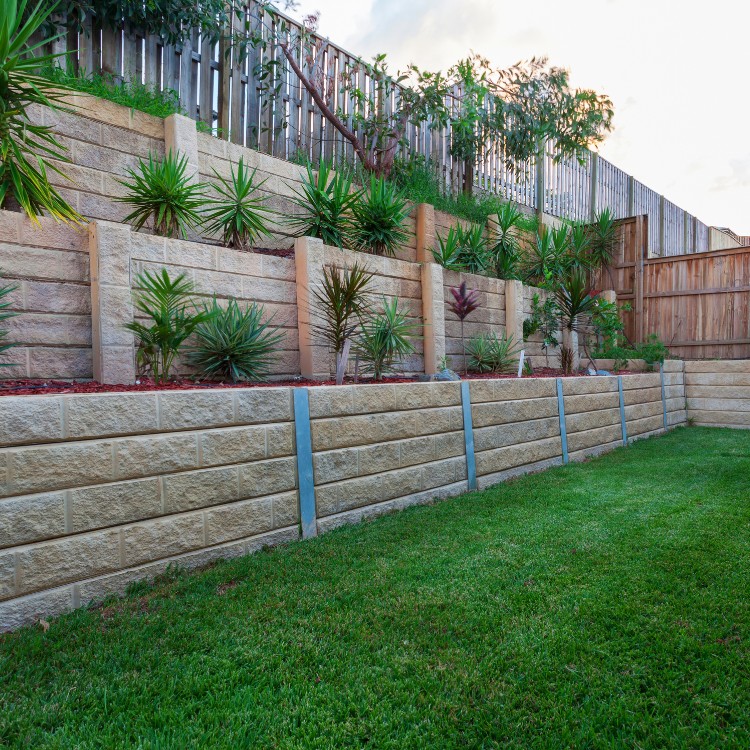
Retaining Walls with Seamless Finishes and Reliable Strength
A heavy North Texas rainstorm can turn a sloped commercial property into a costly headache overnight. Soil shifts, parking lot edges start to crumble, and landscaped areas wash out. In McKinney and the greater Collin County area, clay-rich soils and rapid development make site stability more than a design preference—it’s a business necessity.
Retaining walls are often the quiet workhorses of a property. They hold back thousands of pounds of soil, protect Concrete Foundations, keep Parking Lots intact, and preserve usable space for customers and employees. Done right, they blend into the landscape with clean, seamless finishes. Done wrong, they crack, bulge, and fail—sometimes in just a few years.
Industry data shows that poor drainage and inadequate design account for well over half of retaining wall failures nationwide. In North Texas, that risk is amplified by expansive clay and quick swings between drought and heavy rain.
This guide explains how McKinney businesses can get retaining walls that are both structurally sound and visually polished. You’ll learn how proper grading, foundation support, and finish work come together—and how these systems protect your investment for decades.
Key Insight: Strong retaining walls are not just vertical structures; they’re integrated systems that rely on sound grading, proper foundations, and thoughtful finishes to perform safely and look professional.
Why McKinney Properties Need More Than “Basic” Retaining Walls
McKinney’s growth has turned many once-flat tracts into complex commercial sites that must maximize every square foot. That often means building on slopes, cutting into grades, or elevating pads for Concrete Slab Installation. Retaining walls become essential for holding soil in place and creating usable, level areas.
The challenge is that North Texas soils are highly reactive. In dry spells, they shrink. After heavy rain, they swell. That movement puts enormous pressure on any wall that isn’t properly engineered and integrated with the site.
“Retaining walls fail when they’re treated as decoration instead of infrastructure.” — Local Structural Consultant
For example, a small commercial office near US-75 in McKinney installed a basic block wall to terrace a parking area. Within three years, horizontal cracks appeared. The cause: no drainage behind the wall and no tie-in to the nearby Parking Lots slab. Water built up, pressure increased, and the wall started to lean.
By contrast, a retail center off Eldorado Parkway used a properly designed wall with engineered backfill, weep holes, and integrated Foundation Grading. That wall has gone through multiple rain events and dry cycles with no visible movement—while supporting a full parking area above.
CALLOUT: For commercial and multi-family properties in McKinney, retaining walls should be reviewed in the same way as foundations and paving: designed to handle local soil conditions and long-term use, not just appearance on opening day.
The Foundation Behind a Strong Retaining Wall
Every reliable retaining wall starts below ground. Just as a building depends on well-designed Slab Foundations, a wall depends on a properly prepared base and footing.
The Role of Site Preparation and Grading
Good Land Grading Services shape how water moves on your site. For retaining walls, that means:
- Sloping grades away from the wall face
- Creating proper drainage paths above and below the wall
- Preparing subgrade to minimize settlement
On a light industrial site outside downtown McKinney, TopCore Concrete was brought in after a newly built wall began to settle unevenly. The original contractor had set blocks directly on un-compacted soil. Our team removed the failing section, re-excavated, and installed a compacted gravel base with proper drainage. The rebuilt wall, tied into adjacent Concrete Walkways, has remained stable since.
Concrete Footings and Structural Support
For taller or heavily loaded walls, a reinforced concrete footing is essential. That footing:
- Spreads the load over a larger area
- Anchors the wall against sliding and overturning
- Provides a stable interface with nearby Concrete Driveway Installation or parking areas
“Footings are where you decide if a wall will last 5 years or 50.” — Senior Concrete Foreman, TopCore Concrete
Traditional vs. Modern Base Preparation
| Aspect | Minimal/Traditional Approach | Modern Best Practice in McKinney |
|---|---|---|
| Subgrade compaction | Spot-compacted, inconsistent | Uniform compaction to specified density |
| Base material | Native soil or sand | Crushed stone or engineered base |
| Drainage consideration | Often omitted | Integrated drains and weep systems |
| Interface with hard surfaces | Simple butt joint | Designed transitions to pavements/curbs |
| Expected service life | 5–10 years | 20+ years with maintenance |
Seamless Finishes: Turning Structural Walls into Visual Assets
A retaining wall’s first job is holding back soil, but on a commercial or multi-family property, appearance matters almost as much as strength. Customers and tenants notice cracked, stained, or misaligned walls long before they see a well-engineered footing.
McKinney property owners increasingly want walls that:
- Match existing Concrete Patio Installation finishes
- Align cleanly with Concrete Sidewalk Installation
- Create a cohesive look with entrances, steps, and landscaping
Finish Options That Blend and Protect
Common finish strategies include:
- Smooth, formed concrete for a modern commercial look
- Textured or Stamped Concrete Patios-style patterns on visible faces
- Integrated Concrete Curb Installation and Parking Lot Striping alignment
- Color treatments and Concrete Sealing to resist staining
At a medical office near McKinney’s historic downtown, the owner wanted to terrace a sloped entry but maintain an upscale atmosphere. TopCore Concrete designed a low retaining wall system with a smooth, seamless finish that matched the adjacent Concrete Patio Installation and steps. Expansion joints were carefully aligned with nearby Concrete Walkways, making the entire area feel like one integrated design.
“Good finish work disappears; you only notice it when it’s done wrong.” — Commercial Property Manager, Collin County
Why Seamless Finishes Matter Structurally
Seamless doesn’t just mean visually smooth. It also means:
- Proper joint layout to control cracking
- Clean transitions so water doesn’t pond at edges
- Surface treatments that protect against freeze-thaw and staining
A wall with poor finishing often traps water at its base or behind it, accelerating deterioration. A well-finished wall sheds water, directs runoff to drains, and keeps the structural core dry.
Integrating Retaining Walls with Driveways, Parking Lots, and Walkways
Retaining walls rarely stand alone on commercial sites. They usually connect to:
- Driveways and entrances
- Parking Lots and loading areas
- Concrete Walkways and steps
- Patios, courtyards, and outdoor seating
The quality of these transitions often determines whether a wall performs well over time.
Coordinated Site Design
On a restaurant project along US-380, the owner wanted outdoor seating above grade with parking below. TopCore Concrete coordinated:
- Retaining walls to hold the elevated patio
- Concrete Patio Installation with decorative finish
- Integrated stairs and Concrete Steps Installation
- Adjacent Asphalt Parking Lots with proper edge support
Because the wall, patio, and parking lot were designed together, loads were predictable and drainage was handled as a single system. Years later, the walls remain straight, and the patio surface shows no signs of settlement.
Edge Support and Load Transfer
Walls near drive lanes or heavy traffic areas must account for additional loads from:
- Vehicles on Asphalt Driveways or concrete drives
- Delivery trucks on Parking Lot Paving
- Pedestrian traffic on steps and walkways
“Retaining walls next to drive lanes need to be treated with the same seriousness as the pavement structure itself.” — Pavement Engineer, DFW Region
Poorly supported edges can cause:
- Cracking at the joint between wall and pavement
- Settlement of Driveway Replacement sections
- Shearing or chipping of wall caps and curbs
By designing these interfaces together, TopCore Concrete ensures that the wall, pavement, and curbs share loads appropriately and move uniformly over time.
Drainage, Soil Pressure, and Long-Term Wall Performance
Most retaining wall problems are not caused by the visible concrete or block; they’re caused by what’s happening behind the wall. Water and soil pressure are relentless forces, especially in a climate like McKinney’s.
Why Drainage Is Non-Negotiable
Behind every properly built wall you should find:
- Free-draining backfill (not clay-heavy native soil)
- Perforated drain pipe at the base, daylighted or tied into site drainage
- Filter fabric to keep fines out of the drainage layer
- Weep holes or other outlets for trapped water
On a multi-family project near Craig Ranch, TopCore Concrete was called after residents noticed bulging in a courtyard wall. The original contractor had used onsite clay as backfill with no drain pipe. After excavation, standing water was found behind the wall. We rebuilt the wall with proper drainage and backfill, and the movement stopped.
“Water weighs about 62 pounds per cubic foot. Trapped behind a wall, it becomes an invisible load that many designs never accounted for.” — Geotechnical Engineer, North Texas
Soil Pressure and Structural Design
In McKinney’s expansive clay soils, lateral pressure changes with moisture content. During wet cycles, soil can exert significantly higher forces on walls. To handle that, walls may require:
- Thicker sections or taller stem walls
- Reinforcing steel and tie-backs
- Deeper footings connected to more stable soils
Cost vs. Performance: Drainage and Design
| Design Choice | Lower Initial Cost | Higher Initial Cost |
|---|---|---|
| Backfill material | Native clay | Engineered granular backfill |
| Drainage system | None or minimal | Full pipe and weep system |
| Structural reinforcement | Minimal/none | Designed rebar and tie-backs |
| Expected maintenance | Frequent repairs | Occasional inspection |
| Long-term risk of failure | High | Low |
For commercial owners, the modest upfront investment in proper drainage and engineering usually costs far less than a partial or full wall rebuild down the road.
Repairing, Replacing, and Upgrading Existing Retaining Walls
Not every property starts with a well-designed wall. Many McKinney businesses inherit aging or under-built walls when they purchase a site. The question becomes: repair what’s there, or plan a full replacement?
Signs a Wall Needs Professional Attention
Common warning signs include:
- Bowing or leaning sections
- Horizontal or stair-step cracking
- Water seeping through joints or face
- Rotating or displaced blocks
- Settlement at the top of the wall, especially near Driveways or Parking Lots
A retail strip center along Virginia Parkway had an older wall supporting a rear loading area. Delivery trucks had been parking too close to the top of the wall, and the original design never accounted for that load. Cracks began to appear, and asphalt at the loading dock edge started to fail.
TopCore Concrete evaluated the structure and recommended a phased approach:
- Install temporary shoring
- Remove and rebuild the most compromised section with improved design
- Coordinate Parking Lot Paving repairs and edge reinforcement
- Plan future upgrades for remaining sections
When Repair Isn’t Enough
Some walls can be stabilized with:
- Targeted Foundation Repair or underpinning
- Added drainage and surface water controls
- Limited Concrete Resurfacing and sealing
Others, especially those with fundamental design flaws, are better candidates for full replacement. Attempting repeated small repairs on an inherently weak wall is often more expensive over 10–15 years than investing in a properly engineered system once.
“Band-aid fixes on a failing wall are like patching a sinking boat without finding the leak.” — Senior Project Manager, TopCore Concrete
For properties planning broader upgrades—like new Concrete Patio Installation, Concrete Walkways, or Parking Lot Striping—wall replacement can be integrated into a single, coordinated project to minimize disruption and cost.
What This Means for Businesses in McKinney, TX
McKinney’s rapid growth, variable topography, and challenging soils mean retaining walls play a bigger role here than in many other markets. For local businesses, that has several practical implications.
First, retaining walls are part of your risk management strategy. A failing wall can threaten nearby Concrete Foundations, damage Driveways and Parking Lots, and create safety hazards for customers and employees. Insurers and lenders are increasingly attentive to visible signs of structural distress on commercial sites.
Second, appearance matters in a competitive local market. Whether you’re near Craig Ranch, Adriatica Village, or along US-380, customers have choices. Clean, seamless retaining walls that integrate smoothly with Concrete Sidewalk Installation, patios, and entries send a clear message about how you maintain your property.
Third, coordination saves money. McKinney business owners who plan retaining walls alongside other site work—like Site Preparation, paving, or outdoor seating—typically see:
- Lower total construction costs due to shared grading and mobilization
- Fewer surprises during construction
- Better long-term performance because all elements are designed as one system
Finally, local experience matters. Understanding how Collin County soils behave, how stormwater moves during intense North Texas storms, and how local codes are enforced all affect how a retaining wall should be designed and built.
For McKinney properties, the most reliable retaining walls are those that treat structure, drainage, and finish as a single, integrated solution—designed with this specific region in mind.
Frequently Asked Questions
Q: How tall can a retaining wall be on my commercial property in McKinney without engineering?
A: Local codes and zoning rules typically limit non-engineered walls to relatively modest heights, often around 3–4 feet, but requirements vary by use and location. For commercial sites, any wall supporting Parking Lots, drive lanes, or buildings should be reviewed by an engineer regardless of height. Once walls exceed a certain threshold or are tiered, structural design, permits, and inspections are usually required. TopCore Concrete regularly coordinates with local engineers and the City of McKinney to ensure walls meet both structural and code requirements, and we can advise you early in planning whether your project will require formal engineering.
Q: My existing retaining wall is leaning slightly. Do I need to replace it immediately?
A: Not always, but it should be evaluated promptly. A slight lean might indicate minor movement that can be controlled with drainage improvements or localized Foundation Leveling or repair. However, if the lean is increasing, accompanied by cracking, or located near Driveway Repair areas or building foundations, the risk is higher. In McKinney’s expansive soils, leaning often points to water and pressure issues behind the wall. TopCore Concrete can assess whether targeted repairs, added drainage, or complete reconstruction is the safest and most cost-effective option.
Q: How do retaining walls interact with my building’s slab foundation?
A: Retaining walls and Concrete Foundations should be designed to work together, especially on sloped sites. A wall located upslope from a building can affect how water flows toward the structure; poorly designed walls sometimes direct water toward slab edges, increasing the risk of Foundation Repair needs later. Conversely, walls downslope from buildings may need to retain fill that supports the slab. In McKinney, where soil movement is common, coordinating wall design with Concrete Slab Installation and Foundation Grading is critical to the long-term health of your building.
Q: Can I add a patio or outdoor seating area on top of an existing retaining wall?
A: Possibly, but it depends on how the wall was originally designed. Adding a Concrete Patio Installation or outdoor dining area increases loads on the wall—especially if furniture, planters, or crowds of people are expected. Many older walls in McKinney were built only to retain soil, not to support additional structures or heavy use. Before building on top of a wall, TopCore Concrete can review existing conditions and, when necessary, involve an engineer to determine whether reinforcement, tie-backs, or even wall replacement is needed for safety and code compliance.
Q: How does drainage around my parking lot affect my retaining walls?
A: Drainage and retaining walls are tightly connected. If surface water from Asphalt Parking Lots or Driveways is allowed to run uncontrolled toward a wall, it can saturate backfill, increase soil pressure, and accelerate deterioration. Properly designed Site Preparation and grading should direct runoff to inlets or swales, not into the back of the wall. When TopCore Concrete designs or repairs walls, we evaluate how existing pavement slopes, gutters, and Parking Lot Striping layouts influence drainage so the system works together rather than against itself.
Q: What maintenance do retaining walls require in North Texas?
A: Well-built retaining walls are relatively low-maintenance, but not maintenance-free. In McKinney’s climate, owners should periodically: check for new cracks or movement; make sure drains and weep holes aren’t blocked; inspect adjacent Concrete Walkways and pavements for settlement; and confirm that irrigation systems aren’t over-saturating soils near the wall. For finished concrete walls and adjacent flatwork, periodic Concrete Sealing can help resist staining and freeze-thaw damage. TopCore Concrete can provide scheduled inspections, especially for walls supporting high-value assets like Concrete Foundations, parking areas, and outdoor amenities.
Q: Are gravel driveways and retaining walls a good combination for rural or light commercial properties?
A: Yes, when designed correctly. A Gravel Driveway can be a cost-effective solution for rural or lower-traffic sites in the McKinney area, and retaining walls can help create level drive lanes or parking pads on sloped ground. The key is controlling erosion: gravel must be contained so it doesn’t wash against or overtop the wall, and Land Grading Services should ensure water flows away from both the driveway and the wall. TopCore Concrete often pairs compacted gravel systems with concrete aprons, curbs, or Concrete Driveway Installation near building entries for a balanced approach.
Ready to Get Started?
North Texas weather and soils won’t wait, and neither should critical site infrastructure. If your McKinney property has aging retaining walls, visible cracking, or plans for new construction on sloped ground, now is the right time to act—before another heavy storm season adds stress to an already vulnerable system.
TopCore Concrete can evaluate your existing walls, review how they interact with Concrete Foundations, Parking Lots, Driveways, and outdoor spaces, and design a solution that blends structural reliability with seamless finishes. From Site Preparation and grading to final surface treatments, our team manages the entire process so you have one accountable partner.
Availability for larger retaining wall and site packages can fill quickly during peak construction seasons in McKinney. Scheduling an assessment now helps you secure a spot on the calendar and plan work around your business operations with minimal disruption.
Whether you need a new retaining system, an upgrade to support patios or seating, or a targeted repair strategy, TopCore Concrete is ready to help you protect your property and enhance its appearance for years to come.
About TopCore Concrete
TopCore Concrete is a McKinney-based concrete contractor specializing in structural flatwork, Concrete Foundations, Retaining Walls, and site concrete for commercial, multi-family, and residential properties. With deep experience in North Texas soils and local code requirements, our team delivers durable, well-finished solutions that integrate foundations, paving, and walls into one cohesive system. Learn more about our services and local projects at TopCore Concrete’s homepage.