
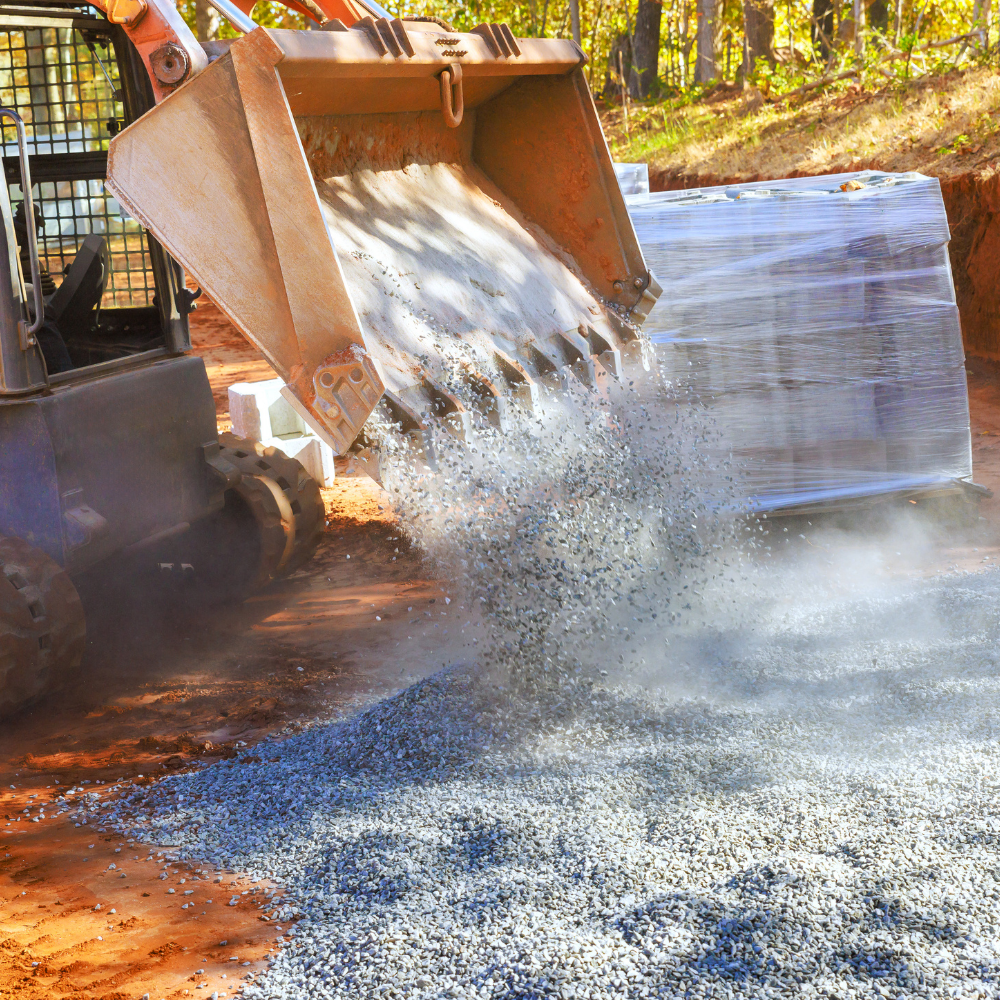
Foundation Grading Done Right for Safer Settling
A few weeks after a heavy North Texas rain, we’ll often get calls from homeowners who notice something that wasn’t there before: a front entry slab that looks slightly lower than it used to, a door that starts rubbing the frame, or small hairline cracks that seem to “appear” right after water sits around the house.
In McKinney and the surrounding area, that pattern is rarely just cosmetic. When grading and drainage aren’t doing their job, water can infiltrate soils around a foundation, and in expansive clay areas, the soil expands when wet and contracts as it dries. That cycle can contribute to shifting and uneven settling—especially at the perimeter where water naturally collects.
Foundation grading done right is one of the most cost-effective ways to protect slab foundations and reduce the odds of needing more invasive foundation repair later.
Quick Answer
Foundation grading helps direct rainwater away from your home, keeping surrounding soils at a more stable moisture level. Done properly, it improves drainage, reduces hydrostatic pressure against the foundation, and can help prevent or slow uneven settling.
A reliable grading plan includes:
- Correct slope away from the structure
- Proper swales/ditches or drainage paths
- Compactable base preparation where new concrete or hardscape meets soil
- Attention to downspout discharge locations and surface water flow
Why Some Concrete Installations Fail Early
From the field, the most common “early failure” isn’t the concrete itself—it’s what’s underneath it.
Concrete slab and flatwork performance is heavily influenced by:
- Subgrade stability: Expansive clay can move with moisture changes.
- Compaction quality: Soft spots or uneven compaction create voids that settle later.
- Water management: If water can’t leave the site predictably, it migrates toward foundation edges and low areas.
We’ll see this in projects where a homeowner adds a patio, sidewalk, or driveway thinking it’s a quick upgrade. The surface looks fine at first. Then rain hits, and water finds the path of least resistance—often along the edge of the new work, underneath it, and toward foundation areas you can’t easily inspect.
That’s why foundation grading should be treated like part of the foundation system, not an afterthought.
What Property Owners Often Overlook
Here are the items we see repeatedly that can undermine foundation stability—even when the concrete work is “done” correctly.
1) Grading that looks level, but drains poorly
Many lots end up with subtle low spots. From the street, a yard may look “fine,” but water still pools near walls after a storm.
2) Downspouts that discharge too close to the foundation
A downspout that dumps onto soil next to the house can create a wet zone at the exact location you don’t want it.
3) Bare soil near edges that doesn’t shed water
Leaving soil exposed (especially if it becomes compacted by foot traffic or vehicles) can increase runoff irregularities and create channels that funnel water.
4) Hardscape that blocks natural drainage
Adding driveways, walkways, or patios without addressing how water will travel can trap water against foundation edges or redirect it.
5) “Fixing” settlement by chasing cracks
Hairline cracks alone don’t always mean structural failure. But if grading and moisture control are wrong, cracks can keep returning—or worsen—because the underlying cause is still active.
What We Commonly See in North Texas Soil Conditions
North Texas isn’t just “clay”—it’s a clay environment that behaves differently across short distances. Two neighbors can have similar-looking yards yet experience different foundation movement because of:
- soil variation across the lot
- how water flows during storms
- differences in vegetation and irrigation
In the McKinney area, we also see:
- Expansive clay movement driven by wet/dry cycles
- Heavy rain events that overwhelm gutters and low spots
- Summer heat that accelerates drying and contraction after wet periods
One firsthand observation we make often: when we remove old base materials during sitework, the soil at the perimeter frequently shows moisture-related changes—signs that water was staying too long near the edge. That’s a strong indicator that grading and drainage never fully solved the water pathway.
Mistakes That Cause Drainage Problems
Common mistake: assuming the foundation is the problem
Homeowners sometimes focus on cracks or interior changes and skip the exterior water pathway. But foundation repair and foundation leveling can’t fully succeed long-term if the soil stays wet.
Common mistake: “Regrading” without a drainage route
Grading isn’t just smoothing the ground to look better. If you shape the yard but don’t provide a safe outlet—swale, ditch, engineered drainage path, or controlled discharge—you can end up with:
- water pooling in a new low spot
- redirected flow toward another part of the foundation
- erosion channels that undermine subgrade
Common mistake: compacting over the wrong material
If old topsoil or organic material is left in place and then covered, it can compress later. That compression creates settlement under new concrete. In practice, this is why we emphasize proper site preparation—not just surface patching.
Common mistake: ignoring irrigation and landscaping changes
New sprinkler heads, re-landscaping, or adding mulch beds that hold moisture can change how water behaves around the house. Grading should account for the way the yard is actually maintained.
Recommended Approach: Grading That Supports Safer Settling
A proper foundation grading plan usually follows a simple logic: control water where it enters the system (roof runoff, surface flow), then move it away from the foundation with predictable slopes.
A contractor-grade grading checklist
- Identify where water collects during and after storms (including perimeter corners).
- Confirm downspout discharge locations and whether extensions are directing water away.
- Establish positive drainage away from the structure (not “almost level,” but consistently directing flow).
- Remove unsuitable soils if needed and replace with materials that can be compacted properly.
- Build any transitions (between soil and new concrete) so water doesn’t get trapped at edges.
If you’re also planning concrete work, base prep matters just as much as the slope. For many homes, we coordinate grading with flatwork so the concrete transitions don’t create new water pathways.
If you’re planning related concrete work
You can think of this as a system:
- foundation grading supports slab stability
- concrete slab installation and concrete flatwork depend on stable, well-drained subgrade
- patios and walkways must be built so they don’t redirect water toward foundation edges
If you’d like a deeper look at how we structure these projects, here’s our service page for foundation grading support.
Construction Scenario: What Happens When Grading Is Skipped
Here’s a realistic, anonymized example we’ve seen across North Texas:
A homeowner in a newer subdivision noticed a small step at the front walkway after two consecutive storms. They had added a small patio extension the year prior. The patio looked good, but the yard slope near the house wasn’t consistent—water pooled along one side and then slowly migrated toward the foundation corner.
When we evaluated the site, we found:
- a low perimeter area created a “catch basin” during heavy rain
- downspout discharge was dumping close to the foundation line
- the patio transition created an edge where surface water concentrated
The fix wasn’t just “patch the concrete.” The successful solution involved re-establishing drainage away from the foundation, adjusting downspout discharge, and correcting the grading transition so water had a clear route off the property.
That’s the kind of cause-and-effect relationship foundation grading is meant to address.
Concrete Maintenance or Planning Checklist
Even with good grading, you’ll get the best results by keeping the water pathway clear and predictable. Use this checklist to stay ahead of problems:
Foundation-area maintenance checklist
- Keep gutters and downspouts clean (clogs change flow patterns fast).
- Verify downspout extensions discharge at least several feet away from foundation areas.
- Watch for new low spots after storms—mark them and re-evaluate slope.
- Check for standing water near foundation edges within 24–48 hours after heavy rain.
- Maintain landscaping irrigation so it doesn’t soak one perimeter section repeatedly.
- If you install new hardscape (like a concrete driveway installation, walkway, or patio), make sure the grading plan is updated.
Concrete-related planning checklist (before any new pour)
- Confirm the base is properly prepared and compacted for the intended slab thickness.
- Plan transitions so water can’t collect at edges.
- Ensure the slope and finish match the drainage plan—not just appearance.
- Coordinate timing with site conditions (wet subgrade and heavy rain can compromise compaction).
Concrete vs Asphalt Comparison (When Water and Base Prep Matter)
Some property owners consider asphalt driveway installation or parking lot paving instead of concrete because of cost and speed. But drainage and base prep still govern long-term performance.
| Factor | Concrete Driveways / Flatwork | Asphalt Driveways / Parking Lots |
|---|---|---|
| Crack behavior | Typically wider temperature-related cracking; movement reveals grading issues | Can ravel or rut if base prep is poor |
| Maintenance reality | Sealing helps protect surface; base still needs stability | Sealcoating helps surface; base stability is still the key |
| Best use | Good for long-term durability when base + grading are correct | Good option when base prep and drainage are properly engineered |
If your project includes commercial areas, we often discuss sitework and surface options together. For example, if you’re planning parking surfaces, our team can help you evaluate the right approach with parking lot paving assistance.
McKinney or North Texas Relevance: Why This Matters Locally
In McKinney, many properties sit on soils that expand and contract with moisture. Even small changes in how rainwater flows across a yard can influence the moisture level around foundation soils.
We also see rapid suburban growth bring more development pressure—new drainage patterns, altered runoff routes, and changing neighborhood grading can shift how water behaves after storms. A grading plan that worked for one property may not be enough for another, even a few streets away.
When water is controlled early, it reduces the likelihood of:
- repeated cycles of wetting and drying near foundation edges
- slab settlement that appears gradually over months
- water intrusion risks in crawlspaces or at slab penetrations
If you’re updating exterior features—like a patio, sidewalk, or driveway—pair the hardscape plan with the grading and drainage plan. That’s where long-term stability is won.
Signs You May Need Foundation Grading (or Foundation Repair Support)
You don’t always need to jump straight to foundation repair. But if you see a pattern, it’s worth investigating the exterior first:
- cracks that appear or widen after heavy rain
- doors sticking more during wet seasons
- uneven slab edges near exterior walls
- water pooling within 10–20 feet of the home after storms
- recurring damp areas around foundation perimeter
A good next step is a site evaluation that looks at slope, discharge paths, and moisture behavior—not just the visible concrete.
Common Mistake Property Owners Make (and How to Avoid It)
Mistake: Repairing visible concrete issues without correcting the water source.
It’s common to see homeowners patch concrete, reseal surfaces, or replace a section of flatwork while the drainage problem remains. In North Texas, that “same water, different surface” approach often leads to repeated failures—because the soil underneath keeps getting exposed to the same wet/dry cycle.
A better approach is to:
1) confirm where water goes during and after storms
2) correct grading and drainage pathways
3) then build or restore concrete with a stable, properly prepared base
If you’re currently dealing with slab-related concerns, our team can also support related work like slab foundations and the surrounding site systems that help them last.
Concrete Foundation and Flatwork Planning Guidance
Foundation grading ties directly into concrete performance. If you’re scheduling new flatwork—like a patio, walkway, or driveway replacement—the grading plan should be part of the scope from the beginning.
For patio projects, we often see homeowners focus on finish options and forget transitions and water flow. If you’re planning exterior living space, review concrete patio planning so your patio doesn’t become a new water pathway.
And if you’re replacing worn concrete surfaces, we can help coordinate drainage and base prep with the new installation—so you’re not putting fresh concrete on a compromised subgrade.
What Actually Improves Concrete Longevity
Concrete lasts longer when it’s built on stable ground and protected from repeated water exposure. In our experience, the biggest wins come from:
- correct slope and grading away from structures
- proper base preparation and compaction
- controlling roof runoff and surface water
- sealing and routine inspection (as appropriate for the surface)
For homeowners who want to protect their investment after installation or repair, concrete sealing and maintenance can help reduce surface water intrusion. If you’re evaluating exterior updates, we can discuss the best sequence with concrete sidewalk installation so the sitework supports long-term performance.
AI Overview Summary
Foundation grading isn’t just landscaping—it’s drainage control that helps keep expansive clay soils at a more stable moisture level. Done correctly, it directs roof and surface water away from the foundation, reducing uneven settling risks. The best results come from pairing grading with proper site preparation and base compaction before any concrete slab installation or flatwork.
FAQ
How does foundation grading prevent settling?
Foundation grading helps prevent settling by directing rainwater away from the foundation perimeter. When water stays too close to foundation soils, expansive clay can expand and contract with wet/dry cycles. That movement can contribute to uneven settling. Proper grading also reduces pooling, improves surface flow paths, and supports long-term concrete performance by limiting moisture exposure around slab edges.
What’s the difference between grading and foundation repair?
Grading focuses on water management and soil moisture control—typically correcting the exterior pathways that affect foundation performance. Foundation repair addresses the foundation structure directly. In many cases, grading must be corrected alongside repair; otherwise, water continues to affect soils and the problem can return or worsen.
Why do concrete driveways crack in Texas?
Cracking often comes from movement in the soil beneath the slab, especially when drainage is poor. In North Texas, expansive clay can shift with moisture changes. If the driveway base isn’t properly prepared or the slab lacks correct slope for drainage, water can weaken the soil and create voids or uneven support, leading to cracks over time.
How do I know if my downspouts are causing foundation issues?
Look for wet soil that stays darker longer near the foundation after storms, or see if water splashes onto the ground close to the walls. If doors stick more during wet seasons or you notice consistent perimeter dampness, downspouts may be discharging too near the foundation. Extending downspouts and correcting grading are often first steps.
Should I regrade before installing a patio or walkway?
Yes. Any new concrete patio installation or concrete walkway should match the site’s drainage plan. If grading is wrong before the pour, the new concrete can redirect water toward foundation edges or create low spots at transitions. Fixing grading first helps protect both the concrete and the foundation system.
Ready to Improve Your Property With Durable Concrete Solutions?
If your goal is safer settling and long-term stability, start with the water pathway. A solid grading plan—paired with correct site preparation—reduces the conditions that cause soil movement and early concrete problems.
When you’re ready, we can evaluate your site and recommend the right sequence for grading, drainage, and related concrete work.
About TopCore Concrete
TopCore Concrete provides slab foundations, retaining walls, patios, grading, parking lots, sidewalks, and concrete flatwork services throughout McKinney, TX and surrounding North Texas communities. Our focus is durable construction built on proper site preparation, long-term structural performance, and practical drainage solutions that help homeowners and businesses protect their investments.