
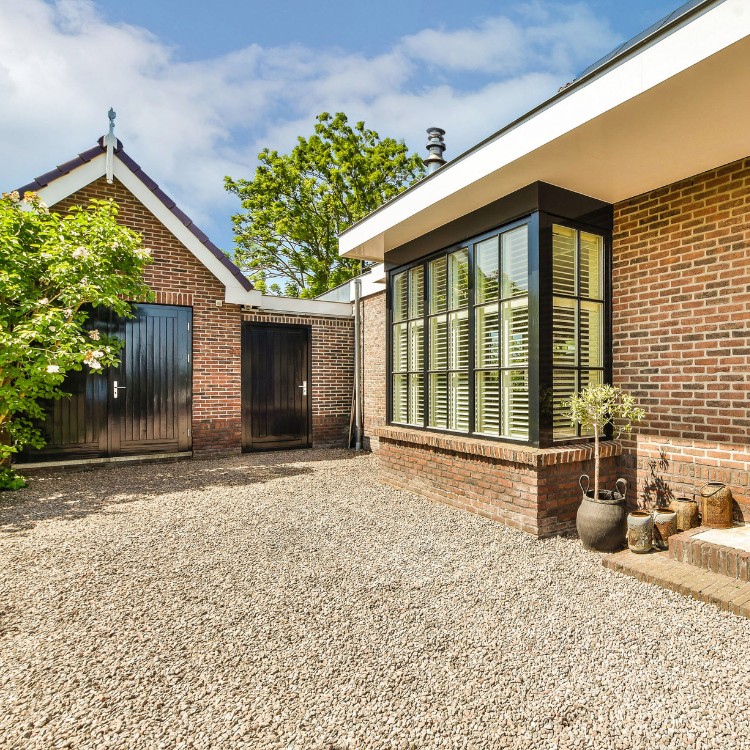
Gravel Driveway Installation That Keeps Mud Away
If your driveway turns into a muddy mess every time it rains, you’re not alone—McKinney homeowners and small businesses deal with the same frustrating cycle: spring storms, water that can’t move where it should, and a gravel surface that slowly “works” itself into a wet, rutted mess. The problem usually isn’t the gravel. It’s the drainage and base system underneath it.
We see this across North Texas when driveways are installed without a firm plan for grading, subgrade moisture, and water flow. A muddy driveway isn’t just unsightly; it can also trap water near garage slabs, create washouts that undermine edges, and increase maintenance costs year after year.
In this guide, I’ll walk you through what actually keeps mud away—how we build a gravel driveway that sheds water, resists rutting, and holds up to real traffic.
Quick Answer
A gravel driveway stays mud-free when the site is graded to drain, the subgrade is stabilized, and the base is built in proper layers with the right thickness and compaction. In North Texas, paying attention to soil conditions—especially expansive clay—and planning for runoff direction makes the biggest difference. If water is allowed to sit in the base or flow under the driveway, gravel will eventually migrate and rut.
What We Commonly See in North Texas Soil Conditions
North Texas isn’t “one soil fits all,” but the pattern we deal with most is expansive clay mixed with variable fill. During wet weather, clay can hold water and soften the subgrade. Then, during dry summer heat, that same soil shrinks and moves. That expansion and contraction is one reason driveways can settle, edges can creep, and ruts can form.
On top of that, many properties in McKinney have lot grading that doesn’t naturally send water away from the driveway. Roof runoff, downspouts, and overflow from adjacent slopes can all dump water toward the driveway crown or low spots. If the driveway isn’t designed to intercept and redirect that flow, the mud problem comes back even after you “top it off” with gravel.
Firsthand contractor observation
One of the most telling things we notice on muddy gravel drives: the mud is often worst near the transitions—where the driveway meets the street, where it crosses a yard swale, or where it slopes down toward a gate. Those are the spots where water concentrates and where base material is most likely to be washed or displaced.
Why Some Gravel Driveways Turn Into Mud
A gravel driveway fails early for predictable reasons. Usually, it’s one (or a combo) of these:
- No engineered crown or slope: Water sits instead of draining off the surface.
- Base built too thin: Gravel can’t “bridge” soft subgrade, so it turns to slurry under load.
- Improper base material: Using the wrong gradation can trap fines and hold moisture.
- Lack of compaction: If the base isn’t compacted in lifts, it will pump and rut.
- Drainage doesn’t have a destination: Even perfect stone work can’t help if runoff has nowhere to go.
- Water flows under the driveway: Without edging or undercut control, fines migrate and you get a muddy “pump” effect.
If you want a gravel driveway to stay clean and firm, you need to design it like a system, not a pile of rock.
A Real-World Scenario: The Driveway That Looked Fine Until It Rained
Here’s a common situation we’ve handled in North Texas (anonymized to protect privacy):
A homeowner had a short gravel driveway with two low spots. Dry weather made it look acceptable, but the first heavy rain turned it into a wet track. The homeowner added gravel twice, and the surface looked better for a few days—then it went muddy again.
When we assessed it, the issue wasn’t just “more gravel.” The driveway had:
- uneven grade with water collecting in the low area,
- insufficient base thickness where the wheels traveled,
- and runoff from the yard that fed into the driveway instead of flowing around it.
After we corrected the grade, rebuilt the base in layers, and ensured water had a clear path away from the driving surface, the driveway stayed firm through subsequent rains.
Common Mistakes Property Owners Make
Mistake 1: Adding gravel without fixing grading
Topping off gravel can mask a problem temporarily, but if the pitch is wrong, water will still pool and force fines to migrate upward. The next rainfall turns the top layer into mud again.
Mistake 2: Skipping subgrade preparation
Over soft or disturbed soil, gravel alone can’t do the job. If the subgrade isn’t properly prepared—whether that means removing unsuitable material, stabilizing, or building up in controlled lifts—the driveway will settle and rut.
Mistake 3: Underestimating the base thickness for traffic
A driveway used for regular vehicle traffic needs a stronger base than a light-use path. If the base is too thin, the stone will compress and shift, especially in wet conditions.
Mistake 4: Treating drainage like an afterthought
Drainage should be planned before stone goes down. If runoff is directed toward the driveway, you need a plan to intercept it and move it away—otherwise the driveway becomes the drainage system.
Mistake 5: Choosing the wrong stone for the job
Not all gravel behaves the same. The gradation and material type matter because they affect drainage, compaction, and how fines move over time.
Construction: How We Build a Gravel Driveway That Resists Mud
Every property is different, but the process usually looks like this:
1. Site evaluation and drainage mapping
We look at where water comes from (roof runoff, yard slopes, street flow) and where it can safely go. If water is forced through the driveway instead of around it, mud will return.
2. Grading and subgrade prep
We correct low spots, remove unsuitable material if needed, and shape the subgrade so water drains away from the surface. This step is what most people underestimate.
3. Base construction in layers
We install a compacted base designed to support traffic and reduce moisture movement. Base work is built in lifts and compacted to help prevent future rutting.
4. Surface stone placement
The top layer is placed to provide a stable driving surface and traction. Proper stone size and depth help keep the surface from turning “soupy” during wet weather.
5. Edge control and maintenance planning
Edges are where gravel migrates first. Depending on the site, we may recommend edging or related solutions to keep the material in place.
If you’re also planning other outdoor improvements, it’s helpful to coordinate grading across the whole property—driveways, drainage paths, and flatwork all interact.
For homeowners looking to pair driveway work with other hardscapes, you may also want to review driveway installation solutions to understand how base prep and drainage principles carry over into concrete work.
McKinney or North Texas Relevance: Why This Matters Here
In McKinney and across North Texas, a gravel driveway is exposed to:
- heavy rain events that can overwhelm poor drainage,
- expansive clay soils that soften and move with moisture swings,
- and long hot summers that intensify shrinkage and surface deterioration.
That combination is rough on driveways built like “quick fixes.” When drainage and base design are handled correctly, you reduce the moisture exposure that causes soil pumping and rut formation.
Also, if your driveway connects to a garage slab or foundation area, water management becomes even more important. Poor grading can keep moisture near structures, which is why we often recommend evaluating the surrounding drainage system as part of any driveway plan. If you’re dealing with foundation concerns along with driveway drainage, consider foundation grading support so water flow is controlled before it becomes a bigger problem.
Construction vs. Repair: When Gravel Is Enough and When It Isn’t
A gravel driveway can be improved, but there are times when replacement of key layers is the real solution.
Gravel driveway improvement is usually enough when:
- the mud is limited to surface areas (not deep ruts),
- the base isn’t saturated and moving,
- drainage can be corrected with grading,
- and the driveway edges aren’t constantly washing out.
Replacement or full base rebuild is usually the right move when:
- you see deep wheel ruts that return after rain,
- the driveway pumps fines and feels soft underfoot,
- water runs beneath the surface,
- or the driveway has settled noticeably.
If you’re unsure, a proper assessment prevents the common “add rock forever” cycle.
Concrete vs Asphalt Comparison (Quick Context)
Many property owners ask whether gravel should be replaced with concrete or asphalt. Gravel can be a great solution when drainage and base are right—especially where you want a lower upfront cost and easier maintenance.
| Option | Best For | Strengths | Common Tradeoffs |
|---|---|---|---|
| Gravel driveway | Light to moderate traffic, budget-flexible projects | Natural drainage potential, lower material cost | Needs base prep; can rut if drainage is wrong |
| Asphalt driveway | Moderate traffic | Smooth ride, faster installation | Can soften with poor drainage; needs maintenance |
| Concrete driveway | Heavy traffic, long-term durability | Strong, stable surface | Higher initial cost; requires correct base to avoid cracking |
If you’re considering a full upgrade, you can compare approaches through concrete driveway installation and decide whether gravel optimization or a full paving solution makes more sense for your property.
What Actually Improves Concrete Longevity (Even If You’re Installing Gravel)
Even though this article is about gravel, the same sitework principles protect concrete too. If you’re also planning a patio, sidewalk, or flatwork near the driveway, your drainage and base prep will determine performance.
Key longevity drivers we prioritize:
- Correct slope and crown so water sheds, not soaks.
- Compacted base so the system doesn’t settle.
- Separation of fines to reduce pumping.
- Controlled runoff direction so water doesn’t cross under hardscape.
For example, if you’re planning concrete patio planning alongside a driveway, you’ll want the entire drainage plan to work together so the patio area doesn’t become a new low spot.
Site Preparation Checklist (Use This Before You Call It “Good Enough”)
Here’s a practical checklist you can use when evaluating a gravel driveway project:
- Drainage direction confirmed (where runoff goes during storms)
- Driveway grade/crown established to shed water off the surface
- Low spots corrected before stone goes down
- Subgrade evaluated for soft or unstable material
- Base thickness planned for vehicle traffic
- Base installed in lifts and compacted
- Stone type/gradation matches drainage needs
- Edges controlled to reduce stone migration
- No water discharge directed onto the driveway from adjacent areas
- Maintenance plan (raking, periodic top dressing if needed)
Signs Concrete Needs Repair (If Your Driveway Connects to Slabs)
Some properties have a mix of surfaces—concrete slabs near a driveway, garage approaches, or walkways. If you’re dealing with settlement or water pooling, watch for:
- cracks that widen after wet weather,
- uneven slabs or trip hazards,
- water standing near edges,
- and doors or thresholds that feel slightly “off” compared to before.
If you’re seeing early symptoms and suspect moisture-related movement, it may be time to evaluate grading and structural stability. For issues that involve slab performance, slab foundations and related support options can be part of a bigger sitework plan.
Our Experience Building Concrete Systems in Texas Conditions
One thing we’ve learned through years of North Texas sitework: homeowners often focus on the visible surface and overlook what’s happening underneath. For driveways, that “underneath” is where mud problems begin.
When base preparation and drainage are treated as first-class elements—not afterthoughts—results last. We’ve seen it with gravel surfaces that stop rutting after grade corrections, and with concrete flatwork that performs better once foundation moisture and runoff paths are addressed.
And when drainage is wrong, even the nicest materials can’t hold up. That’s why we approach driveways and hardscape projects as a complete system: water management, subgrade stability, base construction, and surface material all working together.
A Quick Case Example: Fixing a Washout Edge
Another anonymized example from our work: a small commercial property had a gravel driveway used for deliveries and employee parking overflow. After heavy rain, the edge near a fence line washed out repeatedly. The owner kept adding gravel, but the washout kept returning after storms.
We found that runoff from a nearby area was crossing the driveway and attacking the edge. We corrected the grade, improved base support where vehicles tracked, and helped establish a better path for stormwater. After that, the driveway stopped “feeding” its own mud problem during rainfall.
This is a big takeaway for businesses: parking and drive areas are traffic + drainage systems. Fixing drainage often reduces maintenance more than changing materials alone.
Ready to Improve Your Property With Durable Concrete Solutions?
A gravel driveway can stay firm and clean—especially in McKinney—when you build it like a drainage-and-base system, not just a surface layer. If you’re dealing with repeated mud, ruts, or washouts, the best next step is a site evaluation so we can identify where water is going and what the base needs to support your traffic.
About TopCore Concrete
TopCore Concrete provides slab foundations, retaining walls, patios, grading, parking lots, sidewalks, and concrete flatwork services throughout McKinney, TX and surrounding North Texas communities. We focus on durable construction, proper site preparation, long-term structural performance, and practical guidance for homeowners and businesses—because the best-looking surface won’t last if the drainage and base work aren’t right.