
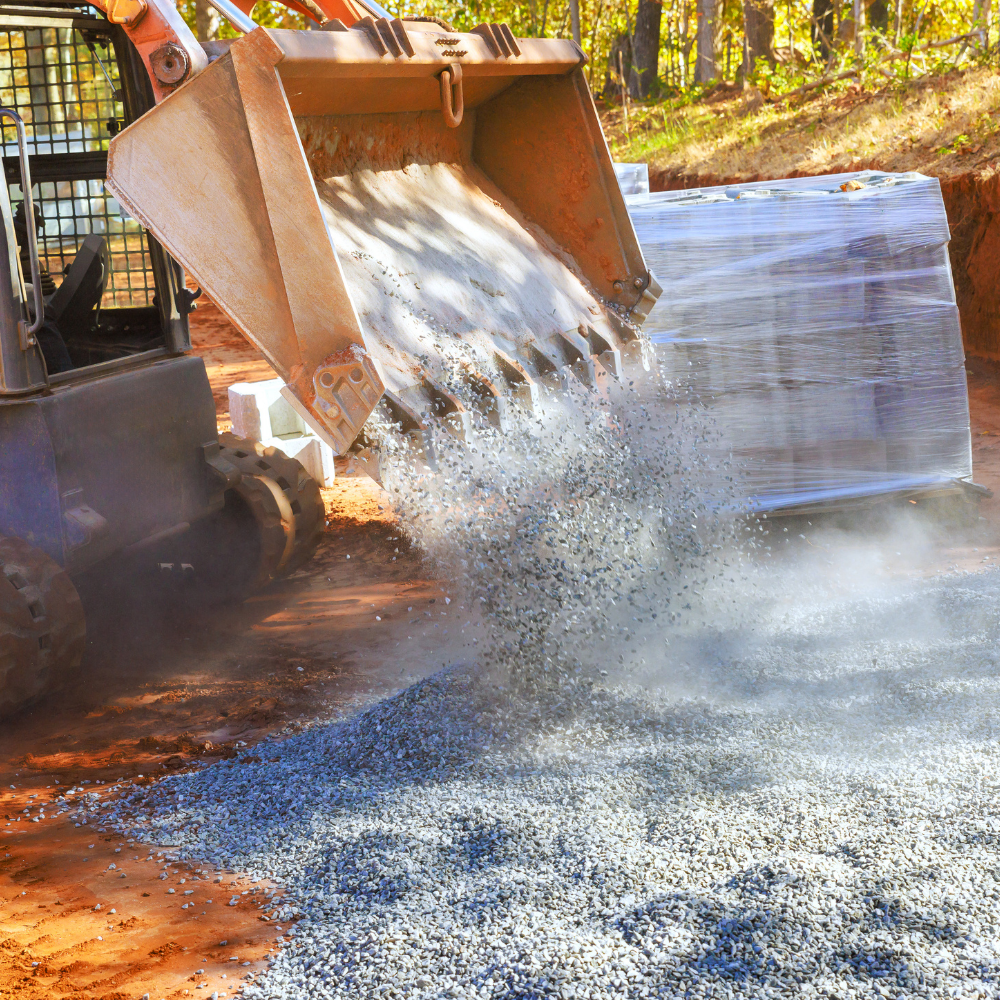
Foundation Grading Done Right: Prevent Settling and Sinking
North Texas soil has a reputation. Ask any homeowner or commercial property manager in McKinney, and you’ll hear stories about doors sticking, cracks creeping across walls, and concrete shifting after a heavy rain followed by a long dry spell. Expansive clay soil, rapid development, and intense weather swings all put extra stress on your foundation—and poor grading is often the hidden culprit.
If water isn’t directed away from your building, it doesn’t matter how strong your Concrete Foundations are. Over time, moisture will collect, soil will move, and your structure can start to settle or sink. According to the Foundation Repair Association, drainage and grading issues are involved in the majority of foundation failures in clay-heavy regions like North Texas.
This guide walks through what proper foundation grading really means, why it’s so critical in McKinney’s soil and climate, and how to protect your investment—whether you’re managing a commercial complex, a small business property, or a residential home.
Key Insight: Done right, foundation grading is a one-time strategic investment that can prevent years of structural headaches, costly Foundation Repair, and business disruption.
Why North Texas Soil Makes Grading Non‑Negotiable
McKinney sits on highly expansive clay soil that swells when wet and shrinks when dry. That movement is powerful enough to lift or drop your foundation by inches over time. Grading is your first line of defense against that constant push and pull.
How Soil and Water Interact Around Your Foundation
When the ground around your slab holds water:
- The soil expands and exerts upward pressure.
- Hydrostatic pressure builds against the sides of the foundation.
- The moisture content becomes uneven, so one side may swell more than the other.
Over months and years, that imbalance can lead to:
- Diagonal cracks in brick or interior drywall
- Gaps around windows and doors
- Sloping floors and trip hazards
- Standing water near Sidewalks and Driveways
“Most foundation problems in expansive soils are not caused by the foundation itself, but by uncontrolled moisture changes around it.” — Structural Engineering Best Practices, ASCE
Local Example: A McKinney Office Park
TopCore Concrete was called to a small office park off US-75 where tenants complained about doors not closing and visible slab cracks. The buildings were only ten years old. The issue wasn’t the concrete; it was the grading.
- The soil sloped toward the building in multiple areas.
- Downspouts discharged right at the slab edge.
- Water routinely pooled after storms.
We regraded the perimeter, adjusted drainage, and installed a combination of surface swales and downspout extensions. Within one rainy season, the soil moisture stabilized, and further movement slowed dramatically—saving the owner from a much larger structural intervention.
What “Correct” Foundation Grading Actually Looks Like
Many properties in McKinney have been graded just well enough to pass inspection—but not well enough to protect the structure for decades. There’s a difference between minimal compliance and long-term performance.
Core Principles of Proper Grading
For most slab-on-grade structures, industry standards call for:
- A minimum slope of 5% (about 6 inches of drop over 10 feet) away from the foundation
- No low spots or “birdbaths” where water can collect
- Stable, compacted soil that won’t wash away in heavy storms
- Integration with gutters, downspouts, and site drainage
For commercial properties with heavy traffic areas, grading must also work in harmony with Parking Lots, Concrete Sidewalk Installation, and Concrete Driveway Installation so water flows predictably and safely.
“Good grading is invisible when it’s working, but painfully obvious when it fails.” — TopCore Concrete Field Supervisor
Case Study: Residential Yard with a Beautiful but Problematic Patio
A homeowner in west McKinney had invested in an elaborate outdoor space: a stamped Stamped Concrete Patios installation, a small retaining wall, and a Gravel Driveway leading to a detached garage. The issue? Everything pitched slightly back toward the house.
Over a few years, the soil along the back wall became saturated. Cracks formed in the interior sheetrock, and the patio itself began to settle unevenly.
Our team evaluated the site and implemented:
- Regrading along the rear foundation to restore positive slope
- Adjustments to the patio edge and adjacent soil
- A shallow swale to capture and redirect surface water
The homeowner kept their outdoor upgrades while restoring the foundation’s protection.
CALLOUT: Correct grading is not about making your yard perfectly flat. It’s about creating a subtle, engineered slope that quietly moves water away—every time it rains.
Blending Grading with Retaining Walls, Patios, and Hardscapes
Modern properties rarely have empty yards and bare soil. In McKinney, it’s common to see a mix of Retaining Walls, Concrete Patio Installation, walkways, and decorative landscaping—all of which can either support or sabotage your grading.
Retaining Walls as Structural Partners
Retaining walls do more than hold back dirt. When designed and built correctly, they:
- Stabilize slopes and prevent erosion
- Control how water moves across your property
- Protect lower-level foundations from saturated soil
For example, TopCore Concrete worked on a multi-tenant property near McKinney’s historic downtown where the parking lot sat several feet above the rear building. A failing timber wall allowed runoff to rush straight toward the slab.
We replaced it with a properly engineered concrete wall, integrated drainage behind the wall, and reshaped the grade. The wall now works with the site grading to keep water away from the structure, not funnel it toward it.
“Retaining walls should always be designed with drainage and grading in mind—not as isolated features.” — TopCore Concrete Design Team
Hardscapes and Water Flow
Features like:
- Decorative Concrete Walkways
- Stamped patios
- Driveway Replacement projects
can unintentionally create dams or channels that concentrate water. If a patio edge traps runoff against your foundation, or a walkway blocks natural drainage paths, the best foundation in the world can’t compensate.
Grading for Driveways, Parking Lots, and High‑Traffic Surfaces
For commercial properties in McKinney—restaurants, offices, warehouses, retail centers—grading isn’t only about the building perimeter. It’s about how large paved areas handle heavy rainfall and vehicle loads.
How Paving and Grading Work Together
On a well-designed site:
- Asphalt Parking Lots and Parking Lot Paving are sloped to inlets or swales, not toward the structure.
- Parking Lot Striping aligns with safe pedestrian paths and proper drainage zones.
- Asphalt Driveways and concrete drive lanes direct runoff away from entries and foundation walls.
- Concrete Curb Installation and gutters manage water flow along edges.
If grading is off by even a small margin, you can end up with standing water, premature pavement failure, and water working its way back toward your building.
Local Example: Industrial Site Off Highway 380
A McKinney industrial facility had repeated potholes and surface failures in its loading area. The root cause wasn’t just traffic; it was grading.
Water from the higher parking lot flowed directly into the heavy truck zone and sat there. Over time, the subgrade weakened, and both asphalt and concrete sections broke down.
Our approach included:
- Regrading the approach and loading area
- Improving Site Preparation and base compaction
- Installing new Concrete Flatwork with proper slope
The result: better drainage, a safer work area, and a longer lifespan for the new pavement.
Comparing Traditional vs. Modern Grading Approaches
Here’s how older, “good enough” grading compares to current best practices used on McKinney projects today:
| Aspect | Traditional Approach | Modern, Best-Practice Approach |
|---|---|---|
| Design Method | Visual estimation, minimal calculations | Laser levels, digital modeling, engineered slopes |
| Focus | Pass inspection, shed some water | Protect foundation, pavement, and structures long-term |
| Integration with Hardscapes | Handled separately (patios, walls, drives as add-ons) | Integrated with patios, walls, Driveways, and drainage |
| Soil Consideration | Generic compaction | Tailored to local clay, moisture, and load conditions |
| Maintenance Outlook | Address problems as they appear | Prevent problems via strategic Land Grading Services |
| Cost Over 10–15 Years | Lower upfront, higher repair costs | Slightly higher upfront, significantly lower repairs |
The Role of Site Preparation in Preventing Settling
Before a single yard of concrete is poured, site preparation sets the stage for everything that follows. Proper prep and grading are especially critical for Concrete Slab Installation in McKinney’s soil conditions.
Key Steps in Professional Site Prep
For both residential and commercial projects, a thorough process typically includes:
- Stripping organic material (topsoil, roots, debris)
- Evaluating native soil and, if needed, importing select fill
- Moisture conditioning and compaction to specified densities
- Establishing final grades with precise slopes
- Planning for future hardscapes, utilities, and drainage
“Rushing or skipping site preparation is the fastest way to guarantee future foundation and pavement issues.” — TopCore Concrete Project Manager
Real-World Scenario: New Construction vs. Add‑On
We often see a stark difference between:
- A new McKinney home built with professional Site Preparation and grading, and
- A later DIY project like a small addition or garage slab poured without proper prep.
The original slab may perform well, while the add-on settles, cracks, or separates within a few years. The reason? The new section often sits on poorly compacted fill or misgraded soil.
By contrast, when TopCore Concrete handles both the main Slab Foundations and subsequent additions, we match compaction, grading, and elevation so the entire structure moves as one, reducing the risk of differential settling.
Grading, Repairs, and Long‑Term Protection
Many McKinney property owners first think about grading only after they see cracks or movement. While early Foundation Leveling or Concrete Repair can help, the work isn’t complete until the grading and drainage issues are resolved.
Why Repairs Alone Aren’t Enough
If the soil around your foundation continues to:
- Alternate between extreme wet and dry
- Collect water in specific spots
- Erode or wash out along edges
then even the best repair system will be under constant stress.
We routinely coordinate with foundation repair firms in the McKinney area. When they stabilize or lift a structure, we follow with grading corrections, Retaining Walls, or drainage improvements to keep conditions stable.
Concrete Maintenance That Supports Good Grading
Beyond structural repairs, several services help preserve both your surfaces and your grading:
- Concrete Sealing to reduce water penetration into slabs and joints
- Concrete Resurfacing to correct minor settling and improve shed patterns
- Concrete Steps Installation and landings that tie into existing grades without creating trip points or water traps
A commercial client near the McKinney Corporate Center Craig Ranch had recurring ponding near a main entry. Instead of just patching the surface, we:
- Corrected the adjacent grading
- Resurfaced the affected Concrete Walkways
- Sealed joints to minimize infiltration
The combination extended the life of the concrete and reduced slip hazards during storms.
What This Means for Businesses in McKinney, TX
McKinney’s rapid growth brings more paved surfaces, more buildings, and more pressure on drainage systems. For local businesses, that translates into higher stakes: a small oversight in grading can affect customer access, employee safety, and the structural integrity of your property.
On a retail or office site, poor grading might mean:
- Water pooling in front of entrances, discouraging customers
- Icy patches in winter where standing water refreezes
- Accelerated deterioration of Parking Lots and drive lanes
For industrial and logistics properties, it can lead to:
- Uneven loading docks and trip hazards
- Damage to forklifts and trucks from failing pavement
- Water intrusion near warehouse slabs and storage areas
McKinney’s clay soil and heavy rain events make these risks more pronounced. But they’re also predictable—and manageable with proper planning.
By investing in professional Foundation Grading and integrated site design, businesses can:
- Reduce long-term maintenance and repair costs
- Protect their brand image with safe, accessible facilities
- Preserve property value in a competitive local market
Whether you’re planning new construction near Stonebridge Ranch, upgrading a property closer to historic downtown, or managing a commercial complex along major corridors, grading is not just a line item—it’s a core part of your asset protection strategy.
Frequently Asked Questions
Q: How can I tell if my McKinney property has a grading problem around the foundation?
A: Common early warning signs include water pooling near your slab after rain, soil erosion exposing parts of the foundation, and mulch or landscaping washing away in specific areas. Inside, you might notice doors sticking, cracks in drywall or brick, or floors that feel slightly uneven. Walk your property after a heavy storm and look at how water behaves: does it move away quickly, or sit near the building and hardscapes like Concrete Sidewalk Installation and patios? If water lingers within a few feet of your foundation for more than a day, or you see repeated washouts along Driveways or walkways, it’s time to have a grading professional evaluate the site.
Q: Do I really need grading if I already have gutters and drains installed?
A: Yes. Gutters and drains are only part of the system. If the soil still slopes toward your slab, downspouts discharge too close to the foundation, or surface water from Parking Lots and driveways flows back toward the building, your foundation remains at risk. Proper Foundation Grading ensures the ground itself works with your drainage infrastructure. In McKinney’s intense storms, gutters can overflow; when they do, you want the site graded to naturally move water away instead of letting it collect around your structure.
Q: How does grading affect my future patio or outdoor living projects?
A: Grading sets the foundation—literally and figuratively—for successful Patio Installation and outdoor spaces. If your yard is improperly graded, adding a heavy concrete or paver patio can trap water against your home, cause uneven settling, or create soggy zones that damage landscaping. When TopCore Concrete plans Concrete Patio Installation or Stamped Concrete Patios, we evaluate existing grades and adjust as needed so the new hardscape sheds water correctly and doesn’t compromise your slab or nearby Slab Foundations.
Q: Is regrading disruptive for an existing business or commercial site?
A: It depends on the scope, but experienced contractors can usually phase work to minimize disruption. For example, we might regrade perimeter areas in sections, keeping primary access routes, Parking Lots, and Sidewalks open as much as possible. On larger sites, work can be scheduled during off-hours or lower-traffic days. In many cases, grading improvements can be integrated with planned projects such as Parking Lot Paving, Driveway Repair, or Concrete Repair, reducing overall downtime.
Q: What does professional grading typically cost in the McKinney area?
A: Costs vary based on property size, existing conditions, and whether additional work—like Retaining Walls, drainage systems, or new Gravel Driveway sections—is required. A simple perimeter regrade around a single-family home is generally a modest investment compared to structural Foundation Repair. For larger commercial sites, grading is often part of a broader Site Preparation or renovation project. The key is that proper grading typically saves money over time by extending the life of your Concrete Foundations, pavements, and hardscapes.
Q: Can grading fix existing foundation damage, or is it only preventive?
A: Grading itself does not lift or structurally repair a damaged foundation. However, it’s a critical part of a complete solution. If you’ve already had Foundation Leveling or structural work done, correcting the grading and drainage around your building prevents the same moisture-related problems from recurring. In McKinney, where soil movement is driven heavily by moisture fluctuations, stabilizing water flow around the slab is just as important as any pier or structural system installed beneath it.
Q: How often should I reassess grading on my property?
A: For most properties, a visual check once or twice a year—especially after major storms—is wise. Look for new low spots, erosion near Concrete Walkways, or changes in how water moves across Driveways and landscaped areas. If you’ve had significant landscaping changes, new hardscapes installed, or utility work that disturbed the soil, it’s a good idea to have a professional reassess your grading. Over time, especially in clay soils, minor shifts can accumulate and warrant targeted adjustments.
Ready to Get Started?
McKinney’s growth and soil conditions aren’t changing—but your property’s risk profile can. Addressing grading issues now means you’re not waiting for the next heavy storm, expanding crack, or sinking corner of slab to force an emergency decision.
If you’re planning new construction, upgrades like Driveway Replacement, or fresh Concrete Patio Installation, integrating professional grading from the start is the most cost-effective approach. For existing properties, a grading assessment is a straightforward way to understand your current risks and options.
TopCore Concrete brings local experience, specialized knowledge of North Texas soils, and a full suite of services—from Foundation Grading and Concrete Slab Installation to Parking Lots, Sidewalks, and Driveways. Our team can evaluate your site, explain options in plain language, and develop a plan that fits your budget and long-term goals.
Protect your foundation, your pavement, and your peace of mind—before minor drainage issues turn into major structural problems.
About TopCore Concrete
TopCore Concrete is a locally focused concrete and sitework contractor serving McKinney, TX and surrounding North Texas communities. Our team specializes in Concrete Foundations, Land Grading Services, flatwork, and commercial and residential paving. With years of experience in expansive clay soils and fast-growing developments, we design and build solutions that last in real-world conditions—not just on paper.