
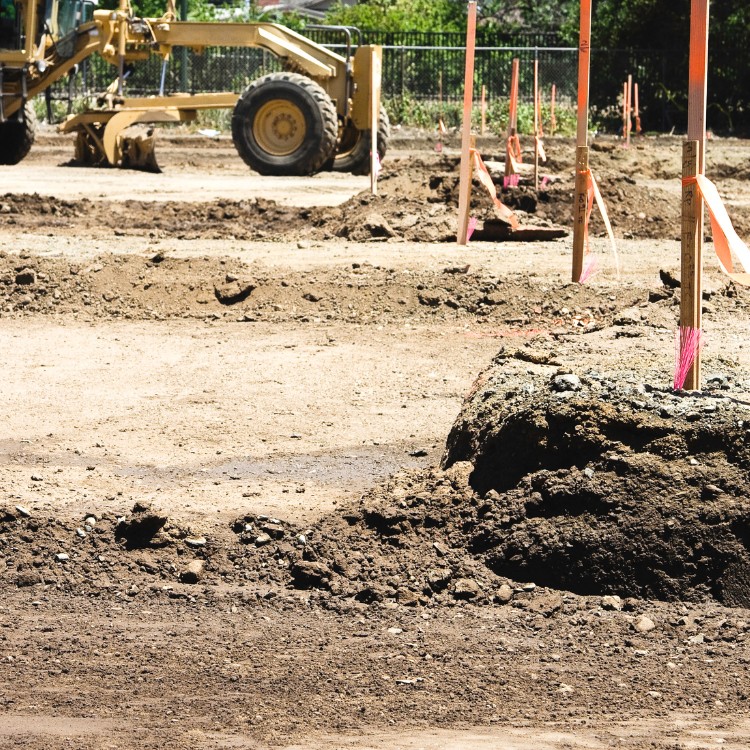
Foundation Grading for Smooth Transitions and Better Flow
On a busy weekday morning in McKinney, the difference between a well-graded commercial site and a poorly graded one often shows up in the worst way: standing water across a storefront sidewalk, a slippery ramp, or a delivery truck struggling to back into a loading area because the transition from Parking Lots to the dock is uneven. Property managers across Collin County see this after every heavy rain — and North Texas gets its share of those.
According to FEMA, just one inch of water inside a building can cause more than $25,000 in damage. In North Texas, where soils expand and contract dramatically, poor drainage and uneven grading also accelerate Concrete Foundations issues and drive up long-term maintenance costs.
This is where professional foundation grading becomes a quiet but powerful ally. With the right slopes, transitions, and drainage paths, your site can move people, vehicles, and water smoothly and safely.
Key Insight: Thoughtful foundation grading doesn’t just “move dirt.” It shapes how water flows, how people walk, and how vehicles access your property — protecting your investment and improving daily operations.
Why Foundation Grading Is the Backbone of Site Flow
Foundation grading is the shaping of soil and base materials around your structures, Foundation Grading, and paving so that everything drains and functions as intended. For businesses in McKinney, this is more than a technical detail; it’s a risk management and usability issue.
Local building codes and ADA guidelines specify minimum slopes for Sidewalks, ramps, and entries. At the same time, engineers need to ensure that runoff flows away from buildings and into designated drainage areas. That balance is delicate in our clay-heavy Blackland Prairie soils, which tend to hold water and then crack when dry.
Consider a McKinney retail center off US-380. The owners were dealing with:
- Water pooling at the front entrance after storms
- Icy patches in winter where water never drained
- Hairline cracks forming in the front Driveways and walkways
TopCore Concrete re-graded the front approach, adjusted the slope of the concrete flatwork, and added a shallow swale to redirect runoff. The visible change was minor; the functional improvement was dramatic. Foot traffic moved safely, and the owner stopped receiving tenant complaints about puddles at the doors.
“Grading sets the stage. If it’s wrong, everything you build on top will eventually show it.” — Project Manager, TopCore Concrete
Designing Smooth Transitions Between Surfaces
On a commercial property, people and vehicles constantly transition between surfaces: from asphalt to concrete, from parking lot to walkway, from loading area to dock, from Gravel Driveway to paved entry. Each of these transitions can either be seamless or a recurring problem spot.
Smooth transitions depend on:
- Proper base preparation and compaction
- Matching elevations between adjoining materials
- Controlled slopes that meet ADA and safety standards
- Thoughtful placement of joints, curbs, and edges
A local example is a business park in McKinney that had frequent trip incidents where the asphalt parking lot met the concrete sidewalks. The original contractor had not accounted for long-term settling, so a ½” lip turned into a 1″ trip hazard over a few years.
TopCore Concrete corrected the issue by:
- Saw-cutting the failing edge
- Rebuilding the base
- Re-pouring the concrete transition with a gentle slope
- Installing a small Concrete Walkways ramp section to smooth the grade difference
Employees immediately noticed the difference. Deliveries rolled more smoothly, and the property manager reduced liability exposure.
CALLOUT: Smooth transitions aren’t just about comfort. They directly impact safety, accessibility, and how your property is perceived by customers and tenants.
To make these transitions work long-term, grading must anticipate:
- Settlement of different materials (asphalt vs. concrete)
- Water flow across joints
- High-traffic wear patterns (e.g., carts, forklifts, pallet jacks)
When grading is done with these realities in mind, you avoid the “step-down” effect that often appears a few years after construction.
Managing Water Flow Around Slab Foundations and Retaining Walls
Water is relentless. It will always seek the lowest point — and if that lowest point is against your foundation, you’re eventually looking at Foundation Repair or Foundation Leveling.
For slab-on-grade construction, which is common in McKinney’s commercial and industrial buildings, proper grading is essential to:
- Keep water away from perimeter beams
- Prevent erosion along building edges
- Protect landscaping and irrigation investments
A manufacturing facility near the McKinney airport illustrates this well. The building’s rear elevation had a gentle slope toward the slab, not away from it. After several heavy rains, the owner noticed:
- Soil washing away from the edge of the slab
- Minor water intrusion in a storage room
- Early signs of movement in an interior Concrete Slab Installation
TopCore Concrete re-graded the back lot, installed a series of low Retaining Walls, and reshaped the surface to carry water to a designated drainage channel. The retaining walls also created a cleaner separation between parking and the rear yard, improving both function and appearance.
“Water control is foundation control. If grading lets water sit, your slab will eventually pay the price.” — Senior Estimator, TopCore Concrete
By combining grading with structural elements like retaining walls, you can:
- Capture and redirect runoff safely
- Protect Concrete Foundations and adjacent pavements
- Preserve landscaping features and prevent washouts
This integrated approach is especially valuable on hilly or constrained sites where space is limited and water has fewer places to go.
Grading for Patios, Walkways, and Outdoor Customer Areas
Customer-facing outdoor spaces — patios, seating areas, and promenades — are where aesthetics, comfort, and functionality meet. The grade under and around these spaces quietly determines how enjoyable and low-maintenance they are.
In McKinney, restaurants and offices near historic downtown and along major corridors are investing heavily in outdoor areas. A well-designed Concrete Patio Installation or Stamped Concrete Patios area can become a major draw, but only if it:
- Drains quickly after storms
- Has smooth, accessible transitions from interior to exterior
- Avoids directing water back toward the building
One café owner in west McKinney learned this the hard way. Their new patio looked beautiful but trapped water in the middle because the slab was perfectly flat. After every rain, several tables sat in shallow puddles.
TopCore Concrete evaluated the site and recommended:
- Lightly regrading the sub-base
- Installing a new patio slab with just enough slope to shed water
- Adding a subtle channel to redirect runoff to a landscape bed
The new grading eliminated puddling while preserving the clean, modern look the owner wanted.
CALLOUT: Even “flat” patios and plazas need slope. The art is in making the grading invisible to customers while highly effective for drainage.
Grading also matters for:
- Concrete Sidewalk Installation connecting parking to entries
- Concrete Walkways around outdoor amenities
- Concrete Steps Installation where elevation changes are unavoidable
Thoughtful grading ensures these elements feel natural, not forced, and that guests move easily and safely through your property.
Parking Lots, Driveways, and Vehicle Flow: Getting the Grades Right
Vehicle areas are where grading decisions are most visible — and most tested. Heavy trucks, delivery vehicles, customer cars, and service equipment all interact with your Concrete Driveway Installation, Asphalt Parking Lots, and loading zones every day.
In McKinney’s expanding commercial corridors, many sites combine:
- Gravel Driveway access from secondary roads
- Parking Lots with mixed-use lanes
- Concrete loading areas and dumpster pads
Each of these surfaces has different structural needs and responds differently to traffic and weather. Grading must account for:
- Proper cross-slope for drainage
- Smooth tie-ins between gravel, asphalt, and concrete
- Adequate thickness and base support at transitions
A distribution center outside McKinney had recurring rutting at the transition from gravel drive to concrete loading apron. Water collected in those ruts, softening the subgrade and creating a cycle of patching and failure.
TopCore Concrete addressed the root cause by:
- Regrading the approach to ensure water shed away from the transition
- Improving base compaction in the high-load area
- Installing a reinforced concrete apron with a controlled slope
Since the upgrade, the owner reports less standing water, smoother truck movements, and reduced maintenance.
Here’s how a traditional “just pave it” approach compares with a grading-focused strategy:
| Aspect | Traditional Approach | Grading-Focused Approach (TopCore) |
|---|---|---|
| Drainage Planning | Minimal, often assumed | Engineered slopes and flow paths |
| Surface Transitions | Matched “by eye” | Designed elevations and joints |
| Long-Term Maintenance | Frequent patching and resurfacing | Lower repair frequency and cost |
| Vehicle Comfort & Safety | Bumps, dips, and ponding | Smooth entries, fewer hazards |
| Impact on Foundations | Water may migrate toward structures | Water directed away from buildings |
Site Preparation and Land Grading: Setting Up Every Project for Success
Before concrete, asphalt, or pavers go in, the most consequential work often happens at the site preparation stage. Proper Site Preparation and Land Grading Services determine whether your investment performs for decades or starts failing in a few years.
Professional grading for commercial properties in McKinney typically includes:
- Clearing and stripping organic materials
- Evaluating soil conditions (especially clay content and moisture)
- Building up and compacting stable base layers
- Shaping final grades to meet drainage and design requirements
On a recent office project in McKinney, two adjacent buildings told very different stories. One owner hired a low-bid contractor focused only on getting the slab poured quickly. The other partnered with a team that prioritized grading and base work.
Five years later:
- Building A (minimal grading): visible cracks in the parking lot, uneven sidewalks, ponding near the entrance.
- Building B (professional grading): surfaces still even, minor cracking only, and clean drainage patterns.
“Owners rarely see the grading work once concrete is poured, but they absolutely see the consequences if it’s not done right.” — Field Superintendent, TopCore Concrete
Here’s a quick comparison of cutting corners versus doing grading right from the start:
| Factor | Minimal Site Prep / Grading | Professional Site Prep / Grading |
|---|---|---|
| Upfront Cost | Lower | Moderate, but controlled |
| Risk of Foundation Movement | Higher (especially in clay soils) | Reduced through proper drainage and compaction |
| Pavement Lifespan | Shorter, more repairs | Longer, fewer major interventions |
| Appearance Over Time | Sags, waves, visible patches | More consistent, professional look |
| Total Cost of Ownership | Higher over 10–15 years | Lower due to minimized repairs and failures |
What This Means for Businesses in McKinney, TX
McKinney is growing quickly, with new commercial spaces, medical offices, retail centers, and industrial facilities coming online every year. In this competitive environment, small details like how smoothly your parking lot drains or how comfortably customers walk from their cars to your door can set you apart.
Local conditions make proper grading even more important:
- Expansive clay soils amplify the impact of poor drainage on Concrete Foundations.
- Intense storms can drop significant rain in a short period, exposing any flaws in site grading.
- Temperature swings between seasons stress concrete and asphalt, especially where water collects.
For property owners and managers in McKinney, this means:
- Grading is not a luxury add-on. It’s a core part of protecting your investment.
- Whether you’re planning Driveway Replacement, upgrading Parking Lot Paving, or adding outdoor seating, grading should be in the conversation from day one.
- Partnering with a contractor who understands local soils, drainage patterns, and code requirements can prevent costly surprises later.
Well-executed foundation grading supports:
- Smoother daily operations (fewer disruptions from puddles, ice, or access issues)
- Lower long-term maintenance costs on flatwork, Concrete Sidewalk Installation, and paving
- Safer conditions for employees, customers, and deliveries
For businesses in McKinney, getting the grade right now means you spend less time reacting to problems and more time focusing on running your operation.
Frequently Asked Questions
Q: How can I tell if my existing site needs grading improvements?
A: Common signs include standing water that lingers more than a day after rain, soil erosion along foundations, repeated cracking or settling in Driveway Repair areas, and trip hazards where Sidewalks meet parking surfaces. In McKinney, many commercial sites show these issues within a few years if grading wasn’t done correctly up front. A professional assessment will look at slopes, drainage paths, and how water moves across your property, then recommend targeted corrections — from minor regrading to adding small Retaining Walls or adjusting Concrete Foundations transitions.
Q: Will grading work disrupt my business operations?
A: Not necessarily. Many grading and Land Grading Services projects can be phased to minimize disruption — working during off-hours, weekends, or in sections so access is maintained. For example, when TopCore Concrete regraded a McKinney office park’s Parking Lots and Concrete Walkways, work was scheduled around tenant hours and completed in zones. Clear communication, signage, and temporary access paths keep employees and customers moving safely while improvements are made.
Q: How does grading interact with foundation repair or leveling?
A: Grading and Foundation Repair are closely connected. If your building in McKinney requires Foundation Leveling, it’s often because water has been allowed to collect near the slab for years. Correcting the structural issues without fixing grading can lead to repeated problems. A comprehensive approach will stabilize the structure and then adjust surrounding grades, Foundation Grading, and drainage so water moves away from the building, protecting your investment in repairs.
Q: Is grading only important for new construction, or does it matter for resurfacing and repairs?
A: Grading is critical both for new builds and for upgrades like Driveway Replacement, Parking Lot Paving, or Concrete Repair. In fact, resurfacing without checking grades can trap water and shorten the life of your new surface. When TopCore Concrete repairs or replaces Asphalt Driveways or concrete, they evaluate and adjust slopes as needed, ensuring the new work drains properly and performs well in McKinney’s climate.
Q: How do patios and outdoor spaces benefit from professional grading?
A: Patios, plazas, and outdoor seating areas may look flat, but they need subtle slopes to shed water and remain safe and comfortable. Without proper grading under and around Concrete Patio Installation or Stamped Concrete Patios, you’ll see puddling, slippery surfaces, and damage to adjacent landscaping. In McKinney’s high-traffic commercial areas, grading also ensures smooth transitions from indoor to outdoor spaces, integrates with Concrete Walkways, and supports long-term performance of decorative finishes and Concrete Sealing.
Q: Can grading improvements help extend the life of my parking lot or driveway?
A: Yes. Water is a primary enemy of both asphalt and concrete. Proper grading reduces ponding, limits freeze-thaw damage, and helps protect the base layers that support Asphalt Parking Lots and Concrete Driveway Installation. When combined with good Concrete Resurfacing or asphalt maintenance, grading improvements can significantly extend the service life of your surfaces, reduce the frequency of Concrete Repair, and keep your McKinney property looking professional.
Q: How does grading affect compliance with ADA and local codes?
A: ADA standards set maximum slopes for ramps, Concrete Sidewalk Installation, and accessible routes. Local McKinney and Collin County codes also dictate how water must be handled on commercial sites. Grading directly determines whether these slopes and drainage rules are met. Experienced contractors design grades so that Concrete Walkways, Parking Lot Striping areas, and access points are both code-compliant and practical, reducing your risk of violations or costly rework.
Ready to Get Started?
North Texas weather won’t wait for the perfect moment to test your site. The next heavy rain or freeze-thaw cycle will reveal whether your grading is helping or hurting your property. Addressing issues now — before another season of storms — can prevent costly Foundation Repair, reduce liability risks, and improve day-to-day usability for everyone who visits or works at your site.
TopCore Concrete has extensive experience shaping commercial and industrial properties in McKinney to perform well under real-world conditions. Whether you need a full-site evaluation, targeted Foundation Grading around problem areas, or integrated work with new Parking Lots, Concrete Sidewalk Installation, or Driveway Replacement, their team can recommend a practical, budget-conscious plan.
Take the next step:
- Schedule a site walk to identify grading and flow issues
- Discuss options tailored to your operations and budget
- Plan improvements around your business hours to minimize disruption
Thoughtful grading today is one of the most effective ways to protect your property, your people, and your bottom line.
About TopCore Concrete
TopCore Concrete is a locally focused concrete and sitework contractor serving McKinney and the surrounding North Texas communities. With extensive experience in Concrete Foundations, Foundation Grading, Parking Lots, Sidewalks, and Driveways, the team is known for practical solutions that respect local soils, codes, and business needs. From initial Site Preparation to long-term Concrete Repair, TopCore Concrete helps McKinney property owners build and maintain surfaces that last.