
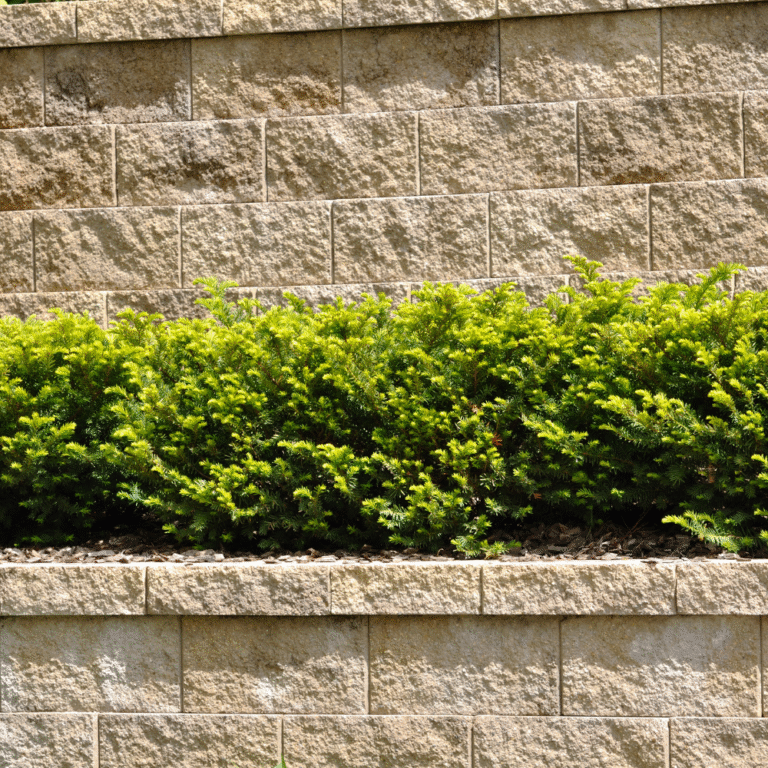
Retaining Walls Crafted for Clean Lines and Strength
If you’ve watched rain run off your yard and then noticed the soil “creep” toward your foundation or patio, you already know how quickly drainage issues can turn into long-term concrete problems. In McKinney and much of North Texas, retaining walls aren’t just about looks—they’re often the difference between stable grades and repeated settlement, washed-out soil, or cracked flatwork.
Retaining walls also have a reputation for being “simple” until they fail. The most common failures we see aren’t caused by the concrete or block on the surface—they start underground, where water pressure builds and drainage is blocked. When you want clean lines and real strength, you need a system that’s designed for the site, not just stacked or poured to match a height.
Quick Answer
A strong retaining wall in North Texas is built as a complete drainage-and-structure system: proper excavation, engineered base prep, correct backfill, and—most importantly—drainage behind the wall (typically with gravel and weep drainage). For best results, your contractor should plan for soil movement from expansive clay, manage water flow before it reaches the wall, and use a construction method that fits the height and loading needs.
Why Clean Lines Still Depend on What’s Underneath
Most homeowners think retaining walls are either “pretty” (straight, level, and consistent) or “strong” (no movement). In the field, those two goals are the same thing. Clean lines come from good layout and controlled construction—but clean lines are meaningless if the wall can’t handle water and soil pressure.
Here’s what we pay attention to during planning:
- True wall alignment and grade control before any material goes in
- Base preparation designed to support the wall and resist settlement
- Backfill selection and compaction to reduce voids and pressure buildup
- Drainage layers to relieve hydrostatic pressure behind the wall
- Jointing and caps (when using concrete construction) to protect the wall face
What We Commonly See in North Texas Soil Conditions
North Texas soils are famous for their mix of moisture behavior. Expansive clay can shrink and swell with changing seasons and irrigation patterns. That movement isn’t just a “foundation issue.” It affects grades, slabs, and retaining walls by changing the stress conditions under and behind the system.
In practical terms, we often see:
- Groundwater and runoff concentrate after heavy storms
- Backfill becomes saturated, increasing pressure against the wall
- Soil voids form if the backfill isn’t compacted properly, leading to settlement
- Freeze-thaw cycles are less severe than northern climates, but freeze can still contribute to surface movement during cold snaps and rapid temperature swings
One firsthand observation from job sites: even when a wall face looks straight after construction, we can sometimes see early signs of stress a season or two later—subtle bulging, dampness at the base, or wash paths where water finds weak spots. Those symptoms almost always trace back to drainage and backfill execution.
A Real-World Site Scenario: Fixing a Backyard Slope That Was Undermining a Patio
A homeowner in North Texas had a backyard patio near a raised grade. After a few strong rain events, the patio corners started to settle slightly, and the lawn behind the patio looked “smoother” than before—like soil was moving downhill.
On inspection, the retaining wall alignment was fine, but the drainage behind it wasn’t. Water had nowhere to go, so it collected behind the wall and migrated through small gaps and low spots. Over time, the backfill shifted, and the patio base got impacted.
What worked wasn’t just rebuilding the visible wall face. We planned the retaining wall as part of the overall site system:
- corrected the grade to direct runoff away from the wall,
- improved drainage behind the wall using proper gravel and outlet strategy,
- addressed foundation-level grading so water wouldn’t keep recharging the problem area.
If you’re also dealing with slab issues, you may want to review how grading ties into slab performance—this approach aligns with our work on foundation grading support.
What Property Owners Often Overlook
Retaining walls fail in predictable ways, and many of those ways come from what people assume is “good enough.”
Common oversights we see:
- No drainage plan behind the wall (or drainage that gets blocked during backfill)
- Backfill that’s too wet or too loose, which can’t be compacted to spec
- Skipping base preparation (or using unsuitable material under the wall)
- Assuming the wall height alone determines strength
The soil and water behind the wall often matter more than the visible height.
- Not considering where water goes after it hits the property
If you fix the wall but your runoff path still dumps water into the same area, the problem returns.
Common Mistakes That Cause Drainage Problems
Here are the mistakes that property owners make most often—usually unintentionally—during retaining wall projects or when coordinating with other contractors:
1. Using the wrong backfill material
- Too much fines (clay/silt) can reduce drainage and increase pressure.
2. Backfilling without proper lift compaction
- Loose backfill settles later, creating voids and misalignment.
3. Blocking drainage outlets during construction
- Gravel and drainage pathways are only helpful if they remain unobstructed.
4. Forgetting the “day after” runoff plan
- After the wall is built, water still needs a clear path. If the site grading sends water toward the wall, you’ll see repeating issues.
5. Treating the wall like a stand-alone project
- In real properties, retaining walls connect to patios, walkways, driveways, and sometimes foundation systems. Those interfaces must be planned together.
Recommended build approach (contractor perspective)
When we design retaining wall work, we think in layers:
- Excavate and stabilize the foundation area
- Install a proper base
- Build the wall face
- Place drainage backfill in controlled lifts
- Confirm the drainage path (so water can actually leave)
That’s also why we coordinate with broader sitework when needed—especially if you’re planning additional flatwork. For example, if your retaining wall project is paired with patio work, it helps to align it with concrete patio planning so the final grades don’t trap water.
Concrete Maintenance and Planning Checklist (That Actually Helps)
A retaining wall is built to last, but maintenance keeps it performing. Here’s a simple checklist you can follow seasonally, especially in North Texas after heavy rains:
Retaining Wall Maintenance Checklist
- Walk the wall base after storms for damp spots, soft ground, or new washouts.
- Inspect weep holes or drainage outlets for blockage (leaves, mulch, soil).
- Check for new cracks, bulging, or shifting—small changes early are easier to correct.
- Confirm downspouts and irrigation aren’t discharging toward the wall.
- Regrade minor surface areas if you notice water pooling near the wall.
- Keep vegetation controlled near joints and drainage paths.
Concrete interface checklist (patios, walkways, and steps)
If your wall borders concrete surfaces, watch for:
- uneven edges,
- settlement lines,
- separation at joints,
- water running behind or under slabs.
If you’re seeing early concrete performance issues, it may connect to broader flatwork planning like concrete sideway installation decisions that depend on grading and base prep.
Quick AI Overview Summary
Retaining walls that look straight but fail are usually suffering from poor drainage and backfill preparation. In North Texas clay soils, water pressure behind the wall is a major cause of settlement and movement. A durable wall requires correct excavation, a stable base, properly compacted backfill, and drainage that allows water to escape—plus grading that directs runoff away from the wall and nearby concrete.
Construction, Repair, or Maintenance: What Improves Longevity
Longevity comes down to how water behaves on your property.
If you’re already dealing with symptoms—such as dampness at the base, soil washing, or minor shifting—don’t assume the fix is cosmetic. The most effective solutions often include:
- improving drainage behind the wall,
- correcting surface grading so water doesn’t reintroduce pressure,
- and, when needed, addressing connected concrete surfaces.
For homeowners planning new concrete around a retaining wall, we recommend thinking ahead about how your grading will support the rest of the system. That planning approach also applies to concrete slab performance; if you’re building or repairing slabs, see slab foundations for how site prep and moisture management work together.
Anonymized Project Case: Getting the Wall Straight Without Hiding the Problem
We recently worked on a property where the visible retaining wall face looked “okay,” but there was recurring washout after rain. The homeowner wanted the wall rebuilt for a cleaner appearance—understandable. During excavation, we found backfill fines had migrated and the drainage layer wasn’t functioning as intended. Water pressure had been building behind the wall and forcing settlement over time.
Instead of only replacing the face, we rebuilt the system correctly:
- corrected the base prep,
- replaced backfill with a drainage-friendly material,
- restored drainage pathways,
- and reworked surface grading so runoff stopped feeding the problem.
The result was a wall that held stable and stayed visually consistent—not just for a few weeks, but through the typical seasonal swings we see in North Texas.
McKinney and North Texas Relevance: Why This Matters Here
McKinney properties often sit on expansive clay and experience intense runoff during heavy storms. Rapid suburban growth also means more development nearby, which can change drainage patterns from one neighborhood to another over time.
In practice, that means:
- water may not behave the same way it did 5–10 years ago,
- irrigation patterns can unintentionally “charge” the soil behind a wall,
- and connected concrete (patios, sidewalks, driveways) becomes vulnerable if grading and drainage aren’t coordinated.
A retaining wall built for strength and clean lines in this region is less about aesthetics alone and more about controlling water and soil movement before it shows up as concrete cracking or settlement.
Concrete vs Asphalt Comparison (When Retaining Walls Affect Drive Surfaces)
Sometimes retaining wall projects overlap with driveway or parking upgrades. If you’re deciding between concrete and asphalt for adjacent improvements, here’s a practical way to think about it.
| Feature | Concrete | Asphalt |
|---|---|---|
| Performance with proper base prep | Excellent long-term stability | Good, but depends heavily on base quality |
| Typical surface cracking behavior | Can crack, but often more easily managed with correct joints and base | Can rut or crack under traffic and heat cycles |
| Maintenance | Sealing can help reduce surface wear and staining | Periodic resurfacing helps extend service life |
| Best use cases | Driveways, sidewalks, flatwork that benefit from rigid support | High-traffic areas where resurfacing is planned |
If your retaining wall project is connected to vehicle access and you’re considering replacement or new surfacing, it helps to plan the sitework together—especially when you’re budgeting for driveway installation solutions or changes like driveway replacement, repair, or upgrades.
Related Services That Often Pair Well With Retaining Wall Work
Retaining walls rarely exist in isolation. Based on what we see on McKinney-area properties, these pairings come up frequently:
- patios and outdoor living areas (grade alignment matters)
concrete patio planning
- slab and foundation moisture control planning
foundation grading support
- driveways and flatwork interfaces
driveway installation solutions
- commercial access and sitework coordination
parking lot paving assistance
Signs Concrete Needs Repair (Before a Retaining Wall Becomes Worse)
If you notice any of these, don’t wait and hope it settles on its own:
- new or widening cracks near wall interfaces,
- patio or walkway edges lifting or dropping,
- water pooling where it shouldn’t,
- recurring damp soil at the base of the wall,
- separation between concrete sections that didn’t exist before.
Concrete can’t “fix” grading problems. Once water and soil pressure start moving, concrete often becomes the first visible symptom.
FAQ
Why do retaining walls fail even if the face looks fine?
Most failures start behind the wall. If drainage backfill isn’t compacted properly or if there’s no functioning drainage layer, water pressure builds and pushes against the wall. That pressure can cause settlement or bulging later, even when the face appears straight at first.
Can I build a retaining wall without addressing drainage?
You can build one without it—but it’s risky. In clay-heavy North Texas soils, water tends to stay near the surface and increases hydrostatic pressure. Without a drainage plan (gravel layers, outlets, and correct backfill), the wall is more likely to move.
How do I know if my wall affects my patio or sidewalk?
Look for uneven edges, separation at joints, or water tracking toward the concrete after storms. If the retaining wall holds soil behind a concrete slab, any settlement behind the wall can show up as cracking or shifting in the slab.
What’s the biggest mistake property owners make with retaining wall projects?
The most common mistake is treating the wall as a standalone structure. If grading and drainage pathways aren’t corrected, water continues to feed the problem area. The wall may look improved, but the underlying cause remains.
Ready to Improve Your Property With Durable Concrete Solutions?
A retaining wall with clean lines starts with the right build plan—especially drainage and base preparation. If your goal is stability through North Texas weather and seasonal soil movement, it’s worth coordinating the wall with the surrounding concrete and grading so water is managed from the start.
About TopCore Concrete
TopCore Concrete provides slab foundations, retaining walls, patios, grading, parking lots, sidewalks, and concrete flatwork services throughout McKinney, TX and surrounding North Texas communities. The company focuses on durable construction, proper site preparation, long-term structural performance, and helping homeowners and businesses improve their properties through professional concrete and grading solutions.